Archive for the ‘Reptiles’ Category

Wild Fact #439 – A King Among Kings – Common Kingsnake

November 1, 2011 - 12:00 am No Comments
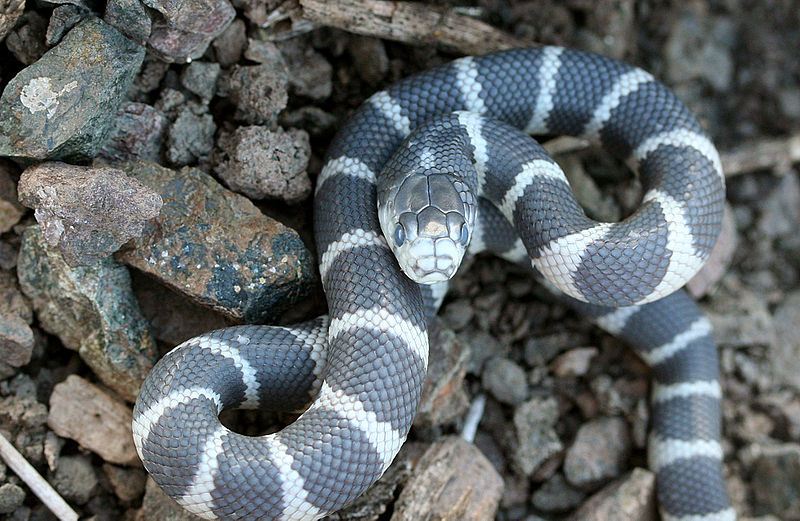
Common Kingsnake

Photo by Calibas (Wikimedia)

I am sure all of you are nursing sore tummy’s today from all of the candy you ingested last night. I hope you and your families enjoyed dressing up and getting free candy. Although Halloween is over, I figured we would continue with the scary Wild Facts and what could be more frightening than the Common Kingsnake? Okay, so there are probably a few other animals out there that are a little scarier but that doesn’t take away from the impressiveness of today’s animal. So grab your gloves and a hat because we are heading to Mexico to look for our slithery specimen. By the way, these snakes are also native to the good ol’ US of A so this is another travel option if you don’t feel like visiting Mexico right now.
Although this snake is called the “Common” Kingsnake, I haven’t found a whole lot of characteristics that are too common with this creature. For starters, all 8 sub-species have a wide variety of colours and patterns making them some of the most fashionable snakes out there. The Common Kingsnake has a larger wardrobe than I do with their favourite pieces of clothing coming in red, orange, yellow, tan, black and white. All of these colours are then mixed in with a variety of patterns such as bands, patches, rings, stripes, spots and of course speckles. Needless to say, it is pretty difficult to identify these snakes based solely on their colour and patterns.

Common Kingsnake

Photo by Haplochromis (Wikimedia)

Even though, their fashion sense is something to be envious of, my favourite characteristic of the Common Kingsnake is their choice of prey. This particular snake will eat a variety of creatures such as birds, rodents, amphibians, reptiles and pretty much anything else they can overpower. Even though, this sounds like the normal diet of a hungry snake, it is a little different. You see, some of the reptiles that the Kingsnake feeds on includes Rattlesnakes and other venomous (and deadly) snakes.

Wait!

How can they consume deadly, poisonous snakes? See, that is the interesting part. The Common Kingsnake is actually immune to the venom of numerous poisonous snakes. This allows them to be one of the few animals that enjoy dining on some of the scariest snakes known to man. Not too shabby for animal that is apparently “Common”, is it?

Well that does it for today’s Wild Fact. Enjoy the rest of your day and I will see you tomorrow.

Digg This
Reddit This
Stumble Now!
Buzz This
Vote on DZone
Share on Facebook
Bookmark this on Delicious
Kick It on DotNetKicks.com
Shout it
Share on LinkedIn
Bookmark this on Technorati
Post on Twitter
Google Buzz (aka. Google Reader)

Wild Fact #446 – Standing Tall – Gargoyle Gecko

October 21, 2011 - 12:00 am No Comments
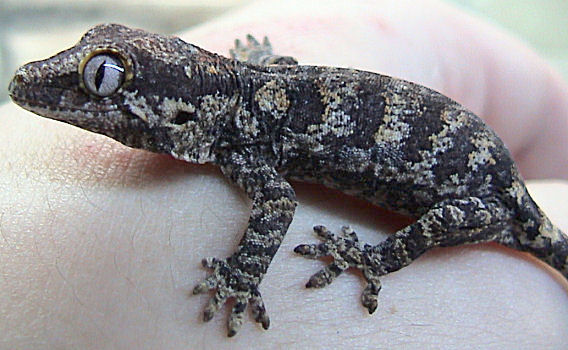
Gargoyle Gecko

Photo by LA Dawson (Wikimedia)

We started the week talking about the Leopard Gecko so it only seems fitting to end the week with another gecko, the Gargoyle Gecko. Personally, I have high expectations for this little reptile with a name like “Gargoyle”. I just picture them standing tall on some high-rise building in the city. I guess this picture is false since the Gargoyle Gecko is only found in the southern portion of the island of New Caledonia. I doubt they have tall skyscrapers with Gargoyles but you never know! So who is up for exploring a new island today to find a potential candidate for the CITES list.

So why are these medium to large sized Geckos called Gargoyles? Well, I am willing to bet it has something to do with all the tiny bumps that can be found on their head. For once I have to give credit to person who named this animal as it is actually a pretty clever and creative name. Besides their bumpy heads, the Gargoyle Gecko also has a long, thin, prehensile tail that is able to drop off (don’t worry it grows back) when they are threatened.

Gargoyle Gecko

Photo from Wikimedia

Unfortunately, dropping their tail won’t help them against their biggest threat. Of course, I am talking about deforestation, which is destroying their lowland forests of their Island home. As I mentioned, these Gecko’s are being considered to be placed on the CITES list which is a pretty good indication that their population may be in trouble. As a result of this consideration, they have put restrictions on the exportation of this cool looking reptile. So if you were looking to get a pet Gargoyle Gecko, it may be difficult.

If you are hoping to catch a glimpse of these cute gecko’s before they disappear then you should be on the lookout for a variety of colour variations. Yep, these little reptiles can be any colour from grey, brown, white, yellow, orange and even red. To make things even more interesting is the fact that they all have a variety of blotches and striping patterns. At least they have a full wardrobe and never have to worry about wearing the same thing twice.

I hope you enjoyed this week of Wild Facts. Have a great weekend and I will see you on Monday.

Digg This
Reddit This
Stumble Now!
Buzz This
Vote on DZone
Share on Facebook
Bookmark this on Delicious
Kick It on DotNetKicks.com
Shout it
Share on LinkedIn
Bookmark this on Technorati
Post on Twitter
Google Buzz (aka. Google Reader)

Wild Fact #450 – The “Cat-Like” Lizard – Leopard Gecko

October 17, 2011 - 12:00 am No Comments
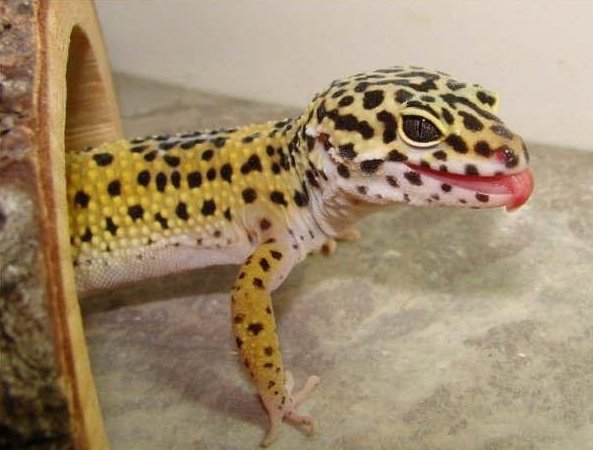
Leopard Gecko

Photo from Wikimedia

I thought today would be a great day to learn about a cute looking animal. After all, it is a Monday, so I am sure at least some of us could use some cheering up. Today’s animal, isn’t the typical “cute and cuddly” but you have to admit the picture of the Leopard Gecko is pretty sweet. Who would have thought that a lizard from the deserts of Asia would be able to make your Monday morning that much better. So what are you waiting for? Chug your coffee and let’s go learn a little more about this fun-looking reptile.

As mentioned, the Leopard Gecko is a ground dwelling, nocturnal lizard that loves to hang out in the deserts of Central Asia, Pakistan and parts of India. For a Gecko, this particular species happens to be quite large as they can easily grow up to 27.5 cm (10.9″) in length and can weigh up to 65 grams (2.3 0z). This weight definitely fluctuates as the Leopard Gecko will go into a semi-hibernation during the cooler winter months. When the temperature dips, this little lizard burrows underground where it survives on its fat cells. Good thing they weigh a whopping 65 grams!

Leopard Gecko

Michelle Reaves, http://www.flickr.com/people/considerthis/

When they aren’t hibernating, this Gecko will spend their days hiding underneath rocks to protect themselves from the scorching sun. Once night falls, they will come out to play. Well, maybe not so much to play as to eat but nonetheless they come out. Interestingly enough, this Gecko is properly named since they use their keen sense of vision and smell to stalk their prey much like that of a Leopard. Therefore if you are an insect or a mealworm living in the Leopard Gecko’s home range then you may want to look over your shoulder every now and again (well, I guess the mealworm doesn’t have to worry since they don’t have shoulders).

Leopard Gecko Fast Fact – The Leopard Gecko has become very popular in the pet trade industry as a result of their size and beautiful colour. Although, in the wild, these Gecko’s will have a darker, duller colour as opposed to their captive friends. I guess they don’t have a need for dull colours when they are in a safe environment.

Well that does it for the first Wild Fact of the week! I hope you enjoyed learning about the Leopard Gecko. See you tomorrow for another fun and exciting Wild Fact.

Digg This
Reddit This
Stumble Now!
Buzz This
Vote on DZone
Share on Facebook
Bookmark this on Delicious
Kick It on DotNetKicks.com
Shout it
Share on LinkedIn
Bookmark this on Technorati
Post on Twitter
Google Buzz (aka. Google Reader)

Wild Fact #457 – Turn on a Dime – Virgin Islands Dwarf Sphaero

October 6, 2011 - 12:00 am No Comments
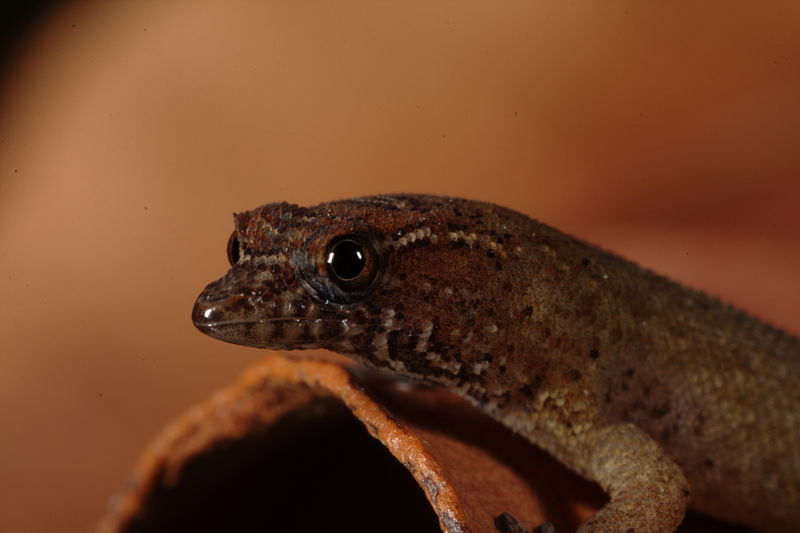
Worlds Smallest Reptile - Virgin Islands Dwarf Sphaero

Photo by Alejandro Sánchez (Wikimedia)

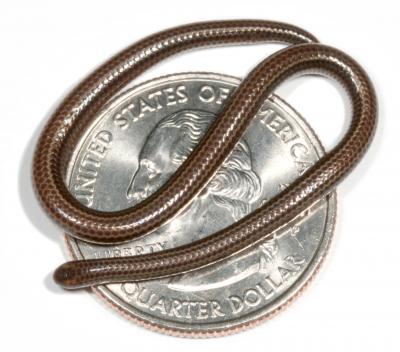
Today’s post on the Worlds Smallest Reptile could have went a couple of ways since there are a few different species that share this honour. I chose the Virgin Islands Dwarf Sphaero because it sounds fun and exciting but I could have just as easily picked the Jaragua Sphaero or even the Brookesia chameleons found in Madagascar. I guess we will just have to wait for future Wild Facts to learn about the latter two species since we are heading to the British Virgin Islands to learn about the Dwarf Sphaero.
If you are not sure what a “Sphaero” is then perhaps we should refer to this animal by their other name, the Virgin Islands Dwarf Gecko. That’s right, one of the Smallest Reptiles in the World is a cute and cuddly gecko which gets to about 18 mm (0.71″) in length and weighs around 0.15 grams (0.0051 ounces). Yesterday we held a penny to understand just how heavy the Bee Hummingbird was. Today, I want you to pick up a USA or Canadian dime. Yep, the smallest reptile weighs about as much as dime. I swear, nature never ceases to amaze me!

Virgin Islands Dwarf Gecko - Worlds Smallest Reptile

Standing on a USA Dime - Photo by Alejandro Sánchez (Wikimedia)

Although, the Virgin Islands Dwarf Gecko prefers to live in the dry upland regions of their home range, they typically hang out in the cool and moist areas underneath rocks. These moist areas play a big role in the life of the Dwarf Sphaero and they would probably cease to exist if this habitat was removed. You may be wondering how a few rocks could be so important for this reptile. Well, due to the extremely small size of our little gecko, they lose water about 70% faster than the larger variety. Believe it or not, animals need water to survive and these humid, micro-habitats help keep these reptiles nice and moist. As well, the Virgin Islands Dwarf Sphaero will usually time the birth of their offspring during the wettest time of the year to help give their young a better chance for survival. For something so small, they are actually pretty intelligent.

Well, that does it for the Worlds Smallest Reptile. Make sure you tune into tomorrow for the last Wild Fact of the week.

Digg This
Reddit This
Stumble Now!
Buzz This
Vote on DZone
Share on Facebook
Bookmark this on Delicious
Kick It on DotNetKicks.com
Shout it
Share on LinkedIn
Bookmark this on Technorati
Post on Twitter
Google Buzz (aka. Google Reader)

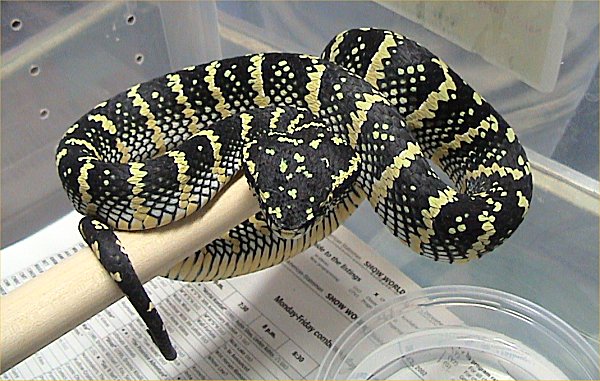
Wild Fact #476 – Fashionable Females – Wagler’s Pit Viper

September 9, 2011 - 12:00 am No Comments
Wagler's Pit Viper

Photo by LA Dawson (Wikimedia)

It looks like we are at the end of another week of Wild Facts. I figured since we were in Southeast Asia observing the Dhole yesterday, we might as well stick around that part of the world for the weekend. As a result, we are going into the rainforest today to look for the Wagler’s Pit Viper. This impressive snake has many common names including Temple Pit Viper, Bamboo Viper, Temple Snake and Speckled Pit Viper. In case you are wondering, the “Temple” references are a result of the abundance of these snakes located around The Temple of the Azure Cloud in Malaysia. Perhaps this will be a great starting place for us!

During our trip, it should be easy to distinguish between the male and female Temple Vipers as this snake definitely displays sexual dimorphism (I know, I know.. enough of the science talk.. this just means the females look different than the males). For instance the females will typically grow up to 1 m (3′) in length while the males usually tap out around 75 cm (29.5″). Unlike most animals we discuss, it is the female vipers that tend to be more colourful. In fact, the females have four different colour phases – The Malaysian, Sulawesi, Kalimantan and the Philippine Phase. Throughout these phases they have a diverse colour range including variations of blue bars, yellow spots, green or black backgrounds and more. Meanwhile, the male Wagler’s Pit Viper is just a plain ol’ boring green colour.

Wagler's Pit Viper

Photo by Nelly de Rooij (Wikimedia)

Don’t feel too bad for the males since these snakes are almost entirely arboreal (what is with the big words today, eh? Just means they live in the trees), so the green colouring does provide them with a nice camouflage. While in the trees, these snakes predominantly feed on lizards, birds and even rodents. Since these snakes live in tropical climates, they don’t need to waste their energy on keeping warm, which means they can actually get by with only 3 meals a month. I have a hard time making it through the day without at least 5 meals… I have no idea how they can last a whole month with that tiny amount of food.

Well, that just about does it for this week of Wild Facts. Take the weekend to enjoy Southeast Asia and I will see all of you on Monday.

Digg This
Reddit This
Stumble Now!
Buzz This
Vote on DZone
Share on Facebook
Bookmark this on Delicious
Kick It on DotNetKicks.com
Shout it
Share on LinkedIn
Bookmark this on Technorati
Post on Twitter
Google Buzz (aka. Google Reader)

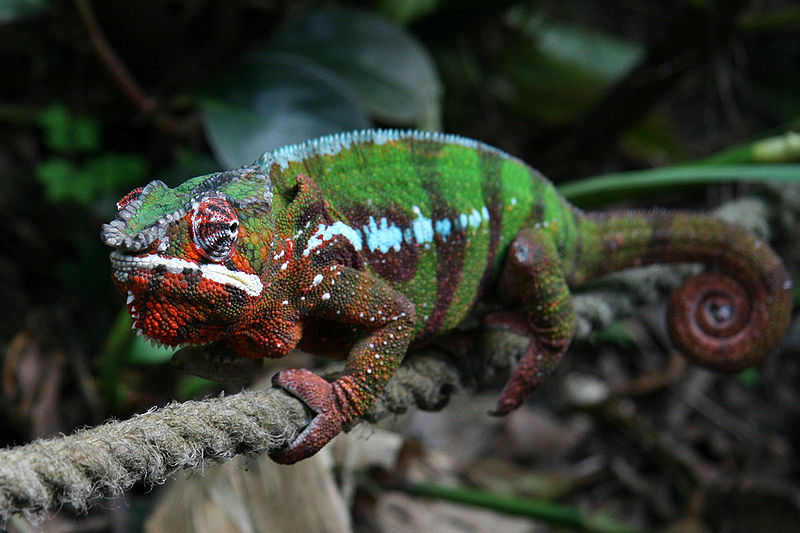
Wild Fact #490 – A Colourful Wild Fact – Panther Chameleon

August 22, 2011 - 12:00 am No Comments
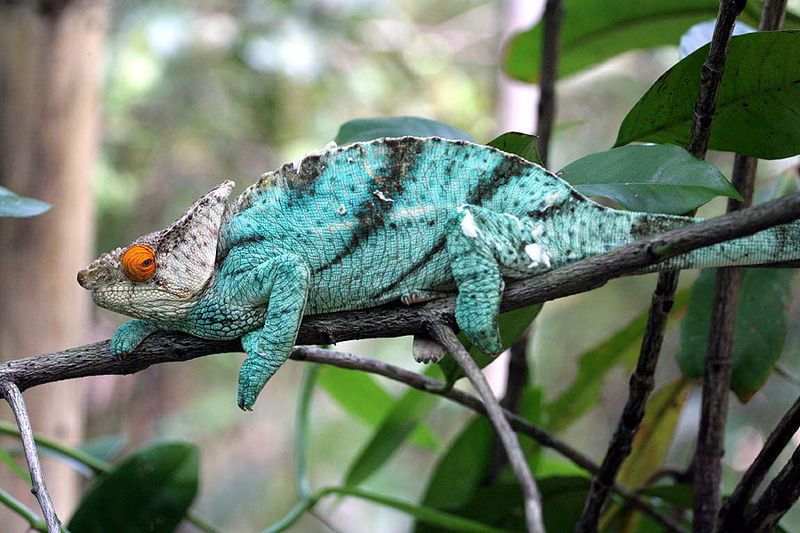
Panther Chameleon

Photo by Marc Staub (Wikimedia)

Welcome back to the start of another thrilling week of Wild Facts. We are going to learn about some pretty amazing animals this week and to kick it all off, we are heading to Madagascar to study the Panther Chameleon. I am sure you noticed from the picture that they have a pretty impressive colour display. As you might expect with Chameleons, their colour is a big part of their life so we will have to talk more about this in a few moments. Okay, so grab your field gear and lets head out to the amazing forests of Madagascar.

The Panther Chameleon is a fairly large reptile with males measuring up to 50 cm (20″) in length while the females are about half this size. This size discrepancy is not the only difference between male and female Panther Chameleons. As we have seen time and time again with animals, the males are also much more brightly coloured than their female counterparts. Typically the colour of the male will vary depending on their location, however, they will usually be a vibrant mix of blue, red, green, yellow and orange. The females on the other hand will be a boring old tan and brown colour with a little bit of pink or orange thrown in for good measure. Interestingly enough, the colour of the females doesn’t change based on location.

Panther Chameleon

Photo by Tom Junek (Wikimedia)

During mating season, the Panther Chameleon never has to worry about taking a pregnancy test since once the female begins carrying eggs she will turn to a dark brown colour with a nice orange stripe. This pretty much tells all the other males in the area to “leave her alone”, which is a pretty neat trick. It seems being left alone is a natural feeling for the Panther Chameleon since other than mating season they all lead very isolated lives. Like other Chameleons, the Panther variety is also very territorial and will always defend their home range. This makes sense since it is always a good idea to protect your investments and a home is one of the biggest investments a Chameleon will have.

Panther Chameleon Fast Fact – If you are stunned by the beautiful colours of the Panther Chameleon then you may be happy to hear that they have become quite popular in the pet trade. Before rushing out and buying one though, you need to realize that they can be difficult to keep since they need to have very specific living conditions.

Well that does it for the first Wild Fact of the week. I can’t wait to see you tomorrow for a brand new animal. Enjoy the rest of your day and I will talk with you again, real soon.

Digg This
Reddit This
Stumble Now!
Buzz This
Vote on DZone
Share on Facebook
Bookmark this on Delicious
Kick It on DotNetKicks.com
Shout it
Share on LinkedIn
Bookmark this on Technorati
Post on Twitter
Google Buzz (aka. Google Reader)

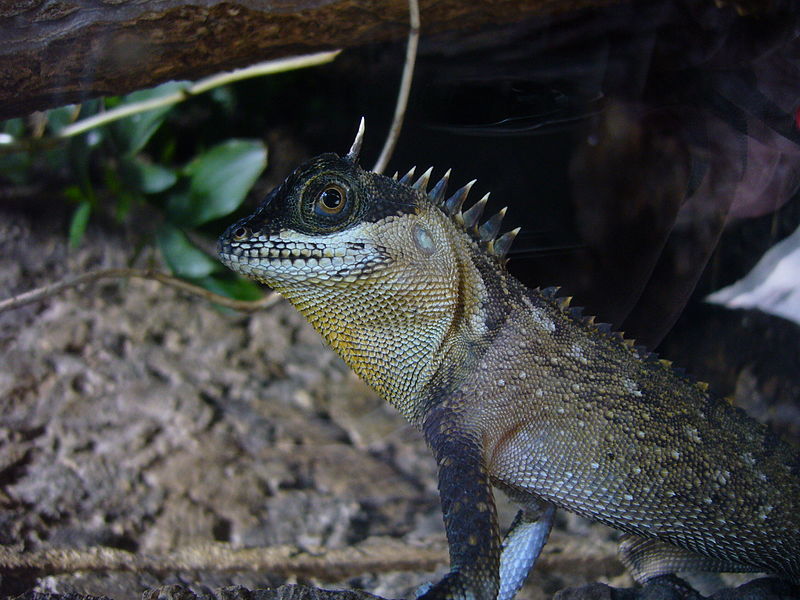
Wild Fact #498 – Not Your Regular Dragon – Mountain Horned Dragon

August 10, 2011 - 12:00 am No Comments
Mountain Horned Dragon

Photo by Tom Oates, 2010 (Wikimedia)

Welcome to the Wednesday Wild Fact, where we will be (wow… that is a lot of words starting with the letter ‘w’) heading to Southeast Asia to play in the trees. What are we hoping to find in those trees? We are looking for the majestic and amazing Mountain Horned Dragon. I hope you are up for some climbing since the Mountain Horned Dragon tends to hang out in dense forested areas at higher elevations. I know you are always up for a good challenge so grab your boots and lets go and learn about this little dragon.

You may have guessed that this reptile gets their name from the obvious row of spines that are running down their neck. Oh and because they breathe fire and destroy villages. Clearly, I am joking about the last part. So if they don’t breathe fire, what do they do? Well, they are capable of controlling their colour variation to some degree. They are not crazy good at this like a Chameleon but it is still a pretty useful party trick. They also have a dewlap, which is just a piece of skin that hangs below the lower neck, and helps ward off predators by making our Dragon look bigger then they really are.

Mountain Horned Dragon

Photo by Tom Oates, 2010 (Wikimedia)

Okay, so maybe those features aren’t as interesting as having the ability to breathe fire. But there is something the Mountain Horned Dragon is good at that the storybook dragons aren’t. The Mountain Horned Dragon makes a great pet and is very common in the pet trade. I am guessing they wouldn’t be as common if they breathed fire. These creatures are often hardy animals that live for about 3 to 5 years. Although, most of the animals in the pet trade are taken from the wild and will often have an abundance of parasites, so make sure you get your new pet checked out by the vet right away.

Mountain Horned Dragon Fast Fact – This particular dragon has a sit and wait feeding style and will usually ambush their invertebrate prey when they least expect it. Occasionally, the Mountain Horned Dragon will head to the shoreline to catch and eat fish, however, they don’t tend to put their head under the water. I am still not sure how they actually catch their fish if they are not willing to submerge themselves. Perhaps they use a fishing rod….who knows!

That does it for today’s Wild Fact. Enjoy the rest of your day and I will see you tomorrow as the week winds down.

Digg This
Reddit This
Stumble Now!
Buzz This
Vote on DZone
Share on Facebook
Bookmark this on Delicious
Kick It on DotNetKicks.com
Shout it
Share on LinkedIn
Bookmark this on Technorati
Post on Twitter
Google Buzz (aka. Google Reader)

Wild Fact #524 – Scared and Bloated – Chuckwalla

July 5, 2011 - 12:00 am 1 Comment

Photo by Azhikerdude (Wikimedia)

Now that the partying from the weekend festivities is completely over, well it should be by now, it is time to get serious about our Wild Facts. Okay, I am just messing with you, I am not usually known for being serious. In fact, I chose today’s animal simply because I loved saying its name. Go ahead and say Chuckwalla! Fun, isn’t it? To me it sounds like a bad cross between  a Chumbawamba and Dishwalla song but it is entertaining, just like “Tubthumping”. In fact, this song would be perfect considering how many people probably had a few drinks this past weekend. Let’s take a short break to listen to this one hit wonder and reconvene in 3 minutes and 42 seconds.

See, it is a horrible song but incredibly entertaining.  Now where were we?  Oh yeah the Chuckwalla! The Chuckwalla is a large lizard, which is part of the Iguana family and is commonly found in the Southern USA and Northern Mexico. Much like the Wart Snake, they also have a lot of loose skin, which forms folds around their neck and sides of their body. Perhaps they are also trying to hide a bulky stomach?

When a Chuckwalla is threatened they will typically run away, which is a smart strategy. If the simple run away method doesn’t work they will actually lodge themselves into the crevice of a rock and inflate their stomach by gulping in air.  This is incredibly fascinating and ensures that the predator will not be able to pull out their scrumptious dinner. How about that, another animal that is conscious about their weight and tries hard to hide it so they can fit in.

Photo from Wikimedia

The male Chuckwalla is pretty territorial during certain times of the year and will typically try all kinds of things to defend his special territory. For example they will do push-ups, bob their head and widely open their mouth all in an attempt to warn other lizards to back off.  To me, it just sounds like a normal day at the gym. You think with all those push-ups they wouldn’t have to worry about a few extra pounds.

Okay, so that does it for Reptile Tuesdays.  Actually, we have been talking about reptiles all week. I will make sure to mix things up for Wednesday’s Wild Fact so make sure you tune in.  Enjoy the rest of your day.

Digg This
Reddit This
Stumble Now!
Buzz This
Vote on DZone
Share on Facebook
Bookmark this on Delicious
Kick It on DotNetKicks.com
Shout it
Share on LinkedIn
Bookmark this on Technorati
Post on Twitter
Google Buzz (aka. Google Reader)

Wild Fact #525 – How to Hide the Bulge – Wart Snake

July 4, 2011 - 12:00 am No Comments

Photo from Wikimedia

I hope all of you enjoyed your long weekend  (or are still enjoying it since I believe my American friends have today off) and managed to properly celebrate Canada Day or Independence Day.  Speaking of that, Happy Independence Day to all of my wonderful American readers. I hope you are all enjoying your day filled with BBQs and fireworks. Okay, let’s move onto our fun animal fact. Today’s fact was inspired by my 2 year old niece even though she doesn’t know it yet.  You see she was at the zoo the other day and manage to pull a huge piece of snake skin (don’t worry, it wasn’t attached to the snake) out of the cage and wanted to bring it with her for the rest of the day. Now I believed they returned the shedded skin back to the proper place but it got me thinking about snakes, so today’s Wild Fact is on the Wart Snake.

The Wart Snake is group of a primitive water snakes comprised of 3 different species which are found in Australia and Indonesia. I thought this would be the perfect snake to talk about since their most prominent feature is their incredibly loose and baggy skin. It actually looks like their skin is a few sizes too big for them.  Perhaps they have all lost a lot of weight recently.  Their scales are also pretty neat since they don’t overlap like most snakes.  Nope, they actually project out from the body and consequently look like little warts.  I wonder how they came up with the common name for this snake?

Photo from Wikimedia

These snakes are entirely aquatic and will spend most of their time at the bottom of a river or a stream just waiting to ambush the poor unsuspecting prey swimming by.  So what do they eat? Naturally, they like to feast on great tasting fish, which they capture by coiling around them.  Besides being responsible for their name the wart-like scales also help the Wart Snake catch their food since these raised scales will hold the squirmy fish in place.  How about that, the scales are trendy and practical.  Unlike typical snakes, the Wart Snake will not bulge after eating a hearty meal.  Their skin is so loose and baggy that their body remains slack and normal at all times.  Even snakes know that you can hide a chubby stomach by wearing loose fitting clothing – intelligent little critters.

Okay, so that does it for the first Wild Fact of the week.  Now let’s get back to celebrating Independence Day by BBQing up some tasty burgers.  Enjoy the rest of your day!

Digg This
Reddit This
Stumble Now!
Buzz This
Vote on DZone
Share on Facebook
Bookmark this on Delicious
Kick It on DotNetKicks.com
Shout it
Share on LinkedIn
Bookmark this on Technorati
Post on Twitter
Google Buzz (aka. Google Reader)

Wild Fact #533 – A Tad Salty – Diamondback Terrapin

June 22, 2011 - 12:00 am No Comments

Photo from Wikimedia

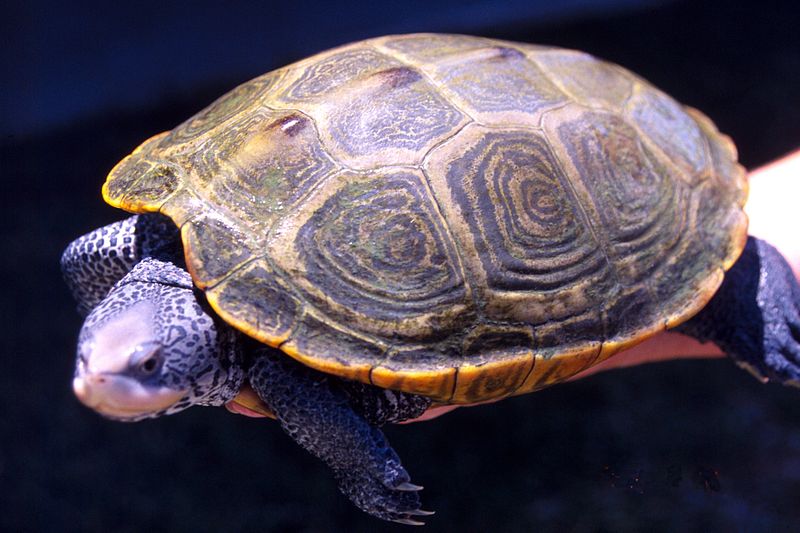
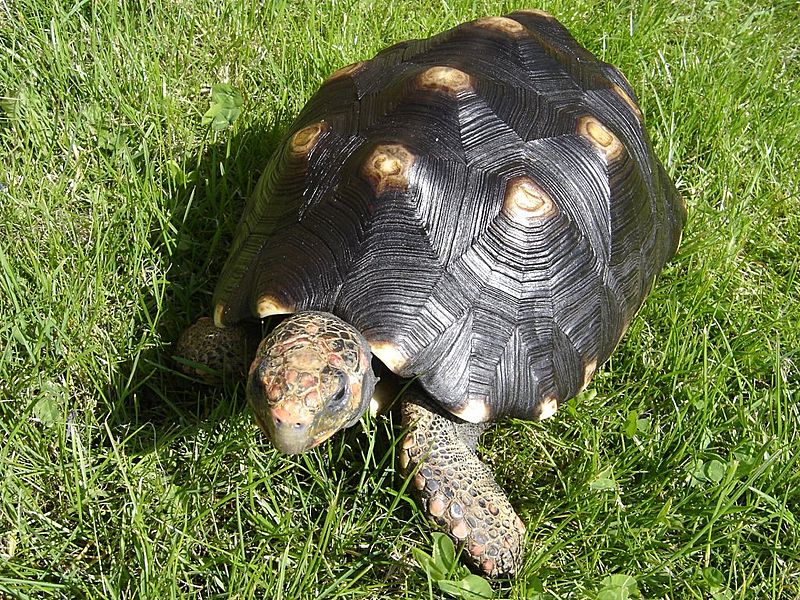
Well, yesterday I promised we would learn about an animal completely different from the turtle and the tortoise.  I looked high and I looked low but I think I finally found the perfect animal.  Of course, I am talking about the Diamondback Terrapin which is not even remotely close to the turtle and the tortoise.  Tell me you are not impressed with how different this animal is.  What do you mean they look just like the other two animals we talked about this week?  Okay, so maybe you are right, perhaps the Terrapin is just another common name used for turtles.  At the end of the day, all three  (turtle, tortoise and terrapin) belong to the order Chelonia and are basically very similar.

The Diamondback Terrapin is actually a species of turtle that resides in the brackish, coastal swamps of southern and eastern United States.  So if it is a turtle species, why is it called “Terrapin”?  Good question!  Besides making things confusing, in the old days, the early settlers use to call any turtle that lived in these type of coastal swamps as a Terrapin. In North America, the term is still commonly used for these brackish water turtles.

Photo by LA Dawson (Wikimedia)

It is believed that the Diamondback Terrapin is the only turtle that spends the majority of their time in these brackish waters.  If you are still trying to figure out what a “brackish water” is, it is basically the transition zone between the ocean and freshwater systems.  It has some salt but not nearly as much as the ocean.  Although, the Diamondback Terrapin enjoys hanging out in these salty transition zones, they will still come up to the beach to lay their eggs.  And why not, right? Everyone enjoys a nice beach vacation every now and again.

Diamondback Terrapin Fast Fact – If you look closely at the skin of the Diamondback Terrapin (actually, you don’t even have to look that closely) you will notice that they have a pattern of black spots and lines. Apparently, this pattern is different for every individual Diamondback Terrapin so it acts like their fingerprint.  The police would have their work cut out for them if they had to get the fingerprints from a nefarious Terrapin.

Seriously, this is the last turtle fact of the week.  I just wanted to highlight the differences and similarities of the Turtle, Tortoise and Terrapin.  Basically, they are all turtles with different common names, typically as a result of their habitat preference (i.e. water, land, brackish waters).  I hope you enjoyed our turtle facts.

Digg This
Reddit This
Stumble Now!
Buzz This
Vote on DZone
Share on Facebook
Bookmark this on Delicious
Kick It on DotNetKicks.com
Shout it
Share on LinkedIn
Bookmark this on Technorati
Post on Twitter
Google Buzz (aka. Google Reader)