Posts Tagged ‘Animal Facts’

Wild Fact #371 – Weekly Wardrobe – Smooth Newt

February 3, 2012 - 12:00 am No Comments
Smooth Newt  | Common Newt

Photo by H. Krisp (Wikimedia)

Earlier this week we talked about the Rough Skinned Newt, so I think it is only fair to end the week with the appropriately named, Smooth Newt. This little amphibian is also known as the Common Newt and they happen to be one of the most common newts throughout Europe. Only Iberia, Southern France, Southern Italy and the Mediterranean Islands are missing this cute little salamander. The Common Newt can even be found in Russia and parts of Asia so apparently they are not afraid to travel. Well, it looks like we are heading to Europe to explore the Smooth Newt so grab your plane ticket and lets go see what we can learn about this amphibian.

On the Move

Outside of their breeding season, the Smooth Newt can be found in a variety of habitats including deciduous forests, bogs, marshes, parks, farmlands and you may even spot them hanging out in your personal garden. Basically, they are just looking for a nice damp place to sit back and relax in. During breeding season, which occurs in early spring, the Common Newt spends the majority of their time in or around standing bodies of water such as ponds, lakes and even roadside ditches. Nothing says romance like dirty ditch water!

Smooth Newt | Common Newt

Photo by Bogbumper (Wikimedia)

A Magical Transformation

During mating season, both the males and females transform from a brownish-green, dull colour into a magnificent brownish-green colour. Okay, maybe their transformation isn’t that spectacular but their spots do become more prominent. As well, the males develop a nice wavy crest from head to tail, which must go a long way with impressing the ladies. It is important that the Smooth Newt doesn’t get too attached to their skin since as they grow they pretty much shed it every week. I would be upset if I spent all kinds of energy transforming my dull skin into a slightly less dull skin only to lose it in a week!

License to Kill

The average lifespan for the Common Newt is roughly 5 years, however, some individuals have been known to live up to 20 years. I would think it is impossible for a Smooth Newt to live this long in the wild but there is legislation out there helping them live a little longer. For example, in Ireland, it is illegal to capture or kill a newt without a permit. This makes a lot of sense, considering the Smooth Newt is the only newt species found in Ireland so I guess they would want to do everything in their power to protect the little amphibian.


Digg This
Reddit This
Stumble Now!
Buzz This
Vote on DZone
Share on Facebook
Bookmark this on Delicious
Kick It on DotNetKicks.com
Shout it
Share on LinkedIn
Bookmark this on Technorati
Post on Twitter
Google Buzz (aka. Google Reader)

Wild Fact #372 – Fair Warning – Emperor Newt

February 2, 2012 - 12:00 am No Comments
Yunnan Newt | Emperor Newt

Photo by Thomas Ruedas (Wikimedia)

While all of the Newt’s this week have been great, I think today’s animal, the Emperor Newt, is my favourite so far. Why? Well, there are a couple of reasons but it all starts with their cool and powerful name. This Newt just sounds like it is better than all the rest, doesn’t it?  They are also known as the Mandarin Newt, and can typically be found hanging around water bodies in Yunnan, China or in homes all across the world as wild specimens are often collected for the pet trade industry.

Deceivingly Beautiful

One of the characteristics that makes the Emperor Newt so interesting is their beautiful yet revealing colour pattern. Not only do the bright orange / yellow spots look awesome, they also reveal the dangers of this particular Newt. Each and every one of those colourful spots are poison glads capable of excreting a toxin that can kill 7500 mice.  All the Emperor Newt has to do is expand their ribs and it is “Goodbye Predator”. This may be a cool feature but excreting poison is typically the last line of defence for this calm Newt.

Defense First

Typically the Emperor Newt will try to avoid predators, which is made possible due to their nocturnal habits and solitary lifestyle. If this doesn’t work, they may just rely on their extra thick skull to protect them from any attacks. Naturally, if this doesn’t work then they bring out the big, poisonous guns to end the threat once and for all. I guess at that point, it is the predators fault since the Emperor Newt tried to spare them their lives. I guess some predators will just never learn.

Emperor Newt

Click for Source

What’s in a Name?

One last thought about the name of the Emperor Newt. Their scientific name is Tylotoritin shanjing is fun to say but also has an underlying meaning in Mandarin. The species name is derived from two Mandarin words, “shan” meaning “mountain” and “jing” meaning “spirit” or “demon”. I would have to think that any predator that has tasted the Emperor Newt probably agrees with the “demon” part. Oh and I forgot to tell you that the Emperor Newt is typically found at an elevation between 100 and 2500 metres (330 – 8200 feet), which explains where the “mountain” terminology came from. The next time you are walking through Yunnan, be on the lookout for the Mountain Demon also known as the Emperor Newt.

Digg This
Reddit This
Stumble Now!
Buzz This
Vote on DZone
Share on Facebook
Bookmark this on Delicious
Kick It on DotNetKicks.com
Shout it
Share on LinkedIn
Bookmark this on Technorati
Post on Twitter
Google Buzz (aka. Google Reader)

Wild Fact #373 – Battle of the Titans – Rough Skinned Newt

February 1, 2012 - 12:00 am No Comments
Rough Skinned Newt

Photo by The High Fin Sperm Whale (Wikimedia)

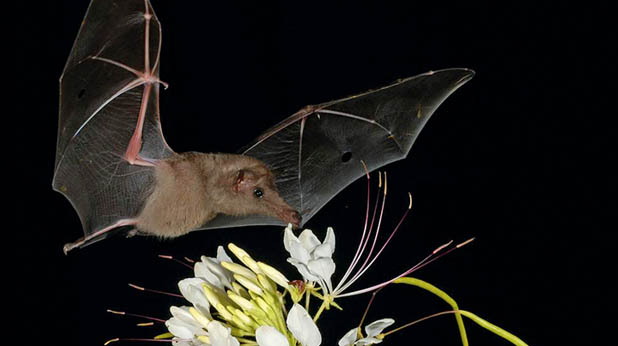
To continue our week of Newts, we are heading to the west coast of North America to study the Rough Skinned Newt. I will let you choose whether you go to Alaska or California, since today’s creature can be found anywhere between these two locations. Personally, I am going to pick the sunny south since I figure we will have a better chance finding one if there is no snow. The Rough Skinned Newt is known for their high levels of toxicity. Remember I mentioned that how the Chinese Fire Belly Newt was toxic but it probably wouldn’t harm you….well, that isn’t necessarily the case for the Rough Skinned Newt.

A Poisonous Treat

While I haven’t heard of any reported human deaths at the hands of the Rough Skinned Newt, they do carry a harmful chemical that could cause paralysis or death, but you would most likely have to ingest one or more of these Newts to feel the full affects. I have said it before and I will say it again, I don’t recommend eating poisonous newts.  It is unfortunate that predators of small salamanders can’t read Wild Facts since I would tell them the same thing. Typically when a predator consumes a Rough Skinned Newt, it is the last thing they do. However, there are exceptions to every rule.
Rough Skinned Newt

Photo by Jsayre64 (Wikimedia)

A Battle for the Ages

The Common Garter Snake has actually evolved an immunity to this particular toxin. Interestingly enough, scientists have discovered that it is actually a genetic characteristic that prohibits the toxin from binding to the snake. What does this mean? It means the Common Garter Snake and the Rough Skinned Newt are connected through co-evolution. Over time the snake enjoyed feasting on Newts until one day the Rough Skinned Newt became toxic in an attempt to prevent predation. In an effort to “one-up” the crafty little newt the Common Garter Snake evolved an immunity to higher levels of toxin. This back and forth battle has existed for many years and I am guessing the ball is now in the Rough Skinned Newt’s court. Perhaps evolution will slightly alter the deadly toxin so it becomes effective again. Of course, this will only happen if there is a need for it. Don’t you just love nature?

Digg This
Reddit This
Stumble Now!
Buzz This
Vote on DZone
Share on Facebook
Bookmark this on Delicious
Kick It on DotNetKicks.com
Shout it
Share on LinkedIn
Bookmark this on Technorati
Post on Twitter
Google Buzz (aka. Google Reader)

Wild Fact #374 – A Life of Change – Alpine Newt

January 31, 2012 - 12:00 am No Comments
Alpine Newt Facts

Photo by Richard Bartz (Wikimedia)

Another day…..Another Newt. Today, we are heading over to Europe to learn about the very interesting, Alpine Newt. Originally, this little salamander could only be found in Central Europe and the mountainous regions of Southern Europe; however, during the 1930′s someone thought it would be a great idea to introduce the Alpine Newt to southern England as well. This introduced population is doing well and is luckily not causing an issue with the native wildlife…..yet. So let’s grab our gear and head across the pond (unless you are already on that side of the ocean) to study the Alpine Newt.

Different Season – Different Colour

What makes the Alpine Newt so fascinating is their colouring, which is linked to their unique lifestyle. You see, this particular aquatic salamander is only aquatic during the mating season. At this time of the year the males will exhibit a beautiful blue colouring on their backs with black and white stippled sides and the amazing bright orange belly (remember when I said the Chinese Fire Belly Newt wasn’t the only one that had this feature?). Naturally, this bright colouring of the male is used to attract a romantic partner. The female on the other hand is a mottled brown colour camouflaging herself with the water. Once mating season is over, the Alpine Newts will head to land where their colours change back to a dark brown/black colour, which helps them blend into their new surroundings.

Alpine Newt

Photo by Anevrisme (Wikimedia)

Diverse Habitats

As you might expect, the Alpine Newt generally prefers to live in mountainous or hilly regions that are well forested and have access to clean water. Now, I see why someone thought it would be a great idea to introduce them to England. During their terrestrial life stage this little newt can be found hiding in the undergrowth of the forest. Throughout the winter months they will lie dormant (smart little creatures) before emerging in the spring and heading straight to the clean, cool waterbodies for mating season.

Importance of Ecosystems

It is nice to see that the Alpine Newt utilizes every possible feature of their habitat. I guess this just goes to show the importance that the overall ecosystem has on an animal species. What would happen to this salamander if the forest undergrowth was removed? What about if the ponds and streams were polluted and destroyed? We may not always realize that destroying a forest would impact an aquatic salamander but that is the beauty of an ecosystem….everything is intertwined.

Digg This
Reddit This
Stumble Now!
Buzz This
Vote on DZone
Share on Facebook
Bookmark this on Delicious
Kick It on DotNetKicks.com
Shout it
Share on LinkedIn
Bookmark this on Technorati
Post on Twitter
Google Buzz (aka. Google Reader)

Wild Fact #375 – Identity Theft – Chinese Fire Belly Newt

January 30, 2012 - 12:00 am No Comments
Chinese Fire Belly Newt

Photo from Wikimedia

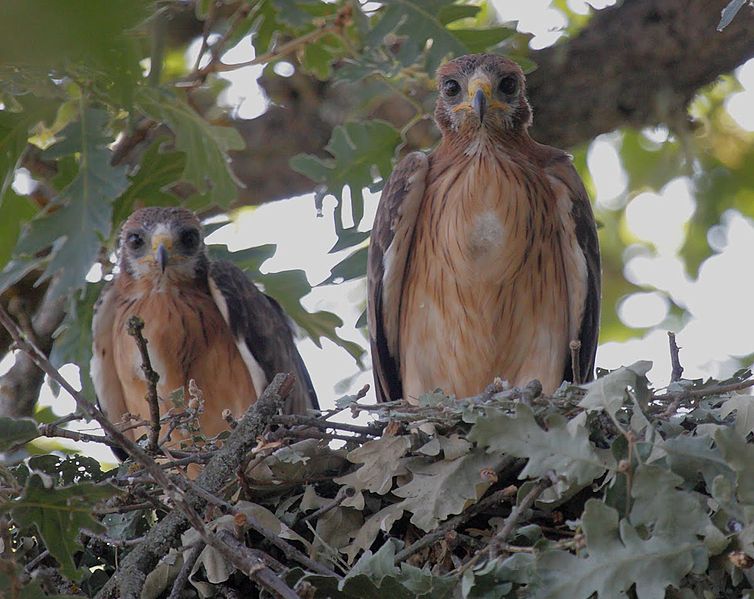
I was absolutely shocked when I realized that our list of Wild Facts does not contain a single Newt. I don’t know how I have neglected these cute, little, aquatic salamanders for so long but I will make it up to them this week. Yes, since I was so inconsiderate to the Newt’s feelings, I am going to devote this entire week to aquatic salamanders. It is important to note that not all aquatic salamanders are Newts but all Newts are aquatic salamanders. We are going to kick off our amphibious week by heading to China to explore the life of the Chinese Fire Belly Newt.
Mistaken Identity

The Fire Belly Newt is a small salamander with a length ranging between 6 and 10 cm (2.2 – 4″). They are typically dark brown or black in colour but have a beautiful orange, or red belly (hence the name). This belly does make them easier to identify but it is important to note that they are not the only newt’s in the world to have this fashionable feature. In fact, the Chinese Fire Belly Newt is often mistaken for their similar looking cousin, the Japanese Fire Belly Newt – which you will often see in pet stores around the world.  I am still not sure how this mistake happens considering the Chinese Fire Belly Newt has relatively smooth skin and a rounded tail while their Japanese cousin has rough skin and a pointed tail. Chinese Fire Belly Newt

Do Not Eat……Obviously

Did you know that the Chinese Fire Belly Newt is actually poisonous? Yep, they are capable of excreting a toxic substance through the pores on their skin. The good news is this excretion is fairly harmless to humans, unless you eat the entire Newt. My recommendation is to wash your hands after handling the Chinese Fire Belly Newt. Oh and please don’t eat these Newts as their toxins will become more dangerous in large quantities. Now that I have scared you from ever wanting to own one of these as a pet, I should tell you that they are fairly common and nobody on record has ever died at the hands of the Chinese Fire Belly Newt, but I still don’t recommend eating them :) .

Digg This
Reddit This
Stumble Now!
Buzz This
Vote on DZone
Share on Facebook
Bookmark this on Delicious
Kick It on DotNetKicks.com
Shout it
Share on LinkedIn
Bookmark this on Technorati
Post on Twitter
Google Buzz (aka. Google Reader)

Wild Fact #376 – The Moosehead – Hammer-Headed Bat

January 27, 2012 - 12:00 am No Comments
Hammer-Headed Bat

Is that a Moose? -- Click for Photo Source

After a week of playing in the ocean, flying with beautiful coloured birds and risking our lives with a carnivorous caterpillar, I thought we would end with an even more bizarre animal. You just need to take one look at the Hammer-Headed Bat to realize it will be a fun animal to learn more about. I mean, just look at their head! To catch a glimpse of this megabit, we need to take a quick trip to equatorial Africa where will will find them hanging out around rivers, mangrove swamps, and palm forests. Now let’s find out why their head is shaped like a hammer.

That is One Big Nose

Only the male Hammer-Headed Bat is blessed with such a large head, which they use to create incredibly loud honking noises. The large nose, larynx and lips allow the male bat create sounds that are extremely resonant. The females on the other hand have a head that is about 3 times smaller than their male counterparts. In fact, their head looks more like a regular ol’ fruit bat. It is funny how the males are always the ones that have to go out of their way to try and impress their female friends.

Hammer-Headed Bat

Image Credit: www.davidhiggins.net

Pick Me, Pick Me

Competition for female attention is quite fierce in the Hammer-Headed Bat population. Typically, males will all gather together in a group, which can contain as many as 130 individuals, At this point the female will fly over and assess the entire group of males. She will pick her favourite by landing on a branch next to the lucky winner. I guess it is kind of like picking baseball teams when you were a kid…..I feel bad for the last bat that never gets picked, but I guess that is life. He will just need to go back and work on getting an even larger nose for next year.

The Deadly Megabat

The Hammer-Headed Bat is the largest bat in Africa with a wingspan between 686 to 970 mm (2.3 – 3.2 feet). Typically, the males are larger than the females, which makes sense since they need to be able to carry that big head around all day. Although, it may be tempting to go up and pet this large, hammer-headed creature, iyou need to realize that this particular bat species is one of the 3 fruit bats in Africa that carry the Ebola virus, without showing any symptoms.  Not only are they huge but they can also be deadly!

Digg This
Reddit This
Stumble Now!
Buzz This
Vote on DZone
Share on Facebook
Bookmark this on Delicious
Kick It on DotNetKicks.com
Shout it
Share on LinkedIn
Bookmark this on Technorati
Post on Twitter
Google Buzz (aka. Google Reader)

Wild Fact #377 – Daring To Be Different – Predatory Hawaiian Caterpillar

January 26, 2012 - 12:00 am No Comments
Predatory Hawaiian Caterpillar

Photo by Darlyne A. Murawski

After spending some time in the ocean, I thought we could shift gears today and head inland to this little island called Hawaii. Have you heard of it? Besides enjoying a nice relaxing day on the beach, we are going to head the forest to discover one of the most amazing caterpillars you will ever find. Of course I am talking about the unique Predatory Hawaiian Caterpillar. What makes this animal so unique? Well, they are one of the few caterpillars that are carnivores feeding on insects and snails. I guess they just couldn’t handle being a vegetarian any longer and had to switch.

Filling a Void

Actually, the Predatory Hawaiian Caterpillar evolved into a killing machine since that niche existed on the isolated islands of Hawaii. Normally, this particular niche would have been filled by a Praying Mantis or something similar. Since they don’t exist on the island, it provided the opportunity for this little caterpillar to adapt and take over their spot on the food chain. The question I have is, how in the world does a friendly, little caterpillar kill and eat other animals? Actually, their technique is pretty impressive.

Predatory Hawaiian Caterpillar

Photo by Jane Memmott

A Deadly Attack

These Predatory Caterpillar’s have long, thin appendages on their abdomen which act as sensory organs. When an unsuspecting insect (and they would be unsuspecting because caterpillar’s eat plants, right?) touches these sensory appendages, our deadly caterpillar will bend back and quickly strike the confused insect. To make the Predatory Hawaiian Caterpillar even deadlier are their raptorial claws which they use to hold down any struggling prey items. They sound cruel, don’t they?

The Disappearing Caterpillar

If these caterpillars are so deadly, why do insects keep brushing up against them? Not only is the Predatory Hawaiian Caterpillar dangerous, they are also excellent at concealing themselves. They blend in perfectly with their vegetated forest so all they need to do is sit and wait until a clumsy snail knocks into the hungry caterpillar. In some cases, the Predatory Hawaiian Caterpillar has adapted their appearance to blend in with specific tree species, making them practically invisible. I guess if you are a small insect or a snail, life in Hawaii can be pretty tough – a lot tougher than just lazing around on the beach all day, that’s for sure.

Digg This
Reddit This
Stumble Now!
Buzz This
Vote on DZone
Share on Facebook
Bookmark this on Delicious
Kick It on DotNetKicks.com
Shout it
Share on LinkedIn
Bookmark this on Technorati
Post on Twitter
Google Buzz (aka. Google Reader)

Wild Fact #378 – Just Standing Around – Tripod Fish

January 25, 2012 - 12:00 am No Comments
Tripod Fish

Click for Source

Earlier this week, we were studying an intriguing deep sea creature known as the Frilled Shark. Today, we are heading back to the ocean where we will be discovering another bizarre animal, the Tripod Fish. We will talk about their name in a second but I am sure you can guess the reasoning from the picture. This particular fish is found anywhere in the ocean between the northern latitude of 40 degrees and the southern latitude of 40 degrees. For some reason, they just love hanging out in this middle zone. While we are swimming around the bottom of the ocean, you will want to take some pictures of this unique fish so make sure to grab your camera – oh, and don’t worry about bringing your tripod, there is one down there already.

Tripod Fish – The Fish With Legs

As you can tell the Tripod Fish has three long fin rays, two protruding from their pelvic fin while the third extends from the lower portion of their tail. Oddly enough, the Tripod Fish will simply stand on these “stilts” for most of their day. Why? It could be that they don’t like lying down on the icky ocean bottom but I think the more appropriate answer is, food! Yes, the motionless Tripod Fish will just stand their all day waiting for the current to bring shrimp and small fish into their zone.

Tripod Fish

Click for Source

The Pelvic Fins Come in Handy

The Tripod Fish has tiny eyes that are absolutely useless at 4700 m (15,400 feet) below the surface of the ocean. So how do they know when dinner comes swimming by? Well, they use their pectoral fins much like we use our hands. When they feel a scrumptious snack drifting by, they will use their fins to knock the poor unsuspecting animal into their mouth. I guess you can’t blame the prey since I would never suspect a tripod of eating me.

Not Quite Love at First Sight

One of the issues when you live in the darkest depths of the ocean is finding a suitable mate. To solve this issue the Tripod Fish evolved into a hermaphrodite (both male and female sexual organs). This allows our tiny, deep sea fish to create offspring all on their own. Of course, if they do happen to swim into another Tripod Fish then they will mate the standard way. This is an interesting approach to love but I guess it works for the Tripod Fish.

Digg This
Reddit This
Stumble Now!
Buzz This
Vote on DZone
Share on Facebook
Bookmark this on Delicious
Kick It on DotNetKicks.com
Shout it
Share on LinkedIn
Bookmark this on Technorati
Post on Twitter
Google Buzz (aka. Google Reader)

Wild Fact #379 – The Dancing Pheasant – Temminck’s Tragopan

January 24, 2012 - 12:00 am No Comments
Temminck's Tragopan

Photo by Doug Janson (Wikimedia)

Currently in the Northern hemisphere we are battling the dreary days of winter, so to help brighten up your day, we are going to learn about a colourful bird known as the Temminck’s Tragopan. As well, a nice trip to India, Japan or China to find this bird may also help with the winter blues. I should probably wait until we get to Asia before telling you that these beautiful birds prefer living at an altitude between 914 and 3,657 meters (3000 and 12000 feet) so it is going to be quite the hike. But I promise it will be worth it. So let’s grab our hiking boots, binoculars and oxygen tanks so we can start our trek to find one of the most stunning birds you will ever see.

Fashion Statement

You may be able to tell by looking at the Temminck’s Tragopan that they are a member of the pheasant family and probably the most beautiful pheasant species roaming the earth. The males are mostly a reddish-orange colour with the abdomen being brighter than their rump. For me, it is the fluorescent blue face that grabs my attention. Similarly, the male has a nice blue lappet (a flap on their head), however, this it is usually tucked away unless he is trying to impress a female friend. Like many other birds, the female tends to be a little more boring than their male counterpart. The colouring of the female is typically a dull brownish-grey with black marks.

Temminck tragopan

Photo by Mat?j Ba?ha (Wikimedia)

Mating Display

So we found out that the male Temminck’s Tragopan will use a decorative head piece to show off for the ladies but it doesn’t stop there. This bird actually has a whole dance routine and surprisingly, they are much better dancers that I am….okay, maybe it isn’t that much of a surprise. Instead of explaining their mating display, I am going to show you. Check out the short video below to see some pretty nifty dance moves.

http://youtu.be/E9tdloS_A-4

Not too bad, eh?

Temminck’s Tragopan Fast Fact

You would never know from watching the video but the Temminck’s Tragopan is typically a solitary bird, with the obvious exception of mating season. As well, they are more arboreal (likes trees) than most other pheasants.

That does it for today’s Wild Fact. I hope your dull winter day is a little brighter!

Digg This
Reddit This
Stumble Now!
Buzz This
Vote on DZone
Share on Facebook
Bookmark this on Delicious
Kick It on DotNetKicks.com
Shout it
Share on LinkedIn
Bookmark this on Technorati
Post on Twitter
Google Buzz (aka. Google Reader)

Wild Fact #380 – Is This the Loch Ness Monster? – Frilled Shark

January 23, 2012 - 12:00 am 2 Comments
Frilled Shark | Prehistoric Shark

Photograph from Getty Images

Reports of Loch Ness Monster sightings are most likely going to increase after today’s Wild Fact. Yes, the Frilled Shark has often been referred to as a “Real Life Loch Ness Monster” or simply a “Sea Serpent” but the truth is, they are just a really old and odd looking shark. In fact, they are so old that they have also be referred to as “living fossils”. How old? Researchers believe the Frilled Shark first existed about 95 to 150 million years ago. This would mean the Frilled Shark most likely had play dates with the Dinosaurs! So are you excited to go and find one of these “living fossils” or what?

The Loch Ness Monster?

Although this particular shark is rather uncommon there have been scattered reports of their existence all around the world. Some places they have been found include, the Eastern Atlantic around Norway, Ireland and Scotland (can you say Loch Ness Monster?), the western Pacific around Japan and Australia and in the Eastern Pacific around California and Hawaii. These reports are uncommon simply because this crazy old Sea Serpent prefers to stay about 500 to 1000 meters (1640 – 3280 feet) below the surface. Personally,  I would prefer these creepy looking sharks to be at these depths than hanging around the wading areas at the beach.

Frilled Shark

Click for Source

One Mean Looking Shark

We can’t have  a Wild Fact about the Frilled Shark and not mention their physical appearance. They basically have the body of an eel but their head, with 300 trident-shaped teeth, are definitely all shark. Just behind all those teeth are a set of 6 “Frilled” gills, which obviously leads to the common name of this incredibly bizarre shark. The way the fins are organized on this shark leads to a odd looking tail, which has been compared to the wings of a throwing dart. I think the best way to fully appreciate the appearance of the Frilled Shark is to watch a short video about them.


http://www.youtube.com/watch?v=xry342A-utI

Absolutely amazing, aren’t they?

Frilled Shark Fast Fact

The Frilled Shark may have one of the longest gestation periods in the world. Believe it or not, researchers think that the Frilled Shark as a gestation period between three and three and a half years! Could you imagine being pregnant for 3.5 years? I personally can’t imagine being pregnant for 9 months, let along over 3 years. I guess we need to be thankful that we didn’t evolve from the Frilled Shark.

I hope you enjoyed today’s lesson on a living  fossil. Have a great day and I will see you tomorrow for another fun and exciting Wild Fact.

Digg This
Reddit This
Stumble Now!
Buzz This
Vote on DZone
Share on Facebook
Bookmark this on Delicious
Kick It on DotNetKicks.com
Shout it
Share on LinkedIn
Bookmark this on Technorati
Post on Twitter
Google Buzz (aka. Google Reader)