Posts Tagged ‘Animal Facts’

Wild Fact #317 – Having a Cranky Day? – Rainbow Crabs

April 19, 2012 - 12:00 am No Comments
Rainbow Crab | Soapdish Crab

Click for Photo Source

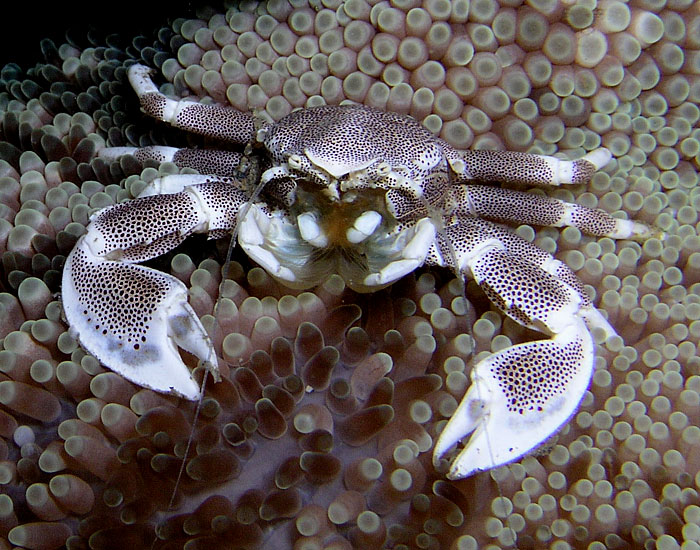
If you are having a bad day then this Wild Fact is sure to brighten up your mood. Why, you ask? Mainly because today’s featured animal is the Rainbow Crab, which just happens to be one of the more colourful animals out there. Never heard of the Rainbow Crab? Perhaps you know them by another name as they have quite a few common names including Moon Crab, Patriot Crab, Halloween Crab and if you are in the pet trade, you will know them as Soapdish Crabs. Aside from being found in homes across the world, the Rainbow Crab, can be seen frequenting areas of western Africa. Now it is up to you if you want to take a trip to Africa or the pet store to catch a glimpse of today’s animal. I am personally going to Africa…..you coming?

A Colourful Crustacean

So I mentioned the Rainbow Crab is one of the more colourful animals in the world and I wasn’t lying. These little crustaceans begin life with a nice blue/silver carapace (their shell), red legs and white claws. Typically the males are more colourful than the females, which is witnessed in numerous animal species, unfortunately these bright colour begins to fade as the Rainbow Crab grows older, regardless of the gender. If you currently have a young male as a pet then you should probably enjoy these colourful years of their youth.

Rainbow Crab | Soapdish Crab

Photo from Wikimedia

Hungry as a Crab

Have you ever wondered why these crabs are often called Soapdish Crabs? Probably not, but I am guessing you are curious, now…aren’t you? You see, Rainbow Crabs are kind of like the Bettas of the crustacean world. Basically, if you put two of these crabs in the same enclosure….only one is leaving alive. So they received the name Soapdish Crabs as they need to be shipped to pet stores in separate soap dishes. Why are they being shipped in soap dishes? I have no idea but I guess it works. Not surprisingly, these highly aggressive crabs will eat just about anything that it can get its hands ….errrr….claws….on. These omnivores will have no issues feeding on vegetation, carrion or even small crabs, reptiles and fish. Like I said, they will eat anything, so watch where you put your fingers!

Digg This
Reddit This
Stumble Now!
Buzz This
Vote on DZone
Share on Facebook
Bookmark this on Delicious
Kick It on DotNetKicks.com
Shout it
Share on LinkedIn
Bookmark this on Technorati
Post on Twitter
Google Buzz (aka. Google Reader)

Wild Fact #318 – All About The Money – Cave Nectar Bat

April 18, 2012 - 12:00 am No Comments
Cave Nectar Bat | Dawn Bat

Click for Photo Source

I have always been intrigued by bats. Perhaps, it stems from my days as a child where I would see them sleeping on the side of my cousin’s garage…and subsequently, I remember getting in trouble for petting them. It is funny, how these poor bats have such a bad reputation, isn’t it? In reality, bats such as today’s featured animal, the Cave Nectar Bat, play a crucial role in the success of their natural ecosystem. We will get into this a little more but first we need to rush to the airport as we are going to Southeast Asia to learn about the Cave Nectar Bat. Also known as the Dawn Bat, Common Nectar Bat, Lesser Dawn Bat and of course the Common Dawn Bat.

The $120 Million Bat

Not only is the Cave Nectar Bat important for their natural environment but they actually help sustain the economy of Southeast Asia. How, you ask? Well, these furry, little bats are the only pollinator of the durian fruit. This particular fruit is responsible for contributing roughly $120 million USD to the economy of Southeast Asia. If this bat becomes extinct….the loss of this valuable resource would soon follow as it is tough for a plant to survive if your seeds are not being dispersed.  So not only are bats good for the ecosystem but they are also good for your pocketbook.

Dawn Bat | Cave Nectar Bat

Click for Photo Source

A Good Restaurant is Worth the Trip

As you might expect, the Cave Nectar Bat, typically lives in…..yep, you guessed it….CAVES! Generally, they will roost in small colonies of a few dozen bats, however, they have been known to have as many as a 1000 friends with them in their limestone cave dwelling. Once the night falls these bats leave their comfy home to feed on the nectar of many plants, including the durian fruit. They have been known to travel as far as 38.6 km (24 miles) just to find the perfect source of tasty pollen or nectar. Personally, I think flying 24 miles for dinner is a little far but if it is a great tasting restaurant then it just might be worth it.

One Big Coincidence?

Remember how I said if the population of this bat decreased, it could cause problems with a million dollar industry? Coincidentally, the Cave Nectar Bat is of least concern as they have a strong population with no major threats. Are people being more conscientious as they don’t want to disrupt the durian fruit industry? Maybe the bat population is doing well as they are a fairly adaptable creature. I just find it funny (or at least coincidental) that when an animal helps people make money….they have no major human threats such as poaching or habitat destruction. Do you think we are consciously protecting this species to ensure the durian fruit market doesn’t collapse? Let me know in the comments below!


Digg This
Reddit This
Stumble Now!
Buzz This
Vote on DZone
Share on Facebook
Bookmark this on Delicious
Kick It on DotNetKicks.com
Shout it
Share on LinkedIn
Bookmark this on Technorati
Post on Twitter
Google Buzz (aka. Google Reader)

Wild Fact #321 – A Short Necked Giraffe?!? – Okapi

April 13, 2012 - 12:00 am No Comments
Okapi - Half Giraffe, Half Zebra

Photo by Charles Miller (Wikimedia)

Looking at the Okapi you may think they are an odd looking zebra, but would you be surprised if I told you they are actually a weird looking giraffe? Yep, that’s right! These bizarre creatures are actually members of the Giraffe family and can only be found in the Rainforest located throughout the northeast portion of the Democratic Republic of Congo. Luckily, one fifth of their home range has been designated as the Okapi Wildlife Reserve, which just happens to be a World Heritage Site, so this should offer them some much needed protection.

Adapting to the Rainforest Lifestyle

Life in the Rainforest isn’t always the easiest. Sure you have an abundance of food and your surroundings are beautiful but you also have to deal with an abundance of predators and a ton of rain. So how does the Okapi handle these challenges? Well, first of all, they trick their would be predators by blending into the surroundings. The Okapi’s stripes make them very difficult to see in an environment that is dominated by alternating patterns of sunlight and shadows. Okay, so

Half Giraffe, Half Zebra - All Okapi

Photo by Raul654 (Wikimedia)

maybe they are able to hide but how do they handle all of the rain? Do you see that their reddish-colour fur on their backs? Besides being incredibly soft, this fur is also very oily, which basically waterproofs the Okapi as the water just rolls of their back. This makes our Giraffe-like friend perfectly adapted to a life in the Rainforest.

A Giraffe, Really?

You may be asking yourself how can the Okapi be a member of the giraffe family…..they don’t have a long neck?!? Perhaps they would have a longer neck if they lived in a different environment but a super, duper long neck just wouldn’t work in the dense Rainforest. Throughout evolution they have developed a shorter neck to allow them additional mobility in the thick forest. As well, regular giraffes need the long neck to feed on the leaves of tall trees but this isn’t the case for our short-necked giraffe. They have vegetation all around them!

No, They Really Are Related to Giraffes

You still don’t believe that they are a member of the Giraffe family??? Take a close look at the mouth of the Okapi, you will notice they share the same dark, prehensile tongue as their cousins, which helps them strip the buds and leaves off the trees. As well, check out their ears! Yep, those are the same, large ears that a Giraffe has, which help them hear even the slightest sound, so don’t try sneaking up behind an Okapi.

Digg This
Reddit This
Stumble Now!
Buzz This
Vote on DZone
Share on Facebook
Bookmark this on Delicious
Kick It on DotNetKicks.com
Shout it
Share on LinkedIn
Bookmark this on Technorati
Post on Twitter
Google Buzz (aka. Google Reader)

Wild Fact #322 – Largest Insect in the World – Goliath Beetle

April 12, 2012 - 12:00 am No Comments
Largest Beetle in the World - Goliath Beetle

Photo by Didier Descouens (Wikimedia)

The other day, my brother asked me what the largest beetle in the world was (I believe it was a question in a game he was playing) and I immediately thought of three beetles – the Titan Beetle, the Hercules Beetle and of course today’s featured animal, the Goliath Beetle. In theory, any one of these answers would have been correct, however, according to their game, the right answer was the Goliath Beetle. Soon, you will learn why this beetle was considered the largest even though the other two are usually longer (the Titan Beetle and the Hercules Beetle can reach lengths up to 6″…..that is half a foot!!).

The Victorious Goliath Beetle

So if the Goliath Beetle only reaches a length of 4.3 inches, why were they considered the right answer in the game my brother was playing? Simply because there is more to being the largest beetle in the world then just length. For instance, when you add in their bulk and weight to the equation, the Goliath Beetle become the largest beetle in the world. In the larval stage, this particular beetle can weigh up to an amazing 100 grams (3.5 oz), which is incredibly heavy for an insect. However, in the adult stage, their weight is about half that size. Hmmm…it isn’t often that the young kids are larger than the parents.

Largest Beetle in the World - Goliath Beetle

Click for Photo Source

Where Can I Find the Goliath Beetle?

If you want to witness this amazing insect for yourself, you will have to get your travel agent on the phone since you will be heading on a nice relaxing trip to Africa. Yes, the Goliath Beetle is typically found hanging out in the tropical forests scattered throughout the African continent. Okay, so maybe they aren’t just hanging out as they are probably intimidating humans everywhere. When they aren’t shocking people with their size, the Goliath Beetle will be on the lookout for tasty tree sap or even tastier fruit. I think we should all thank our lucky stars that this beetle doesn’t have a taste for meat, since an insect of this size would be able to do quite a bit of damage as you unsuspectingly wandered through the African forest.

Digg This
Reddit This
Stumble Now!
Buzz This
Vote on DZone
Share on Facebook
Bookmark this on Delicious
Kick It on DotNetKicks.com
Shout it
Share on LinkedIn
Bookmark this on Technorati
Post on Twitter
Google Buzz (aka. Google Reader)

Wild Fact #323 – Time for a Comeback – Newfoundland Pine Marten

April 11, 2012 - 12:00 am No Comments
Newfoundland Pine Marten

Click for Photo Source

I had a request to write about the endangered Newfoundland Pine Marten and after doing a little bit of research, I think it is a great animal for all of us to learn about. They are a genetically distinct sub-species of the more common American Marten, however, this cuddly creature is only found in Newfoundland, which explains how they received their name. This particular species shares an honour that only 14 animals in the world are a part of….they are one of the 14 animal species native to Newfoundland. Sure, this isn’t as intriguing as begin the worlds largest animal or the most smelliest creature but I am pretty impressed that there are only 14 different animals native to this Canadian island.

Not Too Picky

As you might expect, the Newfoundland Pine Marten is similar in appearance as their American Marten family members; however, this sub-species is typically larger and will usually have a darker colour of fur. Interestingly enough, the Newfound variety will inhabit a larger range of forest types compared to the regular marten species. This diverse taste in habitat type has most likely helped the Newfoundland Pine Marten survive in a fairly small distribution range. I guess it pays not to be picky.

Newfoundland Pine Marten

Photo by Larry Colwell

Government Action Leads to Population Increase

As mentioned, this particular sub-species is considered to be Endangered, and as such is protected by Canadian legislation such as the Species at Risk Act and Canada’s National Park Act. The protection being offered to the Newfoundland Pine Marten seems to be working as their population has risen from a paltry 300 individuals in the year 2000 to a population between 400 and 850 animals in 2007. This just goes to show that if we take action and implement policies and regulations that work – animal populations can be salvaged.

No Place Like Home

Newfoundland is known for their unique geological landscape, which may be why the Newfoundland Pine Marten called this rocky island home. I am not sure if this particular species is able to appreciate the unique rocks but I am certain they are appreciative of them. That’s because they use these rocks to create their dens. Just think how tough life would be if you didn’t have a nice, comfy home. If they aren’t able to find suitable rocks, the Newfoundland Pine Marten will utilize hollow trees and even the leftovers from those pesky squirrels (you know the mess squirrels make after eating….yeah, they use that for shelter). Again, this ability to adapt to their environment has probably helped these endangered creatures stave off extinction.

Digg This
Reddit This
Stumble Now!
Buzz This
Vote on DZone
Share on Facebook
Bookmark this on Delicious
Kick It on DotNetKicks.com
Shout it
Share on LinkedIn
Bookmark this on Technorati
Post on Twitter
Google Buzz (aka. Google Reader)

Wild Fact #324 – Added Protection – Giant Girdled Lizard

April 10, 2012 - 12:00 am No Comments
Giant Girdled Lizard Facts
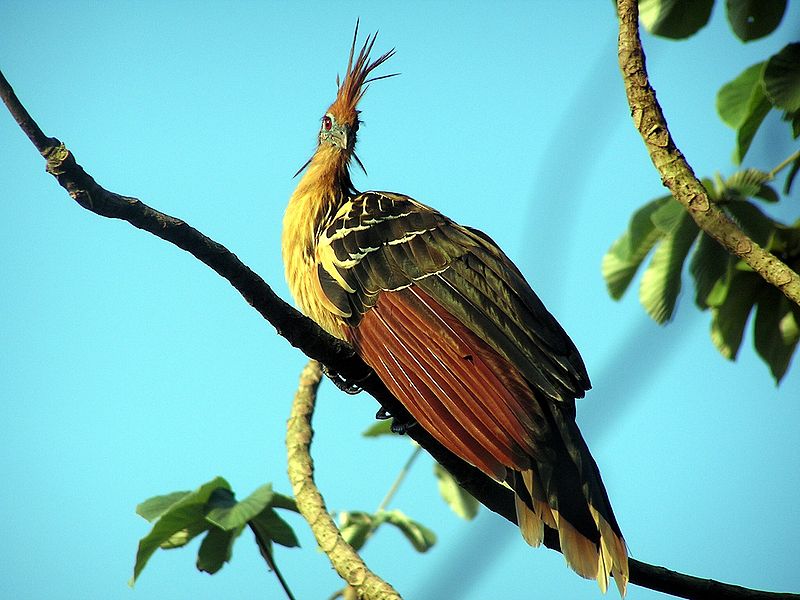
Photo by Eric Johnston (Wikimedia)

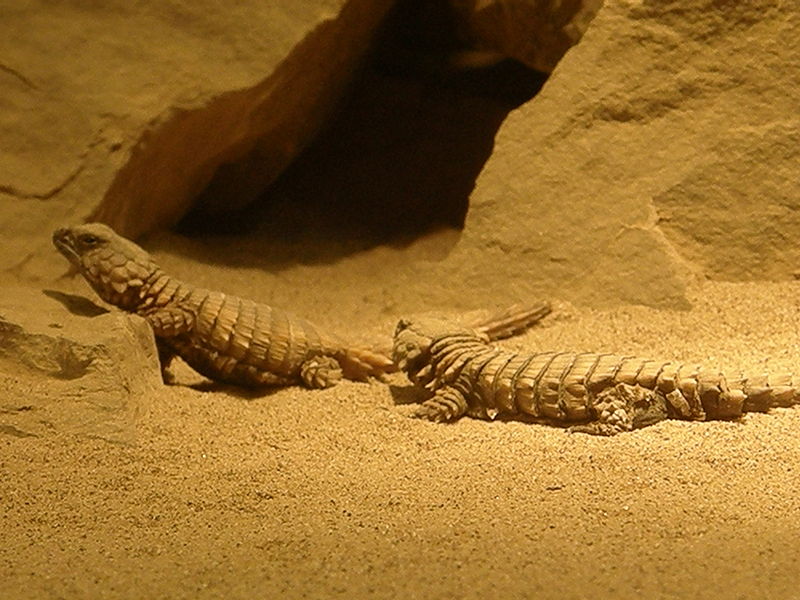
A lot of you may be heading back to work today after a nice relaxing, long weekend, unless you have kids….as a house of children full of chocolate was probably anything but relaxing. In fact, you may be looking forward to just sitting down with your cup of coffee as your imagination takes you to Africa where we will learn about the incredible Giant Girdled Lizard, also known as a Sungazer, Giant Spiny-Tailed Lizard or Giant Zonure. No matter what you call them, you are only going to find this reptile hanging out in the silty soils of the Themeda grassland in South Africa.

Living the Great Life

The Giant Girdled Lizard prefers these silty soils since their favourite hobby just happens to be digging burrows. Okay, maybe this is more of a survival requirement than a hobby but either way these lizards are excellent diggers. They will spend a good portion of their time suntanning at the entranceway of their underground home, which is why they are known as Sungazers. During the winter, they put their sun-tan lotion away and head deep into the burrow where they will hibernate throughout the winter. It is not often that I am jealous of a reptile but a life of lounging in the summer sun and sleeping during the winter cold sounds like a pretty sweet life to me.

Giant Girdled Lizard Facts

Photo by Wilfried Berns / www.Tiermotive.de

Armoured for Protection

Although their life may seem easy, the Giant Girdled Lizard is a prime target for numerous predators scattered throughout their home range. Well, they would be a prime target, if they weren’t covered in spines. Particularly, the whorl of large spines on their tail provide the Giant Girdled Lizard with a very effective self-defence mechanism. When threatened, this lizard will typically escape to their burrow but as they exit down into their home, they make sure to wave goodbye with their deadly tail. This usually persuades the attacker not to continue the chase into the underground shelter.

A Decreasing Population

Even with a suit of sharp spines, the Giant Girdled Lizard, isn’t protected from humans. They are listed as vulnerable with the main threats being the illegal pet trade and habitat destruction. It doesn’t help that they have an incredibly slow reproduction rate, giving birth to one or two offspring every 2 years. To make matters even worse, the Giant Girdled Lizard will not breed in captivity, so if we want to ensure the survival of this species, we need to stop destroying their habitat and selling them on the black market.

Digg This
Reddit This
Stumble Now!
Buzz This
Vote on DZone
Share on Facebook
Bookmark this on Delicious
Kick It on DotNetKicks.com
Shout it
Share on LinkedIn
Bookmark this on Technorati
Post on Twitter
Google Buzz (aka. Google Reader)

Wild Fact #325 – Don’t Worry….Be Happy – Grizzly Bear

April 9, 2012 - 12:00 am No Comments
Grizzly Bear

Photo from Wikimedia

It was brought to my attention that we have yet to venture deep into the forest of western North America to learn about the amazing Grizzly Bear. After today, they will have their very own Wild Fact. So sit back and enjoy the last few remaining remnants of easter chocolate while we explore the world of the one of the most majestic but potentially deadly animals you will find in North America. Although these beautiful animals can be found throughout western North America, their densities are highest in western Canada and throughout Alaska. At one time, the Grizzly Bear roamed throughout a large portion of the continental United States, however, human development has pushed the bear population to a mere 1000 wild individuals.

A Deadly Predator

For the most part, when you think of Grizzly Bears, you probably think of a deadly predator that is just waiting to hunt you down. Who can blame you considering these bears have an average weight of 363 kg (800 lbs) and just happen to be a powerful predator sitting on top of the food chain. What you may not realize though, is the Grizzly Bear mostly feeds on berries, nuts, leaves and roots. Granted, from time to time they will feed on animals such as rodents, fish and even Moose but this is not the main staple of their diet.

Grizzly Bear with a Cub

Photo by Brocken Inaglory (Wikimedia)

A Happy Bear

Just because they like fruit and vegetables doesn’t mean we shouldn’t be cautious in Grizzly Bear territory. These large animals are surprisingly quick as they can reach speeds up to 48 km/hr (30 mph) and will do anything to defend their cubs. Let’s face it, we have all heard the horror stories of these majestic creatures attacking humans. This does happen and it is usually a result of us startling the bear or wandering in between the mother and her cub…by the way, neither one of these are recommended practices. You should always be making a lot of noise while walking through Grizzly Bear territory and if you happen to come across a bear, make sure you leave plenty of room for them to escape. Yes, these creatures are incredibly powerful and can be quite deadly but if you make noise and leave them lots of room to escape, they will be much happier and trust me – you want them to be happy!

Digg This
Reddit This
Stumble Now!
Buzz This
Vote on DZone
Share on Facebook
Bookmark this on Delicious
Kick It on DotNetKicks.com
Shout it
Share on LinkedIn
Bookmark this on Technorati
Post on Twitter
Google Buzz (aka. Google Reader)

Wild Fact #326 – Is This The Easter Bunny? – Pygmy Rabbit

April 6, 2012 - 12:00 am No Comments
World's Smallest Rabbit | Pygmy Rabbit

Click for Photo Source

As you prepare for the Easter long weekend, I thought it would be fun to learn about the World’s Smallest Rabbit. Actually, it’s possible that the Easter Bunny is a Pygmy Rabbit. I don’t know for sure but if they are so small, they would be able to slip in and out of your house without being seen, right? This particular rabbit species has an isolated distribution range as they are only found throughout the Great Basin and intermountain area of Western United States (mainly found in Montana, Oregon and Idaho). As you can imagine, an animal with a limited distribution such as this is fighting to stay alive amidst the numerous human development activities occurring throughout their home range.

World’s Smallest Rabbit

So just how small is this Easter Bunny candidate? As mentioned, they are the smallest of all the rabbits and hares with an average length between 23.5 and 29.5 cm (9.3 – 11.6 inches). Yes, that is the size of a fully grown Pygmy Rabbit. Even more astonishing is the fact that they weight between 375 – 500 grams (0.83 – 1.1 lbs. You read that right, this particular rabbit typically weighs less than a pound, which means you won’t be getting much of a workout simply by lifting this cuddly bunny over and over again.

Worlds Smallest Rabbit - Pygmy Rabbit

Photo from Wikimedia

Just Like Playing in the Sandbox

The Pygmy Rabbit is different from the majority of their cousins as they are one of the only  rabbits found in the Americas that dig burrows (the other is the Volcano Rabbit found in Mexico). As a result of this desire to dig in the sand, this particular rabbit species seeks out a very specific habitat that generally includes areas with deep, loose soil. After all, who wants to try digging through bedrock, right? Similarly, their habitat requirements also include areas that have a tall, dense sagebrush to provide them with adequate cover. Unfortunately, their picky habitat requirements make it tough on their population as these areas are continuously being replaced with human development projects.

Against All Odds

The population of Pygmy Rabbits also suffered as a result of their incredibly slow and long breeding behaviour. Typically, rabbits will produce several clutches of brand new baby bunnies throughout the entire season. However, this particular species is only capable of producing cute and fluffy bunnies during a 2 month breeding window, which is typically in the spring season. With all of these odds stacked against the Pygmy Rabbit, their continued survival doesn’t necessarily look good but the American Government has implemented a few re-introduction programs for a variety of sub-species. With any luck, they will adapt and begin to flourish in the wild.


Digg This
Reddit This
Stumble Now!
Buzz This
Vote on DZone
Share on Facebook
Bookmark this on Delicious
Kick It on DotNetKicks.com
Shout it
Share on LinkedIn
Bookmark this on Technorati
Post on Twitter
Google Buzz (aka. Google Reader)

Wild Fact #327 – It’s a Tough Life – Yellow-Crowned Night Heron

April 5, 2012 - 12:00 am No Comments
Yellow-Crowned Night Heron

Photo by Terry Foote (Wikimedia)

The Yellow-Crowned Night Heron is a spectacular bird found throughout most of the Americas with a preference for the warm, coastal regions. Although, who doesn’t prefer nice sandy beaches, right? The particular bird is also known as the American Night Heron or simply as the Squawk, which is fun to say and probably has something to do with the sound these birds make, however, I am not 100% certain of this. The Yellow-Crowned Night Heron had a relative known as the Bermuda Night Heron but this unfortunate bird became extinct as humans colonized their home. Hopefully our featured animal has finished grieving the loss of their cousin and doesn’t mind us poking around to catch a glimpse of them.

Not Your Average Heron

Typically, when I think of a Heron, I picture groups of very large, birds wading around in the shallow water. However, this particular species is fairly small with an average weight of only 625 grams (1.3 pounds). This doesn’t stop them from wading around in the water though as they are often found near swamps or coastal areas. Much like other herons, the Yellow Crowned variety will usually nest in colonies with their homes being constructed on a platform of sticks, which is nestled in the trees or shrubs. Once these birds find a nice place to live, they tend to keep it , with some nesting sites being used repeatedly for over 20 years. I am guessing they have the mortgage paid off just in time to find a new place to live.

Yellow-Crowned Night Heron

Photo by Gordon Tarpley (Wikimedia)

Life Isn’t Fair

When not building nests, the Yellow-Crowned Night Heron will head out to practice their stalking skills. Don’t worry, they aren’t stalking their ex-heron friend, but they are sneaking around looking for mollusks, fish, crustaceans, insects and of course the odd frog. If stalking doesn’t work, they will simply wait in the bushes and ambush their prey as they come sauntering (or swimming) by. Either way, the hunting strategies of these birds don’t seem to be very fair for a poor unsuspecting frog or fish. I guess life in the wild isn’t alway fair, right?

Life Isn’t Fair – Part II

Speaking of fair, the Yellow-Crowned Night Heron was hunted during the 18 and 1900′s since their mating feathers were a big hit amongst humans. Since then, the hunting has ceased but unfortunately, we have gone in and destroyed their habitat. You know those homes they stay in for 20 years….well, they are getting destroyed. Luckily, the population of these spectacular birds are mostly stable but who knows how long that will last if we continue to move into their coastal habitat.

Digg This
Reddit This
Stumble Now!
Buzz This
Vote on DZone
Share on Facebook
Bookmark this on Delicious
Kick It on DotNetKicks.com
Shout it
Share on LinkedIn
Bookmark this on Technorati
Post on Twitter
Google Buzz (aka. Google Reader)

Wild Fact #328 – A Playful Attitude – Porbeagle Shark

April 4, 2012 - 12:00 am No Comments
Porbeagle Shark

Image by Dan Doucette, Infotography

Yesterday, we had the opportunity to learn about the  Electric Catfish, today, we get to explore the ocean world looking for the amazing Porbeagle Shark. This particular shark is pretty easy to identify but you had better be quick since they just happen to be one of the fastest swimmers in the sea. This species of mackerel shark is typically found in the North Atlantic as well as in the South Atlantic, South Indian and South Pacific oceans, so pretty much every ocean :) . Let’s learn a little more so we know what the Porbeagle Shark looks like when it comes cruising past you.

Porbeagle Description

This incredibly active swimmer has a powerful body and can grow up to 3 m (9.8′) in length while typically weighing up to 150 kg (300 lbs). Although the record weight is actually 230 kg (510 lbs), which is one large fish. They have a white belly with a bluish-grey back and a large pointed snout, which makes them easy to distinguish. These particular sharks tend to live between 25 to 46 years in the wild, provided the fisherman don’t catch them in their nets.

Porbeagle Shark

Photo: S. Campana

A Playful Predator

Believe it or not, the Porbeagle Shark has been known to display a playful behaviour. This type of activity is rare among fish species and especially rare amongst the shark family. Nonetheless, we have witnessed this particular shark rolling and wrapping itself  in long pieces of kelp near the surface of the ocean. Sure, many people speculate that they are simply feeding on small crustaceans or trying to scrape parasites off their skin. But this doesn’t explain why they tend to play with anything that is floating on the surface of the water such as driftwood or floats used by anglers. As well, when these sharks are travelling together they have been known to chase one another in a playful like manner. Sure, the Porbeagle may just be a curious animal but I like to believe they are just a playful creature who is enjoying their life.

Reducing the Quota

Unfortunately, this magnificent animal often has their enjoyable life cut short by commercial fisherman. The meat and fins of the Porbeagle are highly valued and as such they are targeted. Although their population has seen a sharp decline, countries such as Canada are attempting to regulate their population by imposing weight quotas. A few years back, a typical Canadian fisherman would catch approximately 2000 tonnes worth of Porbeagle Shark. Now, this same fisherman has a maximum quota of only 250 tonnes. This is a big improvement and it will hopefully allow this particular shark to enjoy their playful life a little longer.

Digg This
Reddit This
Stumble Now!
Buzz This
Vote on DZone
Share on Facebook
Bookmark this on Delicious
Kick It on DotNetKicks.com
Shout it
Share on LinkedIn
Bookmark this on Technorati
Post on Twitter
Google Buzz (aka. Google Reader)