Posts Tagged ‘Bats’

Wild Fact #384 – No Need for Name Calling – Ozark Big-Eared Bat

January 17, 2012 - 12:00 am 2 Comments
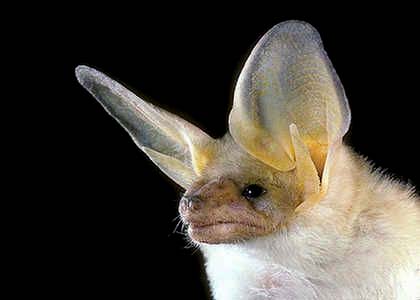
Ozark Big-Eared Bat

Photograph by Merlin D. Tuttle/Bat Conservation-International Inc.

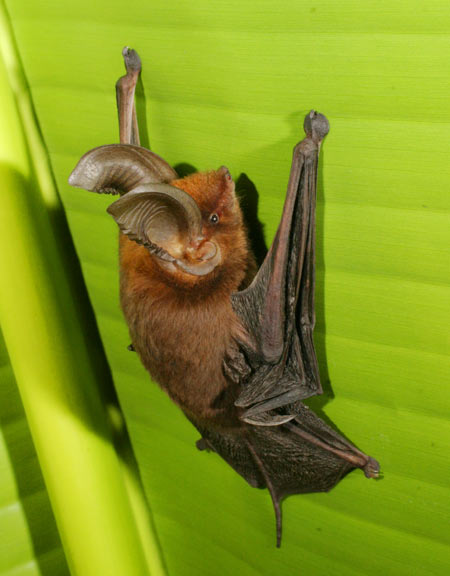
There was such a positive response to the Tube Nosed Fruit Bat that I thought we should examine another adorable bat. Today’s featured animal is the Ozark Big-Eared Bat. Okay, so maybe our little Yoda Bat was cuter but this one is just as interesting. I am not sure if this bat likes being referred to as the “Big-Eared Bat” so perhaps we should call them by one of their other names. They are also known as the Western Big-Eared Bat, the Long-Eared Bat and finally the Lump-Nosed Bat. Hmmm… none of these names are very flattering, are they? Poor little bat must have a tough life. Let’s find out by heading to the caves of southern, central United States to observe this endangered bat in their natural habitat.

Elves of the Bat World?

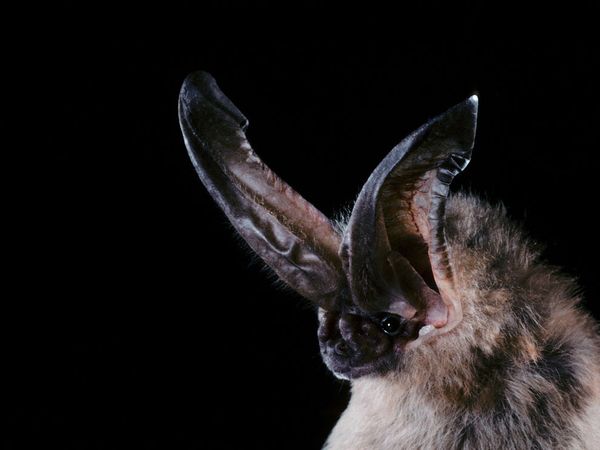
After looking at the names of this unique bat, it is obvious that the Ozark Big-Eared Bat is defined by their incredibly large ears and lumpy nose. Interestingly enough, the body length of this bat is only about 10 cm (4″) long, however, their ears typically extend to a length of 2.5 cm (1′). That may not seem that large but proportionally, it would be equivalent to a 6′ tall human having ears that extend more than a foot and a half. The ears of the Big-Eared Bat are usually held straight up, however, during hibernation some bats will coil their ears similar to a ram’s horn. I have absolutely no idea why they do this!

Ozark Big-Eared Bat

Photo from Wikimedia

Follow Your Nose

Besides the ears, the Lump-Nosed Bat also has….well…. a lumpy nose. Technically, the lumps are facial glands that oddly enough, resemble a pair of mittens. I guess the Ozark Big-Eared Bat is prepared for a cold winter. Another large feature of the Big-Eared Bat that seems to be forgotten is their wingspan. This particular bat species has a wingspan that measures between 30 and 34 cm (12 to 13 inches), which is quite impressive for such a small animal.

Population Dwindling

Unfortunately, human activity has caused the population numbers of the Ozark Big-Eared Bat to reduce dramatically. It is believed that there are only 1800 of these bats remaining in the wild. Luckily, conservationist are working diligently to reduce human disturbance, which may help the population rebound. Bats play a huge role in any ecosystem, so preserving them should be of utmost importance.

Thanks for checking out today’s Wild Fact. Enjoy the rest of your day and I will see you tomorrow for another fun and exciting animal.

Digg This
Reddit This
Stumble Now!
Buzz This
Vote on DZone
Share on Facebook
Bookmark this on Delicious
Kick It on DotNetKicks.com
Shout it
Share on LinkedIn
Bookmark this on Technorati
Post on Twitter
Google Buzz (aka. Google Reader)

Wild Fact #390 – A Nose for Fruit – Tube Nosed Fruit Bat

January 9, 2012 - 12:00 am No Comments
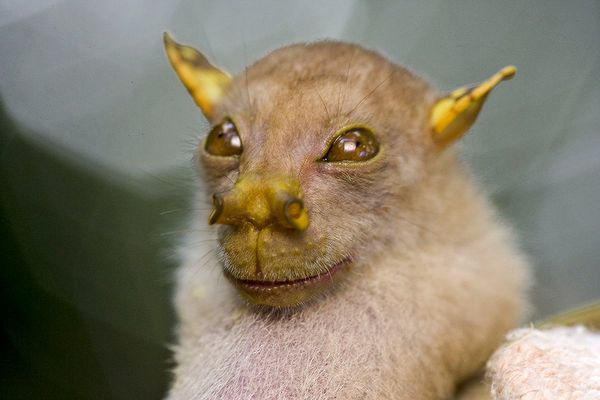
Tube Nosed Fruit Bat

Photo by Piotr Naskrecki, Conservation International

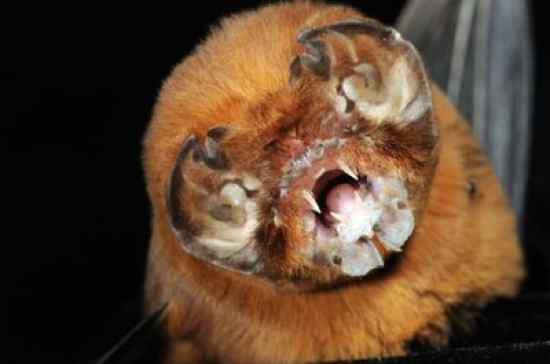
Welcome back to another exciting week of Wild Facts. This week we are going to take a look at some very unique animals starting with one that was recently discovered in 2009. There may not be too much information on the Tube Nosed Fruit Bat but we are going to do our best to learn everything we can about a species we didn’t know existed 3 years ago. That’s right, the Tube Nosed Fruit Bat was one of the 200 species identified during two scientific expeditions through the Nakanai and Muller mountain ranges in Papua New Guinea. Perhaps, we will discuss a few more of the animals identified during this trip throughout the week but first, let’s take a look at this bizarre looking bat.

Do I Look Like Yoda?

Some have compared the Tube Nosed Fruit Bat to the famous Star Wars character, Yoda. Since I have yet to see a Star Wars movie, I can’t really provide my opinion but let me know what you think. Either way, the Tube Nosed Fruit Bat is one odd looking creature. So what’s up with their nose? Like I had mentioned earlier, there isn’t a whole lot of information on this creature but it is believed that their bizarre nose acts like a snorkel. It may look weird but this nose allows the Tube Nosed Fruit Bat to breathe when its face is stuffed inside a scrumptious fruit. That is an interesting adaptation and I am sure it gives this bat an advantage when they play “Bobbing for Apples”.

Tube Nosed Fruit Bat

Click for Sourc

Adapting to Survive?

The Tube Nosed Fruit Bat is typically found in forested areas close to bodies of water, since everyone enjoys living on the water. Like other fruit bats, this particular species plays an important role as a seed disperser in the rainforest ecosystem. Unfortunately, these rainforest ecosystems are being destroyed as a result of human activity. Originally it was believed that this particular bat required high quality forests to survive, however, recent studies have shown them living in degraded habitats. They may not be thriving in these areas but it is great to know they are persisting since habitat destruction is one of the main reasons this bat is listed as endangered. If this species wants to continue living, they had better adapt to living in a degraded environment.

That does it for the first unique animal of the week. Enjoy the rest of your day!


Ong, P., Rosell-Ambal, G. & Tabaranza, B. & Heaney, L., Ingle, N., Cariño, A.B., Pangulatan, L.M., Pedregosa, M., Alcala, E. & Helgen, K. 2008. Nyctimene rabori. In: IUCN 2011. IUCN Red List of Threatened Species. Version 2011.2. <www.iucnredlist.org>. Downloaded on 09 January 2012

Digg This
Reddit This
Stumble Now!
Buzz This
Vote on DZone
Share on Facebook
Bookmark this on Delicious
Kick It on DotNetKicks.com
Shout it
Share on LinkedIn
Bookmark this on Technorati
Post on Twitter
Google Buzz (aka. Google Reader)

Wild Fact #424 – In Need of a Face Lift – Wrinkle Faced Bat

November 22, 2011 - 12:00 am No Comments
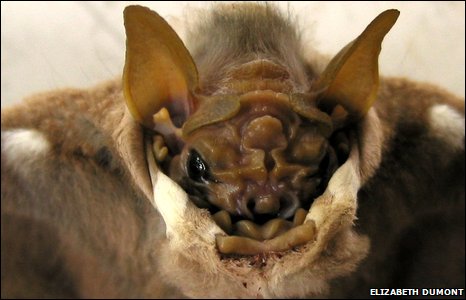
Wrinkle Faced Bat

Photo by Elizabeth Dumont

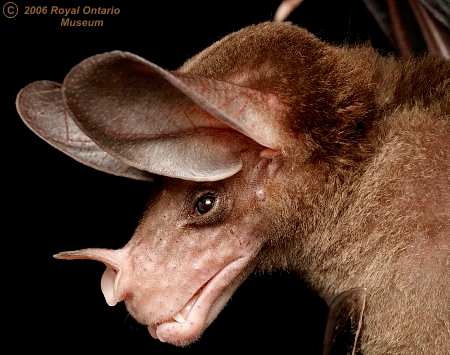
Welcome to the Tuesday edition of Wild Facts. Today we are going to learn about one of the most bizarre looking animals I have ever laid eyes on. Just look at the picture above of the Wrinkle Faced Bat. They definitely have a face that only a mother could love. This odd looking bat can be found throughout Central America, so be sure to keep your eyes peeled for this unusual creature during your next Caribbean vacation. So what do you say? Are you ready to learn why the Wrinkle Faced Bat looks the way they do?

A Face Only a Mother Could Love

Before we find out why they have such an odd appearance, let’s talk a little more about their unique look. The Wrinkle Faced Bat is a dreary yellow to brownish colour, has no tail and weighs about 17 grams (0.6 oz). Compared to the females, the males have more pronounced skin flaps that can actually be used to cover their face. If I looked like this, I would want to cover my face too. Both males and females have little pouches in their mouth that allows them to store fruit for later. Okay, let’s find out why they look so weird!

Wrinkle Faced Bat

Photo by Jplevraud (Wikimedia)

One Strong Bite

So the question that has been stymying scientists for decades is probably the same one you had when you saw this bat. Why in the world do they look like that? We are not 100% certain but the best guess going is the odd shaped head of the Wrinkle Faced Bat allows this bat to eat a wider variety of fruit. As a result of the odd skull shape, the Wrinkle Faced Bat has a bite force 20% greater than other bats of their size. This allows them to eat harder fruits that regular ol’ fruit bats couldn’t handle. Why is this important? It has been proposed that this bat evolved this characteristic to compensate for the lack of soft fruit available during lean years. The ability to eat a wider variety of food has allowed this bat to survive for generations. Sure, they may look hideous but at least they are successful.

That does it for today’s Wild Fact. I hope you enjoyed learning about the Wrinkle Faced Bat.


Digg This
Reddit This
Stumble Now!
Buzz This
Vote on DZone
Share on Facebook
Bookmark this on Delicious
Kick It on DotNetKicks.com
Shout it
Share on LinkedIn
Bookmark this on Technorati
Post on Twitter
Google Buzz (aka. Google Reader)

Wild Fact #433 – One Hungry Bat – Common Pipistrelle

November 9, 2011 - 12:00 am 2 Comments
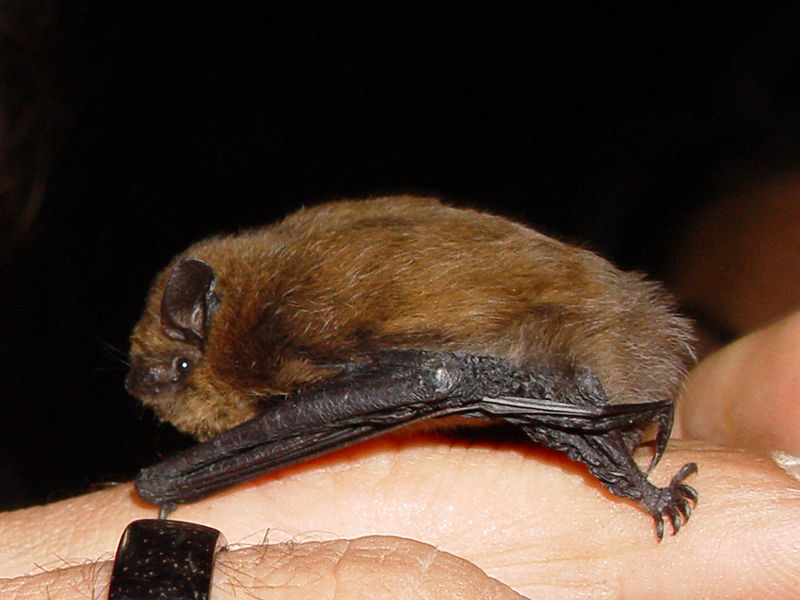
Common Pipistrelle

Photo by Mnolf (Wikimedia)

After spending the first two days of the week chasing after frogs and salamanders, I thought we would mix it up by heading to the night skies to learn about the Common Pipistrelle. Yes, this is a type of bat! I know, I know…ewwww, bats! They may have a bad reputation but these little creatures are crucial for maintaining healthy ecosystems. This particular bat influences a particularly large ecosystem since they can be found across most of Europe, northern Africa and southwestern Asia. So pick a spot and lets wander into the night to find us a nice little bat.

Smallest European Bat

The Common Pipistrelle is the smallest of all the European bats with an average length between 3.5 – 4.5 cm (1.3 – 1.7″). These tiny mammals also have  a soft, furry, brown coloured coat. I don’t know about you but I personally think that if you are this small and furry then you should be classed as “Cute and Cuddly”. Don’t you agree? The reason the Common Pipistrelle has such a large home range lies with their generalist habitat selection. These common bats prefer woodlands and farms, however, they can be found living in houses, parks and marshes. Basically, they can live anywhere!

Common Pipistrelle Baby

Baby - Photo by Mnolf (Wikimedia)

3000 Insects a NIGHT!

Like other bats the Common Pipistrelle leaves the comfort of their home at night to feast on a variety of insects such as moths, gnats and any other small bug they can get their mouth on. They usually hunt for a few hours before returning home, however, they have been known to hunt twice in a night. During the night, they will typically consume about 3000 insects. See, I told you they were important for the ecosystem. That is a lot of bugs! Think about this for a second – during a 30 day month, one Common Pipistrelle will eat about 90 000 insects. Now imagine what would happen if we didn’t have bats!

Common Pipistrelle Fast Fact

Although they are the most common European bat, the population of the Common Pipistrelle is on the decline (along with most other bats) as a result of the increased use of pesticides and the loss of roosting habitat. Basically, we are removing their food source and their homes. I would be pretty upset if I were them!

That does it for today’s Wild Fact. Thanks for stopping by and I will see you tomorrow for a brand new animal fact.

Digg This
Reddit This
Stumble Now!
Buzz This
Vote on DZone
Share on Facebook
Bookmark this on Delicious
Kick It on DotNetKicks.com
Shout it
Share on LinkedIn
Bookmark this on Technorati
Post on Twitter
Google Buzz (aka. Google Reader)

Wild Fact #618 – The Dangers of Fungus – Little Brown Bat

February 23, 2011 - 12:00 am 4 Comments

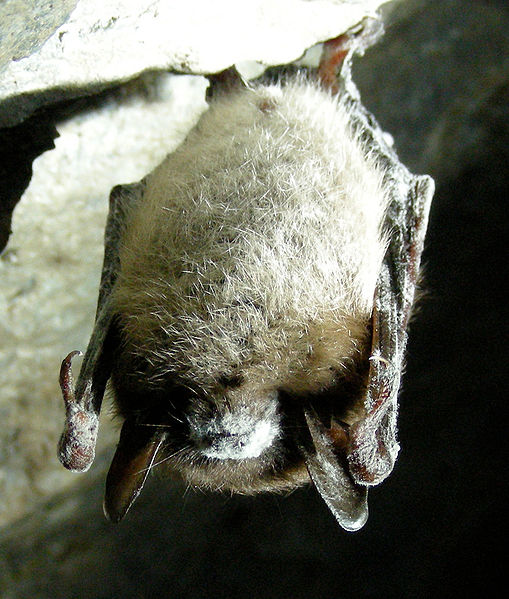
Little Brown Bat with WNS - Photo from Wikimedia

Today’s Wild Fact is going to be a little different than most of the other ones.  This is because I am going to focus on a very important issue that is threatening the existence of the Little Brown Bat.   This wonderful little bat is one of the most common bat species in North America……….or at least it use to be.  You may have heard about something called “White Nose Syndrome” which first started showing up in bats in 2006.  Well since then over 1 million bats have met their fate at the hands of this deadly fungus.  We will talk more about this in a minute.  First let’s take a closer look at the fuzzy Little Brown Bat.

As the name suggests these bats are obviously smaller and brown in colour.  Like most other bats the Little Brown Bat is an insectivore which heads out into the night sky to feed on pests such as mosquitoes, moths, wasps, beetles, mayflies among other insects.  Quite often when they find a nice big juicy bug flying through the air they will catch it using the tip of their wing then transfer to a cup formed by their tail.  Naturally, these civilized bats will use their cup-like tail to feed themselves.  Here you thought they just ate bugs directly with their mouth!  What?  You mean they do that too?  Oh, the Little Brown Bat will use their mouth for smaller insects.  That makes sense since it would probably be equivalent to me eating rice with chopsticks – I know it can be done but it is just a pain!

As mentioned earlier, the Little Brown Bat is in danger and may become endangered very soon as a result of White Nose Syndrome (WNS).  This condition is caused by a fungal growth that forms around the nose and wings of bat species.  Apparently this is a cold-loving fungus and as such begins to grow on the bats while they are hibernating in the deep, dark depths of their cave sanctuaries.  So how does this pesky fungus cause harm to our beloved bats?  Well, it disrupts the bats hibernation period (the technical term is torpor) causing the bat to wake up too early and eventually starve to death.  Not only is this an unpleasant way for millions of bats to die but there could be some huge implications to the ecosystem.

Photo from Wikimedia

For starters, bats play a major role in keeping our insect populations to a tolerable minimum.  This could have major implications in the business of agriculture.  Not too mention, you will be swatting at bugs all day long.  Bats are also an important pollinator and seed disperser.  Are you starting to see that it isn’t only the bats we have to be concerned about? Don’t get me wrong, we need to be concerned about the Little Brown Bat which is on the verge of rapid extinction.  The mortality rates associated with this fungus are incredibly high so if something isn’t figured out soon then it may be too late.

I know I am usually the one preaching that humans shouldn’t be playing mother nature but we need to at least figure out what has caused this sudden development of White Nose Syndrome.  We may be obligated to do something in order to prevent the extinction of a vitally important creature to our ecosystems.

If you would like to help out the Little Brown Bat then I would recommend listening to the authorities about not going caving in infected caves.  We are unsure how this fungus is transferred and it would be terrible if you are the person responsible for spreading this deadly fungus.  As well, you may want to look into putting up some bat boxes.  Every little bit helps, right?

I know this Wild Fact is a little longer than usual but I did want to raise your awareness about this very important issue that is hitting Northeast USA and Canada right now.  If we don’t figure out how it spreads or how to prevent it then it is possible that it will be in a cave near you very soon.

Enjoy the rest of your day folks!

Digg This
Reddit This
Stumble Now!
Buzz This
Vote on DZone
Share on Facebook
Bookmark this on Delicious
Kick It on DotNetKicks.com
Shout it
Share on LinkedIn
Bookmark this on Technorati
Post on Twitter
Google Buzz (aka. Google Reader)

Wild Fact #680 – This Bat Nose How to Hunt – Horsehoe Bat

November 15, 2010 - 12:00 am 4 Comments

Photo from Wikimedia

Thank you for joining me for another amazing week of Wild Facts.  We are going to start it off with a rather unique looking animal, the Horseshoe Bat.  We can find these peculiar bats in the temperate and tropical regions of Europe, Africa, Asia and even further south into northern and eastern Australia.  So pick a country, pack your bags and lets go find us some bats!  So? What country did you pick?  I chose to travel to Asia just to mix things up a bit but I hope at least one of you are going to come with me.  We can’t all go to Australia, you know.

The Horseshoe Bat gets their name from the horseshoe shaped, leaf-like structures protruding from their nose. Not only do these leaf-like structures make the bat even cuter and more cuddly then other bats but they also serve a very valuable purpose.  By now, we should all be aware that bats use echolocation to find their way (and food) at night.  Well the Horseshoe Bat uses these structures to emit their high pitched frequencies required for successful echolocation.  It is believed that these horseshoes allow the bat the ability to focus their sound better.  Hmmm… I wonder what happens if they have to sneeze?  I just picture a poor Horseshoe Bat trying to find his way around while he has a cold, cursing while blowing his nose as he flies into a tree.

Lesser Horseshoe Bat - Photo by F. C. Robiller (Wikimedia)

Like most other bats the Horsehoe bat is nocturnal, however, they tend to get a later start on the hunt then most other bats.  As well, they prefer to hunt about 6 m (20′) off the ground so hopefully they won’t be hitting your head as you are putting the garbage out at night. Again, like most bats the Horseshoe Bat is capable of plucking their insect prey out of mid-flight or while the insect sits on a twig or a leaf not realizing it is about to become dinner.  Interestingly enough some of the Horseshoe Bat species will actually sit quietly in a tree and grab the insects as they fly by.  It kind of reminds me of a frog  but with an ugly nose instead of long, sticky tongue.

The next time you are out and about in Horseshoe Bat territory make sure you keep an eye out for a colony.  That’s right, these bats will actually rest together.  These colonies range from 20 to 2000 individuals.  That is quite the range that might make predicting an exact number difficult.  The Wooly Horseshoe Bat likes to be different as they will usually roost in pairs.  Awww, isn’t that sweet.

Our little trip to learn about the Horsehoe Bat has come to an end.  Don’t cry, we will learn about another wickedly cool animal tomorrow.  Enjoy the rest of your day.

Source:

Horseshoe Bats: Rhinolophidae – Behavior And Reproduction

Digg This
Reddit This
Stumble Now!
Buzz This
Vote on DZone
Share on Facebook
Bookmark this on Delicious
Kick It on DotNetKicks.com
Shout it
Share on LinkedIn
Bookmark this on Technorati
Post on Twitter
Google Buzz (aka. Google Reader)

Wild Fact #938 – A Sticky Situation – Sucker-Footed Bat

November 17, 2009 - 12:00 am 6 Comments

Image courtesy of www.newcritters.com

Photo by Merlin Tuttle, Bat Conservation International

Continuing with the trend of unique and unusual animals, we go all the way back to Madagascar. The more facts I write, the more I want to visit Madagascar to see some of these unique creatures. Although, I may have to hurry since the lush forest of Madagascar appears to be disappearing at an alarming rate. This removal of vegetation actually brings us to our next unique species so let’t get to it shall we?

Today we are going to talk about a special bat. I know, ewwww a bat but this one may have adapted to human interference in the forests of Madagascar. You see, humans are removing the vegetation to provide additional farmland.  In the wake of this destruction appears a broad leaf plant called the traveler’s palm.  This plant is very slippery and would be difficult for animals to utilize.  This may be the case if you weren’t able to adapt.  This is where the sucker-footed bat comes in.  You see this bat has evolved sticky suckers on their feet.  They are able to use the sticky adhesive to climb into these unique plants and roost.  Conservation efforts for this bat are able to be relaxed since they have adapted to live in a degraded habitat.

Sucker-Footed Bat Fast Fact: The sucker-footed bat was discovered in Madagascar in 2006.  This is a new species that may have evolved as a result of the farming practices on the island of Madagascar.

Photo courtesy of www.itsnature.com

Photo courtesy of www.itsnature.com

References:

Field Museum (2007, January 5). New Sucker-footed Bat Discovered In Madagascar. ScienceDaily. Retrieved November 15, 2009, from http://www.sciencedaily.com­ /releases/2007/01/070105151427.htm

Digg This
Reddit This
Stumble Now!
Buzz This
Vote on DZone
Share on Facebook
Bookmark this on Delicious
Kick It on DotNetKicks.com
Shout it
Share on LinkedIn
Bookmark this on Technorati
Post on Twitter
Google Buzz (aka. Google Reader)

Wild Fact #976 – Jamming to the Sounds of Sonar – Tiger Moth

September 24, 2009 - 12:05 am 8 Comments

070529211003-large

We have heard of the space arms race or nuclear arms race. It seems we are always try to one-up other countries to be the best or the first to achieve something.  It appears that we are not alone in this sort of competition.

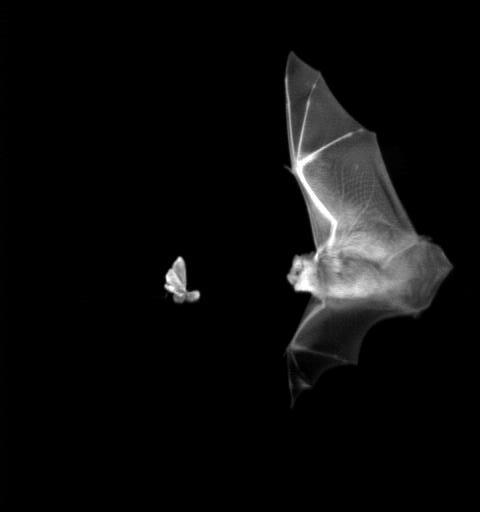
This same sort of one-upping competition can be seen in nature as well.  For the longest time I am sure that bats thought they ruled the roost (or at least the night sky). Bats are  able to use echolocation (same as dolphins) to be able to hunt their prey at night.  By emitting ultra-sonic sounds bats are able to create a picture of the night sky by the reflections of these sounds.  This is the same principle the military uses to detect enemy planes or submarines (it is a sonar).  In an event to show up the poor little bat (well, I guess it is really in an event to survive) the tiger moth evolved a technique that will actually jam the sonar of the bat.

Try to picture this, the hungry little bat is cruising the night sky emitting these numerous high pitch sounds to create a mental picture of the surroundings.  The sound bounces back and shows the bat an image of a tasty moth.  Thinking it is his lucky day, the bat swoops in for the kill. Just as the bat swoops though, the sneaky little tiger moth starts emitting numerous ultrasonic clicks (about 450 clicks in a tenth of a second).  At this point, the bat no longer has a clear image of the night sky and can’t see its prey.  It is as if something turned its etch-a-sketch upside down, the picture disappears. Studies have shown that 85% of the time, the bat would be unsuccessful in capturing a sonar jamming moth.  I am assuming that the bat will now need to evolve some sort of tiger moth sonar jamming, jammer or just eat other moths that aren’t as successful in escaping their predator.

Check out the video below to see the tiger moth at work.

Digg This
Reddit This
Stumble Now!
Buzz This
Vote on DZone
Share on Facebook
Bookmark this on Delicious
Kick It on DotNetKicks.com
Shout it
Share on LinkedIn
Bookmark this on Technorati
Post on Twitter
Google Buzz (aka. Google Reader)

Wild Video – Tiger Moth Jams the Bats Sonar

September 24, 2009 - 12:00 am 2 Comments

This is a very short clip of a bat attempting to catch a tiger moth.  Turn on the sound so you can hear the clicks of the Tiger Moth.

Enjoy!

Digg This
Reddit This
Stumble Now!
Buzz This
Vote on DZone
Share on Facebook
Bookmark this on Delicious
Kick It on DotNetKicks.com
Shout it
Share on LinkedIn
Bookmark this on Technorati
Post on Twitter
Google Buzz (aka. Google Reader)