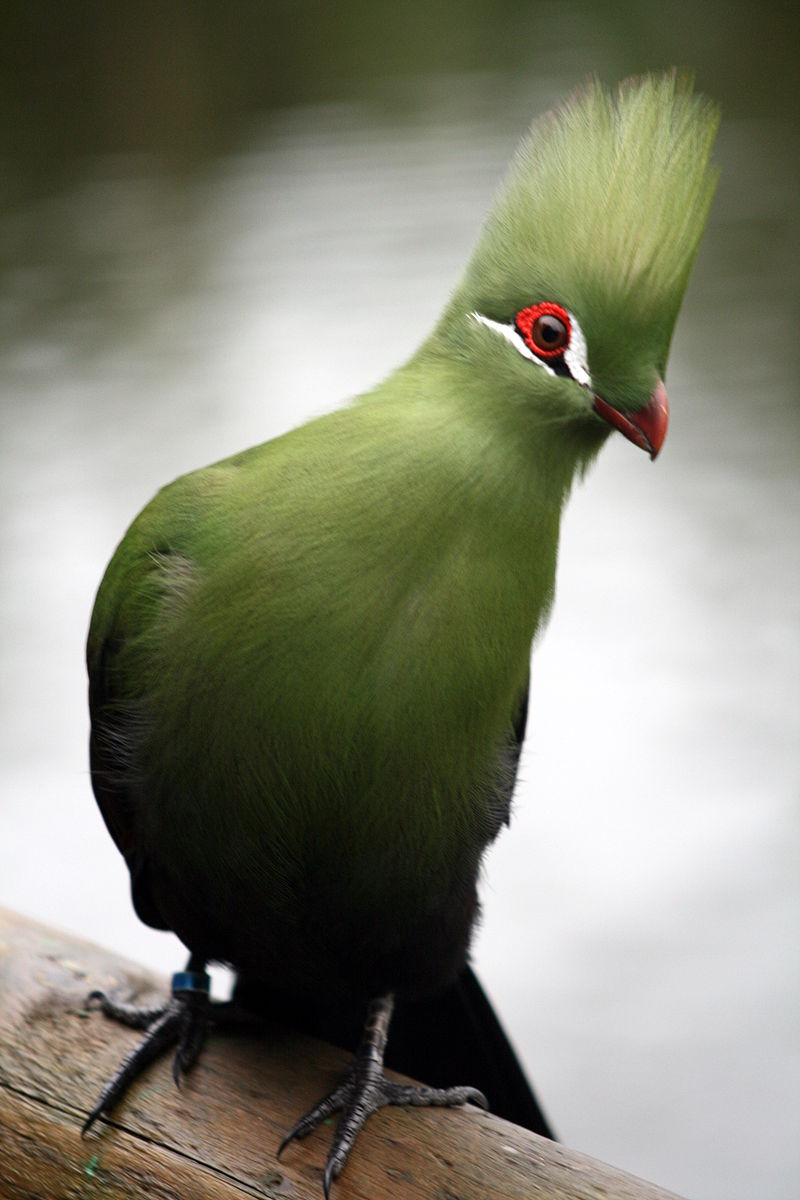
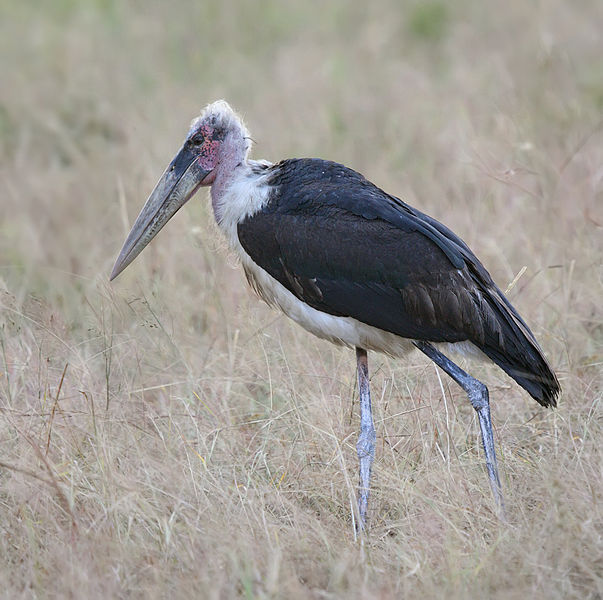
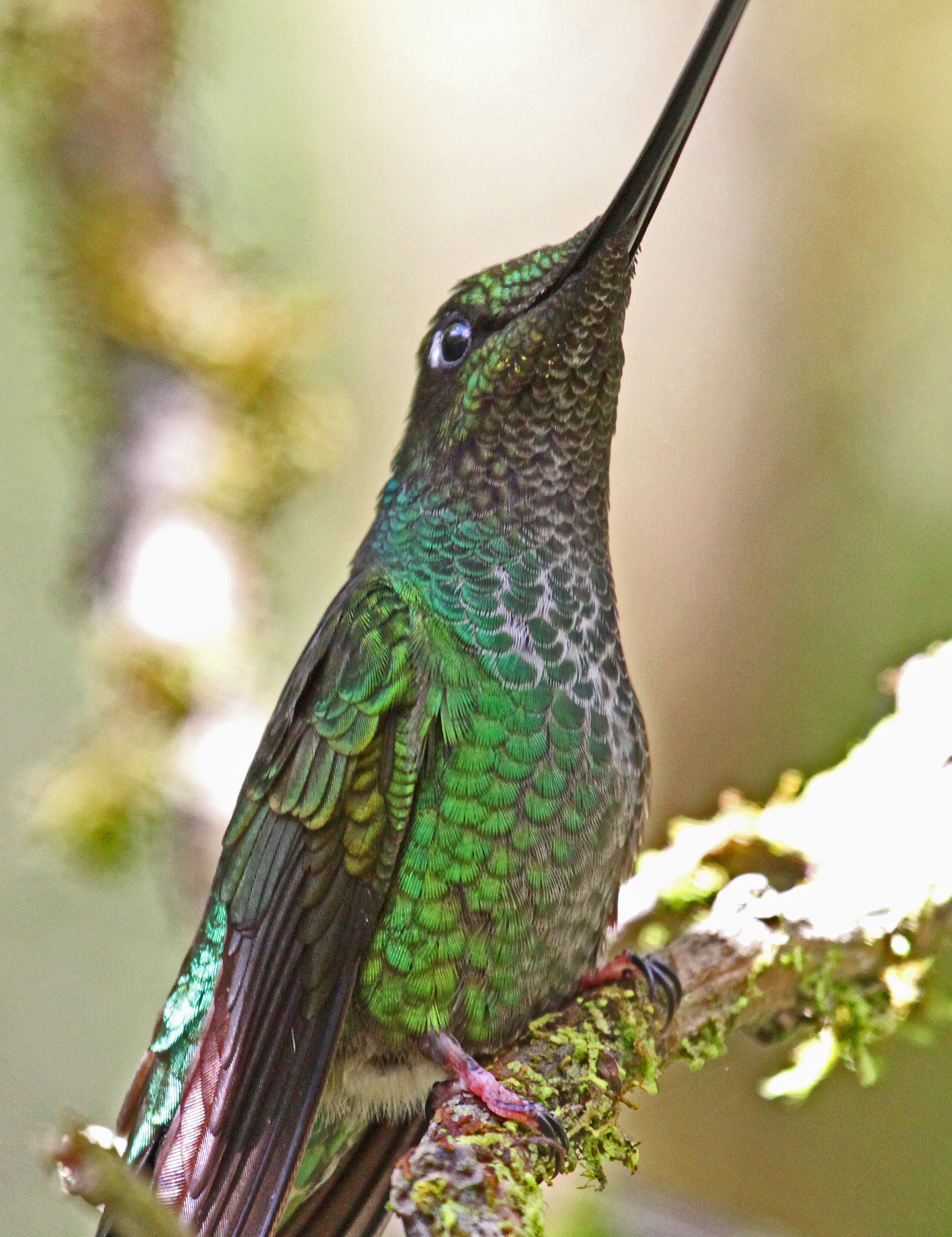
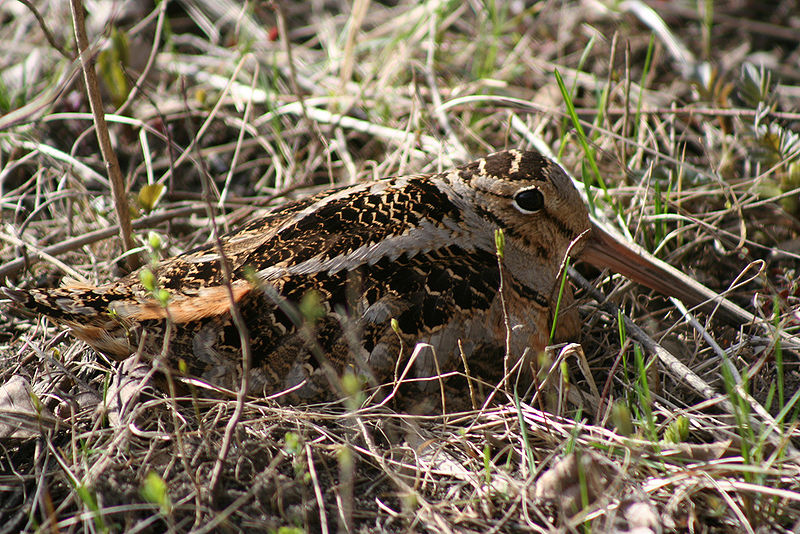
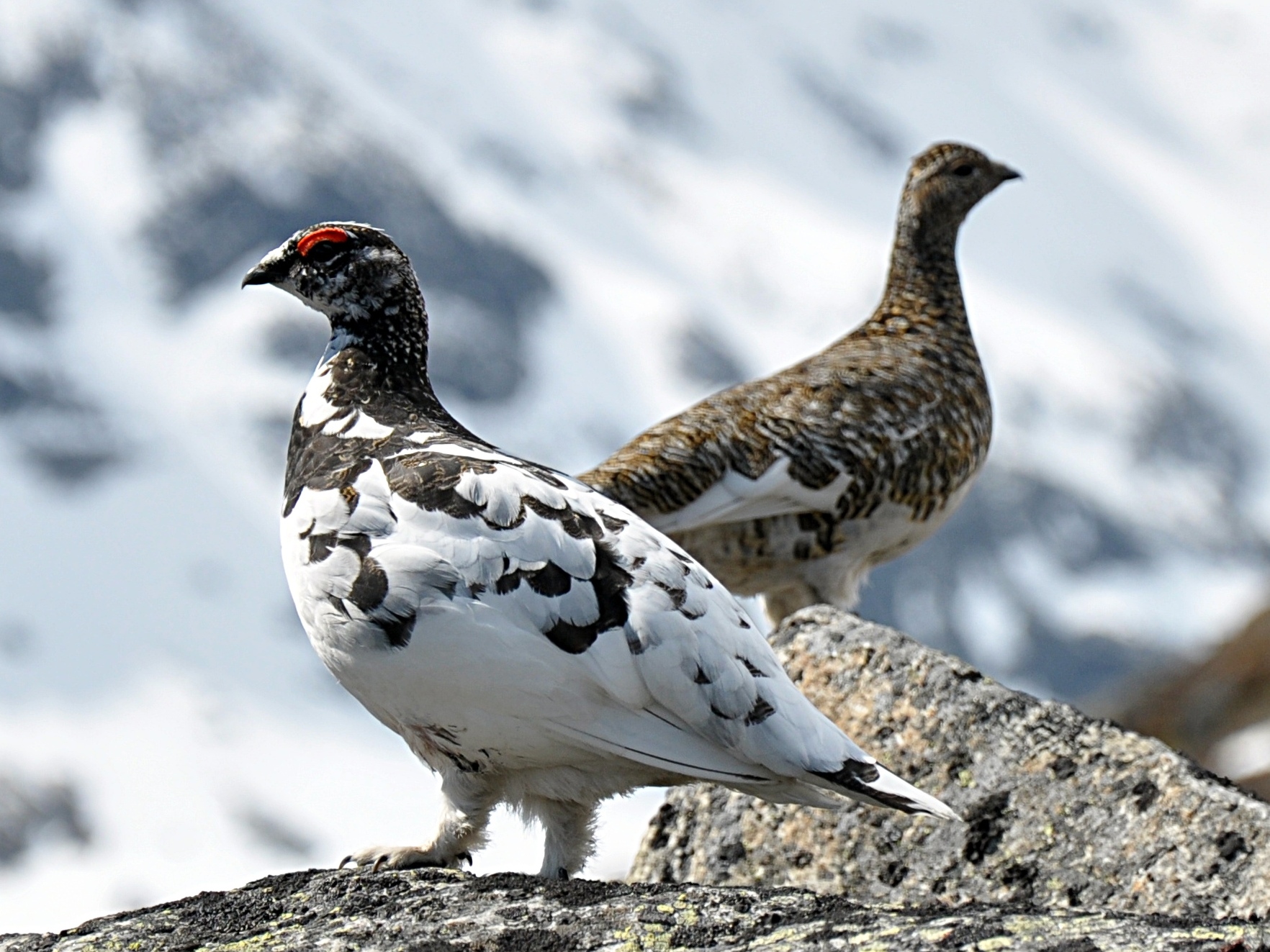
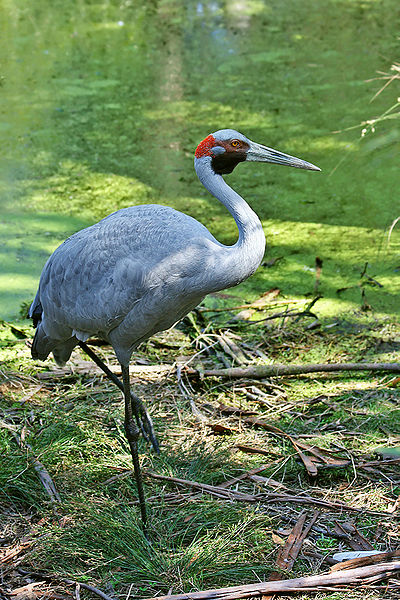
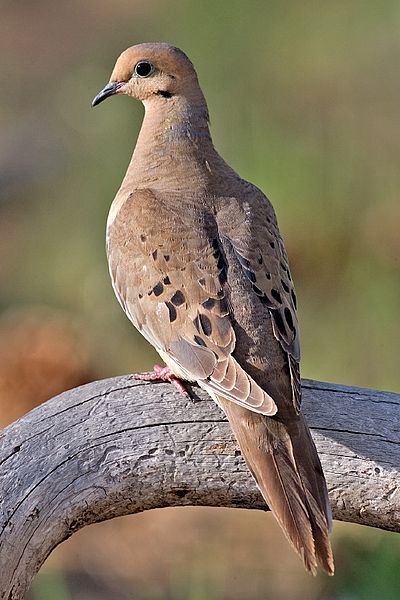
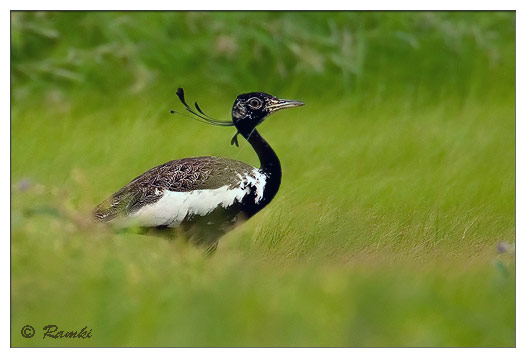
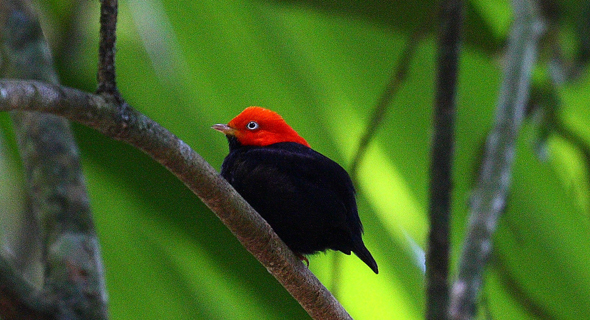
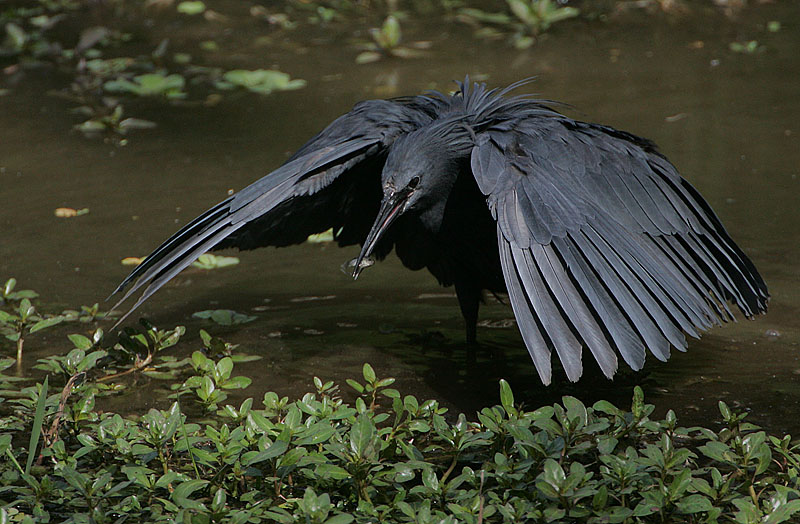
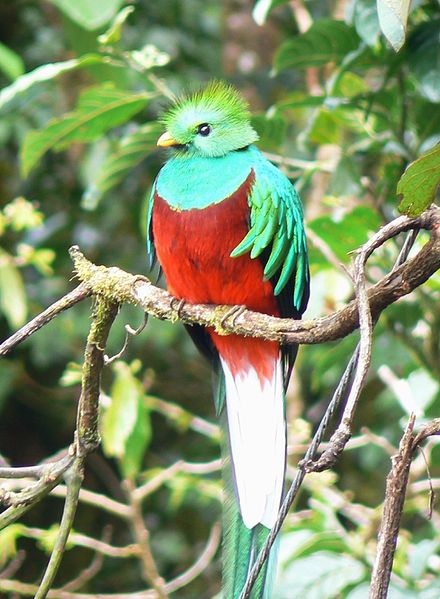
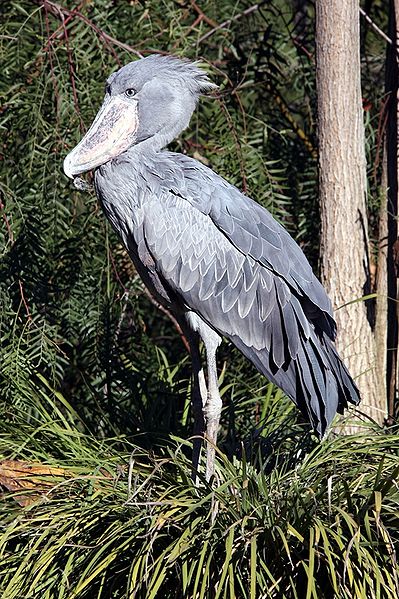
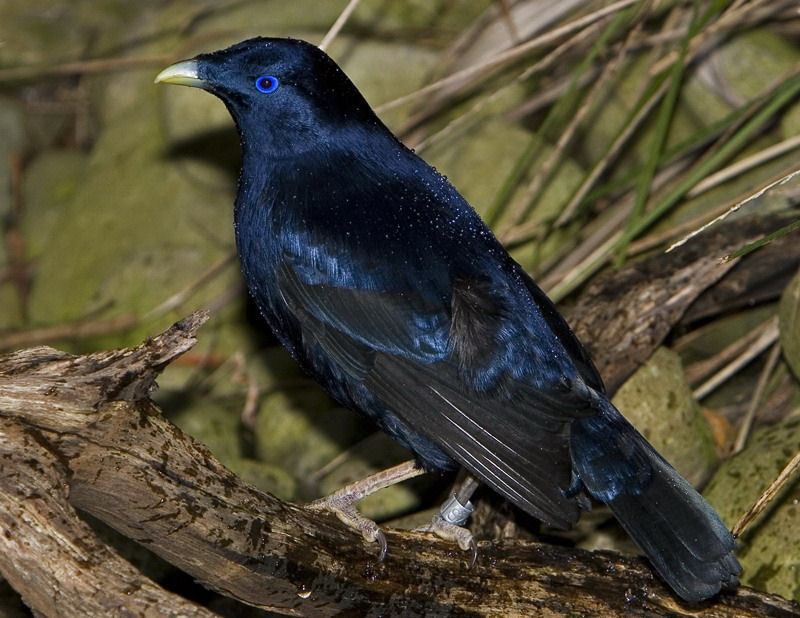
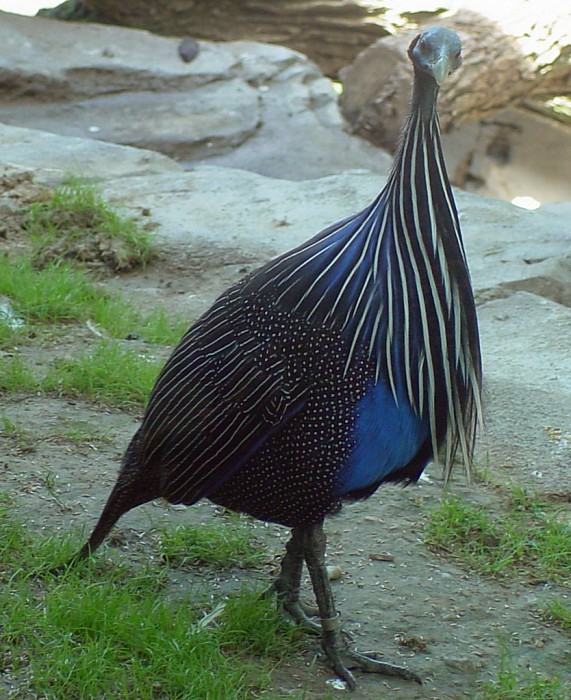
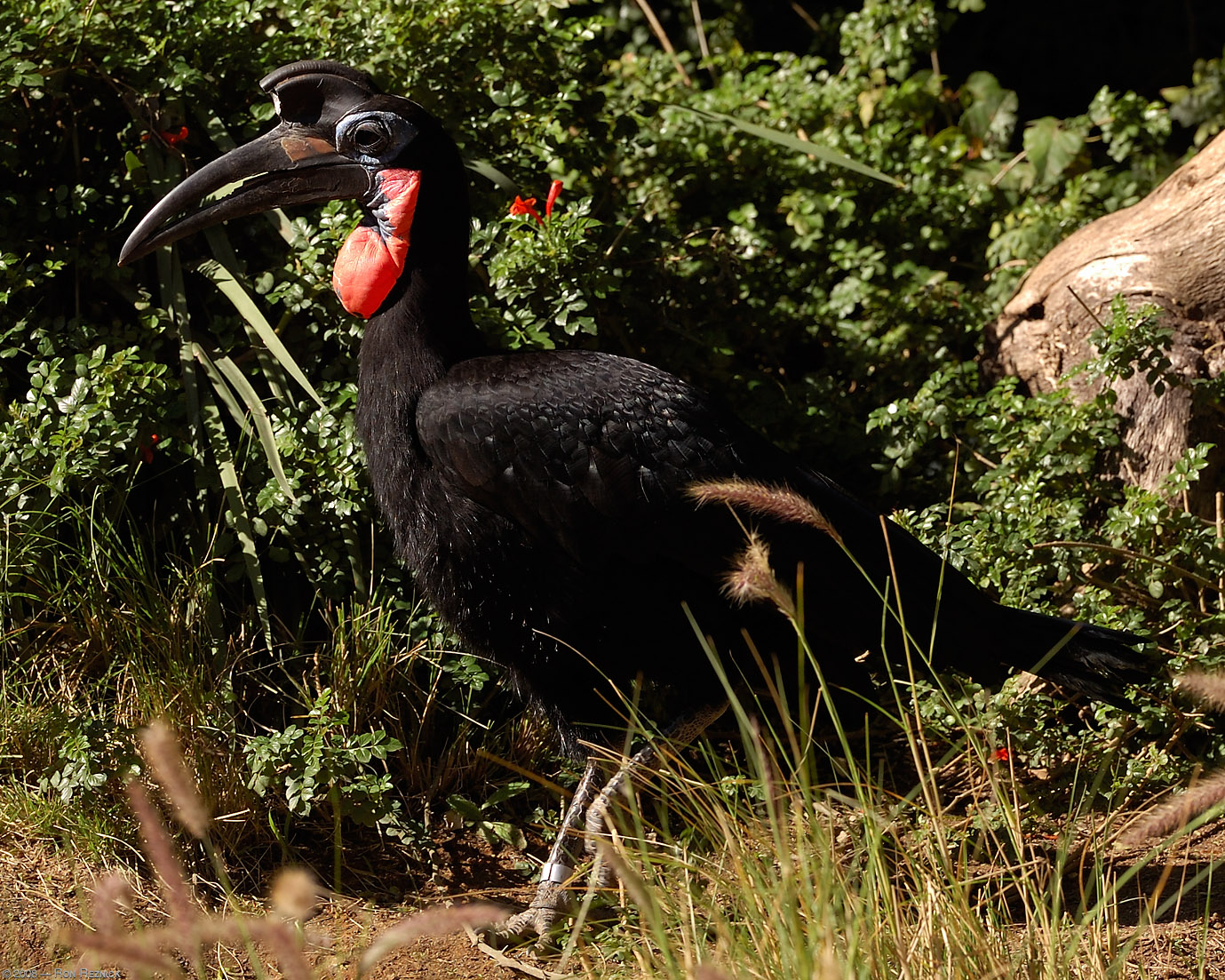
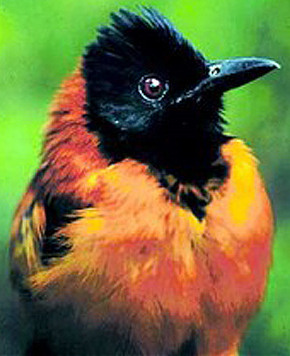
To celebrate this being the last Wild Fact of the week, I thought we would take a nice trip to a tropical location. More specifically we are heading anywhere between southern Mexico and western Panama to observe one of the most beautiful birds on the planet. That’s right, many people consider the vibrant coloured Resplendent Quetzal to be one of more stunning birds out there. That is a pretty impressive designation and I am sure the Quetzal is very proud of this honour. So what do you think? Are they the most breathtaking bird you have ever laid eyes on?
Although these birds are beautiful at any given time, they are most impressive during mating season. In an attempt to impress the ladies, the male Resplendent Quetzal will grow two long tail feathers that can reach a length up to 1 m (3 feet) long. Not only that but both males and females will have their incredibly vibrant shades of blue, red and green splashed all over their body, with the males being just a little bit brighter. There are so many possible jokes that could be made regarding that last sentence but I think it would be best if I kept them to myself.
Photo by Dick Bos (www.bosfoto.nl)
These colourful birds typically hang out by themselves during the year, with the exception of breeding season in which a male and female will come together for a few months. Unlike other bird species out there, the Resplendent Quetzal is monogamous, which is nice to see since it is always important for the chicks to grow up in a happy home. Speaking of their home, the pair of birds will typically use their incredibly strong beaks to hollow out a nice nest in an old tree or rotting stump. The female will then lay her eggs and each parent will take turns incubating the eggs. It probably looks a little funny when the male is taking his turn since their amazingly long tail feathers are usually hanging out of the nest.
Resplendent Quetzal Fast Fact – The skin of the Resplendent Quetzal is incredibly thin and can rip quite easily. To accommodate for this characteristic the Quetzal has a very thick coat of feathers. Luckily these feathers are strong enough to protect their sensitive skin. So not only do they have a cool helmet-like crest but they apparently have the rest of the body armour as well.
Thanks for reading the last Wild Fact of the week. Enjoy your weekend and I will see you on Monday.
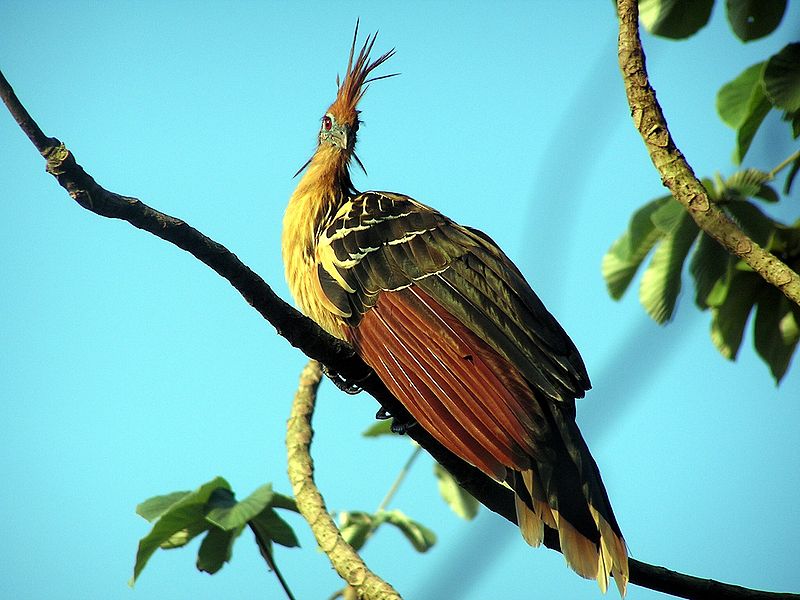
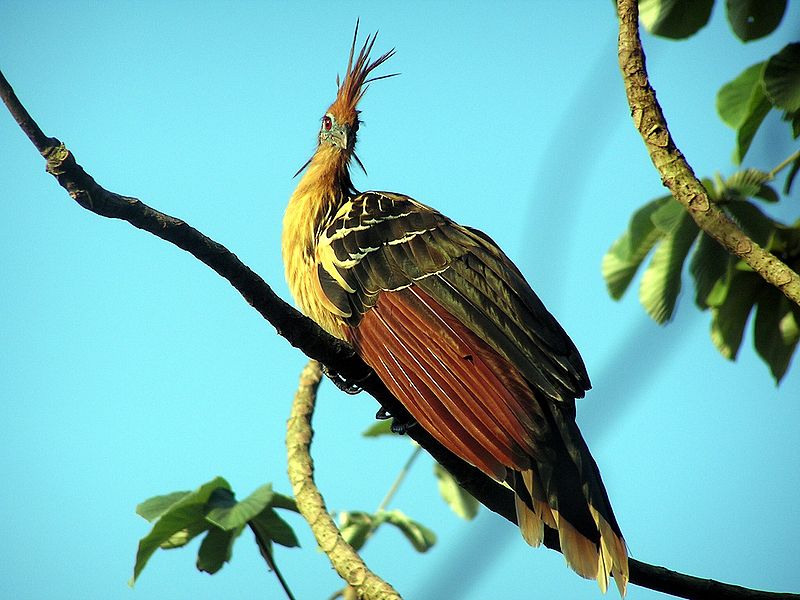
So here we are again, the last animal fact of the week. I really can’t believe how quickly this week has gone by but it is all good since we are approaching the long weekend. Don’t worry, there will be a wonderful, new Wild Fact on Monday. Actually, you are in for a treat next week since it will be a Themed Week of Wild Facts. Yep, I am heading out of town for the week so as usual we will look at animals that have “something” in common. But first, lets talk about a cool bird called the Hoatzin, which is also known as the Hoactzin (notice the “c”), the Stinkbird (my personal favourite name) and the Canje Pheasant.
Okay, so my first question is how in the world did this bird get the nickname “Stinkbird”? As you may have guessed, the Hoatzin happens to smell quite badly. Shocking, right? We are not sure what causes this stench but scientist believe it has something to do with their feeding strategy. You see the Stinkbird has an unusually large crop, which allows their vegetation to actually ferment. I wonder if they are making beer? Anyway, it is most likely fermenting leaves that causes this wonderful odour that lead to the name, Stinkbird. Either way, I feel bad for the poor bird. It is like he is getting picked on by his Grade 6 classmates.
Photo by Brian Ralphs (Wikimedia)
Besides the weird digestive system, the Hoatzin has another unusual quality. The young birds are actually born with claws on two of their wing digits. Perhaps this is for defending themselves against other animals that make fun of their raunchy stench. Actually, these claws help the baby Stinkbirds grab onto branches as they stumble about. Although, they had better learn to take care of themselves quickly since the mother usually abandons them about 10-14 days after birth. This is pretty quick amongst the bird world. I guess the Hoatzin has no problem being different from other birds.
Hoatzin Fast Fact – If you want to catch a glimpse of these incredibly unusual birds then you need to book a ticket to check out some of the swamps and mangroves in the Amazon Forest, which of course is in South America.
Well there you have it, another week of Wild Facts are in the books. We are rapidly approaching the half-way mark, which is unbelievable! Have a great weekend folks and I will see you on Monday.
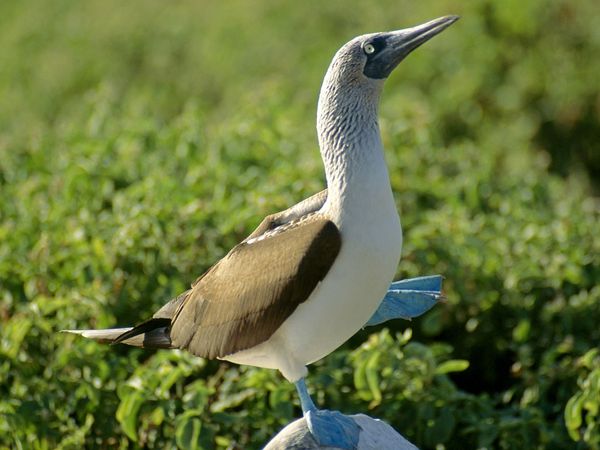
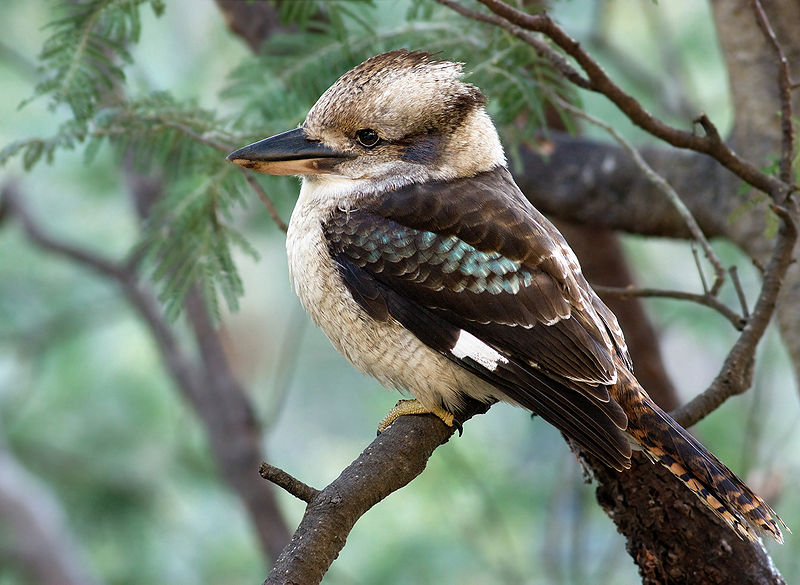
It seems as though we have been studying quite a few birds this week and that trend will continue for today’s Wild Fact. Actually, we are also heading back to Australia and New Guinea to learn about a bird with the coolest call in the world, the Kookaburra. If you live in their range then I am sure you have heard of these interesting birds. Well, what are we waiting for, let’s get out there and see if we can hear the un-mistakeable call of this rather large bird.
I want you to close your eyes and picture yourself walking through the forest on a nice, humid, summer day. All of a sudden you hear someone laughing hysterically. Obviously, you want to find out what is so gosh darn funny so you explore a little further only to find a 42 cm (17″) tall bird looking at you. That’s right, the call of the Kookaburra is very similar to a loud, human laughing hysterically. It is actually uncanny how this bird is able to mimic genuine laughter. You know what, I can’t even describe this so you will have to give it a listen for yourself. The short video below will give you an idea what these large birds sound like.
You can’t tell me you didn’t laugh while watching that video clip.
So what exactly is a Kookaburra? Well, it is a bird, silly! Okay, I guess I can be a little more specific. They are actually part of the Kingfisher family. In fact they are the largest member of their family and interestingly enough one of the fastest fliers. No wonder they are laughing all the time – they are clearly living the good life as the family favourite. Like other Kingfishers, the Kookaburra is a meat eater, typically feeding on young birds or snakes. They will also compliment their diet with insects and reptiles just because having a balanced diet is important.
Photo from Wikimedia
Kookaburra Fast Fact – If you have ever witnessed the Kookaburra capture a snake then you may think they are barbaric savages. This particular bird will usually catch a snake by the back of the head and will end their life by dropping them from a great height. If this doesn’t work then they will simply beat them with their bill before swallowing them. I definitely wouldn’t trust the Kookaburra to babysit your young child.
That does it for the second last fact of the week. Hopefully I will see you here tomorrow to learn about another interesting and unique animal. Enjoy the rest of your day.
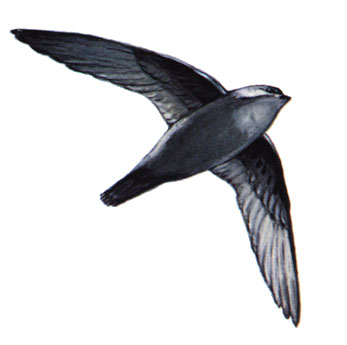
After spending yesterday underground chasing after moles, I figured we would head back to the sky today to observe an interesting bird called the Chimney Swift. Now, today’s Wild Fact was inspired by my dad who was telling me about a story he saw on the news. Apparently there were about 150 of these birds that were flocking to the chimney of a school in Nova Scotia or something like that. Sorry Dad, I don’t think I was actually listening too well . Regardless of my listening skills, I figured it was the Chimney Swift he was talking about so today we are going to climb up a chimney in Nova Scotia to see if we can learn something about these birds.
The Chimney Swift is often referred to as the “Flying Cigar” as a result of their cigar-shaped body and long slender wings. For the most part it is extremely rare to ever catch a glimpse of the Chimney Swift in a perched position. This is probably due to the fact that they don’t actually sit on a perch like a regular bird. Instead they use their incredible claws to hang onto the sides of chimneys and other man-made structures. Believe it or not the Chimney Swift is an animal that actually benefited from European settlement in North America. Before humans came along, these little birds had to hang out in caves and similar natural structures. Once we came along, the number of nesting spots increased dramatically with the creation of chimney’s. Unfortunately, new chimney designs are making it very difficult for the Chimney Swift to utilize these structures. Who would have thought that a population of birds may be on the decline because we changed the design of our chimney?
Photo from WIkimedia
When they aren’t hanging out in chimney’s the Chimney Swift will take to the skies. Normally, you will hear the high-pitched twittering (no, they are not actually Tweeting while they fly – although, i wonder what they would say with their 140 character limit) as they fly high above the city feasting on insects. In fact, these birds spend pretty much all of their time flying and will generally only land at their nest or to roost for the night. The Chimney Swift will even bathe while in flight! How is this possible? Well, while flying around they will dive towards a lake or other body of water, crashing their chest onto the surface of the water before shaking the water off of their feathers as they fly away. I would think that doing a belly flop every time you want to bathe would get tiresome and painful after awhile.
I guess it is time to crawl out of the chimney and brush off all of this soot. As promised, since you read today’s fact, I will give you a free one tomorrow. Make sure you stop by because it will be a good one to end the week with. Enjoy the rest of your day!
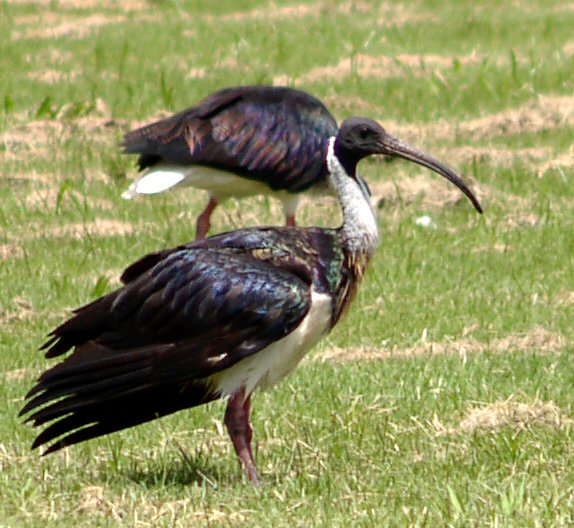
Phew! We made it through another week of Wild Facts and it is time to sit back and enjoy a well deserved break. Before you get too relaxed, I need you to go and dig out your chest waders because we are going to play in some wetlands today. Come on, everyone likes playing in the water and mud. While we are wading through these swamps and marshes, be sure to keep your eye out for a beautiful bird called the Ibis. The great thing about these large wading-birds is the fact that they can be found practically worldwide. Your best bet for seeing them though is in the Temperate regions of the Southern Hemisphere.
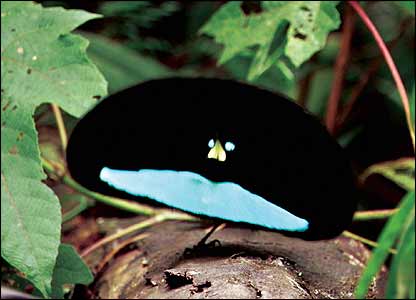
The Ibis is best known for their large size, long necks and curved beaks. This long neck and curved beak comes in handy when they are trying to catch a nice snack. These birds are specialists at picking frogs, insects, crabs and reptiles out of the mud using their curved beak. How about that? Not only does the beak look cool but it plays a pretty important role in the life of the Ibis.
Like most other wading-birds, the Ibis is a sociable bird that likes to go for a beer or two with their friends. In fact, the Ibis is very open-minded and will even hang out with other wading-birds such as the Heron and the Umbrellabird. It is important not to ignore you own species so the Ibis will also form large flocks of their own kind. They will usually create these flocks in order to find food and a mating partner.
Photo by J.M.Garg (Wikimedia)
You would think that these huge flocks of very large birds would be safe from most predators but this does not appear to be the case. In fact, the Ibis will generally rest in the trees instead of on the ground in an attempt to protect themselves from the hungry animals down below. What type of animals will try to feast on the Ibis? Well, there are wild cats, foxes, snakes and even birds of prey will swipe their eggs. This just goes to show that size doesn’t matter.
Okay, so it is time to get out of the swamp and head back home so we can enjoy another beautiful spring weekend. Thanks for hanging out with me today and I will see you on Monday.
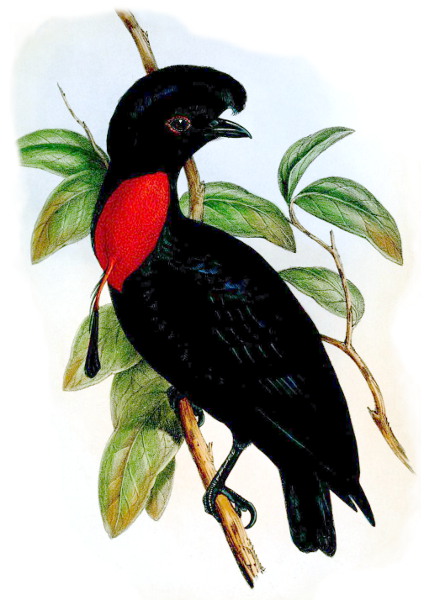
Welcome to the first day of April. Hey, I guess that means it’s April Fool’s Day so make sure you are careful with all the pranksters out there. There is an old saying that goes like this “April Showers, Brings May Flowers”. Not only is this saying deep and profound but it also means we will probably need an umbrella this month. Don’t worry, Wild Facts has you covered as we are starting the rainy month off with the Umbrellabird. Okay, so maybe they won’t be able to protect you from the rain but they should be able to keep your attention for the next minute or so.
The Umbrellabird is a rather large species of bird that can be found inhabiting the tropical rainforests of Central and South America. I guess having a large crest on your head that acts like an umbrella would be a useful characteristic if you are living in the rain-forest. Okay, so this umbrella-like crest isn’t used to protect the birds latest hairstyle. Actually, the males will typically fan this crest out during mating season to attract a mate. Not only that but they will make a loud rumbling noise, which is said to sound like a Hippo. I don’t know about you but I am impressed that a bird can be so loud that you mistake it for a Hippopotamus.
Photo from Wikimedia
So how are they capable of making this loud noise? You may have been distracted by the umbrella so you didn’t even notice the large wattle hanging from the Umbrellabird’s throat. This wattle is able to inflate which basically acts as an amplifier. They would make the perfect roadie for a band since they are always carrying an amp with them.
Umbrellabird Fast Fact – You have to be careful around this bird since they have some very influential friends. In fact, they are even connected to the great Charles Darwin. Well, he might be a friend of a friend but it still counts. You see the Umbrellabird was discovered in the 1800′s by Darwin’s companion, Sir Alfred Wallace.
That is the end of another week of Wild Facts. Enjoy your weekend and I will see you on Monday.
If you read the title and looked at the picture then you are probably fully aware that we are getting away from the interesting frog species we learned about last week. That’s right, we are heading to the skies to learn about the Tropicbird. As you might expect, this bird species can be found in Tropical locations. It is funny how that works, isn’t it? At one time it was thought the Tropicbird was closely related to other large seabirds such as Pelicans and Frigate birds. Apparently, this is no longer the case as it appears the Tropicbird does not have any close relatives (that we know of). I bet their Family Reunions would be incredibly boring.
As mentioned the Tropicbird is a large seabird and can grow up to about 1 m (3′) in height. All three species of Tropicbird are typically white in colour with long tail feathers and skinny legs. So what does a large seabird like this eat? Well, like other ocean birds they feast on fish with the odd squid or crustacean thrown in for good measure. It would be neat to watch one of these birds hunt as they tend to plunge-dive into the water to catch their tasty snack. I haven’t even jumped off a diving board before so I have no idea how these birds can just dive bomb the water.
Photo by Gerald Ludwig (Wikimedia)
Outside of the breeding season this beautiful bird will typically hang out by themselves. They may be found hunting in pairs but for the most part tend to be quite solitary. Naturally the Tropicbirds come together on the breeding grounds which are generally located on the tops of cliffs. After mating the female will lay a single egg (talk about putting all your eggs in one basket) which is incubated by both the male and female. After 6 weeks the egg will hatch and the chick will stay with Ma and Pa for about 3 months before leaving the nest. It is nice to see both birds working together to take care of their little one.
Tropicbird Fast Fact – The Tropicbird typically takes part in amazing courtship displays. Anywhere from 2–20 birds will simultaneously and repeatedly fly around each other in large, vertical circles. While flying in circles they will swing their tail streamers from side to side. If the female likes the show then she will mate with the male in his nest site. As you can imagine disputes will occur from time to time. This would be like watching the Canadian Snowbirds performing their aerobatic tricks……but of course with jets instead of actual birds.
It looks like we are done with the Tropicbird for now. I hope you enjoyed Monday’s Wild Fact. See all of you tomorrow.
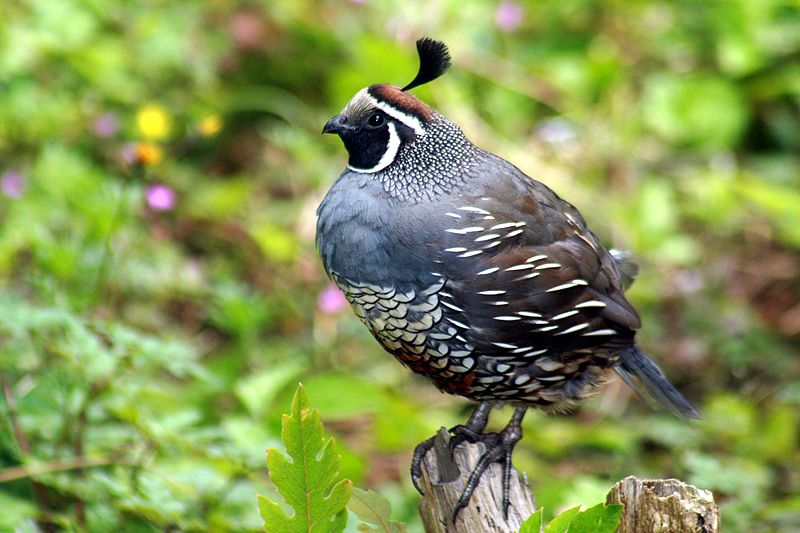
Today is a little bit of a sad day for many people, including myself. Yes, today is the day we all go back to work and the routine of life begins once again. I hope all of you enjoyed your holidays and are ready for the work week. To help you cope with going back to work we are going to look at an interesting bird called a Quail. The term Quail symbolizes a group of small to mid-size birds in the pheasant family. As a result you can find these birds pretty much wherever you live.
If you are looking to track down one of these interesting birds then you need to hang out in woodland and other forest areas throughout the world. As with other species, not all Quail look the same. There are about 15 different species scattered throughout the globe with all of them having slightly different appearances. Their attributes are largely driven by the adaptations to their specific environment.
The Quail is generally a solitary animal meaning they don’t really care for the company of other birds. Sometimes if this bird is in a gregarious mood then they will socialize with one other Quail. With that said, everything changes once mating season rolls around. During this time, different family groups will come together and form flocks as large as 100 individuals. I can just imagine how cranky these introvert birds are after a few days with such a large flock.
Photo from Wikicommons
Technically the Quail is an omnivore as they feed on insects and worms but they seem to be a vegetarian at heart. The majority of their diet is made up of vegetation such as seeds, wheat, flowers and fruits. In fact, about 95% of their diet is focused around the vegetarian side. I can completely understand this as I would rather eat vegetables over insects and worms any day of the week.
Quail Fast Fact – The Quail is able to begin mating after about 2 months which seems to be a very short time after birth. I guess this is typical for most birds in the pheasant family though. During mating season these birds will typically leave the protection of the forest to congregate in more open areas such as fields.
Well that does it for the Back to Work Wild Fact. I hope you are having a great day. See you tomorrow.
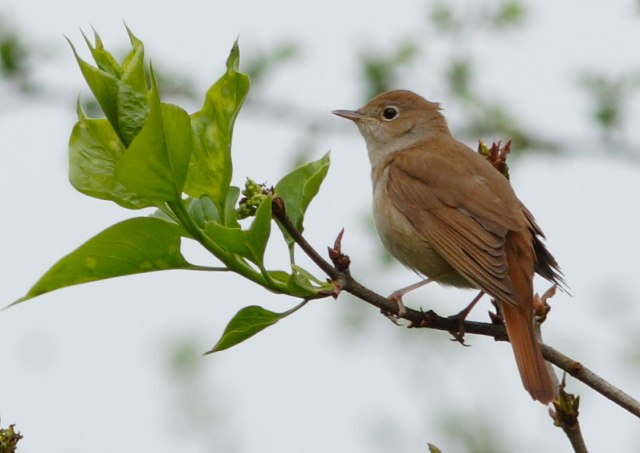
Last week we talked about a couple of birds while looking at the real life version of Tweety and the Roadrunner. Today we are going to look at another bird but I don’t know any famous cartoon characters that were based off of the Nightingale. Don’t get me wrong, I know they have some songs named after them and even a sonnet but no cartoon character. Perhaps we should make one that can be friends with Tweety and help him defeat that mean ol’ puddy tat. If we are going to create a new cartoon character, I guess we should learn more about the real life subject, right?
The Nightingale is a small bird that can be found in Europe and southwest Asia. It is often mistaken for another famous bird, the European Robin, as they look awfully similar to the female Robins. The Nightingale tends to be larger than the Robin and is usually a boring old brown colour, except for the reddish tail. At least they have some colour to pretty them up. These particular birds are known to travel far distances each year to reach their breeding grounds or overwintering areas. They typically breed in the European and Asian forests while spending the chilly winter months in southern Africa. I bet they would have enough frequent flyer miles to migrate to North America.
Photo by insecta62 (Wikicommons)
So what exactly is a Nightingale? Well obviously it is a bird but what does their name mean? Believe it or not these birds were apparently named over 1000 years ago. The term “Nightingale” simply means “night songstress”. I suppose we don’t have to be a genius to figure out why they called them that. Obviously, these birds love to sing at night. I personally prefer singing in the shower or the truck. It is believed that the single males still looking for their mate will sing throughout the night to attract that special partner. So basically they are serenading the lovely females. Who would have known that Nightingale’s are so romantic.
Don’t worry you get your chance to hear the beautiful song from the Nightingale by watching the short video clip below. Enjoy and have a great day!
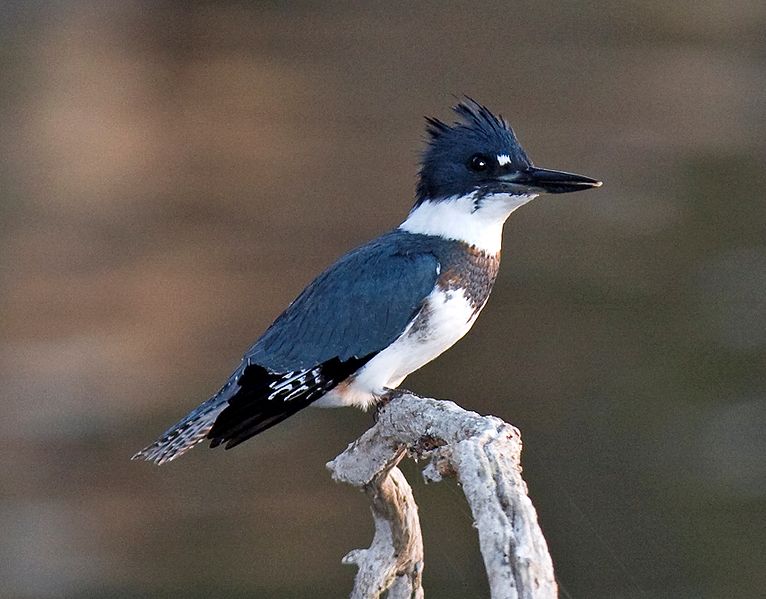
After spending yesterday in the deepest depths of the ocean we are coming up for some air. In fact we are heading to the sky to talk about a pretty cool bird that is always a treat to see. I am of course talking about the Belted Kingfisher which is typically found in the United States and in Canada. If you are Canadian then you might recognize it from the 1986 version of the $5 bill. To save you from Googling the Canadian $5 bill, I have included a picture of it below.
Back of the Canadian $5 Bill (1986-2002)
Other than on the $5 bill, you might see these birds hanging out near water bodies all throughout Canada and the United States. They usually spend their summer vacation on these northern breeding grounds. Like the smart birds that they are they will fly into southern United States, Mexico and even parts of Central and South America during the cold winter months. Typically these birds know when it is time to go once the waterbodies start to freeze. Although, some individual Kingfishers have been known to brave the cold Canadian winters. Not too smart, if you ask me.
Female Belted Kingfisher with Prey - Photo by Teddy Llovet (Wikicommons)
It is not uncommon to see one of these beautiful birds perched on a branch or post near a waterbody. If you wait just a little bit longer you may be lucky enough to witness them diving head first into the water where they will most likely catch a nice scrumptious fish for dinner. Besides fish they will also feed on crustaceans, insects, reptiles and even small mammals. The Belted Kingfisher relies heavily on lakes and rivers. Even their nest depends upon these waterbodies as they roost in a tunnel on the side of the bank. The nice thing about the Kingfisher is they believe in equal rights. Both the male and female will work to dig out a nice nesting tunnel. Again they will both share the duties of incubating the eggs and feeding the young. Now that is one fair and equal relationship.
Belted Kingfisher Fast Fact – Their long nesting tunnel is usually excavated so that it is going uphill. It is believed this is engineering concept will protect the young if the area ever gets flooded. The little babies will still be able to breath by utilizing the air pocket at the elevated end of the tunnel. Now that is one smart and impressive bird.
Thanks for checking out today’s Wild Fact on the Belted Kingfisher. Be sure you come back for the final fact of the week on Friday. I can’t believe it is almost Friday already. Have a great day!
Welcome to my ongoing project to provide you with 1000 Animal Facts. Every week-day I will provide a new and interesting animal fact counting down from 1000. My goal is to hopefully educate the young and old alike about the interesting adaptations of the animal kingdom. As well, I am hoping people will gain a greater appreciation of the animals we share earth with. If you have any questions, please feel free to use the Contact form or leave a comment.