Posts Tagged ‘Fish Facts’

Wild Fact #370 – Bizarre But Tasty – Burbot

February 6, 2012 - 12:00 am No Comments
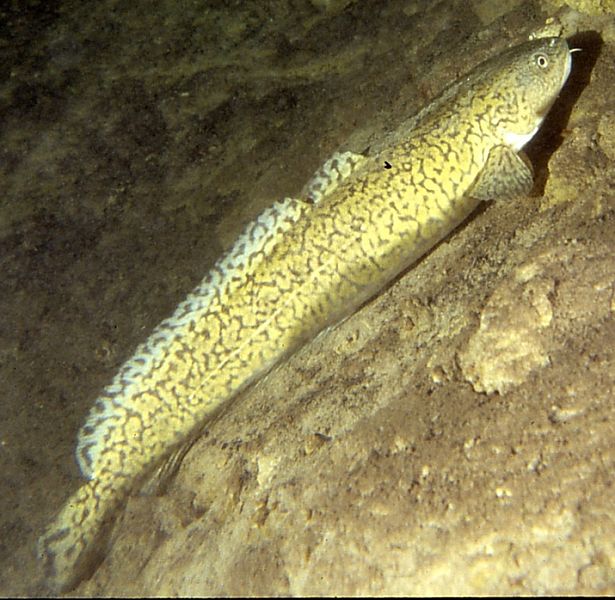
Burbot | Ling

Photo by Berreu (Wikimedia)

After a weekend of fishing with the guys, I figured it was only appropriate to write about an unique fish species. Today we are heading to freshwater lakes, above 40 degrees latitude, throughout North America and Europe. It is here that we will find the weird looking Burbot, which is also known as the Ling-Cod or what we were calling it this weekend, a plain ol’ Ling. Surprisingly enough, the Burbot is the only gadiform (cod-like fish) found in freshwater systems, so I guess that is one thing that makes this fish special. Keep reading to find out a few more things that set this fish apart from others.

What Kind of Fish is That?!?

The Burbot is a cold water fish that prefers lakes in the 15 degrees Celsius (59 degrees Fahrenheit) range, which is why you can usually find them at deeper depths during the summer months. I know I would never make it as a Ling since I would be heading to the beach to relax in the warm water. So how can you tell if the fish you just caught is a Burbot? Well, it is pretty easy since they have a very unique appearance. They have slim body with smooth (and slimy) skin to go along with their flat head. On this head, you will notice a couple of barbels, which is just those whisker-like filaments hanging off their chin. These barbels provide the Burbot with a sense of smell as well as touch. Finally, you will notice the large fin running along the back-end of the fish, which is a pretty distinctive feature that should help you identify your fish species.

Burbot | Lota lota | Ling

Photo from Wikimedia

Tasty but Not Targeted

Although the Burbot isn’t necessarily sought after by anglers, their meat is delicious and even nutritious (in moderation). Nonetheless, anglers don’t seem to be too keen on targeting this bizarre fish. I am still surprised that more people don’t fish for them since they taste like lobster and are often referred to as “the poor man’s lobster”. If you decide try your luck at catching a Burbot, remember to check your local fishing regulations. Most places will allow you to catch these fish since they have a fairly healthy population. This is probably due to the fact that nobody is angling them and they lay about 1 million eggs every winter, so they are quite productive.

The next time you catch an odd looking fish, check it out to see if it is a Burbot before screaming and quickly throwing it back. You just may get a delicious meal out of it.

Digg This
Reddit This
Stumble Now!
Buzz This
Vote on DZone
Share on Facebook
Bookmark this on Delicious
Kick It on DotNetKicks.com
Shout it
Share on LinkedIn
Bookmark this on Technorati
Post on Twitter
Google Buzz (aka. Google Reader)

Wild Fact #416 – A Little Bloated – Sea Raven

December 2, 2011 - 12:00 am No Comments
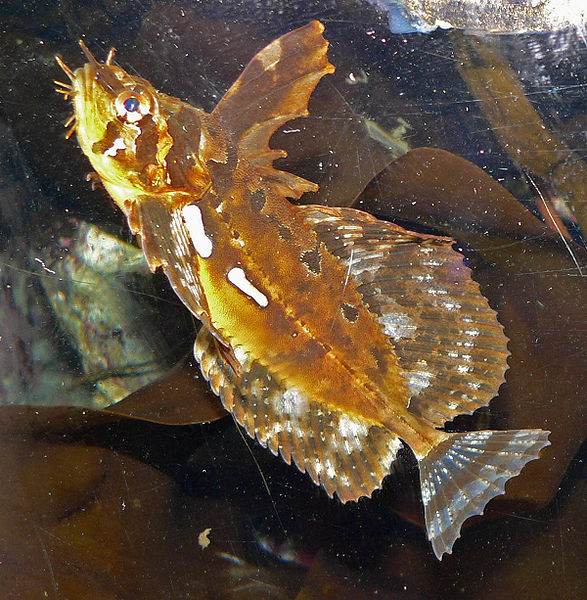
Sea Raven Facts

Photo by Stan Shebs (Wikimedia)

After spending yesterday in the warm portions of the ocean chasing after the incredibly quick Sailfish, I thought we would head to the northwest Atlantic and north Pacific to search for a ground dwelling sculpin known as the Sea Raven. According to some researchers this is the “most remarkable looking fish” so I think we are all in for a treat today. Besides, I can’t think of a better way to end the week then by splashing around in the north Pacific Ocean at the beginning of December – I am getting shivers just thinking about it.

A Remarkable Fish

So what makes the Sea Raven such a remarkable looking fish? Well for starters they have a wide range of amazing colours including deep red, dark brown, purple and of course various shades of yellow. Don’t get me wrong their coloration is impressive but I don’t think this is their best feature. Personally, I like the fleshy protrusions extending from the large head of the Sea Raven. As well their prickly skin and ragged looking dorsal fin come together to make this one bizarre looking fish. I wonder if all the other sculpins make fun of the Sea Raven for being different or if they are envious of their remarkable look.

Sea Raven Facts

Click for Source

The Balloon of the Ocean

Compared to other sculpins, the Sea Raven is definitely the coolest, in my opinion. These little fish have the ability to expand their stomach by taking in large mouthfuls of water. In this condition the fish will just float around aimlessly as it tries to use their tail as a rudder to steer the ship. At this point it is unclear if the Sea Raven is able to control the amount of water it releases at any given time. It is believed that they just need to wait until the water naturally expels from their system. For some reason, I keep picturing this little fish flying around like a balloon that you just let go before tying the end.

Sea Raven Fast Fact

Okay, one last quick fact before we get ready for the weekend. The Sea Raven is known for having large teeth and as a result bite harder than most of the other sculpins out there. I guess this answers the question about whether other sculpins make fun of them or not….I wouldn’t mess with a fish that can bite me in half.

That does it for today’s Wild Fact. Enjoy your weekend and I will see you on Monday.

Digg This
Reddit This
Stumble Now!
Buzz This
Vote on DZone
Share on Facebook
Bookmark this on Delicious
Kick It on DotNetKicks.com
Shout it
Share on LinkedIn
Bookmark this on Technorati
Post on Twitter
Google Buzz (aka. Google Reader)

Wild Fact #417 – One Fast Sail Boat – Sailfish

December 1, 2011 - 12:00 am No Comments
Sailfish

Photo by OSF/Howard Hall/Animals Animals—Earth Scenes

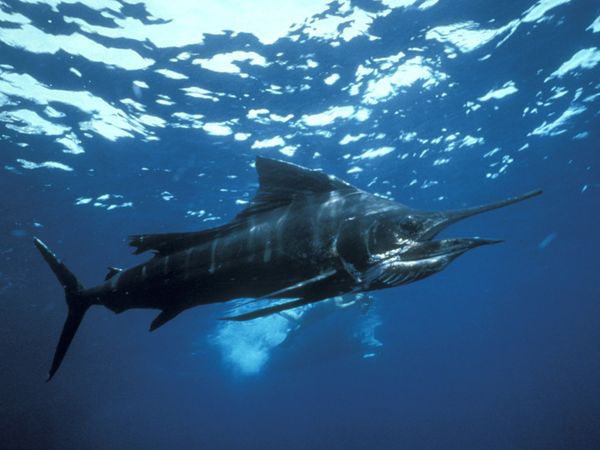
Can you believe it is December 1st already? You know that this means Christmas is just around the corner, right? For a lot of people, Christmas is associated with snow and cold so I thought we would put those nasty winter thoughts out of our head by studying the warm water Sailfish. Yes, these beautiful creatures are typical found in the warmer oceans throughout the world. Although we may get to hang out in the warmer parts of the world, you better not just relax on the beach if you plan on catching a glimpse of the Sailfish. Unfortunately this fish is usually found quite far from land where they are able to feed on their favourite food.

The Fastest Fish

Even if you make it further out in the ocean, you had better be on the lookout since the Sailfish is known to be the fastest fish in the ocean. They have actually been clocked jumping out of the water at an astounding 110 km/hr (66 mph). I don’t know about your country but this would be considered speeding on pretty much  every highway in Canada. If you do get to see one of these speedy Sailfish, you shouldn’t have a tough time distinguishing them from other fish in the ocean. As you can see from the photo, the Sailfish has an incredible dorsal fin that is pretty much the length of their body. I wonder how they received their name “Sailfish”? :) .

Sailfish

Photo by Rich Gasparian (Wikimedia)

A Useful Sail

Their sail is more than just a fashion statement. It actually plays a pretty important role in their feeding strategy. The Sailfish loves feeding on schools of sardines and anchovies, which they corral together using their large sail. They are basically like a shepherd herding their sheep…..only the Sailfish shepherd eats their “sheep” right away. You have to feel sorry for the poor sardines and anchovies since they don’t stand a chance against a fish that has a large sail and travels at speeds greater than 100 km/hr. Although, it isn’t only small fish that need to be on the lookout since the Sailfish will also feast on squid and octopus.

That does it for today’s warm water fish Wild Fact. Enjoy the rest of your day and we will meet up tomorrow for the last fact of the week.

Digg This
Reddit This
Stumble Now!
Buzz This
Vote on DZone
Share on Facebook
Bookmark this on Delicious
Kick It on DotNetKicks.com
Shout it
Share on LinkedIn
Bookmark this on Technorati
Post on Twitter
Google Buzz (aka. Google Reader)

Wild Fact #546 – The Rat of the Sea – Spotted Ratfish

June 3, 2011 - 12:00 am 2 Comments


Photo from Wikimedia

How about that?  We managed to make it all the way to the last Wild Fact of the week.  I am sure you are excited to get the weekend started so I will get right into today’s fact on the Spotted Ratfish.  To take a look at today’s animal, we are going to be doing a little diving in the Pacific Northwest.  It may be a little chilly so I suggest you bring a wet suit.  Before we dive in, let’s learn a little more about this interesting deep sea creature.

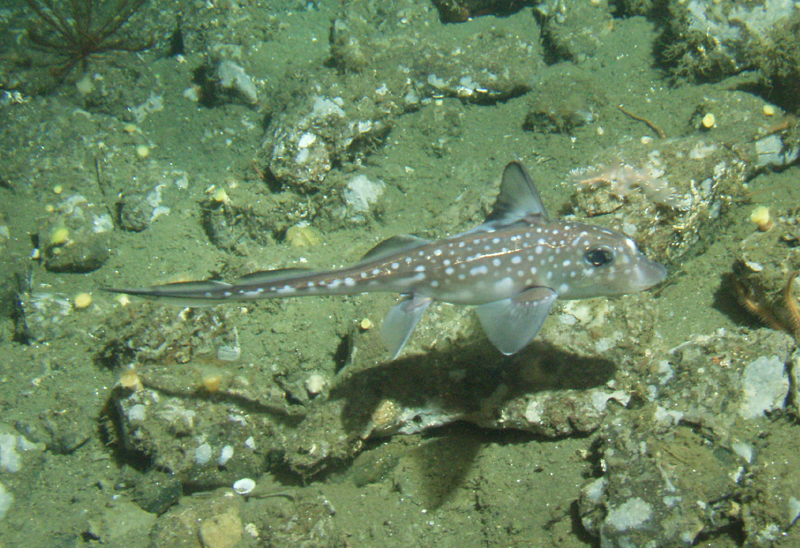
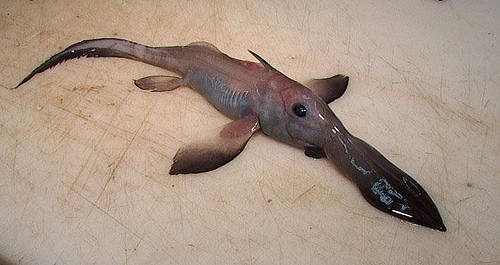
The Spotted Ratfish is actually a harmless relative to the shark family.  Obviously they get their name from the long, pointed,  rat-like tail, which is pretty unique for fish species.  In case their unusual tail isn’t enough to help you identify them during our dive, let’s go over a few more key features.  The Spotted Ratfish has a smooth and scale-less skin and will usually be a silvery colour with shades of gold, blue and green.  As well, this Ratfish has a large, emerald green eye which is capable of reflecting the light just like a cats eye.   This should definitely help spot them in the dark depths of the ocean.

Photo by Clark Anderson (Wikimedia)

Unfortunately, we may have a tough time observing these interesting fish species since the Spotted Ratfish tries to keep its distance from divers.  Although, if they do feel threatened, they are capable of inflicting a mild, toxic wound using a poisonous spine.  Don’t worry, it won’t kill you and for the most part the Spotted Ratfish is not generally an aggressive fish.  Oh and be sure to watch them as they swim away since I guarantee it will be entertaining.  I think they like to pretend they are in an air show as they will typically perform barrel rolls and corkscrew turns as they swim away.

Spotted Ratfish Fast Fact – Keep your eyes out while you are scanning the ocean floor.  The Spotted Ratfish will lay leathery egg cases that are often mistaken as inanimate objects by curious divers.  I guess it is a good thing that the Ratfish has figured out a way to make their eggs blend in and look like a non-living object.

It looks as though we have made it to the weekend.  Thanks for reading Wild Facts this week! Now let’s get outside and enjoy the beautiful weekend.  See you on Monday.

Digg This
Reddit This
Stumble Now!
Buzz This
Vote on DZone
Share on Facebook
Bookmark this on Delicious
Kick It on DotNetKicks.com
Shout it
Share on LinkedIn
Bookmark this on Technorati
Post on Twitter
Google Buzz (aka. Google Reader)

Wild Fact #549 – The Fashion Guru – Oarfish

May 31, 2011 - 12:00 am No Comments

Photo from Wikimedia

Welcome to the second installment of Wild Facts – Deep Sea Creatures, where we head to the deepest and darkest depths of the ocean to find some of the strangest animals known to man.  Today we are going to study the longest bony fish that humans know about.  Of course I am talking about the amazing Oarfish.  The nice thing about this animal is the fact that even though they are considered a Deep Sea Fish, you will get to see them quite often.  This probably isn’t good for the fish since it means they have just washed up on the shore, but it does seem to happen quite often.

So I know you are dying to find out just how long the longest bony fish really is.  Are you sitting down?  Good, because this fish can reach a total length of 15 meters (50′) and can weigh up to………..wait for it……..272 kg (600 lbs).  I don’t know about you but I am pretty impressed that such a long, narrow fish can weigh so much.  I honestly don’t know what I would do if I caught one of these things on my fishing line.

Photo from Wikimedia

To make this fish even cooler is the fact that it has a bluish, scale-less body with a large red dorsal fin. If there is one deep sea fish that has a fashion sense, it is definitely the Oarfish.  As a result of the extreme length and interesting colours, it is believed that this particular deep sea fish is responsible for many “Sea Monster’ sightings.

So what do these bizarre creatures feed on when hanging out 3000 feet below the ocean surface?  Well, they have a small mouth and their teeth are hardly visible so I doubt they are taking down large sharks.  Instead, they feed on harmless animals such as plankton, shrimp and any other crustaceans they can get their mouth on.  Naturally, these long, heavy fish provide an excellent food source to even larger fish such as sharks.  You have to love the circle of life.

It is time to head back to the surface and catch a breath before we head back down for another Deep Sea Adventure tomorrow.  Enjoy the rest of your day and I will chat with you tomorrow.

Digg This
Reddit This
Stumble Now!
Buzz This
Vote on DZone
Share on Facebook
Bookmark this on Delicious
Kick It on DotNetKicks.com
Shout it
Share on LinkedIn
Bookmark this on Technorati
Post on Twitter
Google Buzz (aka. Google Reader)

Wild Fact #565 – Those Teeth Are Not For Knitting! – Gar

May 9, 2011 - 12:00 am No Comments

Photo from Wikimedia

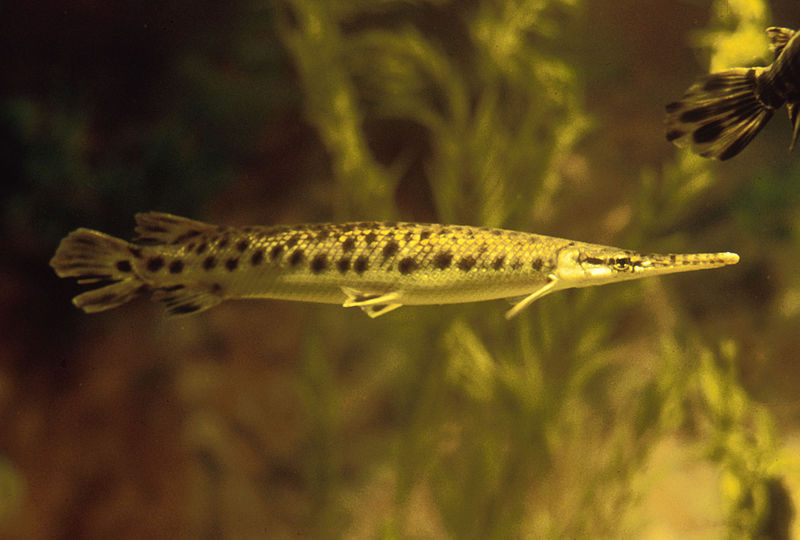
Well I hope all of the Mother’s out there enjoyed their special day and were able to spend time with their families.  The love, support, guidance and encouragement that mom’s provide is something that should be celebrated every day so Thank You to all the mother’s out there (especially my own). Today’s Wild Fact has absolutely nothing to do with mothers or special occasions.  Unless you think  a slimy fish called a Gar is related to Mother’s Day.  So what exactly is a Gar?  Well, they are a long fish which is typically found in the freshwater’s of Central and North America.  So who is up for a boat ride to learn about this interesting fish species?

Before we get any further into this Wild Fact, I am going to have to ask you to put your life-jacket on.  I don’t want any accidents while we are learning about this large fish.  Just how large are they?  Well, some species can get up to 3 m (9′) long but this isn’t necessarily common among all species of Gar.  Even if they don’t grow to this large size they are all considered to be deadly predators.

Photo by Omnitarian (Wikimedia)

The Gar is a slow moving fish, therefore they tend to rely on the sheer power and strength of their jaws to dominate the fish world. Not only are their mouths powerful but they are also filled with a ton of sharp, needle-like teeth.  To make matters worse for the little fish and crabs hanging out in Gar territory is the fact that they hunt in schools.  That’s right, groups of Gar will work together in an attempt to ambush the poor prey as one massive  and scary looking fish.  Nobody said life was easy for a small fish in a North American freshwater system.

Gar Fast Fact – Due to the typically large size of the Gar, they actually have very few natural predators.  Some of their biggest threats include alligators, crocodiles, large fish and of course those pesky humans. Luckily the Gar is not considered to be threatened for extinction.  Although their populations are decreasing in some areas due to over-fishing and water pollution.

Well that does it for the first fact of the week.  Make sure you dry off and get ready for tomorrow’s brand new Wild Fact!

Digg This
Reddit This
Stumble Now!
Buzz This
Vote on DZone
Share on Facebook
Bookmark this on Delicious
Kick It on DotNetKicks.com
Shout it
Share on LinkedIn
Bookmark this on Technorati
Post on Twitter
Google Buzz (aka. Google Reader)

Wild Fact #705 – Freshwater Jaws! – Barb

October 11, 2010 - 12:00 am 2 Comments

Photo by André Karwath (Wikicommons)

I just finished my amazing Thanksgiving dinner of Turkey, Rice, Broccoli, Cauliflower and a nice, refreshing glass of milk so I figured I better write up the newest Wild Fact before I take a nice, refreshing nap.  Today we are going to talk about Barb.  No, not my Aunt Barb but instead a small fish that can be found in the freshwater lakes and rivers of the southern hemisphere.  There are about 2000 species of Barb throughout Asia, Africa and South America so we shouldn’t have a tough time finding one.

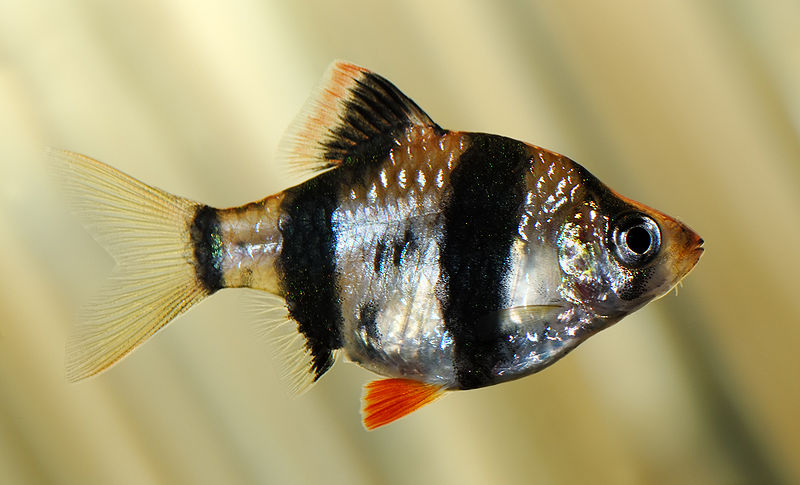
The Barb only grows between 2.5 – 7 cm (1 – 3″) long yet are known as freshwater sharks.  I know what you are thinking, how can a tiny, little fish like that possibly be referred to as a shark.  It has to do with the fact that these little guys are one of the few freshwater fish that actually have rows of teeth, similar to a shark.  Despite their small stature these fish are very aggressive hunters and actually dominate in their small fish ecosystem.  Isn’t that cute, it is like a miniature freshwater shark with pretty colours.  Even though Barbs prefer small fish and insects they have also been known to indulge themselves with an aquatic plant salad from time to time.  I have said it before and I will say it again, it is all about balance.

Tiger Barb - Photo from Wikicommons

As you can imagine the Barbs small size and beautiful colours make them a target for becoming household pets. They are fairly hardy fish so they could make great pets.  Obviously they are not the type of pets you take for a walk and throw a ball to but they are pets nonetheless.  If you decide to get a Barb for your aquarium, please don’t put them in a tank with other small fish.  Remember, they are Jaws of the freshwater fish world so your pet guppy won’t stand a chance.

Barb Fast Fact – If you are looking to minimize the aggression from your pet Barb (honestly, every time I write this I think of my Aunt.  For the record she is not a pet) then you should be placing them in a tank with at least 6 other Barb’s and preferably more.  Since Barb’s are a schooling fish this helps calm their mean streak.

That does it for me on this Thanksgiving Day.  A Happy Thanksgiving to all that are celebrating.  Enjoy the rest of your day.

Digg This
Reddit This
Stumble Now!
Buzz This
Vote on DZone
Share on Facebook
Bookmark this on Delicious
Kick It on DotNetKicks.com
Shout it
Share on LinkedIn
Bookmark this on Technorati
Post on Twitter
Google Buzz (aka. Google Reader)

Wild Fact #736 – No Place Like Home – Butterfly Fish

August 27, 2010 - 12:00 am 2 Comments

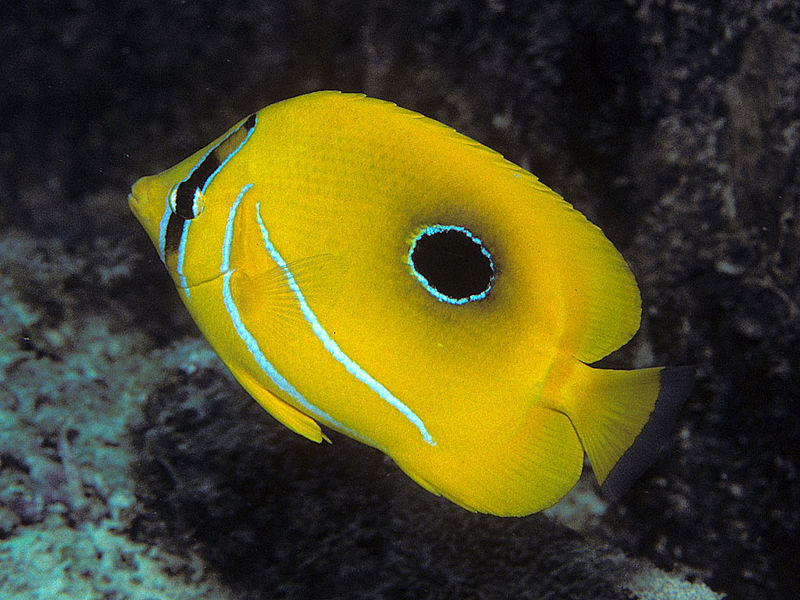
Photo by: Bernard E. Picton

Here we are at the end of another week of Wild Facts.  I was thinking of doing a little bit of fishing this weekend.  I figure I better try to get out before the snow starts flying.  In honour of my potential fishing plans I figured I would write about an interesting little fish today.  I really don’t think I will be catching any Butterfly Fish this weekend since they are found in Tropical and Sub-Tropical waters.  Don’t get me wrong I would love to be fishing the Tropical waters this weekend but I think I will just stick to the northern rivers of the Yukon for now.

If you have ever gone snorkeling around the Tropical coral reefs then you most likely have seen these spectacular fish.  They are brightly coloured with unique patterns and just happen to be the most common fish species on the reefs.  Out of all of the different patterns of Butterfly Fish I think I like the ones with the large eye-spot.  To me this is a very clever defense mechanism since it confuses the poor predator. They usually have no idea what end to attack, which gives the Butterfly Fish a better chance to escape.

Photo by: Leonardo Stabile

There are about 114 species of Butterfly Fish and their thin, round-shaped bodies often resemble that of their cousin, the Angelfish. In order to tell these two types of fish apart, you will need to look for the black spots or the dark bands around the eyes of the Butterfly Fish.  All day these little fish will continuously peck at the coral reefs looking for polyps, worms or other invertebrates.

Not only does the coral provide an excellent spot to find food but the Butterfly Fish will also spend their nights resting inside the coral.  In fact the coral also provides a safe refuge when larger predators such as snappers and sharks come looking for a quick meal.  It goes to show just how important this coral is to this particular fish species.  Naturally the destruction of coral reefs, which we are seeing worldwide, is impacting the population of Butterfly Fish.

Butterfly Fish Fast Fact – Unlike most fish species the Butterfly Fish will form life-long mating pairs.  Awww, isn’t that cute!  Little husband and wife Butterfly Fish.

That does it for this week of Wild Facts.  Have a great weekend and get out to enjoy the sunshine.

Digg This
Reddit This
Stumble Now!
Buzz This
Vote on DZone
Share on Facebook
Bookmark this on Delicious
Kick It on DotNetKicks.com
Shout it
Share on LinkedIn
Bookmark this on Technorati
Post on Twitter
Google Buzz (aka. Google Reader)

Wild Fact #765 – Beach Ball of the Sea – Puffer Fish

July 19, 2010 - 12:00 am 2 Comments

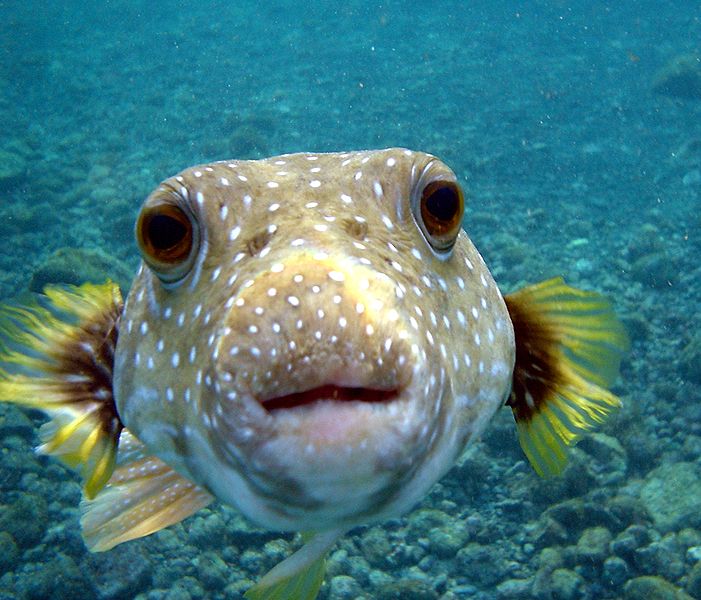
Photo By Mila Zinkova

Welcome back to another fun and exciting week of Wild Facts.  Today we are going to head to the tropical and sub-tropical oceans (although some do live in freshwater systems) to learn about one of the most poisonous creatures on earth. Of course we are going to explore the life of none other than the Puffer Fish, also known as the Blow Fish. I am sure most of us are familiar with this unique fish but let’s see what else we can learn.

The Puffer fish is a very slow and clumsy swimmer which makes them easy pickings for any potential predator.  Instead of trying to out swim these fierce predators the Blow Fish has adapted a much more unique self defense mechanism. They have an elastic stomach and the ability to ingest large quantities of water in a short order of time. The result of this behaviour turns them into a large ball several times the size of their normal self.  Naturally this makes it very difficult for a normal fish to consume the Puffer Fish. If a predator is “lucky” enough to actually consume the fish before it blows up into a ball it will pay a very costly price.  As I mentioned the Blow Fish is one of the most poisonous animals on the planet.  In fact they contain a poison called tetrodotoxin which is up to 1200 times more lethal than cyanide.  If this doesn’t paint a clear enough picture than perhaps this little fact will. The Puffer Fish contains enough toxin to kill 30 humans and there is no known antidote.  Of course, humans like to tempt fate so believe it or not the meat of the Puffer Fish is served as a delicacy in Japan called “fugu”. Personally, I wouldn’t recommend trying to eat one of these guys. In fact, I would probably just stay away from them completely but I guess I am just a big baby.

Inflated Puffer Fish

Puffer Fish Fast Fact – After the eggs of a Puffer Fish hatch, the young (called fry) are not fully developed.  As a result they will form a hard protective shell around them. Eventually this shell will crack off and the fins and tail will develop.  Once the Puffer Fish is big enough it will swim down and integrate itself with the rest of the community.

Well that is all I have on the deadly Puffer Fish.  I hope you enjoyed today’s fact and I will see you back here tomorrow for Wild Fact #764.

Digg This
Reddit This
Stumble Now!
Buzz This
Vote on DZone
Share on Facebook
Bookmark this on Delicious
Kick It on DotNetKicks.com
Shout it
Share on LinkedIn
Bookmark this on Technorati
Post on Twitter
Google Buzz (aka. Google Reader)

Wild Fact #773 – The Most Shocking Wild Fact Yet – Electric Eel

July 7, 2010 - 12:00 am 8 Comments

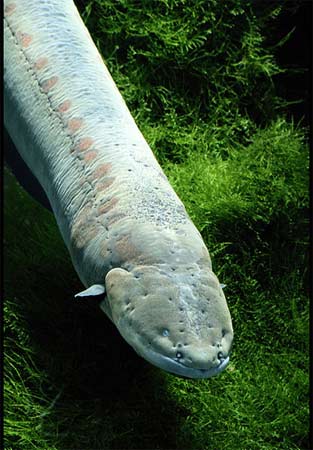
Photograph by George Grall

Welcome to Wild Facts!  If this is your first time stumbling upon our crazy little place to learn all about animal facts than please feel free to snoop around.  As well you can leave a comment or send me an e-mail if you have any questions or would like some additional information about an animal.  If you happen to be one of the regular readers than welcome back and thanks for all of your support so far.  All of you reading this are in for a shocking post today.  No I mean it will literally be electrifying since we are going to look at the always interesting Electric Eel.  What can possibly be cooler than a fish that can give you a huge electrical shock? Well, I guess it would be pretty groovy if we had sharks with laser beams but let’s not get ridiculous (Bonus Wild Fact point if you caught the movie reference in that last line).

The first thing you need to know about the Electric Eel is they are not eels.  Yes they have the same “snake-like” appearance as our eel friends but they are actually more closely related to other fish such as carp and catfish.  As we all know the Electric Eel is able to produce an electric charge which they use to stun their prey or to defend against predators. Just how powerful is their electric charge? Good question and I had a hunch that you would ask this so I came prepared.  The Electric Eel actually has about 6000 specialized cells, called electrocytes, which store power like little batteries.  These cells are able to produce a charge of about 600 volts.  For the record a standard plug-in is only about 120 volts (in North America) so the Electric Eel can generate 5 times the power of a plug-in.  If you want to know what this feels like than stick a fork in the socket and multiply that by 5.  I AM KIDDING!  Where are you going? Geez, don’t actually stick a fork in the socket! Are you nuts? Luckily human deaths from an electric eel are very rare but repeatedly getting shocked could cause heart failure.  As well, some people have drowned after being stunned by these shocking eel-like fish. I recommend you try not to get shocked by an Electric Eel but I will let you decide what you want to do.

Electric Eel Fast Fact – The Electric Eel has relatively poor eyesight but is capable of producing a low level electric charge that helps paint a picture of their surroundings.  And we thought bats that used sonar were cool.  Eat your heart out Little Brown Bat!

Thanks for stopping by Wild Facts and I look forward to seeing you around.  Have a great day!

Digg This
Reddit This
Stumble Now!
Buzz This
Vote on DZone
Share on Facebook
Bookmark this on Delicious
Kick It on DotNetKicks.com
Shout it
Share on LinkedIn
Bookmark this on Technorati
Post on Twitter
Google Buzz (aka. Google Reader)