Posts Tagged ‘Penguin Facts’

Wild Fact #474 – Keep an Eye on this Penguin – Yellow-Eyed Penguin

September 13, 2011 - 12:00 am No Comments
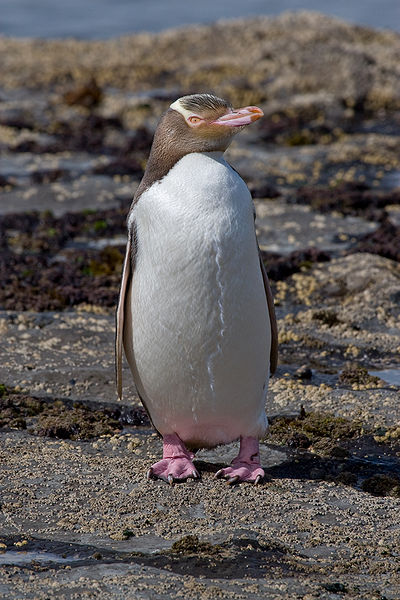
Yellow-Eyed Penguin

Photo by Christian Mehlführer (Wikimedia)

So I hope the week is going well for you so far. If it isn’t, I have the perfect thing that will turn the entire week around for you. How would a trip to New Zealand to study the Yellow-Eyed Penguin sound? Yeah, if that doesn’t make your week better than nothing will! That’s right animal fans, today we get to explore the life of one of the most lovable birds out there (you can’t tell me that penguins aren’t lovable). So pack your bags and lets get  going on our little road trip to New Zealand.

By now you have probably figured out that the Yellow-Eyed Penguin doesn’t live in the freezing cold like the standard penguins. Nope, they prefer to hang out in the forests along the coast of beautiful New Zealand. Personally, I would say that this is not a bad alternative to living on the harsh, frozen landscape of Antarctica.

Yellow-Eyed Penguin

Photo by Christian Mehlführer, (Wikimedia)

At one time, it was believed that the Yellow-Eyed Penguin was closely related to the Little Penguin, however, genetic testing has shown that they are actually more like the Crested Penguins, such as the Rockhopper Penguin. If you don’t feel like doing genetic testing, here are some other features that may help you identify the Yellow-Eyed Penguin. Well first of all, they have Yellow Eyes! This feature makes it very easy to identify these penguins. As well, this particular penguin species are one of the larger varieties as they can grow up to 75 cm (30″) tall and weigh up to 8 kg (18 lbs). So if you are wandering around New Zealand and you spot a fairly large penguin with yellow eyes…..it is probably a Yellow-Eyed Penguin.

Although, the chances of you spotting one of these penguins on your trip may be slim. The Yellow-Eyed Penguin is one of the most endangered penguin species out there with about 4000 individuals remaining in the wild. At one time, this animal had nothing to worry about but deforestation along with the introductions of non-native animals such as cats, dogs and foxes have left this species population in jeopardy. It just goes to show that life can change on you very quickly so you had better be prepared.

Well that does it for our trip to New Zealand. I hope you enjoyed learning about the Yellow-Eyed Penguin. See you tomorrow for another Wild Fact.

Digg This
Reddit This
Stumble Now!
Buzz This
Vote on DZone
Share on Facebook
Bookmark this on Delicious
Kick It on DotNetKicks.com
Shout it
Share on LinkedIn
Bookmark this on Technorati
Post on Twitter
Google Buzz (aka. Google Reader)

Wild Fact #508 – Bad Luck Bird – African Penguin

July 27, 2011 - 12:00 am 1 Comment
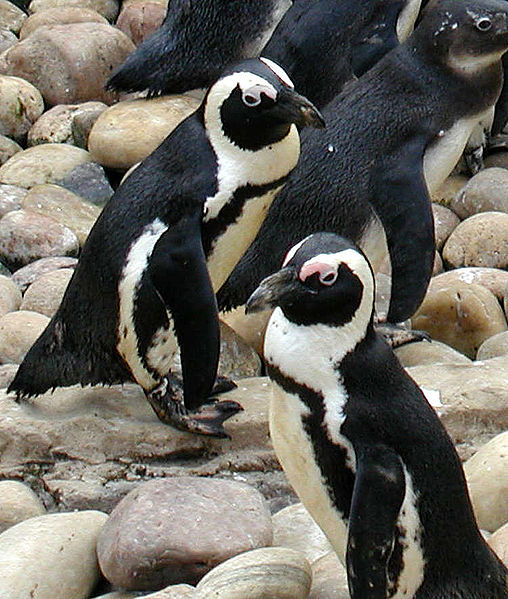
African Penguin

Photo from Wikimedia

Welcome everyone to the Wednesday edition of Wild Facts. Today we are going to take a trip to  a little place I like to call Africa, but we aren’t learning about the typical animals such as lions and gazelles. Nope, we are going to wattle our way over to the coast between Namibia and South Africa, so we can learn about the amazing African Penguin. This little penguin is also known as the Black-Footed Penguin and they have also been called the Jackass Penguin. They received this latter name since these unique birds have been known to make the neighing sound of a donkey.

So what does an African Penguin look like? Well, like a penguin. They are about 70 cm (27.5″) tall and weigh between 2 and 5 kg (4.4 to 11 lbs). They have black feet, which is how they received that clever “Black Footed Penguin” name, and each individual African Penguin has a black stripe with black spots on their chest. These spots are just like fingerprints with no two patterns being the same. Basically, it is like wearing a “Hello, My Name is….” tag at all times.

African Penguin Swimming

Photo by Commquarium (Wikimedia)

Have you ever wondered why the African Penguin is black and white? Believe it or not, this colouring plays a very important role in the survival of the species…and they look pretty sharp while doing so. Even in Africa this specific colouring provides incredible camouflage for our penguin friend. You see, when the African Penguin is enjoying a nice swim, the white belly makes them difficult to spot for predators beneath them looking up. Similarly, the black back makes them difficult to spot for the predators looking down into the water. If you ask me, this is pretty tricky of the penguin.

African Penguin Fast Fact – Unfortunately, this magnificent penguin is considered to be endangered as a result of climate change, over-harvesting the African Penguins food source, and of course, good ol’ pollution. In fact, during the year 2000, the African Penguin was having the best breeding season in recent memory. Unfortunately, right at the peak of this much needed phenomenal breeding season, an oil tanker sprung a leak and managed to oil about 18 000 individual African Penguins. I don’t know about you but that is just horrible luck for this species. I sure hope their luck changes since it would be nice to have them hanging around the earth a little while longer.

So that does it for Wednesday’s Wild Fact. I hope you enjoyed learning about the African Penguin and I am looking forward to exploring the life of a new animal with all of you, tomorrow.

Digg This
Reddit This
Stumble Now!
Buzz This
Vote on DZone
Share on Facebook
Bookmark this on Delicious
Kick It on DotNetKicks.com
Shout it
Share on LinkedIn
Bookmark this on Technorati
Post on Twitter
Google Buzz (aka. Google Reader)

Wild Fact #586 – Royal Penguin

April 8, 2011 - 12:00 am No Comments

Photo by M. Murphy (Wikimedia)

To end the week we are going to be hanging out with Royalty.  Okay, so maybe they aren’t royalty amongst us humans but I bet the Royal Penguin is respected and loved among their penguin comrades.  Actually, have you ever noticed that there are a lot of “Royalty” like penguins?  Look, we have the Royal Penguin, the King Penguin and of course the Emperor Penguin.  Those must be the most powerful and dominant birds species on our planet.  In order to observe the latest Royal member of Wild Facts, we will need to take a trip to Antarctica.  Don’t worry, I hear it is nice this time of year.

Well, I have my parka on and I am eager to start learning a little more about the Royal Penguin so let’s get to it.  First of all we have to be careful not to confuse it with the similar Macaroni Penguin (talk about getting the short end of the stick – two similar penguins and one gets called “Royal” while you are referred to as “Macaroni”… ouch).  There is still some debate whether or not the Royal Penguin is just a sub-species of their Macaroni cousin or if they are a separate species.  Either way, they are an interesting bird.

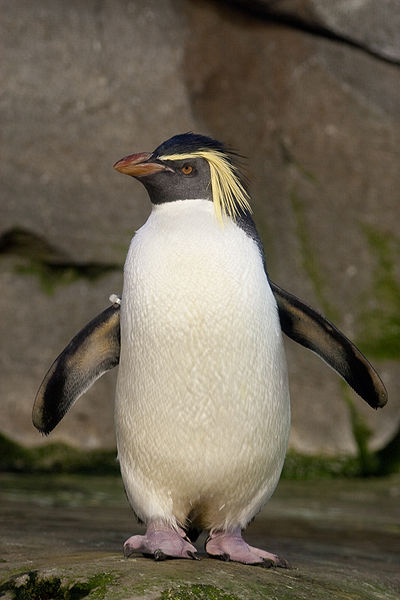
You may have noticed that the Royal Penguin has a beautiful yellow, orange and black crest extending from the back of their eye.  Naturally this tells us that they are a member of the Crested Penguin group.  In fact, they just happen to be the largest crested Penguin out there.  Maybe this is why they are referred to as being Royal.

Photo by M. Murphy (Wikimedia)

Like other seabirds, the Royal Penguin is colonial and tends to nest on the beach or on cleared areas.  The female of this penguin species will generally lay two eggs, however, it seems as though the first egg is just for practice.  Typically, the second laid egg will be larger and will hatch before or at the same time as the first laid egg.  It is usually the second egg that survives and in some cases the adult penguins will throw the first egg out of the nest before it hatches.  It must be tough being the black sheep of the family and you aren’t even born yet.  I would think this is survival technique as there is not much point in wasting energy and time incubating an egg that probably won’t survive in the real world.  Natural selection can be a very cruel process, can’t it?

How about that, we are at the end of another Friday Wild Fact.  Thanks for spending the week with me but I will let you go and enjoy the weekend on your own now.  Have a good one!

Digg This
Reddit This
Stumble Now!
Buzz This
Vote on DZone
Share on Facebook
Bookmark this on Delicious
Kick It on DotNetKicks.com
Shout it
Share on LinkedIn
Bookmark this on Technorati
Post on Twitter
Google Buzz (aka. Google Reader)

Wild Fact #702 – Jump Around! – Rockhopper Penguin

October 14, 2010 - 12:00 am 1 Comment

Northern Rockhopper - Photo by Arjan Haverkamp (Wikimedia)

I realize it is only October but since there is still snow on the ground in the Yukon Territory, I want to make all of you experience the cold wintery weather.  I hope you brought your winter boots and your parka because we are taking a trip to Antarctica.  The good news though is we are learning about the Rockhopper Penguin so today’s fact is bound to put a smile on your face.  For some reason, I find penguins always put me in a good mood. I made sure to find the most interesting facts to distract you from the shivering and frostbite.

The Rockhopper Penguin gets its name since it prefers to hop over rocks to move around as opposed to the famous belly slide other penguins utilize.  I am not kidding, these little penguins enjoy jumping over rocks.  Maybe it is like a good ol’ fashion game of leap frog for them.  These rock-hurdling penguins are only about 45 – 58 cm (18 – 23″) tall and can weigh up to 5 kg (11 lbs).  Is anyone else trying to picture a little penguin jumping over  a rock? Normally, I wait until the end of the post for the videos but here is a quick 30 second clip of the penguins hopping around.  I am telling you, I could watch penguins all day.

Now that we have an idea how these little guys move, lets find out what they eat.  The Rockhopper Penguin primarily feeds on crustaceans such as krill, however, they will also feed on small fish and occasionally squid.  You may have noticed that their food comes from the ocean.  I guess that means they don’t spend their entire day bouncing around from rock to rock.  In fact the Rockhopper Penguin is an incredible swimmer using their streamlined body, webbed feet and strong flippers to cut through the water.

Photo by Samuel Blanc (Wikimedia)

Although they are great at swimming the Rockhopper Penguin is much safer on land.  They have no natural land based predators, however, they have to brave the dangerous ocean waters to get their food.  Once they are in the watery world they need to be on the lookout for sharks, killer whales and of course leopard seals.  These penguins are brave and will usually spend the entire winter out at sea.  They usually only hit the rocky cliffs once the mating season comes around.  You would think it would be smarter to just hang out on the cliffs all year and make your little brother venture out to the ocean to find food for you.  I guess one day these Rockhopper Penguins will catch on to the way things should be done.

That does it for Thursday’s Wild Fact.  See you tomorrow for the last Fact of the week.

Digg This
Reddit This
Stumble Now!
Buzz This
Vote on DZone
Share on Facebook
Bookmark this on Delicious
Kick It on DotNetKicks.com
Shout it
Share on LinkedIn
Bookmark this on Technorati
Post on Twitter
Google Buzz (aka. Google Reader)

Wild Fact #745 – One Hot Penguin – Little Penguin

August 16, 2010 - 12:00 am 2 Comments

Photo by Andrea

It is Sunday night and I am dying of heat here in the Yukon so I thought to help beat the summer sun I would write a post about a true winter bird, the Little Penguin.  But wait!  This particular penguin lives in New Zealand, Australia and some have even been recorded in Chile.  I don’t think those places are nearly cold enough to give me a reprieve from my summer heat. Oh well, we are this far into the fact so we might as well continue.

As you may have guessed the Little Penguin also known as the Fairy Penguin in Australia gets its name from their small size.  This “little” Penguin is about 35 – 50 cm (14-20″) tall and weighs up to 3 kg (6.6 lbs).  Not surprising this penguin provides a great snack to many land-based predators. In an attempt to thwart becoming dessert the Little Penguin will spend the entire year in a large colony.  You know the old “safety in numbers” thing. This makes sense because if I was that small I would surround myself with as many “friends” as possible hoping one of them gets picked off before me.

This little blue penguin is a deadly predator itself.  They may be small but they are still carnivores and like other penguins feed entirely on marine animals.  If they had to choose a favourite then it would probably be krill or other small crustaceans since they make up the majority of their diet. When they are in the mood for something different they will mix up their diet with squid or certain fish species. You gotta love seafood!

Little Penguin

The Little Penguin is much like other penguins in that they usually mate for life.  The female will normally lay two eggs into a self-dug burrow which both parents will incubate over the following month.  Many times only one of the eggs will hatch and will cause the parents to blame each other for ruining the other egg.  Okay, they obviously don’t bicker like that, well I don’t think they do.  Once the baby Penguin is born the parents will feed it and keep it warm for about 3 months. I don’t know what it is about penguins but I find all species to be very fascinating.  I hope you enjoyed today’s Wild Fact.  I am off to enjoy the rest of my day off.  I love long weekends!

Digg This
Reddit This
Stumble Now!
Buzz This
Vote on DZone
Share on Facebook
Bookmark this on Delicious
Kick It on DotNetKicks.com
Shout it
Share on LinkedIn
Bookmark this on Technorati
Post on Twitter
Google Buzz (aka. Google Reader)

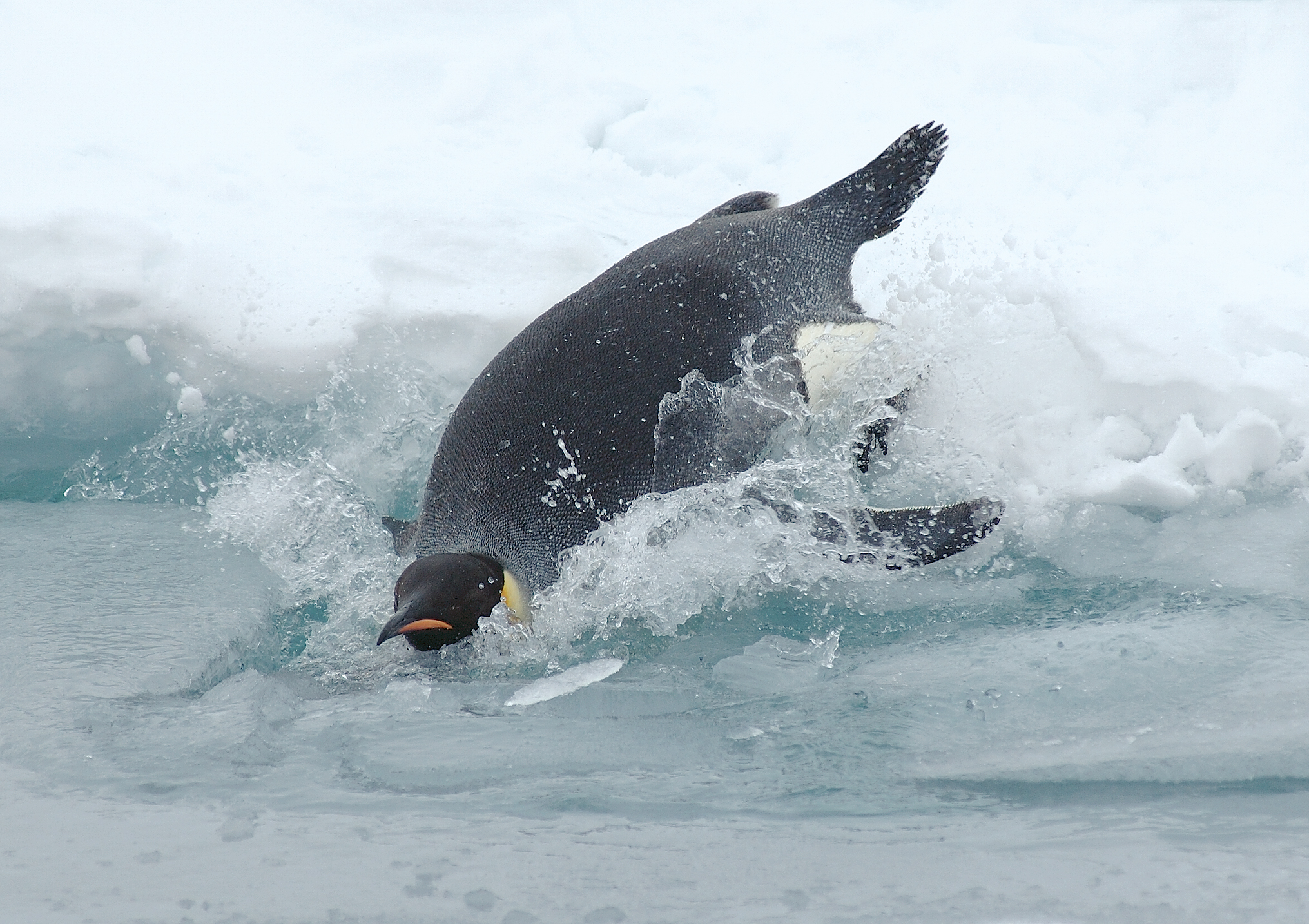
Wild Fact #766 – Standing Tall – Emperor Penguin

July 16, 2010 - 12:00 am 2 Comments

Since it is the middle of summer for me and my Northern Hemisphere friends I figured we could all use a break from the heat and humidity.  Actually, I don’t really need a break since the Yukon hasn’t been unbearably warm but that is not the point.  In order to get some relief from the pesky summer sun we are heading to Antarctica to learn about one of the most fascinating birds, the Emperor Penguin.  You can’t tell me you are not excited to learn about the largest penguin species.

The Emperor Penguin is endemic to Antarctica and can weigh anywhere between 22 to 45 kg (49 to 99 lbs).  I am sure we can all see the problem with living in Antarctica, which is how the heck do you deal with the cold.  Just so you know these flightless birds will often have to put up with temperatures as low as minus 60 degrees Celsius (-76 degrees Fahrenheit).  Maybe taking a field trip here wasn’t such a good idea.  I am getting a chill just thinking about all of the snow and ice.  Luckily the Emperor Penguins are smart and will all huddle together to keep warm and block out the frigid wind chill.  Usually they will form a circle and they will take turns standing in the middle to warm up from the cold.  It is interesting how they realize the importance of helping each other so they can all survive.

The crazy thing about these penguins is they will even breed during this harsh season.  Talk about uncomfortable! The female will usually lay a single egg and immediately leave it behind while she goes out on an extended hunting trip.  In some case she may have to travel as far as 80 km (50 miles) just to reach the open water so she can feed on fish, squid and other aquatic animals.  While she is out hunting the male will stay home and protect that single egg.  Unlike most birds he will not sit on the egg.  Nope he prefers to stand and protect the egg from the harsh elements by balancing it on his feet and covering it up with his feathered skin, also known as the brood pouch.  There is no question that the male Emperor Penguin should win father of the year as they will do this for about 2 months without eating anything.  Once the mother returns with a belly full of food for her young the male will then take off for his own hunting trip. I can imagine it would be a nice break after spending two months babysitting an egg.  The moral of this Wild Fact is to be grateful that we are humans and don’t have endure the harsh life that the Emperor Penguin has been forced to deal with.

Emperor Penguin Fast Fact – The Emperor Penguin is able to dive up to 565 m (1850 feet) which makes them the deepest diving bird.  As well, they are able to stay under water for about 20 minutes.

Have a great weekend everyone!

Diving Emperor Penguin - Photo by Glenn Grant, National Science Foundation

Digg This
Reddit This
Stumble Now!
Buzz This
Vote on DZone
Share on Facebook
Bookmark this on Delicious
Kick It on DotNetKicks.com
Shout it
Share on LinkedIn
Bookmark this on Technorati
Post on Twitter
Google Buzz (aka. Google Reader)

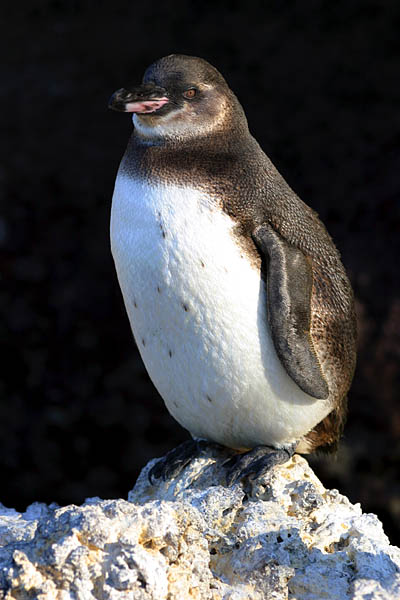
Wild Fact #907 – This Penguin is Hot! – Galapagos Penguin

December 30, 2009 - 8:36 pm 6 Comments

Galapagos penguin, Galapagos Islands. Photo: David Bate.

I am sure you are all getting things ready for New Year’s Eve so I want to thank you for taking 2 minutes out of your schedule to check out today’s Wild Fact.  I wanted you all to know that I still haven’t figured out my scheduling issues with my blogging platform.  This means that my posts may be published earlier or later depending on my schedule.  Thank you for bearing with me while I try to figure out the glitches.

I bet when I said I would devote this week to animals of the Galapagos you were not expecting a post about a penguin.  Believe it or not the Galapagos Penguin is able to survive at the equator.  It is the furthest north that a penguin species occurs. This is a small penguin that stands at 16 to 18 inches and weighs about 5 pounds. I guess the biggest question we have for this little penguin is how can it possibly survive on the incredibly warm Galapagos Islands? Luckily, the Humboldt current brings cooler temperatures from the deeper parts of the ocean.  This cool water is vital in the survival of the Galapagos penguin.  As well, this particular penguin has evolved a couple of adaptations to surviving the heat.

Obviously going into the water seems like the quickest and smartest way to cool off. I know that is what I would do!  But when that is not an option the Galapagos penguin will stretch out its flippers while hunching over.  This keeps the sun from shining directly on their feet.  The penguin has a lot of blood flowing to their feet which means that the heat will be lost at these extremities.  This is the same logic as to why our mothers always made us wear a hat while playing outside in the winter.  I guess not entirely the same since our mothers were trying to keep us warm but still the same principles.  If this method isn’t working well enough then they take a page from man’s best friend. Believe it or not these little birds will begin panting as the evaporation from the throat and airways will help with cooling the penguin.

I guess the biggest thing to take from this post is if you love penguins but hate the cold then take a trip to the Galapagos so you can have the best of both worlds.

Now go out and bring in the New Year!  Be safe and have fun!

Digg This
Reddit This
Stumble Now!
Buzz This
Vote on DZone
Share on Facebook
Bookmark this on Delicious
Kick It on DotNetKicks.com
Shout it
Share on LinkedIn
Bookmark this on Technorati
Post on Twitter
Google Buzz (aka. Google Reader)