Posts Tagged ‘shark’

Wild Fact #550 – The Surprise Factor – Goblin Shark

May 30, 2011 - 12:00 am 5 Comments

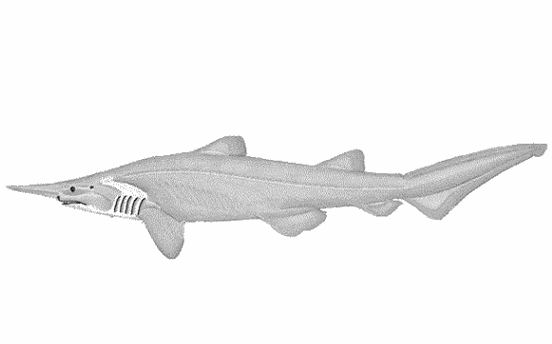
Photo from Wikimedia

As promised, this week of Wild Facts will have a theme since I am in the process of moving across the Country.  As a result, these facts have been pre-written and automatically posted.  This week’s theme has been done before but I find it so fascinating that I wanted to look at some more “Deep Sea Creatures”.  That’s right, we are heading to the deepest and darkest depths of the ocean to find some interesting animals, and believe me, there are  a ton of them.  We will start the week off with the Goblin Shark, which is probably an animal I should have saved for Halloween, but I can’t wait that long.

The Goblin Shark is obviously a Deep-Sea Shark, which can be found throughout the oceans of the world but are most notably found around Japan.  This poor shark’s family reunions must be very depressing since they are the only living species in their entire family. At least they would have a lot of left-overs once the reunion was over.

Okay, so by now, you are probably wondering what in the world is up with their head.  You are right, they have a long trowel-shaped head with a long snout, which makes them look considerably different than most sharks.  So what is the purpose of this odd shaped head?  Well, when you are a shark living in the deepest depths of the ocean, you need to find creative solutions to seeking out food.  This odd shaped head helps the Goblin Shark to detect and feed on a variety of marine animals.

Photo by Peter Halasz (Wikimedia)

In order to detect their prey, this shark will use the electro-sensitive organs found on their snout.  Yep, they detect the electrical currents emitted by their poor unsuspecting prey.  The really cool part is how they catch them though.  Once they detect a yummy meal, the Goblin Shark will suddenly protrude their jaw and use their tongue-like muscle to suck the prey into their sharp teeth.  How cool is it that they can just retract and protrude their jaw to surprise those little sea creatures?

Goblin Shark Fast Fact – The Goblin Shark also differs from other sharks since their fins are rounded instead of pointed.  If this wasn’t enough, they are also pink, which isn’t too common among sharks.  No wonder they headed to the deep depths of the ocean – all the other sharks were probably picking on them for being different.

Well that does it for the first Deep Sea Creature of the week. Make sure you tune in tomorrow to learn about another bizarre creature living on our planet.

Wild Fact #620 – COOOKIES! – Cookiecutter Shark

February 21, 2011 - 12:00 am 5 Comments

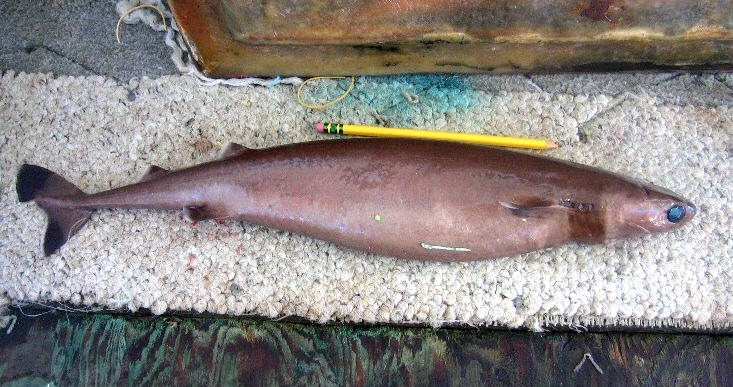
Cookiecutter Shark - Photo from Wikimedia

Welcome to another round of Wild Facts.  I hope all of enjoyed your weekend and are now ready to get back to work.  Today’s Wild Fact was suggested by one of our readers, Hailey, who e-mailed me about the Cookiecutter Shark.  I am incredibly glad that she brought this animal to my attention since I think we will a lot of fun learning about this unique animal.  Thank you Hailey for the great recommendation.  For the record, every time I say this sharks name, I think of Cookie Monster.  Perhaps, I should refer to today’s animal by their other common name, the Cigar Shark. Nah!  We will stick with COOOOKIES!

The Cookiecutter Shark is actually a species of the small dogfish shark and they only measures in at about 50 cm (20″) in length.  Obviously this size pales in comparison to the Great White Shark but that certainly doesn’t make our Cookiecutter any less of a shark.  In fact, one look at their smile and you would probably be overtaken with fear.  They have an incredible set of teeth.  Seriously, the dentist would absolutely love them.  The Cookiecutter Shark has 30 to 37 teeth on top and about 25 to 31 large teeth on their bottom jaw.  Just imagine how much money they could make from the Tooth Fairy.  Let’s see, with inflation these days a tooth is probably worth about $5, right?  Since they could have up to 68 teeth in their mouth, they would be looking at about $340 from the Tooth Fairy.  There is no way the Tooth Fairy could stay in business for long with numbers like that.

The Pretty Smile - Photo by Karsten Hartel (Wikimedia)

So with all of these big scary teeth, you would think that the Cookiecutter Shark is a major predator of the sea, right?  Well, due to their small size and relatively weak swimming ability, the Cookiecutter Shark is actually the only parasitic fish in the shark family.  You are probably wondering how a shark could be a parasite, aren’t you? Believe it or not, these sharks swim around and simply take bites out of other fish.  The bite doesn’t kill them but it is big enough to satisfy the Cookie Monster….errr…. Cookiecutter’s appetite.   How cool is this shark!?

Cookiecutter Shark Fast Fact – Have you ever wondered how this shark got its name?  As you might expect, it has something to do with their bite.  The mark their bite leaves on their victim is in the shape of a cookie.  Aaaah, the famous “Mark of the Cookiecutter”.  The brown colouring of this shark is what gave rise to their secondary name, the Cigar Shark.

Thanks again to Hailey as this was definitely a fun fact.  I hope all of you enjoyed today’s animal.  See all of you tomorrow.

Wild Fact #666 – The Fight Between Good and Evil – Angel Shark

December 3, 2010 - 12:00 am 2 Comments

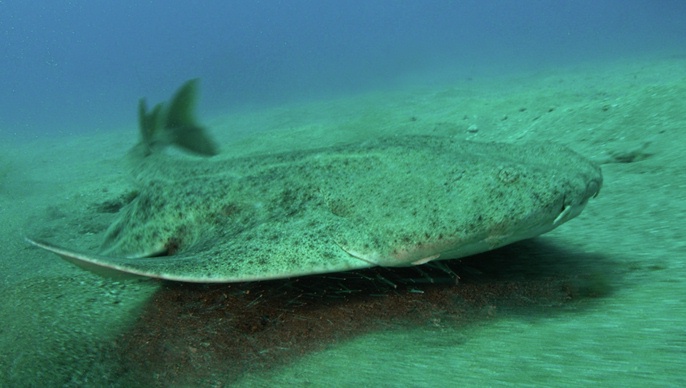
Photo by Philippe Guillaume (Wikicommons)

I wish today was Friday the 13th or even Halloween since it would make Wild Fact #666 even more creepy.  I am also wishing I would have saved the Tasmanian Devil or the Thorny Devil Wild Fact for today.  Oh well, what can you do right?  We will have to settle for the Angel Shark which may sound all divine and holy but you should hold off judgment until you hear their other name.   This angelic animal is also known as the “Sand Devil” so it actually fits perfectly with today’s theme.

You may have taken a double look from the title to the picture as the Angel Shark looks nothing like the sharks we typically see.  I know I haven’t see the Jaws movie in an awfully long time but I am sure he looked more fierce than this.  Although this animal looks more closely related to a skate or a ray they are indeed classed as sharks.  They have all the same parts as a shark but somehow managed to get flattened somewhere down the evolutionary line.

So how did these beautiful creatures get two very different names?  Well their flattened pectoral fins look very similar to wings or even a halo.  I am just thinking out loud but wouldn’t a shark with wings be really cool to see?  I have also heard people mention that the taste of an Angel Shark is truly a heavenly experience.   On the other end of the spectrum is the pure evil side of the Angel Shark.  They have incredibly sharp teeth and are not afraid to use them.  I suppose the name “Sand Devil” is appropriate if you were an unsuspecting victim to a vicious Angel Shark bite.  I do feel bad for this poor shark as they must be in a constant state of confusion.  They have the angel on one side and the devil on the other.  How in the world are they suppose to make the right decisions?

Photo from Wikicommons

You are in luck if you wanted to get a closer look at this heavenly, divine shark (or evil patron of doom depending which features you look at) as they can be found all over the world.  There are 19 species of Angel Shark that can be found in the Atlantic and Pacific oceans.  There is even a small section of the Indian Ocean that contains the infamous Sand Devils.  If you do travel to one of these areas, make sure you bring your diving gear.  Angel Sharks are typically found on the ocean floor in either shallow sections or at depths up to 1300 m (4265 feet).  That is a long way down!

That does it for our evil Wild Fact.  I will be away for most of next week as I will be soaking up the sun in Victoria.  Yes, this means I will be doing a theme next week.

I do want to warn all of my readers that there could be a disruption in your daily Wild Facts.  My computer has been having some major issues (I keep getting the awful Blue Screen of Death) so I am hoping it holds out long enough for me to complete my Wild Facts this weekend.

Have a great weekend everyone!

Wild Fact #708 – The Nurse Will See You Now – Nurse Shark

October 6, 2010 - 12:00 am 4 Comments

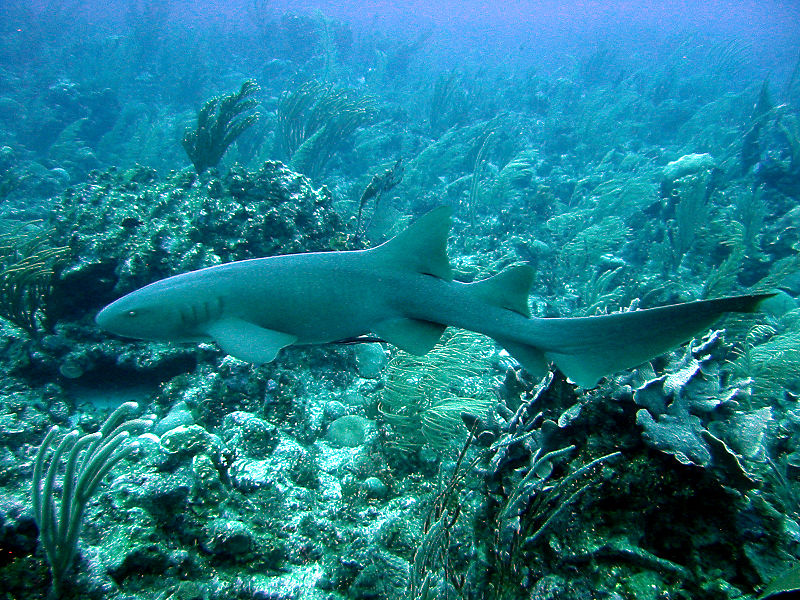
Photo from Wikimedia

It is the middle of the week and I can understand if some of you are sick of working and looking forward to the long weekend.  In order to help cure this sickness Wild Facts is going to introduce you to a nurse today.  I can afford to do this since we have free health care in Canada.  Readers, I want you to meet Nurse Shark.  While this shark is trying to solve your mid-week blues lets take a moment to learn a little bit more about this health practicioner.

Obviously, I wouldn’t recommend going to a Nurse Shark for medical advice since the “schools” they are in don’t teach medicine.  This particular shark does indeed go to school and can often be found lazing around in groups with up to 40 individual Nurse Sharks.  Like most students, the Nurse Shark is only in these schools during the day while they are resting.  Once night falls these hunters of the sea will go out on their own to look for food. So what type of food are these nocturnal, solitary hunters looking for?  The Nurse Shark will prey on fish, shrimp, sea urchins and have even been known to feast on stingrays.  They better make sure they avoid that stinger on their tail, unless of course the Nurse Shark is in the Stingray aquarium at SeaWorld.

Photo by Duncan Wright (Wikimedia)

The Nurse Shark can become very large as they range in size from 2.5 – 4.3 m (8 – 14′) long and can weigh up to 150 kg (330 lbs).  Not only that but they also have very powerful jaws filled with thousands of tiny, serrated teeth.  They are usually more docile than other shark species but if you irritate one they will bite to protect themselves.  I am willing to bet that you will need to go and see a real nurse if you annoy one of these sharks.

You might be thinking that you will never have to worry about encountering one of these sharks but that is not necessarily true.  You see, the Nurse Shark lives in the shallow waters along the coasts of tropical and sub-torpical areas.  They are usually found in depths between 1-2 m (3-6′), which just happen to be the same depths you are boogie-boarding in on your Carribean vacation.

Nurse Shark Fast Fact – Although Nurse Shark’s are abundant throughout most of their range their sluggish, docile nature coupled with their proximity to humans may be starting to stress their population.  They are not commercially fished, however, they are hunted for their extreamely tough, leathery skin.

I hope you enjoyed your visit to the nurses office.  Enjoy the rest of your day!

Wild Fact #726 – A Fisherman’s Best Friend? – Spiny Dogfish

September 10, 2010 - 12:00 am No Comments

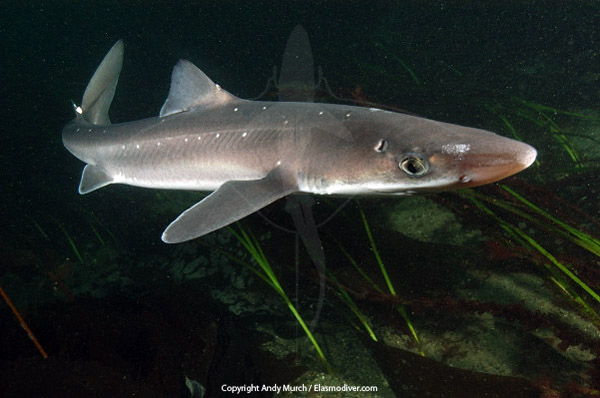
Photo by Andy Murch

As I was swimming back up from the ocean floor yesterday, after observing the amazing Giant Isopod, I came across the Spiny Dogfish shark.  Since I was already in my scuba gear, I figured I would take a couple of minutes to study the shark and report back to you for the final Wild Fact of the week. In all honesty, I already know quite a bit about this particular shark since I had to dissect one during my Chordate Anatomy Class in University.  This would actually make sense since the Spiny Dogfish is thought to be the most researched shark in the world. Well, let’s find out a little more about this popular shark, shall we?

The Spiny Dogfish can be found around the globe including in the Atlantic, Indian and Pacific oceans. These particular sharks prefer the warmer coastal waters, however, they have been known to frequent the freezing cold water around Antarctica.  I guess even sharks like to partake in the annual polar dip event.  The obvious features on the Spiny Dogfish are the two spikes found on their backs, which is probably why they are referred to as “Spiny”.  Even more interesting is the fact that these spines are mildly poisonous and lend a helping hand (well, I guess they lend a helping spike) when the Spiny Dogfish has to defend against a vicious predator.

Wait a minute! Sharks have predators? Well they do but not as many as they would if they didn’t have those poisonous tips on their back.  Since the Dogfish Shark is about 48-160 cm (19-63 inches) their only predators are larger sharks, killer whales and of course the largest predator of all, humans.  This aggressive shark will feed on a variety of animals including fish, squid, crustaceans and monkey’s.  Okay! That last one isn’t a real prey item but I just wanted to make sure you were paying attention.

Photo by: Doug Costa

Spiny Dogfish Fast Fact – The next time you hear a pregnant woman complain about having to carry a baby for nine months remind her that a Spiny Dogfish has a 2 year gestation period.  I must warn you that you should probably be careful when suggesting for the pregnant woman to suck it up but it will make you look smart (well not smart enough to keep your mouth shut). The Spiny Dogfish will produce between 2 and 15 Dogfish pups. Hey, I just realized that their babies are called “pups” and they are DOGfish.  I bet that is not a coincidence.

All right, I think I am getting a little giddy so I should probably end the fact here.  Have a great weekend everyone and I will see you bright and early Monday morning.

Wild Fact #826 – Nailed this Wild Fact – Hammerhead Shark

April 23, 2010 - 12:00 am 4 Comments

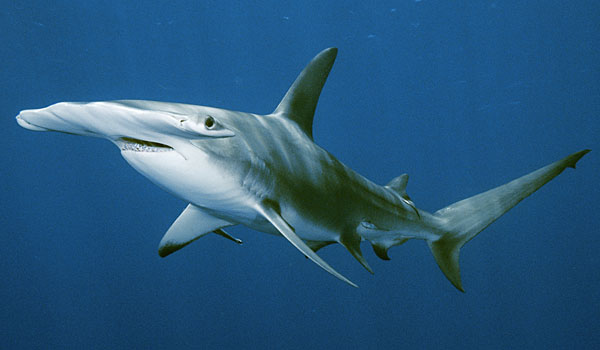
I trust everyone is having a great week and is ready for another beautiful spring weekend.  I had a great swim at the hotel pool the other day so I wanted to end the week with an animal that lives in the water.  What can I say, my mind works in mysterious ways.  Anyhow, I wanted to talk to you about one of the coolest sharks, the Hammerhead Shark. With a quick glance you are able to tell that this is one interesting shark.

The hammerhead shark is an aggressive animal that feeds on smaller fish, squid, octopus and crustaceans.  They are able to use their unique head to help them find their food.  By having a head shaped this way they are able to have their eyes set far apart from each other. This wide range actually gives the hammerhead better vision than most sharks.  As well, this particular shark also relies heavily on other senses to detect their prey.  For example they are able to fit many ampullae of Lorenzini on their long head.  This special sensory organ allows the shark to detect the electrical field of yummy food such as the stingray.  Once they detect the stingray, the shark is able to pin it down using its uniquely shaped head.  Who would have thought that there were so many uses for an odd shaped head.

The hammerhead shark is unique among the fish species as it does not lay eggs.  They actually give birth to live young that can range from 6 to 50 “pups”.  The newborn shark will have a more rounded head than it’s parents but eventually will get that fun hammerhead look.  The shark has many enemies until it reaches maturity.  As you can imagine the adult sharks have very few natural predators. This makes sense because who in their right mind would go out of their way to attack a shark?

Well folks, that wraps up another fun-filled week of animal facts.  Be sure to join us on Monday for another thrilling adventure into the wild. Have a great weekend!

Wild Fact #935 – What a Big Mouth – Megamouth Shark

November 20, 2009 - 12:00 am 7 Comments

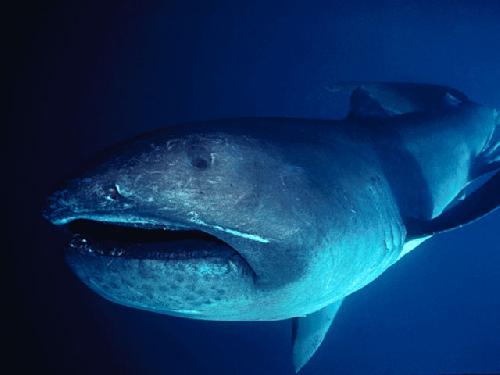
Photo Courtesy of www.planetsave.com

Photo Courtesy of www.planetsave.com

Let’s end the week of unusual Wild Facts where it all started.  Of course I am talking about heading back to the sea.  I am going to set up a scenario for you.  You are on vacation in the Phillipines and it is a gorgeous day out, I am talking sunny and hot.  Due to the warmth you decide to try your hand at surfing or maybe boogie boarding.  You paddle out there and you are just about to make your way back in when there is a commotion in the water.  You look back and you see the shark pictured above.  Now this is a 16′ long shark that weighs about 1600 pounds and has a large gaping mouth.  Now basically, you are starting to hear the jaws theme going through your head.  How would you feel? Would you be scared and start paddling like crazy to shore?

Well, if you can remember the Wild Fact about the Blue Whale then you should remember that you can’t judge a book by its cover.  That’s right, the megamouth shark is actually a filter feeder just like the large blue whale.  So you just had a heart attack out in the ocean for nothing!

The megamouth shark was identified in 1976 and since then only 47 specimens have been seen.  Because of this, little is actually known about these sharks but I will tell you some facts that are known.  We know that they are filter feeders that survive on krill (shrimp).  As well, a tagging study has shown that these large beasts actually migrate vertically throughout the day. What this means is they head to the deeper water during the day (i.e. 400′ depth) and move up to the shallow water in the evening.  Why does it migrate like this? Well, they are most likely following the large groups of krill that move up and down through the water column. Because of the large protruding mouth the megamouth shark was classified into an entirely new family.  So, how do these gentle beasts feed? Unfortunately, we have yet to witness the megamouth feeding but it is presumed that they protrude their jaw and expand their mouth while inhaling the shrimp.  They close their mouths and force the shrimp into their stomach.  So the next time you are out in the Pacific Ocean and you see a megamouth shark coming up behind you, don’t panic!

Before you turn off the computer check out this interview that Scientific American did with George Burgess, Director of FLMNH’s Florida Program for Shark Research, here.

I hope you enjoyed Wild Facts – The Weird and Unusual this week.

Have a great weekend!