Posts Tagged ‘Passerine Bird’

Wild Fact #544 – Spring Singer – Uguisu

June 7, 2011 - 12:00 am 2 Comments

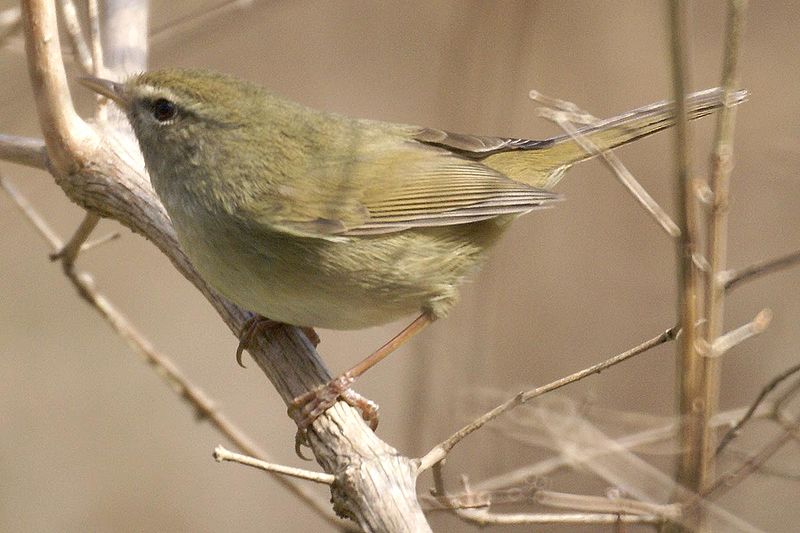
Photo by M.Nishimura (Wikimedia)

I can’t remember the last time we talked about a bird – okay, I lied, think the last bird we did was the Ibis, but that is not going to stop me from writing about another bird species today.  That’s right, we are going to learn about a bird that is more often heard than seen throughout Japan.  Of course this little passerine bird is called the Uguisu but also known as the Japanese Bush Warbler, the Spring Bird or the Spring Announcing Bird.  I am not a genius but I am willing to bet this little bird represents the beginning of spring.  Well, enough chit-chat, let’s take a closer look at the Uguisu.

As mentioned the Uguisu is a small bird found throughout most of Japan but can also be spotted or heard in China and Taiwan.  Now these little birds may be fairly dull in appearance but what they lack in colourful beauty they certainly make up for with their songs.  The Uguisu is known to have a beautiful singing voice and has often been referred to as the Japanese Nightingale.  I guess this comparison makes sense on a number of levels since the Japanese Bush Warbler shares numerous other traits with the Nightingale.  For example, both bird species tend to be solitary, feast on a variety of insects and do not display sexual dimorphism (okay, I didn’t mean to throw out the big biology word – well maybe I did, a little – but basically this just means that both the female and male are similar in size, colour and other physical characteristics).

Photo by Isaka Yoji (Wikimedia)

Earlier I indicated that you would probably hear the Uguisu long before you ever saw them.  This has to do with the fact that this particular bird likes to be secretive and as such spends most of the daylight hours hiding among the leaves. Once they are protected by the shadows of the trees, they will begin to sing their beautiful songs for all of us to hear (yes, I know they are just singing to either attract a mate or warn an intruder but sometimes I like to think the bird is singing just for me).  If you live on the large Japanese Island of Hokkaido then you may actually get to see these birds more often then other people.  You see, these birds tend to migrate to other countries in an attempt to escape the cold mountain winters, providing ample viewing opportunities as they fly away.  If you ask me, this is a pretty smart plan.

Wow, that Wild Fact went pretty quick but I guess this is a good time to call it a day.  I hope you enjoyed our bird fact and I will see you back here tomorrow for some more exciting animal facts.

Digg This
Reddit This
Stumble Now!
Buzz This
Vote on DZone
Share on Facebook
Bookmark this on Delicious
Kick It on DotNetKicks.com
Shout it
Share on LinkedIn
Bookmark this on Technorati
Post on Twitter
Google Buzz (aka. Google Reader)

Wild Fact #585 – The Snow Birds – Snow Bunting

April 11, 2011 - 12:00 am No Comments


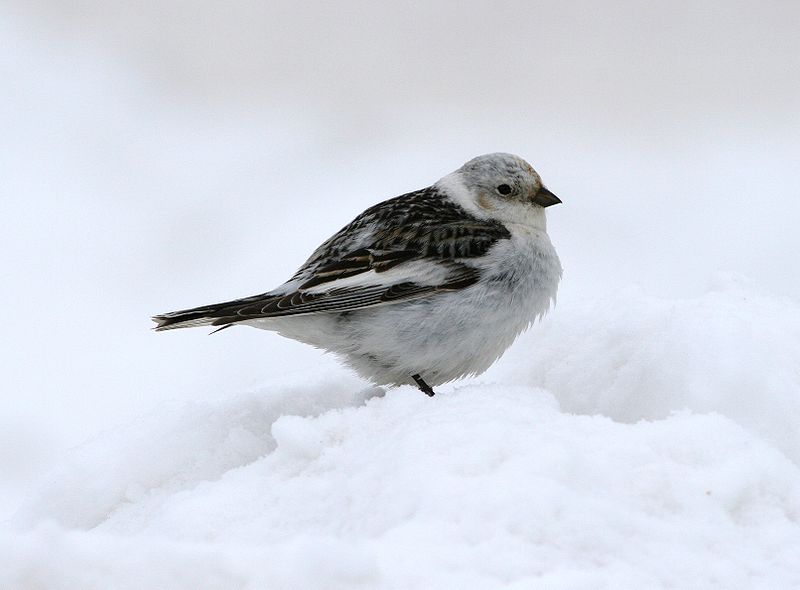
Photo by Donna Dewhurst (Wikimedia)

So this weekend I took a quick trip to Alaska (yes, when you live in the Yukon it is just a quick trip) and throughout the drive I kept seeing these little white birds flying around everywhere.  Today we will explore the life of the Snow Bunting which just happened to be hanging out on the highway between Whitehorse and Skagway this weekend. This actually makes a lot of sense since there are isolated populations of Snow Buntings along the Saint Elias Mountains, which just happens to be on the Yukon-Alaska border.

Typically, the Snow Bunting will head to the Arctic circle to breed, however, they spend the winter months hanging out in grassy fields or along the shores of lakes and oceans.  This is actually a pretty smart strategy since the Arctic is absolutely amazing in the summer but can be harsh for a little birdie in the winter.

It is pretty easy to identify the Snow Bunting since they have distinguishable white patches on their wings.  The breeding males are even easier since they are white with a black back.  During the winter months though both the male and female will be a boring ol’ pale ginger coloured with black and grey on their back.

Photo by Spacebirdy (Wikimedia)

Since I obviously saw the breeding version of these birds let’s talk about this particular behaviour a little more.  Generally the males will come north about 4-6 weeks before the females.  This can be tough on the birds since temperatures can still drop to -30 degrees Celsius.  The males come up early to establish and defend specific territories. You know, it is important to have a nice house set up before the female comes to visit. During this time the males will still flock together in groups of 30 to 60 to forage for food.  Considering we saw large flocks this weekend, I am going to assume they were looking for food. Although, considering the amount of snow still in the mountains, they would have had a tough time finding seeds and insects to feed on.

Snow Bunting Fast Fact – Besides the Common Raven the Snow Bunting is the only passerine bird that hangs out this far north.  As a result they have feathered feet to protect them from the harsh environment.

I guess that is all for the little Snow Buntings that enjoyed flying in front of my truck this weekend. If you ever get a chance, take a trip to the Saint Elias Mountains to check out the breeding plumage of these little birds. Enjoy the rest of your day!


Digg This
Reddit This
Stumble Now!
Buzz This
Vote on DZone
Share on Facebook
Bookmark this on Delicious
Kick It on DotNetKicks.com
Shout it
Share on LinkedIn
Bookmark this on Technorati
Post on Twitter
Google Buzz (aka. Google Reader)

Wild Fact #767 – The Next “Bachelor” – Bowerbirdcom

July 15, 2010 - 12:00 am 2 Comments

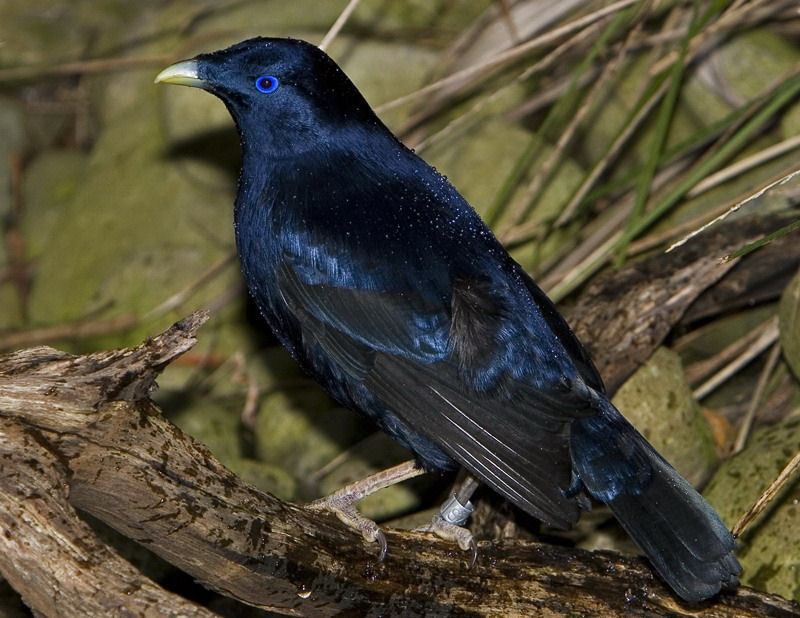
Photo by Pam Russell

This post is for all of the women out there that have a tough time convincing their husbands/boyfriends to renovate the house. I want you to go and wake them up from their nap so they can read about the Bowerbird with you.  I know they will be grumpy but trust me it will be worth it.  Before we get into the details of their unique mating behaviour I guess I will tell you a little about this bird.

The Bowerbird is a medium-sized passerine bird, which doesn’t help since more than half the birds in the world are passerine birds. This particular type though can be found around New Guinea and Australia.  As I alluded to the Bowerbird is best known for their unique mating behaviour so lets take the rest of the fact to explore this, sound good?

The male Bowerbird is the ultimate bachelor and should probably try out for a certain reality show. Come on what does Pilot Jake have that a male Bowerbird doesn’t, they can both fly! I am just not sure that this male bird would be able to live in such a hum-drum mansion during the taping.  You see the houses they build are much more extravagant.  That’s right, the Bowerbird is often called the “Avian Architect” since they build a lavish bachelor pad called a “Bower”.  They use twigs, moss and leaves to construct the nest but then decorate it with shiny baubles, berries, feathers, shells, and anything else they can find.  These beautifully built bowers are not at all like the nice house in the country with the white picket fence that is perfect for raising a family. No, they are more like the Penthouse suite in downtown New York. They are the ultimate bachelor pad designed to attract as many females as possible.

The Ultimate Bachelor "Bower"

Once an interested female bowerbird arrives to check out the finely constructed nest the male will begin to strut and sing hoping to convince her to stick around for a little bit.  You know, it is eerie how similar the bowerbird is to the human bachelor. I just picture the male “dumb-dancing” while trying out cheesy pick up lines on the potential mate.  After mating the female will fly off and build a nest close by while the male will work on convincing another female into his sweet bachelor pad.  You know, I am starting to think that it may not have been a good idea to wake up your husbands/boyfriends for this Wild Fact.  Sorry ladies, my bad!

Well folks I am off to collect some shells and feathers for my home.  I will check back in with you a little later.

Digg This
Reddit This
Stumble Now!
Buzz This
Vote on DZone
Share on Facebook
Bookmark this on Delicious
Kick It on DotNetKicks.com
Shout it
Share on LinkedIn
Bookmark this on Technorati
Post on Twitter
Google Buzz (aka. Google Reader)