Posts Tagged ‘Camel’

Wild Fact #410 – The Fighting Camel – Guanaco

December 12, 2011 - 12:00 am No Comments
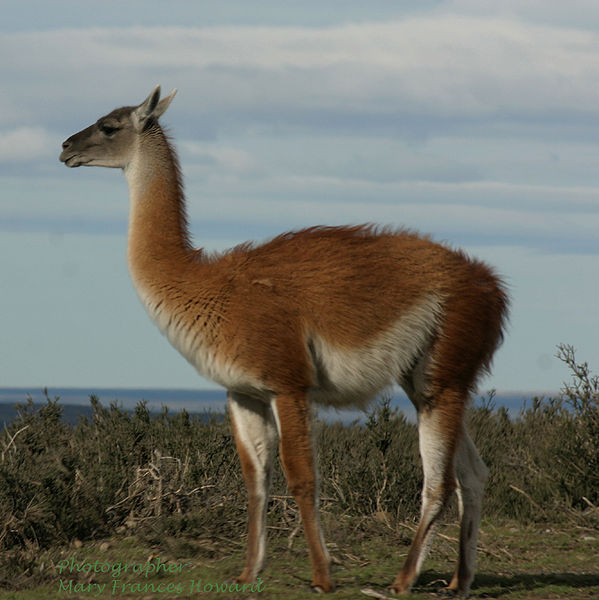
Guanaco

Photo from Wikimedia

As Christmas approaches and you begin to stress about finishing up the shopping and baking, I want you to take 5 minutes to relax and learn about a camel-like species. That’s right, the Guanaco will help peel away the Christmas anxiety for a few minutes as we take a nice, long trip to South America. Hopefully you picked up a pair of hiking boots during your last trip to the mall since we the Guanaco is typically found grazing in the higher mountainous regions. It should be a nice hike though since I don’t’ think the Andes are that big of a mountain range :) . Okay, let’s catch our breath and start climbing…

Pretty Little Camel

As I mentioned, the Guanaco is a camelid species that’s found throughout the Andes from Peru to Patagonia. These animals typically stand at a height of 1.22 m (4′) and weighs about 90 kg (200 lbs). Although they weigh 200 lbs, the Guanaco is actually a slender animal with a short tail, large head and a fairly long neck. As you can imagine, living in the dry mountains can get quite cool, which is why the Guanaco is armed with a warm coat. This coat is usually a light brown on top with a white underside and is often sought after by humans due to its softness and insulate properties.

Guanaco

Photo by Bernard Gagnon (Wikimedia)

All’s Fair In Love and War

The Guanaco can usually be found in groups consisting of 10 females, a dominant male and their young. Once the young males reach five years of age, they will go off and try to find their own herd. If the young male is unsuccessful in finding a family, they will join or form a bachelor group, which can consist of as many as 50 unattached males.  Talk about a night out with the guys! So how do these males determine dominance? Well, they are like other animals, they fight for dominance. The fighting Guanaco has quite a few tricks up their sleeves including biting their front legs, twisting their necks around each other and of course my personal favourite, spitting at each other. The loser of the fight will have to leave the herd, while the winner becomes the leader of their herd. It may sound like a tough life but it works for this camel-like species.

That does it for the Guanaco. I hope you enjoyed your trip to South America. Hopefully, you were able to recharge your batteries so you can go and finish your hectic Christmas shopping.

Digg This
Reddit This
Stumble Now!
Buzz This
Vote on DZone
Share on Facebook
Bookmark this on Delicious
Kick It on DotNetKicks.com
Shout it
Share on LinkedIn
Bookmark this on Technorati
Post on Twitter
Google Buzz (aka. Google Reader)

Wild Fact #492 – A Spitting Good Time – Bactrian Camel

August 18, 2011 - 12:00 am No Comments

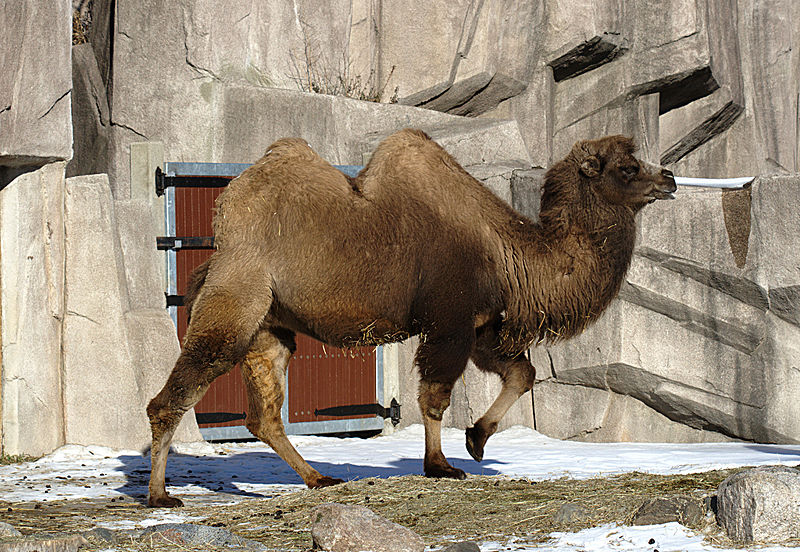
Bactrian Camel

A couple of weeks ago, I had the opportunity to visit a wildlife sanctuary with my nieces (and the rest of my family). During this trip, we had the opportunity to see a camel up close and personal. Although, it was a little scary since it sounded like the camel wanted to spit on all of us, I still enjoyed his company. Since then, I have been constantly thinking about Camels so I thought I would do a second Wild Fact on the mysterious animal. The first Wild Fact just had general information on all camels. Today’s Wild Fact is going to be all about the Bactrian Camel, which of course has two humps as oppose to their relatives with the one hump. For the record, the Camel I saw at the sanctuary only had one hump but I want him to know that he was still the inspiration for today’s animal fact.

As mentioned the Bactrian Camel has two humps but they still work the same way as the single hump variety. They store fat, which can be converted to water and thus allows them to travel long distances without drinking. Typically you picture a camel trekking across the wide open deserts with sand blowing in the air. Well, that isn’t entirely true for the Bactrian type since they actually hang out in the Rocky Deserts of Central and East Asia. Don’t get me wrong, this is still not a pleasant place to live since it can easily reach 100 degrees Fahrenheit (38 degrees Celsius) in the summer and drop to minus 20 degrees Fahrenheit (-29 degrees Celsius) during the winter months. How in the world do these animals survive?

Bactrian Camel

Photo from Wikimedia

First of all, they have a nice heavy coat for the winter, which they shed before the summer heat comes into full force. As well, the Bactrian Camel rarely sweats, which helps conserve water. In fact, they are so good at conserving water that the little drinks they get from the winter plants can sustain their thirst for weeks. Although, once they find a good source of water, they will soak it up like it is going out of style. They can actually drink 30 Gallons (135 L) in a about 13 minutes. That has to be some sort of record!

Bactrian Camel Fast Fact – With fewer than a 1000 Bactrian Camels surviving in the wild and their population on decline, they have actually been made part of the EDGE (Evolutionary Distinct and Globally Endangered) project. Hopefully, their population will be protected and we can continue to enjoy these beautiful beasts. I have learned first hand that even if it sounds like they are going to spit on you, they really are beautiful beasts.

Well, I guess I should go and get ready to write the last Wild Fact of the week. I hope you will join me tomorrow as we learn about another interesting animal species.

Digg This
Reddit This
Stumble Now!
Buzz This
Vote on DZone
Share on Facebook
Bookmark this on Delicious
Kick It on DotNetKicks.com
Shout it
Share on LinkedIn
Bookmark this on Technorati
Post on Twitter
Google Buzz (aka. Google Reader)

Wild Fact #883 – The Reunion of Very Old Friends – Cama

February 3, 2010 - 12:00 am 2 Comments

If my scheduling is going right then this should be February 3, 2010, which is unfortunate because this means I will be spending the entire day flying back to the Yukon.  It is crazy how fast this vacation has gone.  I know as I sit here writing this that I actually haven’t gone on vacation yet but I am pretty certain it will go by fast.  I trust all of you have been enjoying reading about the unusual cross breeds.  Today we are going to discuss an animal that was engineered in 1998.

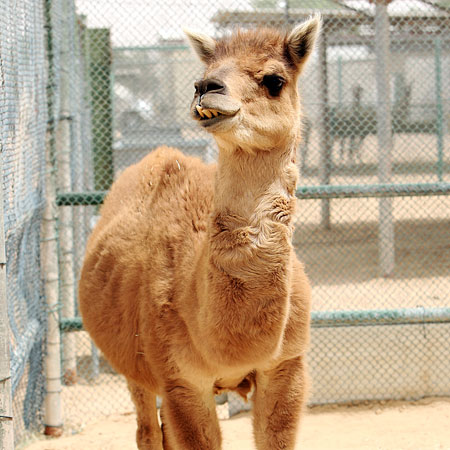
As you may have guessed the Cama is a cross between a male Camel and a female Llama.  A team of scientists cross bred these two animals with the hope of getting the best of both worlds.  The result was an animal with short ears and a long tails which it got from the camel side.  The llama side of the family contributed the cloven hooves.  If you look at the picture you will notice that the cama does not have the famous hump. The birth of this cama was a pretty impressive feat since it was the first time the Old World’s Camels were successfully bred with a Western Hemisphere Llama since they split up more than 30 million years ago.

Believe it or not it took scientists two years to get the artificial insemination which they were hoping would create an animal with the soft llama fur.  I know what you are thinking!  Llamas have nice fur so why did they need to cross breed them?  Just use the naturally occurring animals.  Well this would work but humans tend to be greedy so they were hoping to create a larger animal with this prized fur.  You see, that way they can make more profit by selling more of this fur.

I am starting to see that humans are making hybrids in order to create more wealth.  Do you agree with people intervening with nature? Do we have the right to replace evolution? Let me know what you think!

Well that is it for me for today.  I have a plane to go and catch!

Rama the Cama at 2 days old!

Digg This
Reddit This
Stumble Now!
Buzz This
Vote on DZone
Share on Facebook
Bookmark this on Delicious
Kick It on DotNetKicks.com
Shout it
Share on LinkedIn
Bookmark this on Technorati
Post on Twitter
Google Buzz (aka. Google Reader)

Wild Fact #986 – Thirsty Camel

September 9, 2009 - 9:42 pm 2 Comments
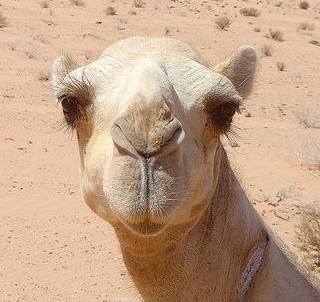
Photo Compliments of http://www.solarnavigator.net/animal_kingdom/animal_images/Camel_Jordanian_Desert.jpg

Photo Compliments of http://www.solarnavigator.net/animal_kingdom/animal_images/Camel_Jordanian_Desert.jpg

If you have ever been to the desert then you may be able to tell me about one of the most common modes of transportation for the dry, sandy conditions. It comes as no surprise that the camel has developed numerous adaptations to survive the harsh conditions of the desert.  For example they have long eyelashes to protect their eyes from the sand as well as a heavy coat to reflect sunlight. Today’s fact will clear up a myth about a camel adaptation.

You can’t talk about a camel and not discuss the humps on their back. A lot of people believe that the camel’s hump (or two humps) is a storage tank for water.  As interesting as it would be to have their humps holding water, this is not the case.  The humps act as a holding container for fatty tissue.  By retaining all of this fatty tissue in the humps it allows the camel to minimize heat-trapping insulation in the rest of their body. So basically, instead of the fat going straight to their hips they are stored in the hump.  If the humps are not full of water then how are camels able to go for so long without water? I am going to try and explain this so you don’t need a degree in animal physiology to understand.  More or less the camels red blood cells are oval shaped as opposed to most other mammals that have circular red blood cells (including humans). These oval shaped cells allow for the blood to flow easier when the camel is dehydrated.  As well these cells are more stable which allow the camel to consume very large quantities of water at one time.  For instance a camel may drink up to 150 L (40 Gallons) of water at one time.  To put that into perspective, a typical fuel tank on a full sized pick-up truck is around 120 L (30 Gallons).

Camel Fast Fact: The camel is the only animal to have replaced the wheel where the wheel had already been invented.  This occurred mostly in North Africa and is obviously no longer the case.

Did you find this post interesting? Do you have any further questions? Do you have any stories about camels? Have you had the opportunity to ride one of these practical vehicles? I would be interested in hearing from you.

Digg This
Reddit This
Stumble Now!
Buzz This
Vote on DZone
Share on Facebook
Bookmark this on Delicious
Kick It on DotNetKicks.com
Shout it
Share on LinkedIn
Bookmark this on Technorati
Post on Twitter
Google Buzz (aka. Google Reader)