Archive for the ‘Mammals’ Category

Wild Fact #376 – The Moosehead – Hammer-Headed Bat

January 27, 2012 - 12:00 am No Comments
Hammer-Headed Bat

Is that a Moose? -- Click for Photo Source

After a week of playing in the ocean, flying with beautiful coloured birds and risking our lives with a carnivorous caterpillar, I thought we would end with an even more bizarre animal. You just need to take one look at the Hammer-Headed Bat to realize it will be a fun animal to learn more about. I mean, just look at their head! To catch a glimpse of this megabit, we need to take a quick trip to equatorial Africa where will will find them hanging out around rivers, mangrove swamps, and palm forests. Now let’s find out why their head is shaped like a hammer.

That is One Big Nose

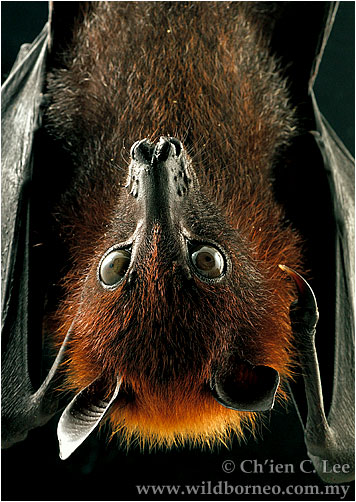
Only the male Hammer-Headed Bat is blessed with such a large head, which they use to create incredibly loud honking noises. The large nose, larynx and lips allow the male bat create sounds that are extremely resonant. The females on the other hand have a head that is about 3 times smaller than their male counterparts. In fact, their head looks more like a regular ol’ fruit bat. It is funny how the males are always the ones that have to go out of their way to try and impress their female friends.

Hammer-Headed Bat

Image Credit: www.davidhiggins.net

Pick Me, Pick Me

Competition for female attention is quite fierce in the Hammer-Headed Bat population. Typically, males will all gather together in a group, which can contain as many as 130 individuals, At this point the female will fly over and assess the entire group of males. She will pick her favourite by landing on a branch next to the lucky winner. I guess it is kind of like picking baseball teams when you were a kid…..I feel bad for the last bat that never gets picked, but I guess that is life. He will just need to go back and work on getting an even larger nose for next year.

The Deadly Megabat

The Hammer-Headed Bat is the largest bat in Africa with a wingspan between 686 to 970 mm (2.3 – 3.2 feet). Typically, the males are larger than the females, which makes sense since they need to be able to carry that big head around all day. Although, it may be tempting to go up and pet this large, hammer-headed creature, iyou need to realize that this particular bat species is one of the 3 fruit bats in Africa that carry the Ebola virus, without showing any symptoms.  Not only are they huge but they can also be deadly!

Digg This
Reddit This
Stumble Now!
Buzz This
Vote on DZone
Share on Facebook
Bookmark this on Delicious
Kick It on DotNetKicks.com
Shout it
Share on LinkedIn
Bookmark this on Technorati
Post on Twitter
Google Buzz (aka. Google Reader)

Wild Fact #381 – Look Into My Eyes – Blue-Eyed Black Lemur

January 20, 2012 - 12:00 am 4 Comments
Blue-Eyed Black Lemur

Photo by Bruce McAdam

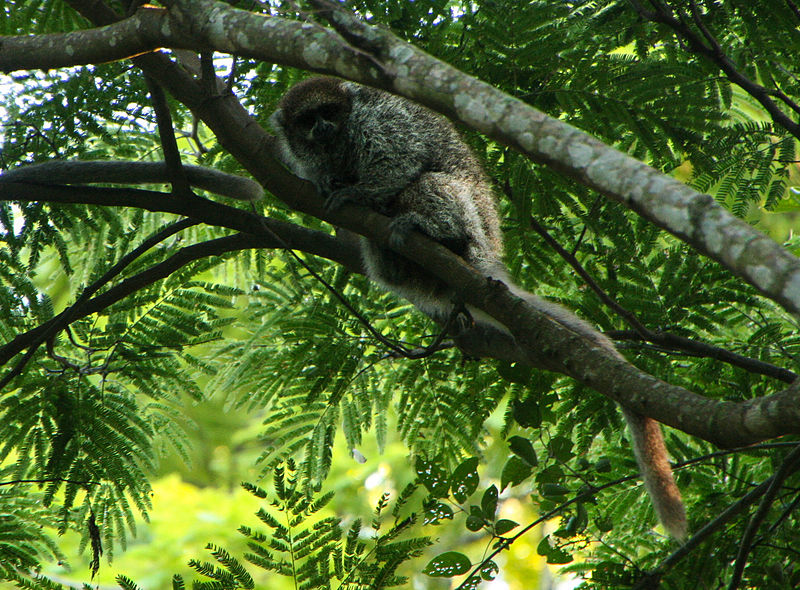
Don’t you just love Fridays? Not only do you get to sit back and enjoy the weekend but you also get to learn about the incredible Blue-Eyed Black Lemur! This lemur, also known as the Sclater’s Lemur, is typically found throughout the forests on the north-western tip of Madagascar. Until recently the Blue-Eyed Black Lemur was classified as a sub-species of the Black Lemur. In 2008, a decision was made to recognize today’s animal as an unique species. You will notice that they look similar to the Black Lemur but they are pretty easy to tell apart. Just look at the eyes. One species has an orange-red eye colour while another has blue eyes. I will let you figure out which is which :) .

Battle of the Sexes

The Blue-Eyed Black Lemur has a characteristic not normally found throughout the primate world. The males and females are completely different colours. The males are typically a solid black while the females tend to be a reddish-brown colour. I will let you pick which variety you like best. Personally, I think the dark black colour really contrasts the amazing blue eyes but what do I know about fashion? Incidentally there are only a few primates known to have blue eyes, so this should make the Blue-Eyed Black Lemur that much more special.

Blue-Eyed Black Lemur

Photo by Anrie (Wikimedia)

Are You On Facebook?

Like other lemur’s this particular species is a social animal living in groups between 2 and 15 individuals with group sizes between 7 and 10 being the most common.  To communicate with each other the Blue-Eyed Black Lemur will use scent marking, vocalizations, facial expressions and from time to time, they will write romantic poems. Yes, I am just kidding about the poems. Similar to other lemur’s the use of scent marking is probably their most important form of communication with both males and females using their anal glands to mark their territory. The males will also use wrist and palm glands by twisting twigs, leaves and branches. Unfortunately, I am not fluent in Lemur Scent Communication so I would have know idea what the little guys are trying to tell me, which I am sure would be frustrating for them.

Well that does it for this week of Wild Facts. Enjoy the weekend and make sure you tune in on Monday for another interesting animal.

Digg This
Reddit This
Stumble Now!
Buzz This
Vote on DZone
Share on Facebook
Bookmark this on Delicious
Kick It on DotNetKicks.com
Shout it
Share on LinkedIn
Bookmark this on Technorati
Post on Twitter
Google Buzz (aka. Google Reader)

Wild Fact #383 – The Scaly Anteater – Chinese Pangolin

January 18, 2012 - 12:00 am No Comments
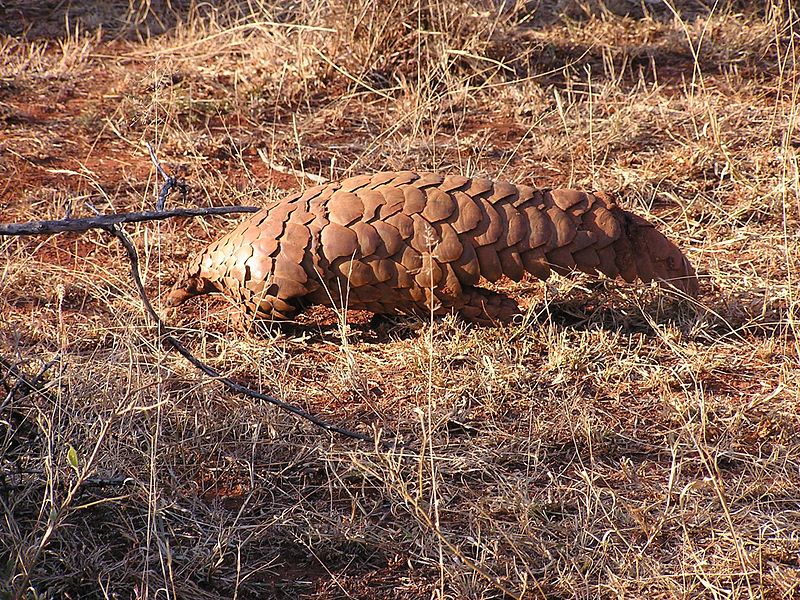
Chinese Pangolin

Photo by verdammelt (Wikimedia)

Today is a great day for the people looking forward to the weekend. Yes, you have made it over the hump and it is all smooth sailing from here on out. To make the trip to the weekend even better, I figured we would take our own trip. You have a few places to choose from including India, Nepal, Myanmar, Taiwan and southern China. All of these places will provide you with the opportunity to witness the intriguing but endangered Chinese Pangolin. Personally, I think I am going to take a trip to Nepal, which place did you choose for you mid-week getaway?

The Shy Type

We may have a difficult time spotting a Chinese Pangolin, not only because their population is rapidly decreasing but because they tend to be nocturnal, solitary creatures that are rarely seen. Nonetheless, we should probably go over what they look like just in case we get lucky. The Chinese Pangolin specializes in feasting on ants and termites and as such, dictates their appearance. They have strong, powerful claws capable of digging through a termite mound as well as long, sticky tongues which are perfect for licking up all of those tasty insects. Their body is composed of large scales, which act as an amazing self-defence mechanism. Anytime the Chinese Pangolin is threatened, they will simply roll up in a ball leaving nothing exposed.

Chinese Pangolin Distribution

Distribution Map - Photo by Chermundy (Wikimedia)

Nocturnal Hunters

As mentioned, the Chinese Pangolin is a solitary animal that spends the majority of their day sleeping in a burrow. As night falls, they leave the comfort of their underground home to look for those tasty ants and termites. Hunting at night doesn’t really bother the Chinese Pangolin since their eyesight is not very good to begin with. Nope, this intriguing animal relies heavily on their sense of smell, which is typically impacted by the dark! Surprisingly, these armoured animals are capable of climbing trees and are actually good swimmers.

Poached Pangolin

As mentioned, the population of the Chinese Pangolin is decreasing as a result of human hunting. Apparently the meat of the Chinese Pangolin is a delicacy while their skin, scales and blood is often used in Chinese medicine. Fortunately, this particular animal is getting some protection through CITES which is attempting to stop the export of any wild Chinese Pangolins. Unfortunately, this International legislation does not seem to be enough to stop human poaching so their population is still at risk.

That does it for Wednesday’s Wild Fact. I hope you enjoyed learning about the Chinese Pangolin. See you tomorrow for another interesting animal species.

Digg This
Reddit This
Stumble Now!
Buzz This
Vote on DZone
Share on Facebook
Bookmark this on Delicious
Kick It on DotNetKicks.com
Shout it
Share on LinkedIn
Bookmark this on Technorati
Post on Twitter
Google Buzz (aka. Google Reader)

Wild Fact #384 – No Need for Name Calling – Ozark Big-Eared Bat

January 17, 2012 - 12:00 am 2 Comments
Ozark Big-Eared Bat

Photograph by Merlin D. Tuttle/Bat Conservation-International Inc.

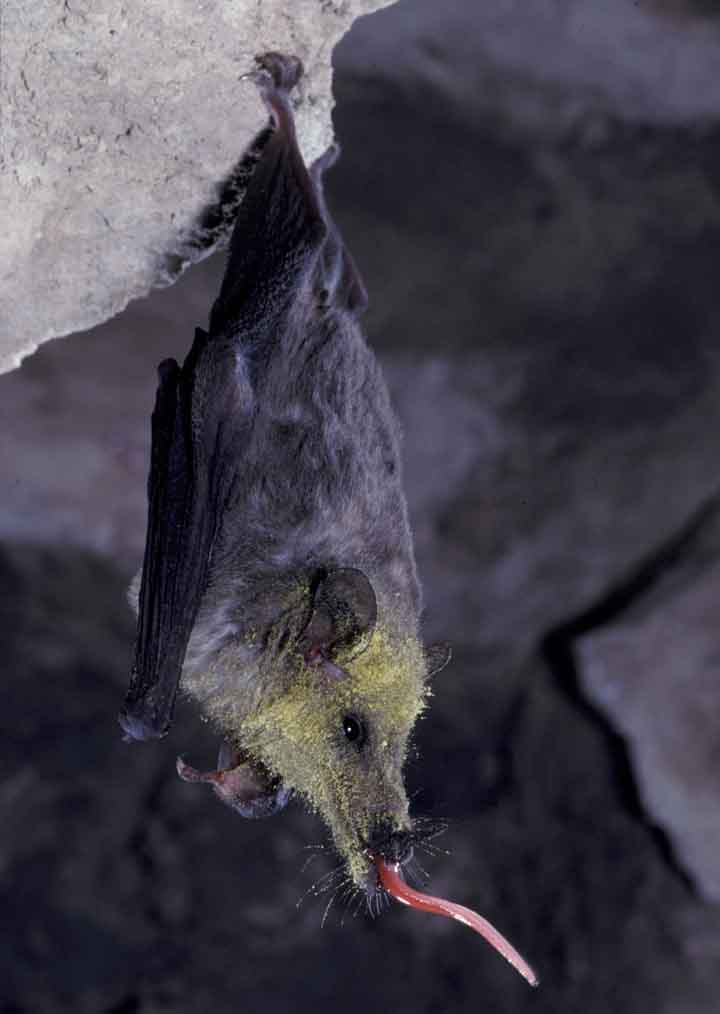
There was such a positive response to the Tube Nosed Fruit Bat that I thought we should examine another adorable bat. Today’s featured animal is the Ozark Big-Eared Bat. Okay, so maybe our little Yoda Bat was cuter but this one is just as interesting. I am not sure if this bat likes being referred to as the “Big-Eared Bat” so perhaps we should call them by one of their other names. They are also known as the Western Big-Eared Bat, the Long-Eared Bat and finally the Lump-Nosed Bat. Hmmm… none of these names are very flattering, are they? Poor little bat must have a tough life. Let’s find out by heading to the caves of southern, central United States to observe this endangered bat in their natural habitat.

Elves of the Bat World?

After looking at the names of this unique bat, it is obvious that the Ozark Big-Eared Bat is defined by their incredibly large ears and lumpy nose. Interestingly enough, the body length of this bat is only about 10 cm (4″) long, however, their ears typically extend to a length of 2.5 cm (1′). That may not seem that large but proportionally, it would be equivalent to a 6′ tall human having ears that extend more than a foot and a half. The ears of the Big-Eared Bat are usually held straight up, however, during hibernation some bats will coil their ears similar to a ram’s horn. I have absolutely no idea why they do this!

Ozark Big-Eared Bat

Photo from Wikimedia

Follow Your Nose

Besides the ears, the Lump-Nosed Bat also has….well…. a lumpy nose. Technically, the lumps are facial glands that oddly enough, resemble a pair of mittens. I guess the Ozark Big-Eared Bat is prepared for a cold winter. Another large feature of the Big-Eared Bat that seems to be forgotten is their wingspan. This particular bat species has a wingspan that measures between 30 and 34 cm (12 to 13 inches), which is quite impressive for such a small animal.

Population Dwindling

Unfortunately, human activity has caused the population numbers of the Ozark Big-Eared Bat to reduce dramatically. It is believed that there are only 1800 of these bats remaining in the wild. Luckily, conservationist are working diligently to reduce human disturbance, which may help the population rebound. Bats play a huge role in any ecosystem, so preserving them should be of utmost importance.

Thanks for checking out today’s Wild Fact. Enjoy the rest of your day and I will see you tomorrow for another fun and exciting animal.

Digg This
Reddit This
Stumble Now!
Buzz This
Vote on DZone
Share on Facebook
Bookmark this on Delicious
Kick It on DotNetKicks.com
Shout it
Share on LinkedIn
Bookmark this on Technorati
Post on Twitter
Google Buzz (aka. Google Reader)

Wild Fact #385 – Can You Do a Cartwheel? – Ring-Tailed Cat

January 16, 2012 - 12:00 am No Comments
Ring-Tailed Cat

Photo by Robertbody (Wikimedia)

After ending last week with an interesting Wild Fact on the newly discovered Montane Mouse, I thought we would start this week with the typical nemesis of any mouse…..a cat! Wait! What do you mean the Ring-Tailed Cat is not actually a furry feline? That’s right, the Ring-Tailed Cat is not really a cat. So if they are not part of the feline family, what kind of animal are they? Take a minute to guess, I will give you the answer soon. To help you figure out what family this animal belongs to, you may want to take a trip to a nice desert-like area of North America such as Arizona, California or even Texas to get a closer look.

What Am I?

Okay, so did you figure out what the Ring-Tailed Cat really is? Did you guess a lemur? Perhaps the canine family? While these would have been good guesses the real answer is obvious once you hear it. The Ring-Tailed Cat is actually a member of Procyonidae family! See, I told you it was obvious once you hear it. In case you were wondering, the Procyonidae family is also known as the “Raccoon” family. This makes a lot of sense when you look at the face of this adorable desert “cat”.

The Perfect Climber

Would you believe me if I told you that this desert animal has several adaptations that make them phenomenal climbers? It’s true! For starters, they have an incredibly long tail that provides them with amazing balance. Secondly, their ankle joint is capable of rotating more than 180 degrees, which makes them a very agile climber. So why in the world would a desert animal need to be a good climber in a desert? This is a great question.

Ring-Tailed Cat

Photo by Robertbody (Wikimedia)

A Real Cliffhanger

Although, their habitat may lack trees, it does have  a lot of rocky cliffs and embankments that the Ring-Tailed Cat loves living in. The Ring-Tailed Cat may be one of the best rock climbers in the Animal Kingdom. For instance, these animals have been known to shimmy up crevices by placing their back against one wall with all four feet against the other as they climb at a 90 degree angle. If that doesn’t impress you, they have also been known to perform cartwheels using their long, balancing tail. I can’t even do a cartwheel so that amazes me.

Well, I hope you enjoyed today’s Wild Fact on the misleading Ring-Tailed Cat. Enjoy the rest of your day and I will see you tomorrow for another exciting animal fact.


Digg This
Reddit This
Stumble Now!
Buzz This
Vote on DZone
Share on Facebook
Bookmark this on Delicious
Kick It on DotNetKicks.com
Shout it
Share on LinkedIn
Bookmark this on Technorati
Post on Twitter
Google Buzz (aka. Google Reader)

Wild Fact #386 – Hide ‘n’ Seek – Montane Mouse

January 13, 2012 - 12:00 am No Comments
Long Tailed Montane Mouse

Image: Stephen Richards, Conservation International

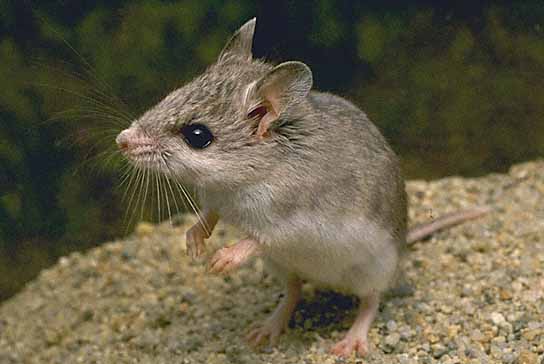
We started the week learning about a new species of bat that was discovered in Papua New Guinea a few years ago. Today we are ending the week with a rodent species that was discovered at the same time as the Tube Nosed Bat.  That’s right the cute and cuddly Montane Mouse was one of the 200 animals researchers discovered in 2009. Do you get the feeling that all of these animals were simply playing a huge game of hide ‘n’ seek with humans? Just makes you wonder how many more undiscovered animals are out there? Although there isn’t much information on this newly discovered rodent, this won’t stop us from taking a trip to Papua New Guinea to see what we can find out. You coming with me?

Stand Out From the Crowd

So what makes this Montane Mouse different then other furry little rodents? Well there must be a few things since they have been classified in their very own Genus, which means they have no close relatives. The most notable difference is the long tail with the pure white tip. This definitely makes identifying these mice easier since no other species in the area has a white tail.  In fact, have you ever seen a mouse with white tail? I know, me neither! Researchers have also described this Montane Mouse as having forward directed incisors and narrow feet. This suggests that this particular mouse is perfectly suited for a life of digging and moving soil. So the next time you need a hole dug, you know who to call for help.

Still Plenty to Discover!

What else do we know about this long tailed Montane Mouse? To be honest, not a whole lot. Since they were captured 1590 metres above sea level, it is safe to say that they don’t have a problem with high elevations. Other than that, we don’t know much more about this beautiful creature. Heck, this animal doesn’t even have a scientific name yet! I still find it mind boggling that in this day and age, we are still finding completely new animals. Hopefully there are many more to discover.

I hope you enjoyed the week of Wild Facts that featured numerous obscure animal species. Have a great weekend and I will see you on Monday for another week of fun and crazy animal facts.
 

Digg This
Reddit This
Stumble Now!
Buzz This
Vote on DZone
Share on Facebook
Bookmark this on Delicious
Kick It on DotNetKicks.com
Shout it
Share on LinkedIn
Bookmark this on Technorati
Post on Twitter
Google Buzz (aka. Google Reader)

Wild Fact #389 – Do They Have Bananas in Space? – Rhesus Monkey

January 10, 2012 - 12:00 am No Comments
Rhesus Monkey | Rhesus Macaque

Photo by Einar Fredriksen (Wikimedia)

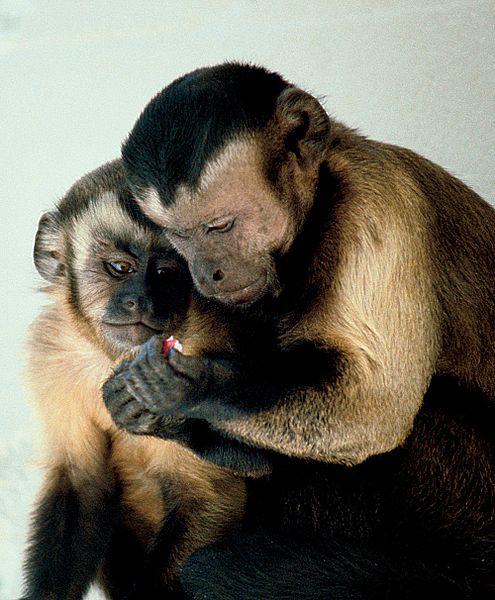
Yesterday we observed the incredibly unique Tube Nosed Bat and although there is little information on this newly discovered species, we managed to learn a few things. Today, we are going to study an animal that has more information that we know what to do with. The Rhesus Monkey is actually one of the best known species of Old World Monkeys. The natural range of the famous monkey includes Pakistan, India, Southeast Asia, Afghanistan and China, however, you will also find a troop or two living in Florida. Yes, you can see wild Rhesus Monkeys in the United States, which were apparently introduced to help enhance a tourist operators “Jungle Cruise”. Something tells me he didn’t have permission to release these monkeys into the Florida landscape.

One Intelligent Monkey

The Rhesus Monkey was able to survive in the forests of Florida due to their intelligence. These animals are able to adapt to many different environments and have been known to live within human settlements throughout India. I guess it is nice to see humans interacting with one of our long lost cousins. Personally, I am not sure if I would want a troop of Rhesus Monkeys living in my neighbourhood. These troops can get as large as 200 members and the Rhesus Monkey isn’t known for being a quiet species. I have a feeling you would have a tough time getting any sleep with an active, noisy troop of 200 monkeys roaming the streets of your neighbourhood.

Rhesus Macaque | Rhesus Monkey

Photo by J.M.Garg (Wikimedia)

The Astronaut

So just how smart is the Rhesus Monkey? Well, they actually beat humans into space! That’s right, this was the species of monkey that we decided to send into space before we made the trip ourselves. For some reason, I can’t get the image of a little monkey in a space suit flying a shuttle out of my head. I guess that must have been “One small step for monkey…..One giant leap for monkey-kind”.  This isn’t the only time that the Rhesus Monkey has helped out the more “advanced” human race. These little critters have aided a large number of medical and scientific research including the discovery of the different human blood groups. We owe a lot to this little monkey, don’t we? The next time you see a Rhesus Monkey, make sure you thank them for everything they have done.

That does it for today’s history lesson on the incredibly well known Rhesus Monkey. Tune in tomorrow for a lesser known species.


Digg This
Reddit This
Stumble Now!
Buzz This
Vote on DZone
Share on Facebook
Bookmark this on Delicious
Kick It on DotNetKicks.com
Shout it
Share on LinkedIn
Bookmark this on Technorati
Post on Twitter
Google Buzz (aka. Google Reader)

Wild Fact #390 – A Nose for Fruit – Tube Nosed Fruit Bat

January 9, 2012 - 12:00 am No Comments
Tube Nosed Fruit Bat

Photo by Piotr Naskrecki, Conservation International

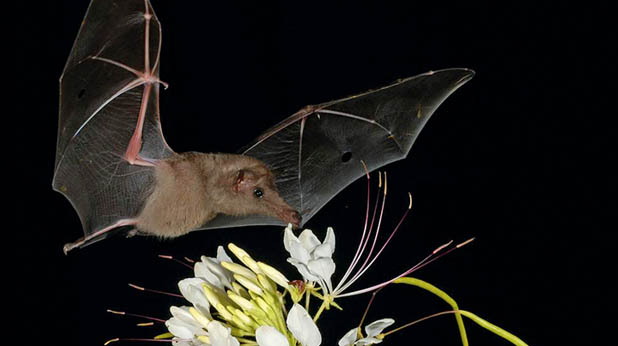
Welcome back to another exciting week of Wild Facts. This week we are going to take a look at some very unique animals starting with one that was recently discovered in 2009. There may not be too much information on the Tube Nosed Fruit Bat but we are going to do our best to learn everything we can about a species we didn’t know existed 3 years ago. That’s right, the Tube Nosed Fruit Bat was one of the 200 species identified during two scientific expeditions through the Nakanai and Muller mountain ranges in Papua New Guinea. Perhaps, we will discuss a few more of the animals identified during this trip throughout the week but first, let’s take a look at this bizarre looking bat.

Do I Look Like Yoda?

Some have compared the Tube Nosed Fruit Bat to the famous Star Wars character, Yoda. Since I have yet to see a Star Wars movie, I can’t really provide my opinion but let me know what you think. Either way, the Tube Nosed Fruit Bat is one odd looking creature. So what’s up with their nose? Like I had mentioned earlier, there isn’t a whole lot of information on this creature but it is believed that their bizarre nose acts like a snorkel. It may look weird but this nose allows the Tube Nosed Fruit Bat to breathe when its face is stuffed inside a scrumptious fruit. That is an interesting adaptation and I am sure it gives this bat an advantage when they play “Bobbing for Apples”.

Tube Nosed Fruit Bat

Click for Sourc

Adapting to Survive?

The Tube Nosed Fruit Bat is typically found in forested areas close to bodies of water, since everyone enjoys living on the water. Like other fruit bats, this particular species plays an important role as a seed disperser in the rainforest ecosystem. Unfortunately, these rainforest ecosystems are being destroyed as a result of human activity. Originally it was believed that this particular bat required high quality forests to survive, however, recent studies have shown them living in degraded habitats. They may not be thriving in these areas but it is great to know they are persisting since habitat destruction is one of the main reasons this bat is listed as endangered. If this species wants to continue living, they had better adapt to living in a degraded environment.

That does it for the first unique animal of the week. Enjoy the rest of your day!


Ong, P., Rosell-Ambal, G. & Tabaranza, B. & Heaney, L., Ingle, N., Cariño, A.B., Pangulatan, L.M., Pedregosa, M., Alcala, E. & Helgen, K. 2008. Nyctimene rabori. In: IUCN 2011. IUCN Red List of Threatened Species. Version 2011.2. <www.iucnredlist.org>. Downloaded on 09 January 2012

Digg This
Reddit This
Stumble Now!
Buzz This
Vote on DZone
Share on Facebook
Bookmark this on Delicious
Kick It on DotNetKicks.com
Shout it
Share on LinkedIn
Bookmark this on Technorati
Post on Twitter
Google Buzz (aka. Google Reader)

Wild Fact #391 – Singing the Blues – Blue Monkey

January 6, 2012 - 12:00 am No Comments
Blue Monkey

Photo by Markrosenrosen (Wikimedia)

It looks like you made it to the weekend! I know all of you have been working very hard after a relaxing holiday, so I thought I should reward you with a Wild Fact about a cute and cuddly animal. Personally, I thought yesterday’s fact on the Anopheles Mosquito would have fallen into this category but I don’t think everyone sees it that way. So we are going to end the week with the fun and furry Blue Monkey, which is also known as the Diademed Monkey but that is tough to say so I think I will stick with the Blue Monkey. Is this monkey really blue? Find out in about 4.5 seconds…

How Blue is the Blue Monkey?

The short answer to this obvious question is “No”. The Blue Monkey is not noticeably blue, however, they have little hair on their face and this does occasionally give them a bluish appearance. For the most part the Blue Monkey is actually an olive or grey colour, except for the face which is typically dark with a yellowish patch on their forehead. Perhaps they should be called the “Yellowish, Olive/Grey Monkey”. Sure it doesn’t sound that great but at least it would be more accurate.

Blue Monkey

Photo by D. Gordon E. Robertson (Wikimedia)

A Forest Home

So where can we find our “Blue” Monkey? This particular monkey is native to Central and East Africa in the canopy of the evergreen forests or the montane bamboo forests. I have never personally been to a “bamboo forest” but it sounds absolutely incredible. If any readers have experienced this intriguing forest, could you please let me know what it was like? Thanks! Anyway, back to our monkey friend….

Life is Not Fair

Since the Blue Monkey prefers to live in trees that are capable of providing both food (fruits and leaves) and cover, they are quickly losing their habitat. For some reason, humans prefer to clear out these useful trees to create pine plantations. After this occurs, the confused monkey will begin peeling the bark off of these new, exotic trees trying to find something to eat. Naturally, this doesn’t go over well with “us” and measures are taken to ensure the Blue Monkey “Pests” no longer damage the pine plantations. Is it just me or does this not seem fair to the monkey?

That does it for the week. Enjoy your weekend and I will see you on Monday.

Digg This
Reddit This
Stumble Now!
Buzz This
Vote on DZone
Share on Facebook
Bookmark this on Delicious
Kick It on DotNetKicks.com
Shout it
Share on LinkedIn
Bookmark this on Technorati
Post on Twitter
Google Buzz (aka. Google Reader)

Wild Fact #395 – Fat Sand Rat

January 2, 2012 - 12:00 am No Comments
Fat Sand Rat

Photo by Tino Strauss (Wikimedia)

Welcome to the first Wild Fact of 2012. I trust all of you had a great New Year’s celebration and are ready for an exciting and prosperous 2012. With New Year’s comes the infamous “New Year’s Resolutions”. I have yet to make one, however, I think today’s animal, the Fat Sand Rat, should probably take some time to craft one or two resolutions for themselves. Yes, there is a member of the Gerbil family that is commonly known as the Fat Sand Rat. In fact, their scientific name, Psammomys obesus, isn’t much better. Let’s find out why this little rodent received such a hurtful name.

The Fat Lab Rat

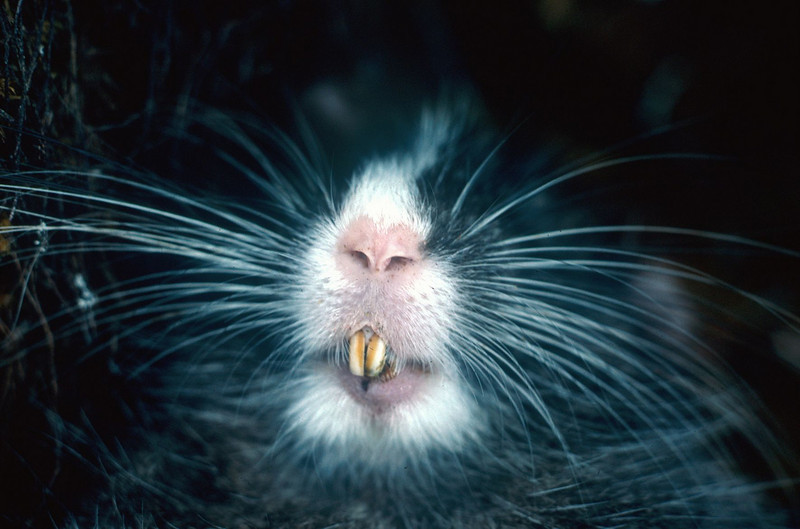
As you might expect the Fat Sand Rat happens to be quite bulky and as such they have been referred to as “sloths of the rodent world”, which isn’t very accurate. Granted, the male Fat Sand Rats are bulky and as such, don’t exercise too much, however,  the females tend to be quite lean, fast and agile.  Perhaps, the females can help their counterparts keep their resolution this year. Interestingly enough, the Fat Sand Rat has been observed to suffer from diabetes when they feed on normal rodent food. As such, these rodents have become very important in the laboratory as humans continue to study the impacts of diabetes. I guess being a fat rodent does have its benefits…..for humans.

Fat Sand Rat

Click for Source

Housekeeping Sand Rat

The Fat Sand Rat is known to be active throughout the day and night, which lands them back in the laboratory to study seasonal affective disorder, but we will save that story for another time. Although these rodents get pegged for being lazy, they tend to have complex burrow system. Their underground homes usually consist of chambers for food storage, nesting as well as mating. Every morning, before they go foraging, the Fat Sand Rat has been spotted at the entrance of their burrow sweeping out the dirt and excrement. A little house cleaning to start the day is probably a good habit to get into. Perhaps, I jumped to conclusions when I mentioned that this rodent needs to make a resolution. They seem to be pretty organized and could probably teach us a few things, in the laboratory as well as out of it.

That does it for the first Wild Fact of 2012. Enjoy the rest of your day and I will see you tomorrow for another animal.

Digg This
Reddit This
Stumble Now!
Buzz This
Vote on DZone
Share on Facebook
Bookmark this on Delicious
Kick It on DotNetKicks.com
Shout it
Share on LinkedIn
Bookmark this on Technorati
Post on Twitter
Google Buzz (aka. Google Reader)