Archive for the ‘Reptiles’ Category

Wild Fact #387 – A Good Defense is the Best Offense – Northern Alligator Lizard

January 12, 2012 - 12:00 am No Comments
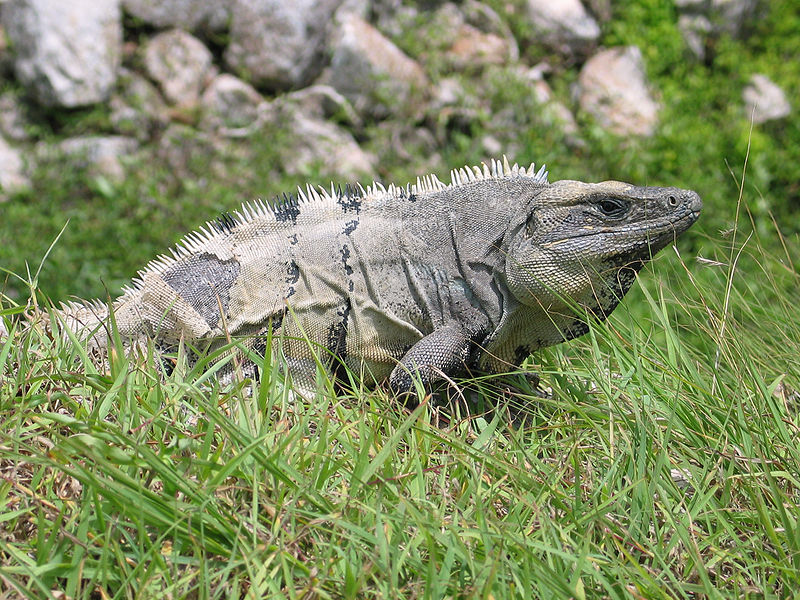
Northern Alligator Lizard

Photo by Meggar (Wikimedia)

Today we continue learning about obscure animals. Although today’s animal is a little more popular, you may be surprised to find out that you have an alligator living in your backyard……if your backyard is on the west coast in North America.  Okay, so maybe it is a Northern Alligator Lizard but that doesn’t take away from their awesomeness. Although, they may not be as large as a real alligator (thank goodness), they are known to be one of the largest lizards species in Canada, which is pretty impressive, right? So what are we waiting for? Let’s head out to your backyard and start looking for the incredible Northern Alligator Lizard.

The Defense Specialist

We may have a tough time spotting this medium-sized lizard since they are known to be quite secretive and will typically flee once spotted. Trust me when I tell you not to pursue a fleeing Alligator Lizard. I guarantee you will not be a happy camper once you catch them. Once caught the Northern Alligator will try a few different defence strategies. They will release a foul smelling mix of musk and faeces, followed by biting and if the situation calls for it, they will simply drop their tail and scurry away. Dropping their tail is a common trend among lizards and acts as a distraction to the predator, giving them just enough time run and hide. The tail of the Northern Alligator Lizard does grow back, however, it tends to be shorter, fatter and darker. I guess this is one way to tell which lizards have had a tough life.

Northern Alligator Lizard

Click for Source

Anti-Social Lizards

Although the Northern Alligator Lizard doesn’t mind the cold, which is why they can be found living in Canada, they are still not big fans of winter. Therefore, this lizard species will hibernate in underground dens known as, hibernacula. The Northern Alligator Lizards living in British Columbia tend to stick around their hibernacula all year long. I guess they are afraid that winter can hit anytime! During the summer months, the Northern Alligator Lizard can often be found in groups as they sun themselves on the rocks. Although, they can be found in groups, the Northern Alligator Lizard is not a social animal and will hardly interact with the neighbouring sun tanners. Sometimes you just want to relax and soak up the sun without having to worry about entertaining other lizards, right?

That does it for today’s Wild Fact. I will see you tomorrow for the final animal fact of the week.


Digg This
Reddit This
Stumble Now!
Buzz This
Vote on DZone
Share on Facebook
Bookmark this on Delicious
Kick It on DotNetKicks.com
Shout it
Share on LinkedIn
Bookmark this on Technorati
Post on Twitter
Google Buzz (aka. Google Reader)

Wild Fact #388 – The Comeback Kid – Chelonoidis elephantopus

January 11, 2012 - 12:00 am No Comments
Galapagos Tortoise

Photo from Yale University

This week it seems we are alternating between popular animals and ones that we just don’t know much about. Today’s animal is a type of Galapagos Tortoise that we had thought had been extinct for 150 years. Yes, the Chelonoidis elephantopus falls under the category of “we don’t know much about this animal”. That’s okay though since we are going to do our best to uncover a few facts about this amazing tortoise. Are you ready to take a quick trip to the Galapagos Islands, where it is believed that this once “extinct” animal is making the comeback of the century?

Extinct or Not Extinct? That is the Question

So how do you re-discover a lost species? Through genetic testing of course. That’s right, researchers were studying the genome of closely related species, Chelonoidis becki, when they started finding traces of a long lost generation. It was proven that these hybrids were a direct descendant from the “extinct” tortoise, which means either their mother or father shouldn’t technically exist anymore. Since these tortoises have been known to live up to 175 years, you may be thinking that this is no big deal and that the hybrid was born before their mother or father went extinct. This is a great theory but I forgot to give you one crucial piece of the story…..some of these hybrids were only 15 years old. Yep, this means that there is most likely a hidden population of Chelonoidis elephantopus living somewhere on the island.

Galapagos Tortoise

Click for Source

An Amazing Hiding Spot

Finding these extinct species is now similar to an Easter egg hunt, which would be a lot of fun. It would be monumental for the species if humans were able to find a few specimens, since we would be able to begin a breeding program to help keep this Tortoise population alive. Although, if I were the Chelonoidis elephantopus, I would be a little weary of humans since their drastic population decline was a result of our hunting efforts. Maybe this is the perfect time to make things right and help this animal species do something that is almost impossible……comeback from extinction!

That does it for our trip to the amazing Galapagos Islands. I hope you enjoyed learning about the comeback tour of this “extinct” tortoise.

Digg This
Reddit This
Stumble Now!
Buzz This
Vote on DZone
Share on Facebook
Bookmark this on Delicious
Kick It on DotNetKicks.com
Shout it
Share on LinkedIn
Bookmark this on Technorati
Post on Twitter
Google Buzz (aka. Google Reader)

Wild Fact #398 – The Next Houdini – Perentie

December 28, 2011 - 12:00 am No Comments
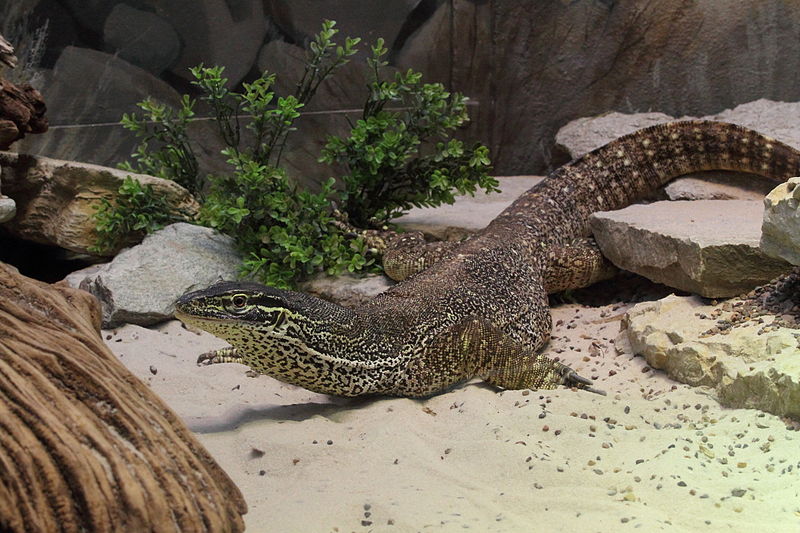
Perentie

Photo from WIkimedia

For some of us the holidays are ending today, so if you are heading back to a quiet workplace after a great Christmas weekend, this Wild Fact is for you. For the rest of you still on holidays……this Wild Fact is also for you :) . Today we are heading to Australia to learn about the fourth largest lizard in the world, the Perentie. This particular lizard is a type of Goanna, also known as a Monitor Lizard, which is native to Australia. Other notable members of the Goanna family include the Crocodile Monitor, the Water Monitor and of course the most famous, the Komodo Dragon. Incidentally, these three species are the only lizards that are larger than the Perentie.

Big, Bad Bite

So just how big is the Perentie? Typically, this lizard can grow up to 2.5 metres (8′ 2″) long and weigh up to 20 kg (44 lbs), which is pretty impressive if you remember that this is a lizard we are talking about. Running across a large lizard like this may be intimidating but it is even worse when you realize that they also have a venomous bite. I would be careful feeding a Perentie since a bite from one of these lizards can cause swelling, blood clotting and of course an intense shooting pain that may last up to several hours. Although, the venom may not kill you, I don’t recommend sticking your fingers in the mouth of the Perentie.

Perentie

Photo by Sean Mack (Wikimedia)

Escape Artists

Luckily, Perenties try their best to avoid human contact, so the chances of getting bit are pretty slim. In fact, the chances of even seeing one of these magnificent creatures is pretty slim. They will typically disappear long before you even know they are in the area. The Perentie is a surprisingly quick runner that can run on all four legs or just the hind legs. If they do stick around, there is a good chance you will just walk on by since the Perentie is known for their camouflage. As well, this large lizard is capable of digging a burrow within minutes and are excellent tree climbers, so they have many options if they decide to escape.

Well that does it for today’s “Back to Work” Wild Fact. I hope you enjoy the rest of the day and if you are still on holidays, kick back and relax! See you tomorrow for another Wild Fact.


Digg This
Reddit This
Stumble Now!
Buzz This
Vote on DZone
Share on Facebook
Bookmark this on Delicious
Kick It on DotNetKicks.com
Shout it
Share on LinkedIn
Bookmark this on Technorati
Post on Twitter
Google Buzz (aka. Google Reader)

Wild Fact #411 – The Goggles Do Nothing! – Giant Spitting Cobra

December 9, 2011 - 12:00 am No Comments
Giant Spitting Cobra

Click for Source

The last few weeks of Wild Facts have been suggested by my beautiful girlfriend, Sylviane, and I would like to thank her for the hard work she has done researching cool animals to write about.  She has made writing these Wild Facts a lot easier and she has found some pretty interesting animals along the way, so THANK YOU, Sylviane! Today’s Wild Fact was inspired by Miranda who is a student working hard on a 7 month project about Cobra’s. Miranda got me thinking about a newly discovered snake, the Giant Spitting Cobra. You can thank Miranda after reading about this amazing animal!
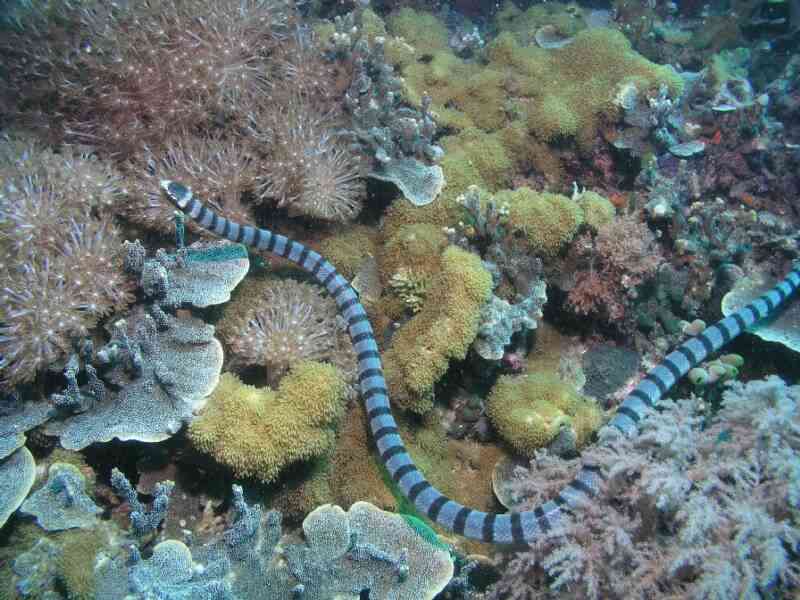
Deadly Spit

The Giant Spitting Spitting Cobra is definitely not a snake you want to irritate. They are capable of growing up to 2.74 m (9′) and are believed to have the most venomous bite of all the Cobras. The venom of the Giant Spitting Cobra has two very important uses. The first is to make sure they get a nice warm meal. Yes, they will use the venom to kill birds, lizards and other snakes.  I am just glad that humans is not on that list! Although, humans aren’t in the clear yet, since the second use for this venom is as a self-defence mechanism for this large snake. Believe it or not, they can actually spray their venom several yards, which is probably how they received their common name. Typically, the Giant Spitting Cobra will aim for your eyes since that gives it the best chance to escape. I can just imagine the surprised look on the predators face when the snake spits at them.

Giant Spitting Cobra

Click for Source

Don’t Wait For Treatment

If you are on the wrong side of a venomous bite or spray from the Giant Spitting Cobra, then you had better see a doctor quickly. This toxin is know to kill the cells around the wound, which is scary when you consider that the snake is aiming for your eyes. People have been known to go blind as a result of being sprayed by a Spitting Cobra. For the most part, if you get treatment immediately then you will most likely live to tell your story, so don’t wait around.

That does it for the last Wild Fact of the week. Enjoy your weekend and we will meet up again on Monday.

Digg This
Reddit This
Stumble Now!
Buzz This
Vote on DZone
Share on Facebook
Bookmark this on Delicious
Kick It on DotNetKicks.com
Shout it
Share on LinkedIn
Bookmark this on Technorati
Post on Twitter
Google Buzz (aka. Google Reader)

Wild Fact #428 – Wear Your Heart on Your….Back – Hawksbill Turtle

November 16, 2011 - 9:18 am No Comments
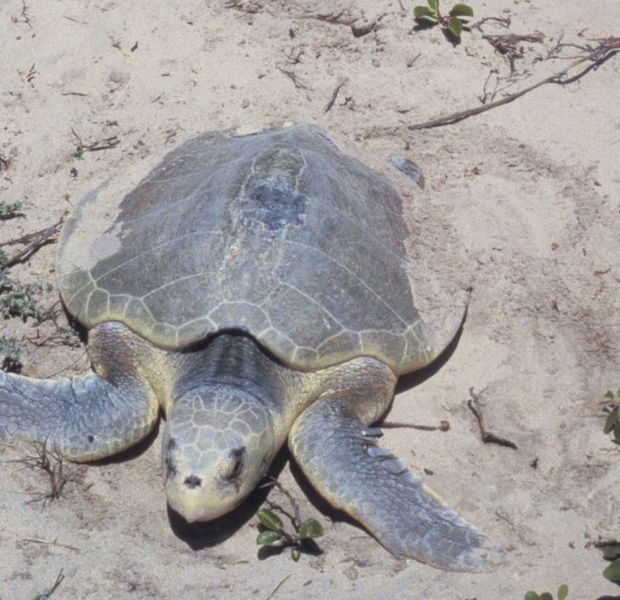
Hawksbill Turtle

Photo by Hoffryan (Wikimedia)

It may have took awhile to get today’s Wild Fact out, due to computer issues, however, better late than never. I promise it was worth the wait as we are heading to the ocean today to study a critically endangered sea turtle known as the Hawksbill Turtle. This particular turtle can be found throughout tropical areas in the Atlantic, Pacific and Indian Oceans, so you get to choose which area you want to explore. As well, you won’t need to go too deep since the Hawksbill Turtle prefers living along the coastlines where they are close to food and nesting sites.

One Big Heart

The Hawksbill Turtle is smaller than most other sea turtles as they only grow to about 114 cm (45″) in length and weigh up to 68 kg (150 lbs). I find it funny that a 150 lb turtle is considered to be the runt of the family. The young Hawksbill Turtles seem to have more ‘heart” compared to the adults. The juvenile turtles have a heart shaped shell, which becomes elongated as they grow older. Similarly, the shell of this particular turtle tends to be beautifully coloured, which tends to get this turtle into quite a bit of trouble.

Hawksbill Turtle

Photo by Tom Doeppner (Wikimedia)

Adopt a Turtle

As mentioned, the Hawksbill Turtle is critically endangered as a result of human influence. Although they are globally protected, people still love dining on their eggs and have no problems hunting this turtle for their flesh and amazingly beautiful shell. Similarly, the Hawksbill Turtle is also a victim to fishing as they are often accidentally caught in large fishing nets. Luckily, this turtle is getting some attention as the World Wildlife Federation (WWF) is working hard to ensure that this beautiful creature lives for a long time to come. If you would like to help out with this cause then please feel free to visit the “Adopt a Turtle” website.

The Talons of a Hawk

If you take a look at the head of the Hawksbill Turtle, you will quickly see how they received their name. Yes, their head tapers to a point, which resembles the beak of a majestic bird. Besides the beak, this Turtle also has talons like a Hawk. Okay, maybe I am exaggerating a little bit since I don’t think a pair of claws on each flipper would really constitute  as “talons” but these claws do separate the Hawksbill Turtle from most other sea turtles.

That does it for today’s adventure. Enjoy the remainder of your day and I will see you tomorrow for a new animal fact.

Digg This
Reddit This
Stumble Now!
Buzz This
Vote on DZone
Share on Facebook
Bookmark this on Delicious
Kick It on DotNetKicks.com
Shout it
Share on LinkedIn
Bookmark this on Technorati
Post on Twitter
Google Buzz (aka. Google Reader)

Wild Fact #439 – A King Among Kings – Common Kingsnake

November 1, 2011 - 12:00 am No Comments
Common Kingsnake

Photo by Calibas (Wikimedia)

I am sure all of you are nursing sore tummy’s today from all of the candy you ingested last night. I hope you and your families enjoyed dressing up and getting free candy. Although Halloween is over, I figured we would continue with the scary Wild Facts and what could be more frightening than the Common Kingsnake? Okay, so there are probably a few other animals out there that are a little scarier but that doesn’t take away from the impressiveness of today’s animal. So grab your gloves and a hat because we are heading to Mexico to look for our slithery specimen. By the way, these snakes are also native to the good ol’ US of A so this is another travel option if you don’t feel like visiting Mexico right now.
Although this snake is called the “Common” Kingsnake, I haven’t found a whole lot of characteristics that are too common with this creature. For starters, all 8 sub-species have a wide variety of colours and patterns making them some of the most fashionable snakes out there. The Common Kingsnake has a larger wardrobe than I do with their favourite pieces of clothing coming in red, orange, yellow, tan, black and white. All of these colours are then mixed in with a variety of patterns such as bands, patches, rings, stripes, spots and of course speckles. Needless to say, it is pretty difficult to identify these snakes based solely on their colour and patterns.

Common Kingsnake

Photo by Haplochromis (Wikimedia)

Even though, their fashion sense is something to be envious of, my favourite characteristic of the Common Kingsnake is their choice of prey. This particular snake will eat a variety of creatures such as birds, rodents, amphibians, reptiles and pretty much anything else they can overpower. Even though, this sounds like the normal diet of a hungry snake, it is a little different. You see, some of the reptiles that the Kingsnake feeds on includes Rattlesnakes and other venomous (and deadly) snakes.

Wait!

How can they consume deadly, poisonous snakes? See, that is the interesting part. The Common Kingsnake is actually immune to the venom of numerous poisonous snakes. This allows them to be one of the few animals that enjoy dining on some of the scariest snakes known to man. Not too shabby for animal that is apparently “Common”, is it?

Well that does it for today’s Wild Fact. Enjoy the rest of your day and I will see you tomorrow.

Digg This
Reddit This
Stumble Now!
Buzz This
Vote on DZone
Share on Facebook
Bookmark this on Delicious
Kick It on DotNetKicks.com
Shout it
Share on LinkedIn
Bookmark this on Technorati
Post on Twitter
Google Buzz (aka. Google Reader)

Wild Fact #446 – Standing Tall – Gargoyle Gecko

October 21, 2011 - 12:00 am No Comments
Gargoyle Gecko

Photo by LA Dawson (Wikimedia)

We started the week talking about the Leopard Gecko so it only seems fitting to end the week with another gecko, the Gargoyle Gecko. Personally, I have high expectations for this little reptile with a name like “Gargoyle”. I just picture them standing tall on some high-rise building in the city. I guess this picture is false since the Gargoyle Gecko is only found in the southern portion of the island of New Caledonia. I doubt they have tall skyscrapers with Gargoyles but you never know! So who is up for exploring a new island today to find a potential candidate for the CITES list.

So why are these medium to large sized Geckos called Gargoyles? Well, I am willing to bet it has something to do with all the tiny bumps that can be found on their head. For once I have to give credit to person who named this animal as it is actually a pretty clever and creative name. Besides their bumpy heads, the Gargoyle Gecko also has a long, thin, prehensile tail that is able to drop off (don’t worry it grows back) when they are threatened.

Gargoyle Gecko

Photo from Wikimedia

Unfortunately, dropping their tail won’t help them against their biggest threat. Of course, I am talking about deforestation, which is destroying their lowland forests of their Island home. As I mentioned, these Gecko’s are being considered to be placed on the CITES list which is a pretty good indication that their population may be in trouble. As a result of this consideration, they have put restrictions on the exportation of this cool looking reptile. So if you were looking to get a pet Gargoyle Gecko, it may be difficult.

If you are hoping to catch a glimpse of these cute gecko’s before they disappear then you should be on the lookout for a variety of colour variations. Yep, these little reptiles can be any colour from grey, brown, white, yellow, orange and even red. To make things even more interesting is the fact that they all have a variety of blotches and striping patterns. At least they have a full wardrobe and never have to worry about wearing the same thing twice.

I hope you enjoyed this week of Wild Facts. Have a great weekend and I will see you on Monday.

Digg This
Reddit This
Stumble Now!
Buzz This
Vote on DZone
Share on Facebook
Bookmark this on Delicious
Kick It on DotNetKicks.com
Shout it
Share on LinkedIn
Bookmark this on Technorati
Post on Twitter
Google Buzz (aka. Google Reader)

Wild Fact #450 – The “Cat-Like” Lizard – Leopard Gecko

October 17, 2011 - 12:00 am No Comments
Leopard Gecko

Photo from Wikimedia

I thought today would be a great day to learn about a cute looking animal. After all, it is a Monday, so I am sure at least some of us could use some cheering up. Today’s animal, isn’t the typical “cute and cuddly” but you have to admit the picture of the Leopard Gecko is pretty sweet. Who would have thought that a lizard from the deserts of Asia would be able to make your Monday morning that much better. So what are you waiting for? Chug your coffee and let’s go learn a little more about this fun-looking reptile.

As mentioned, the Leopard Gecko is a ground dwelling, nocturnal lizard that loves to hang out in the deserts of Central Asia, Pakistan and parts of India. For a Gecko, this particular species happens to be quite large as they can easily grow up to 27.5 cm (10.9″) in length and can weigh up to 65 grams (2.3 0z). This weight definitely fluctuates as the Leopard Gecko will go into a semi-hibernation during the cooler winter months. When the temperature dips, this little lizard burrows underground where it survives on its fat cells. Good thing they weigh a whopping 65 grams!

Leopard Gecko

Michelle Reaves, http://www.flickr.com/people/considerthis/

When they aren’t hibernating, this Gecko will spend their days hiding underneath rocks to protect themselves from the scorching sun. Once night falls, they will come out to play. Well, maybe not so much to play as to eat but nonetheless they come out. Interestingly enough, this Gecko is properly named since they use their keen sense of vision and smell to stalk their prey much like that of a Leopard. Therefore if you are an insect or a mealworm living in the Leopard Gecko’s home range then you may want to look over your shoulder every now and again (well, I guess the mealworm doesn’t have to worry since they don’t have shoulders).

Leopard Gecko Fast Fact – The Leopard Gecko has become very popular in the pet trade industry as a result of their size and beautiful colour. Although, in the wild, these Gecko’s will have a darker, duller colour as opposed to their captive friends. I guess they don’t have a need for dull colours when they are in a safe environment.

Well that does it for the first Wild Fact of the week! I hope you enjoyed learning about the Leopard Gecko. See you tomorrow for another fun and exciting Wild Fact.

Digg This
Reddit This
Stumble Now!
Buzz This
Vote on DZone
Share on Facebook
Bookmark this on Delicious
Kick It on DotNetKicks.com
Shout it
Share on LinkedIn
Bookmark this on Technorati
Post on Twitter
Google Buzz (aka. Google Reader)

Wild Fact #457 – Turn on a Dime – Virgin Islands Dwarf Sphaero

October 6, 2011 - 12:00 am No Comments
Worlds Smallest Reptile - Virgin Islands Dwarf Sphaero

Photo by Alejandro Sánchez (Wikimedia)

Today’s post on the Worlds Smallest Reptile could have went a couple of ways since there are a few different species that share this honour. I chose the Virgin Islands Dwarf Sphaero because it sounds fun and exciting but I could have just as easily picked the Jaragua Sphaero or even the Brookesia chameleons found in Madagascar. I guess we will just have to wait for future Wild Facts to learn about the latter two species since we are heading to the British Virgin Islands to learn about the Dwarf Sphaero.
If you are not sure what a “Sphaero” is then perhaps we should refer to this animal by their other name, the Virgin Islands Dwarf Gecko. That’s right, one of the Smallest Reptiles in the World is a cute and cuddly gecko which gets to about 18 mm (0.71″) in length and weighs around 0.15 grams (0.0051 ounces). Yesterday we held a penny to understand just how heavy the Bee Hummingbird was. Today, I want you to pick up a USA or Canadian dime. Yep, the smallest reptile weighs about as much as dime. I swear, nature never ceases to amaze me!

Virgin Islands Dwarf Gecko - Worlds Smallest Reptile

Standing on a USA Dime - Photo by Alejandro Sánchez (Wikimedia)

Although, the Virgin Islands Dwarf Gecko prefers to live in the dry upland regions of their home range, they typically hang out in the cool and moist areas underneath rocks. These moist areas play a big role in the life of the Dwarf Sphaero and they would probably cease to exist if this habitat was removed. You may be wondering how a few rocks could be so important for this reptile. Well, due to the extremely small size of our little gecko, they lose water about 70% faster than the larger variety. Believe it or not, animals need water to survive and these humid, micro-habitats help keep these reptiles nice and moist. As well, the Virgin Islands Dwarf Sphaero will usually time the birth of their offspring during the wettest time of the year to help give their young a better chance for survival. For something so small, they are actually pretty intelligent.

Well, that does it for the Worlds Smallest Reptile. Make sure you tune into tomorrow for the last Wild Fact of the week.

Digg This
Reddit This
Stumble Now!
Buzz This
Vote on DZone
Share on Facebook
Bookmark this on Delicious
Kick It on DotNetKicks.com
Shout it
Share on LinkedIn
Bookmark this on Technorati
Post on Twitter
Google Buzz (aka. Google Reader)

Wild Fact #476 – Fashionable Females – Wagler’s Pit Viper

September 9, 2011 - 12:00 am No Comments
Wagler's Pit Viper

Photo by LA Dawson (Wikimedia)

It looks like we are at the end of another week of Wild Facts. I figured since we were in Southeast Asia observing the Dhole yesterday, we might as well stick around that part of the world for the weekend. As a result, we are going into the rainforest today to look for the Wagler’s Pit Viper. This impressive snake has many common names including Temple Pit Viper, Bamboo Viper, Temple Snake and Speckled Pit Viper. In case you are wondering, the “Temple” references are a result of the abundance of these snakes located around The Temple of the Azure Cloud in Malaysia. Perhaps this will be a great starting place for us!

During our trip, it should be easy to distinguish between the male and female Temple Vipers as this snake definitely displays sexual dimorphism (I know, I know.. enough of the science talk.. this just means the females look different than the males). For instance the females will typically grow up to 1 m (3′) in length while the males usually tap out around 75 cm (29.5″). Unlike most animals we discuss, it is the female vipers that tend to be more colourful. In fact, the females have four different colour phases – The Malaysian, Sulawesi, Kalimantan and the Philippine Phase. Throughout these phases they have a diverse colour range including variations of blue bars, yellow spots, green or black backgrounds and more. Meanwhile, the male Wagler’s Pit Viper is just a plain ol’ boring green colour.

Wagler's Pit Viper

Photo by Nelly de Rooij (Wikimedia)

Don’t feel too bad for the males since these snakes are almost entirely arboreal (what is with the big words today, eh? Just means they live in the trees), so the green colouring does provide them with a nice camouflage. While in the trees, these snakes predominantly feed on lizards, birds and even rodents. Since these snakes live in tropical climates, they don’t need to waste their energy on keeping warm, which means they can actually get by with only 3 meals a month. I have a hard time making it through the day without at least 5 meals… I have no idea how they can last a whole month with that tiny amount of food.

Well, that just about does it for this week of Wild Facts. Take the weekend to enjoy Southeast Asia and I will see all of you on Monday.

Digg This
Reddit This
Stumble Now!
Buzz This
Vote on DZone
Share on Facebook
Bookmark this on Delicious
Kick It on DotNetKicks.com
Shout it
Share on LinkedIn
Bookmark this on Technorati
Post on Twitter
Google Buzz (aka. Google Reader)