Archive for the ‘Uncategorized’ Category

Guest Post – A peaceful creature in a violent world: The Canary

December 11, 2011 - 5:12 pm No Comments

Currently in the world today there are approximately 10,000 bird species known to be alive with 400 falling into the category of endangered. The top three of the most popular house pets for birds are parakeets, cockatiels, and canaries.

You often see them in bird cages, but how much do you know about the canary. These birds only reach about 5 inches in length and can live as long as 10 years. Although they typically could care less about what humans are doing, they have been beloved pets for hundreds of years. Much of the appeal is their beautiful song, peaceful personality, and small size. It was because of this good nature that the singing Canary first found its way into Europe in 1478.
Nearly every type of canary found has the ability to sing. However, there are some who enjoy this practice more then others. Often breeders will attempt to focus on the more vocal birds for breeding in hopes that this will create a more vocal offspring, although reports of this being successful have been mixed.

Every since they were first imported and kept as pets, with bird cages being built with remarkable and exquisite designs, their popularly has only increased. There have even been reports of royalty having special bird cages designed out of gold, silver, and precious stones. These were often kept in palaces, and because of this incredible interest Spain, who had the majority of canary birds, would only import males. It wasnít until the early sixteenth century that a female canary was able to be found or sold.

Although humans are cursed to have their brain cells gradually die over time, the canary has the remarkable ability to simply regenerate them. This is one of the contributing factors for the longevity of their lives.

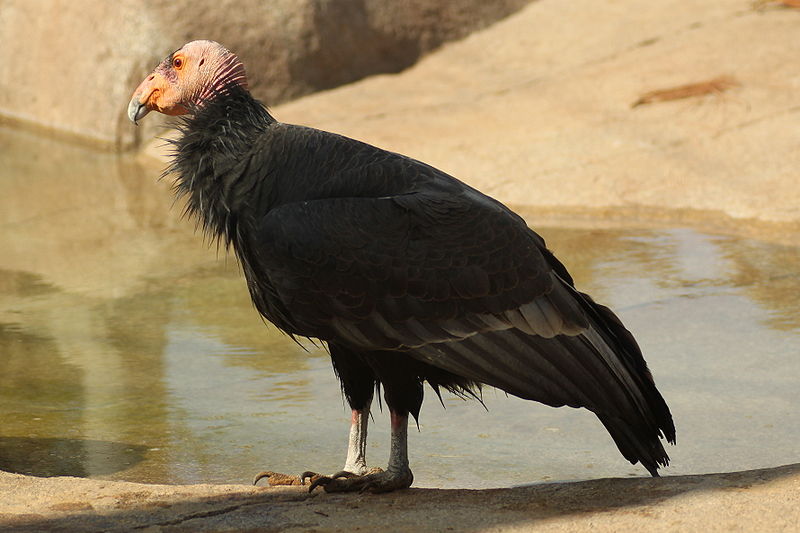
Unlike Cockatoos, who will sometimes use their beaks and talons to open doors, the canary will tolerate bird cages. Because of this these birds make for an ideal pet, however there are other birds in the wild that are not quite so friendly. There have been reports that in Florida vultures have now started to fly in and grab poodles from patios on rooftops. There are also some eagles that have killed small young deer and fly away with them.

Animals in the wild are not always kind to those in their own as well. Turkeys have been known to find members of their flock that are different or physically inferior and peck them to death.

The canary is a beautiful and peaceful creature that has captured the hearts of millions for centuries. They are a unique bird in a sky full of predators.

Digg This
Reddit This
Stumble Now!
Buzz This
Vote on DZone
Share on Facebook
Bookmark this on Delicious
Kick It on DotNetKicks.com
Shout it
Share on LinkedIn
Bookmark this on Technorati
Post on Twitter
Google Buzz (aka. Google Reader)

Book Review – Unlikely Friendships by Jennifer S. Holland

July 24, 2011 - 2:49 pm No Comments

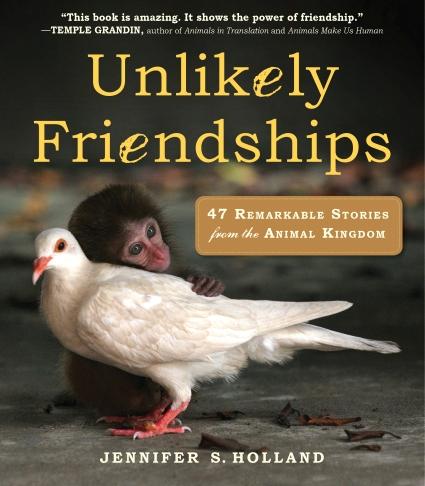
Unlikely Friendships by Jennifer S. Holland - Amazing Animal Relationships.

Today we are going to learn that friendships and heartfelt feelings are behaviours which are not as unique to humans as we might think. If you don’t believe me then I strongly suggest that you read Unlikely Friendships by Jennifer S. Holland. Actually, I recommend you read this book even if you do believe me.

So, what is Unlikely Friendships all about? Well the author looks at 47 remarkable stories from the animal kingdom and highlights some of the most unusual relationships you could imagine. For starters, Jennifer Holland opens up the book by describing the unusual friendship that formed between an African elephant and a sheep. In this case, the poor elephant was left orphaned after his mother accidentally fell off a cliff. The 6 month old elephant, named Themba, was scared and in need of some motherly love – enter Albert the Sheep. Albert was there to watch over and help Themba through these tough times. This odd couple took naps together, played together, and hung out like long-time friends.

This is just one of the 47 stories which describe how animals can put aside their differences and find friendship and even love with another species. Even animals that naturally dislike each other are capable of forming tight bonds. In one story the author tells the story of an old, blind dog that was being taken care of by the family cat. Believe it or not, the cat would walk in front of the dog, right below his chin, and guide him to his food bowl or out to the yard. That’s right, the cat was basically a seeing-eye dog…errr… cat.

I think my personal favourite story which illustrates the incredible spectrum of emotions that animals have is the famous story of Koko the Gorilla and the kitten. It is incredible that this “less sophisticated” animal species was able to know that he wanted a kitten for his birthday. Even more incredible were the range of emotions that Koko experienced when the poor little kitten met its untimely death. Trust me, this is one short story you need to read.

In all honesty, the author does a great job of narrating the friendships and bonds formed between some unusual animals in a way that is easy and fun to read. Unlikely Friendships is truly an amazing book with 47 short stories that will make your mouth drop in awe as you learn that animals are indeed capable of “human” emotion. Here are a few more “Unlikely Friendships” that you will get to read about when you pick up your copy of this wonderful book:

The Macaque and the Kitten

The White Rhino and the Billy Goat

The Sled Dog and the Polar Bear – This one just boggles my mind!!

The Rat and the Cat – Sounds like a Dr. Seuss book but it was also an interesting story.

The Orangutan Babies and the Tiger Cubs

The Snake and the Hamster – Another one that amazes me. You’d think the snake would eat the hamster.

The Dachshund and the Piglet

And, stories of many more unusual animals forming life-long friendships.

I don’t promote a lot of products or try to push too many things on you but this is definitely one book that I think every one of you will enjoy. While writing out my Wild Facts, I noticed that people are intrigued and inspired by the “human” qualities of animals. Well, Unlikely Friendships by Jennifer S. Holland explores the human-like behaviour of animals on a whole new level. You will fall in love with the cute and happy stories throughout this book.

I am even going to make it easy for you to purchase by adding a link to Amazon right below. Trust me, you will enjoy this book so much you will lend it to your friends and family to read.

Digg This
Reddit This
Stumble Now!
Buzz This
Vote on DZone
Share on Facebook
Bookmark this on Delicious
Kick It on DotNetKicks.com
Shout it
Share on LinkedIn
Bookmark this on Technorati
Post on Twitter
Google Buzz (aka. Google Reader)

Site Maintenance

April 15, 2010 - 7:14 pm 2 Comments

Hi Everyone,

As you can tell, I am in the process of doing some spring cleaning around Wild Facts.  Over the next couple of days you may see some small glitches until I finish getting the new theme set up.

I want to thank you for putting up with the changes as we continue to improve the website and move forward.

Thanks!

Nathan

Digg This
Reddit This
Stumble Now!
Buzz This
Vote on DZone
Share on Facebook
Bookmark this on Delicious
Kick It on DotNetKicks.com
Shout it
Share on LinkedIn
Bookmark this on Technorati
Post on Twitter
Google Buzz (aka. Google Reader)

Wild Fact #835 – Northward Bound – Tundra Swan

April 12, 2010 - 12:00 am 6 Comments

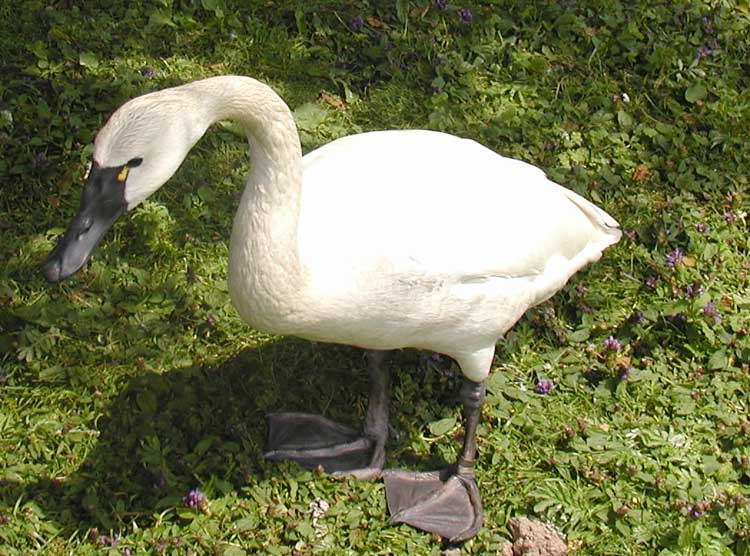
I was driving into town this weekend and I noticed a sign advertising “Swan Haven” out at Mclintock Bay here in Whitehorse.  This is a popular staging area for Trumpeter Swans while they fly north.  You can go here and see hundreds of swans just hanging out and resting. This simple sign inspired me to start the week off talking about the swan; however, I felt more inclined to write about the Tundra Swan instead of the Trumpeter Swan.  Both these swans are similar and very difficult to tell apart.  If you get close enough you will see a yellow mark at the base of the bill on a Tundra Swan.

The tundra swan is also known as the “Whistling Swan” but they didn’t get this other name by being whistling champions.  In fact it is the high pitched sound coming from their wings as they fly overhead that gives rise to the whistling nickname. When you include the fact that these birds will migrate 6000 km (3725 miles) round-trip, it ends up in a whole lot of whistling.

Unlike many animals, the tundra swans mate for life and will often pair up for an entire year before mating.  I am sure during this year the male swan has to be on his best behaviour and take the female to dinner and the movies all the time.  Mating between these birds can be very difficult due to the harsh climate of the arctic.  If there happens to be a late spring or an early freeze than the population of swans that year takes a big hit.  Luckily, this doesn’t seem to cause too many problems as the tundra swan is the most widespread and numerous species of swan in North America.

Tundra Swan Fast Fact: Although the Tundra Swan and Trumpeter Swan look alike they sing very different songs.  The trumpeter swan has a brassy and trumpet-like voice, while the tundra swan has a softer voice with more melody.

I think I am off to Mclintock Bay to go and watch some swans!  Have a great day!

Digg This
Reddit This
Stumble Now!
Buzz This
Vote on DZone
Share on Facebook
Bookmark this on Delicious
Kick It on DotNetKicks.com
Shout it
Share on LinkedIn
Bookmark this on Technorati
Post on Twitter
Google Buzz (aka. Google Reader)

Wild Fact #869 – Heading into Possum’s Lodge – Cuscus

February 23, 2010 - 12:00 am 2 Comments

Photo by Michael Morcombe

Lately, I have been realizing that Australia is still a place that I will need to visit soon.  It has always been on the top of my “Must See” list, however, since starting Wild Facts it has dropped in the rankings due to places like Madagascar and Southern Africa which are just loaded with cool animals.  Today, we are going to look at another marsupial that is found in Australia (as well as in Papua New Guinea).  I would really like to make a visit to check out all of these unusual mammals. Anyone up for a road trip?
The Cuscus (no, not that rice-type stuff, couscous) is a sub-species of the possum. In fact it is the worlds largest possum species.  I would like to make it clear that the possum and opossum are two different species. The opossum can be found in North America and is actually the only marsupial found in North America. Although they may have similar names and some similar physical characteristics the possum and opossum are not closely related. Now that we got that mess cleared up, lets get back to our delicious couscous….. I mean, Cuscus!

The cuscus spends the majority of its life hanging around in the canopy of the beautiful Australian trees.  What is one of the best adaptations for an animal that spends most of their time in the trees? That’s right!  A long prehensile tail that acts as an extra arm for hanging in the branches. These little guys use their tail so well that when they were first discovered, Scientists believed that they were related to monkeys. Of course, we know that they are actually more closely related to the possum. Silly Scientists!

Since the cuscus spends most of its time in the trees and only comes out to feed at night, they actually have very few predators. Among them include snakes and birds of prey.  Although, humans are probably their biggest predator.  Apparently they are hunted for their meat and thick fur.  This doesn’t help their population status which is unfortunately dwindling.  The main cause for their population decline though is the destruction of their habitat.  Once again, humans need for natural resources are impacting the local populations of animals.

Cuscus Fast Fact: The cuscus is a very secretive animal so spotting them in the wild is very difficult.  I guess this means we will have to keep our eyes peeled during our road trip to Australia.  I want to be one  of the people lucky enough to see them in their natural habitat……..before it is cut down!

Enjoy the rest of your day everyone!

Digg This
Reddit This
Stumble Now!
Buzz This
Vote on DZone
Share on Facebook
Bookmark this on Delicious
Kick It on DotNetKicks.com
Shout it
Share on LinkedIn
Bookmark this on Technorati
Post on Twitter
Google Buzz (aka. Google Reader)

Wild Fact #869 – Heading into Possum's Lodge – Cuscus

February 23, 2010 - 12:00 am 8 Comments

Photo by Michael Morcombe

Lately, I have been realizing that Australia is still a place that I will need to visit soon.  It has always been on the top of my “Must See” list, however, since starting Wild Facts it has dropped in the rankings due to places like Madagascar and Southern Africa which are just loaded with cool animals.  Today, we are going to look at another marsupial that is found in Australia (as well as in Papua New Guinea).  I would really like to make a visit to check out all of these unusual mammals. Anyone up for a road trip?
The Cuscus (no, not that rice-type stuff, couscous) is a sub-species of the possum. In fact it is the worlds largest possum species.  I would like to make it clear that the possum and opossum are two different species. The opossum can be found in North America and is actually the only marsupial found in North America. Although they may have similar names and some similar physical characteristics the possum and opossum are not closely related. Now that we got that mess cleared up, lets get back to our delicious couscous….. I mean, Cuscus!

The cuscus spends the majority of its life hanging around in the canopy of the beautiful Australian trees.  What is one of the best adaptations for an animal that spends most of their time in the trees? That’s right!  A long prehensile tail that acts as an extra arm for hanging in the branches. These little guys use their tail so well that when they were first discovered, Scientists believed that they were related to monkeys. Of course, we know that they are actually more closely related to the possum. Silly Scientists!

Since the cuscus spends most of its time in the trees and only comes out to feed at night, they actually have very few predators. Among them include snakes and birds of prey.  Although, humans are probably their biggest predator.  Apparently they are hunted for their meat and thick fur.  This doesn’t help their population status which is unfortunately dwindling.  The main cause for their population decline though is the destruction of their habitat.  Once again, humans need for natural resources are impacting the local populations of animals.

Cuscus Fast Fact: The cuscus is a very secretive animal so spotting them in the wild is very difficult.  I guess this means we will have to keep our eyes peeled during our road trip to Australia.  I want to be one  of the people lucky enough to see them in their natural habitat……..before it is cut down!

Enjoy the rest of your day everyone!

Digg This
Reddit This
Stumble Now!
Buzz This
Vote on DZone
Share on Facebook
Bookmark this on Delicious
Kick It on DotNetKicks.com
Shout it
Share on LinkedIn
Bookmark this on Technorati
Post on Twitter
Google Buzz (aka. Google Reader)

Wild Fact #885 – This Animal is “Dynamite” – Liger

February 1, 2010 - 12:00 am 4 Comments

Photograph by Bill Dow/Shambala Preserve

As I promised, my second week of holidays will provide you with another crazy Wild Facts theme.  I hinted at it last week indicating that each fact would be a combination of two animals.  I didn’t lie either since we will be exploring some of the crazy and popular hybrid animals.  Please don’t expect to see a Wild Fact on the “Cabbit” this week since this cross between a cat and a rabbit does not exist!  I remember having this argument while I was in University so I wanted to emphasize that it is genetically impossible for a cat and rabbit to succesfully breed.
The liger on the other hand does exist and has been made quite popular from the Napoleon Dynamite movie.  A liger is the offspring resulting from the breeding of a male lion and female tiger.  These types of hybrids usually experience giantism where the liger will be much larger than either parent. In fact, a liger is considered to be the largest cat measuring between 2.8-3.6 m (9-12′) long and weigh between 400-600 kg (882-1322 lbs).  I guess at this point, I should mention that ligers don’t occur in the wild.  I don’t want you being afraid of the 1300 pound predator chasing you on your next holiday.  They are only found in captivity since the distribution of tigers and lions don’t overlap in nature.  It is tough to mate with a partner that you never see, right?

The characteristics of these animals vary since the liger gets traits from both a tiger and a lion .  Their colour can be black, brown, tan or orange. It is possible for them to have a mane but doesn’t always occur.  Most ligers are great swimmers which is a quality of the tiger and they tend to be very social which obviously comes from the lion side of the family. I wonder if the liger would be the outcast at an all tiger/lion school? I guess it wouldn’t matter since they are much larger and could just bully his way into popularity.

Since the liger is created from breeding two different species of animals, there are some drawbacks for the offspring.  The male ligers are typcially sterile and have low amounts of testosterone.  The female ligers are fertile but obviously cannot mate with their male counterparts so they have to settle for a male lion or tiger. I guess this lack of reproduction potential is an indication of why you don’t mess around with nature.

It may not be right to play Mother Nature but it sure does make for an interesting Wild Fact. Make sure you come back tomorrow for another unusual cross-breed.

Digg This
Reddit This
Stumble Now!
Buzz This
Vote on DZone
Share on Facebook
Bookmark this on Delicious
Kick It on DotNetKicks.com
Shout it
Share on LinkedIn
Bookmark this on Technorati
Post on Twitter
Google Buzz (aka. Google Reader)

Wild Fact #885 – This Animal is "Dynamite" – Liger

February 1, 2010 - 12:00 am 10 Comments

Photograph by Bill Dow/Shambala Preserve

As I promised, my second week of holidays will provide you with another crazy Wild Facts theme.  I hinted at it last week indicating that each fact would be a combination of two animals.  I didn’t lie either since we will be exploring some of the crazy and popular hybrid animals.  Please don’t expect to see a Wild Fact on the “Cabbit” this week since this cross between a cat and a rabbit does not exist!  I remember having this argument while I was in University so I wanted to emphasize that it is genetically impossible for a cat and rabbit to succesfully breed.
The liger on the other hand does exist and has been made quite popular from the Napoleon Dynamite movie.  A liger is the offspring resulting from the breeding of a male lion and female tiger.  These types of hybrids usually experience giantism where the liger will be much larger than either parent. In fact, a liger is considered to be the largest cat measuring between 2.8-3.6 m (9-12′) long and weigh between 400-600 kg (882-1322 lbs).  I guess at this point, I should mention that ligers don’t occur in the wild.  I don’t want you being afraid of the 1300 pound predator chasing you on your next holiday.  They are only found in captivity since the distribution of tigers and lions don’t overlap in nature.  It is tough to mate with a partner that you never see, right?

The characteristics of these animals vary since the liger gets traits from both a tiger and a lion .  Their colour can be black, brown, tan or orange. It is possible for them to have a mane but doesn’t always occur.  Most ligers are great swimmers which is a quality of the tiger and they tend to be very social which obviously comes from the lion side of the family. I wonder if the liger would be the outcast at an all tiger/lion school? I guess it wouldn’t matter since they are much larger and could just bully his way into popularity.

Since the liger is created from breeding two different species of animals, there are some drawbacks for the offspring.  The male ligers are typcially sterile and have low amounts of testosterone.  The female ligers are fertile but obviously cannot mate with their male counterparts so they have to settle for a male lion or tiger. I guess this lack of reproduction potential is an indication of why you don’t mess around with nature.

It may not be right to play Mother Nature but it sure does make for an interesting Wild Fact. Make sure you come back tomorrow for another unusual cross-breed.

Digg This
Reddit This
Stumble Now!
Buzz This
Vote on DZone
Share on Facebook
Bookmark this on Delicious
Kick It on DotNetKicks.com
Shout it
Share on LinkedIn
Bookmark this on Technorati
Post on Twitter
Google Buzz (aka. Google Reader)

Wild Award – Superior Scribbler

January 17, 2010 - 3:28 pm 4 Comments

I would like to send out a heartfelt thank you to Jen over at http://epicfarms.blogspot.com/ for passing on the Superior Scribbler award to Wild Facts!  It really is a great honour to receive an award from such a great blogger.  I highly recommend you go and check out Equine Epiphanies. It is an enjoyable read about horses and life on a southern farm.

There are usually rules tied to these awards and this one is no different.  I have instituted a new personal policy where I will acknowledge the award and link back to the generous person presenting me with the award but I will no longer be passing the awards on.  There are a lot of blogs out there which deserve many accolades but this process just feels too much like a chain e-mail, which I never participate in.

Again, I want to thank Jen for the honour.  Now go over and check out:

BWS tips button

Digg This
Reddit This
Stumble Now!
Buzz This
Vote on DZone
Share on Facebook
Bookmark this on Delicious
Kick It on DotNetKicks.com
Shout it
Share on LinkedIn
Bookmark this on Technorati
Post on Twitter
Google Buzz (aka. Google Reader)

Test

December 27, 2009 - 6:23 pm No Comments
Digg This
Reddit This
Stumble Now!
Buzz This
Vote on DZone
Share on Facebook
Bookmark this on Delicious
Kick It on DotNetKicks.com
Shout it
Share on LinkedIn
Bookmark this on Technorati
Post on Twitter
Google Buzz (aka. Google Reader)