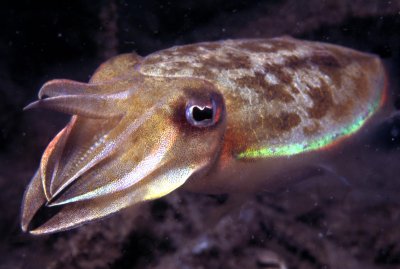
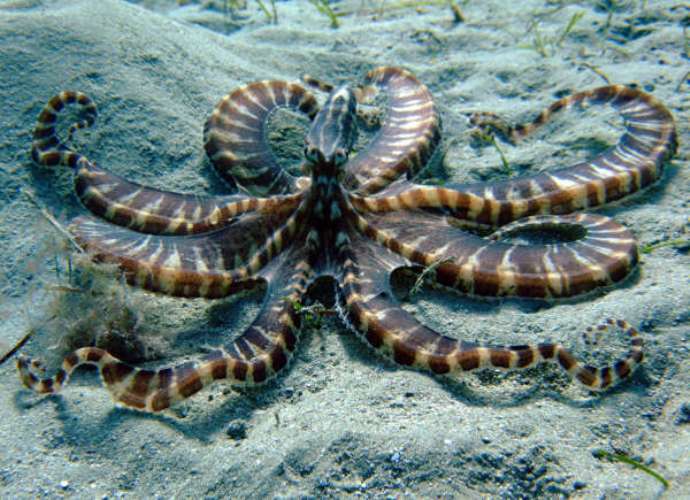
Archive for the ‘Mollusks’ Category

Wild Fact #442 – The Perfect Partnership – Hawaiian Bobtail Squid

October 27, 2011 - 12:00 am No Comments
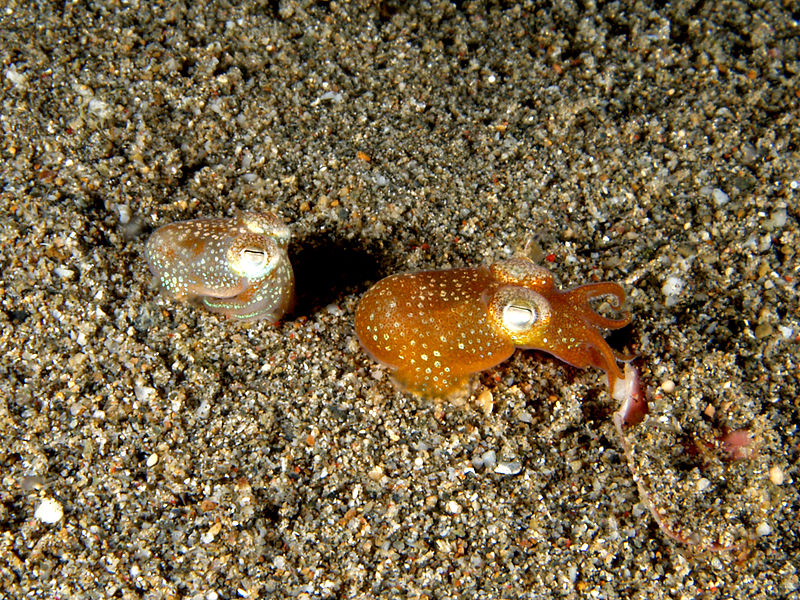
Hawaiian Bobtail Squid

Photo by Nick Hobgood (Wikimedia)

We have spent the last few days hanging around on land but today we are heading to the ocean for a nice, little swim. While we are playing around in the water, make sure to keep your eyes open for a tiny little creature known as the Hawaiian Bobtail Squid. Believe it or not, this animal can be found in the shallow waters surrounding the Hawaiian Islands….shocking, right?  Since winter is right around the corner, I figure we could all use a nice trip to a tropical paradise. So grab your scuba gear and lets learn a little more about the interesting Hawaiian Bobtail Squid.

As I mentioned, this squid is incredibly small. Just how tiny? Well, I had a hunch you would ask that so I came prepared. The Hawaiian Bobtail Squid has a mantle length of 2.54 cm (1″) which is pretty impressive if you stop and think about this for a second. That is one small squid! One of the most interesting features about this particular squid is their symbiotic relationship they have with a bacteria known as Vibrio fischeri.

What is this relationship?

Hawaiian Bobtail Squid

Photo by Nick Hobgood (Wikimedia)

Well, I am glad you asked! This bacteria lives in the mantle of the squid and as a result gets a nice steady meal of amino acids and sugar. The bacteria is so grateful for their food that they provide the squid with a very important feature……light! Wait, what? Yep, you read that right. The bacteria is bioluminescent and is able to determine the amount of light hitting the squid from above. They will then replicate this light on the underside of the squid, making the Hawaiian Bobtail Squid virtually invisible to predators looking up for a nice tasty snack. This is a pretty handy partnership, isn’t it?

Unfortunately, the Squid is not born with these handy, dandy bacteria living in their mantle. Nope, they actually have to attract them using a specialized mucous. Similarly, at the end of the Hawaiian Bobtail Squid’s day, they will expel the bacteria in an attempt to conserve their energy. So even though it is a great relationship, apparently it isn’t a long lasting one. I guess even the best partnerships have to come to an end at some point.

Thanks for taking the time to learn about the Hawaiian Bobtail Squid and their interesting friendship with an specialized bacteria. Enjoy the rest of your day and I will see you tomorrow.

Digg This
Reddit This
Stumble Now!
Buzz This
Vote on DZone
Share on Facebook
Bookmark this on Delicious
Kick It on DotNetKicks.com
Shout it
Share on LinkedIn
Bookmark this on Technorati
Post on Twitter
Google Buzz (aka. Google Reader)

Wild Fact #547 – My Pet Octopus – California Two-Spot Octopus

June 2, 2011 - 12:00 am 2 Comments

Photo from Wikimedia

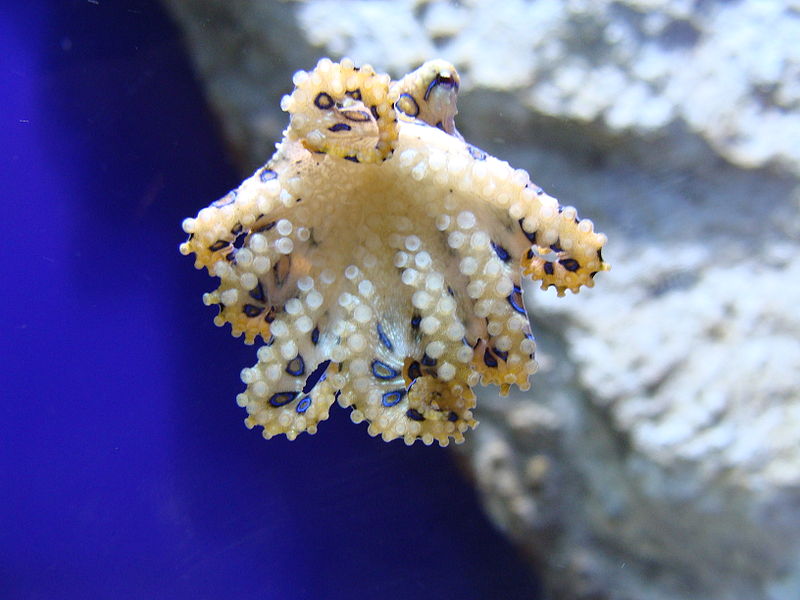
Here we are again with a fresh new Wild Fact.  Of course, you know by now that today’s animal will live in the ocean and I am guessing you can narrow this down a little more by reading the title of today’s fact.  That’s right, the California Two-Spot Octopus, which is also known as the Bimac Octopus, lives off the coast of California (among many other places). I know this is shocking but I swear I am telling you the truth.  If you are wondering how to tell if the Octopus you are looking at is actually a Bimac, then look deep into its eyes.  Actually, you just need to look beside their eyes as these particular creatures have blue, circular eye-spots on each side of their head.  Let’s see what else we can learn about these eight legged animals.

The California Two-Spot Octopus actually has a friendly temperament and are quite hardy.  This ultimately makes them the best Octopus to own as a pet.  So if you have ever wanted an octopus or if your dog is just looking for a new playmate then perhaps you should look into the California Tw0-Spot Octopus. If you are thinking about getting one as a pet, you should probably know how big they can get, right?

Photo from Wikimedia

Well, the Bimac Octopus typically has a mantle size of 17.5 cm (7″) but their arms will take this size to 58 cm (23″) so you will need a fairly large aquarium to put them in.  Yes, this means the goldfish bowl will not be suffice.  The California Two-Spot Octopus relies heavily on camouflage or crypsis.  Basically, they will change their colour to blend into their environment.  Seriously, how cool would this little trick be at a party?

California Two-Spot Octopus Fast Fact – If you do consider getting a pet Bimac Octopus then it is important to know that their life-span is fairly short.  They typically only live for about one or two years.  You will know when they are reaching the end of their road as the female will lay her eggs.  If you have a male, well, they will begin to go senile! The thought of a crazy Octopus pet sounds like it could be a lot of fun.

It looks like we have just about made it through another week.  Only one Wild Fact left for the week so make sure you tune in tomorrow to see the last Deep Sea Creature. Enjoy the rest of your day.

Digg This
Reddit This
Stumble Now!
Buzz This
Vote on DZone
Share on Facebook
Bookmark this on Delicious
Kick It on DotNetKicks.com
Shout it
Share on LinkedIn
Bookmark this on Technorati
Post on Twitter
Google Buzz (aka. Google Reader)

Wild Fact #653 – One Arm Short – Seven-Arm Octopus

January 5, 2011 - 12:00 am 9 Comments

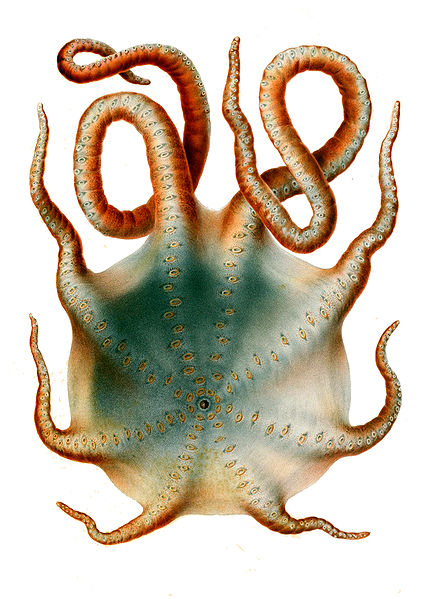
Photo from Wikicommons

Has anyone else noticed how fast the week goes when you have the Monday off?  I really can’t believe that it is already Wednesday.  Don’t get me wrong, I am not complaining but it sure is going by quick.  As a special treat to celebrate this fast moving week, we are going to head to the deep depths of the ocean.  Okay, you got me, we were going to the ocean today even if the week was going slow.  I want to take all of you on this ocean adventure to learn about the largest recorded Octopus on our planet.  Interested?  Well, grab your scuba gear and lets go learn about the Seven-Arm Octopus.

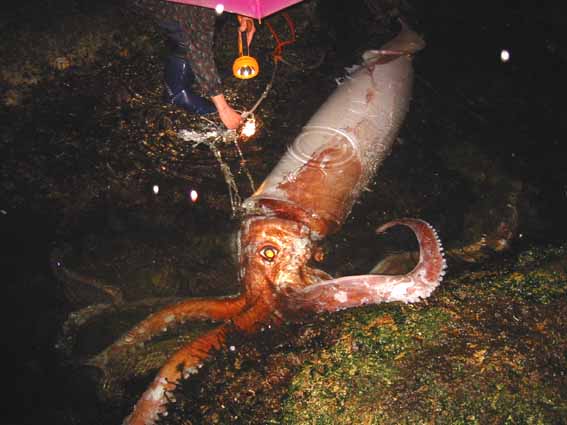
As mentioned the Seven-Arm Octopus is said to be the largest octopus species roaming the ocean.  Some folks believe the North Pacific Giant Octopus is capable of growing larger than the 4 meter (12′) long, 75 kg (165 lb) Seven-Arm Octopus that was documented.  Either way, the Seven-Arm Octopus is one huge creature.  This is good since it shouldn’t be too difficult for us to spot them on our scuba trip.

If you are anything like me, you are probably wondering how an octopus, which receives its name from their eight arms, only have seven arms?  Well, this particular species was called the Seven-Arm Octopus since the males modified arm used in egg fertilization (called the hectocotylus) is actually coiled in a sac beneath the right eye.  When you look at how much gelatinous material these creatures possess it is very easy to overlook this eighth arm. As a result, you get the Seven-Arm Octopus, but in reality these guys actually do have the full eight arms.  It is a good thing otherwise they would be known as a Septopus.

Seven-Arm Octopus Fast Fact – The record holding Octopus was caught in 2002 off the coast of New Zealand and weighed 61 kg.  Unfortunately, this was an incomplete specimen and they estimated it to weight 75 kg and measure 4 m long.  Not only was this the biggest octopus ever caught but it was also the first Seven-Arm Octopus species caught in the South Pacific.  I just love it when an Octopuses hard work pays off and they end up making a name for themselves.

That does it for Wednesday’s deep water Wild Fact.  I hope you enjoyed our scuba adventure.

Digg This
Reddit This
Stumble Now!
Buzz This
Vote on DZone
Share on Facebook
Bookmark this on Delicious
Kick It on DotNetKicks.com
Shout it
Share on LinkedIn
Bookmark this on Technorati
Post on Twitter
Google Buzz (aka. Google Reader)

Wild Fact #668 – The Spotlighgt is on This Cool Vampire – Vampire Squid

December 1, 2010 - 12:00 am 2 Comments

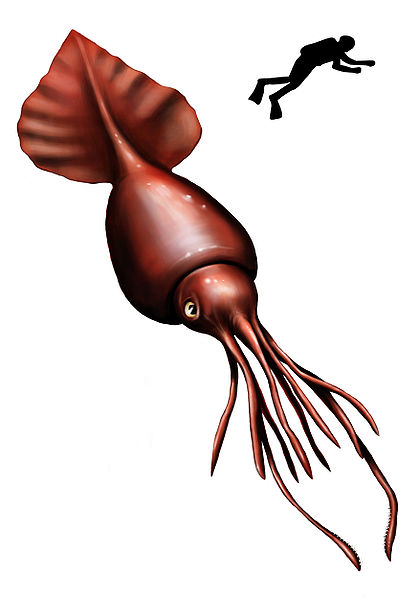
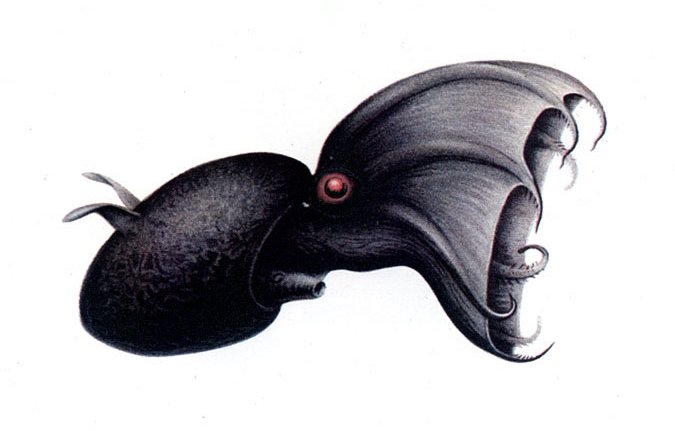
Drawing of a Vampire Squid by Carl Chun, 1911

Well it is the middle of the week, my driveway still needs to be shoveled and here I am writing a Wild Fact about a deep sea creature called the Vampire Squid.  Personally I think I made a great choice to sit down and write about this incredibly unique animal instead of braving the cold, windy, Yukon night.  In order for us to get to know the Vampire Squid a little better you may want to put on your wetsuit and grab an oxygen tank since we are heading to the deep blue sea.  Usually they can be found in temperate or tropical parts of the ocean.  So we need to choose which area we want to go swimming in.  My vote is for the tropical area.

The Vampire Squid is not a very big animal as the largest they will typically grow to is only 30 cm (1 foot) long.  Their actual jelly-like body is only about 15 cm (6″) long while their eight arms make up the rest of their length.  You may have noticed from the picture above that their arms actually have a webbing of skin attaching them together.  This webbing is pretty cool since the Vampire Squid is able to pull their arms over their body and use this web to protect themselves against attackers.  Sticking with their arms, you will find a single row of suction cups on each arm as well as soft spines which are known as cirri.  Add the cape-like webbing, soft spine structures to the fact that these squids have red eyes and you have the reason they are called Vampire Squid.  Does anyone else see the resemblance between this squid and every girls favourite vampire, Robert Pattinson?

Vampire Squid - Dorsal View - Photo from Wikicommons

Now that we are done examining the unique arms of the Vampire Squid let’s take a closer look at their body.  Their gelatinous body is covered with photophores so you know what that means, right?  Of course you do!  This means the squid is able to light up anytime they feel like.  I would like to see those “show-off” normal vampires use bio luminescence to attract prey and disorient oncoming predators.  This light show that the Vampire Squid displays is most likely their main form of defense.  Unlike other squid’s they don’t have an ink sac to help defend against the bullies of the sea.  Although, if things get really bad they can release a cloud of bio-luminescent mucus from their arms, which I am sure would help confuse their predators.  One more reason why the Vampire Squid is way cooler than the regular, ol’ vampires.

I guess that just about does it for our trip to the deep sea.  I hope you enjoyed your time swimming around with the squids.  See you tomorrow for another adventure.

Digg This
Reddit This
Stumble Now!
Buzz This
Vote on DZone
Share on Facebook
Bookmark this on Delicious
Kick It on DotNetKicks.com
Shout it
Share on LinkedIn
Bookmark this on Technorati
Post on Twitter
Google Buzz (aka. Google Reader)

Wild Fact #692 – One Tough Decision – Giant Clam

October 28, 2010 - 12:00 am No Comments

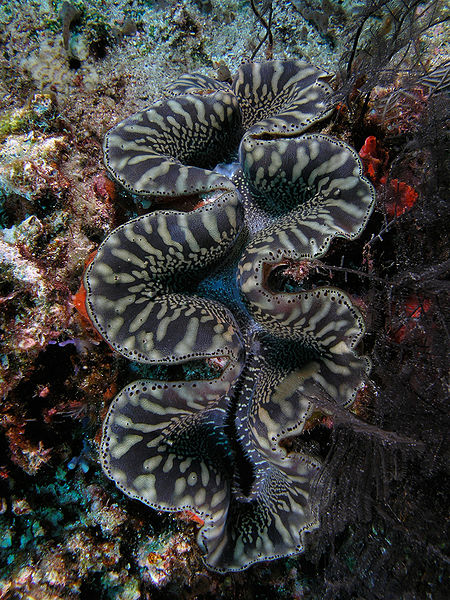
Giant Clam - Photo by Nick Hobgood (Wikimedia)

I had every intention to leave the ocean and talk about a nice land animal but I accidentally tripped over a Giant Clam after studying the Fin Whale.  Well, you know how my mind works so that means today we are going to learn about the largest living bivalve mollusc, the Giant Clam.  Again, we tend to find the Giant Clam hanging around coral reefs in the Indian and South Pacific Oceans. The Giant Clam has to be very careful when selecting its home since the moment it attaches to a piece of coral, it will remain in that location for the rest of its life.  Talk about a big decision!

So just how big is the Giant Clam?  Well this mammoth mollusc can get as large as 1.2 m (4′) in length and weigh up to an amazing 227 kg (500 lbs).  The next question I have is how could I have possibly tripped over this large animal?  Clearly I was making that story up.  These incredible creatures are able to get this large by feeding on the sugars and protein created by the millions and millions of algae that live in their tissues.  As a trade off for providing the clam with food the algae receives a nice safe home in return.  As well, the Giant Clam provides them with the opportunity to photosynthesize by basking in the sun just below the waters surface.  Don’t you love all of these mutual relationships animals have?

Giant Clam - Photo by Nick Hobgood (Wikimedia)

If you have actually heard of the Giant Clam then you probably have heard about the horrible stories associated with them.  There are legends that the Giant Clam has actually consumed human beings.  Now I know this sounds like some B-Rated Horror flick but these rumours do exist.  It is important to note that these are just stories.  There has been no record of a human being consumed by a Giant Clam.  Even the largest Giant Clam would most likely just hide inside its shell has the human swam by.  Besides, the muscles of the Clam move far to slowly to surprise a human being.  No matter how much you wanted to believe in the Killer Giant Clam, it just wouldn’t happen.

Giant Clam Fast Fact – These same adductor muscles that open and close the shell are considered a delicacy.  This has caused over-harvesting to occur and coupled with the aquarium junkies out there has the Giant Clam heading into troubled waters.  They have been listed as vulnerable on the IUCN List due to this decrease in population size.

And that my friends is the end of the Giant Clam Wild Fact.  Tune in tomorrow to find out if we actually leave the ocean waters behind and venture onto land. Enjoy the rest of your day.

Digg This
Reddit This
Stumble Now!
Buzz This
Vote on DZone
Share on Facebook
Bookmark this on Delicious
Kick It on DotNetKicks.com
Shout it
Share on LinkedIn
Bookmark this on Technorati
Post on Twitter
Google Buzz (aka. Google Reader)

Wild Fact #754 – Saturday Morning Cartoon – Glass Squid

August 3, 2010 - 12:00 am 2 Comments

Photograph by David Shale, courtesy University of Aberdeen

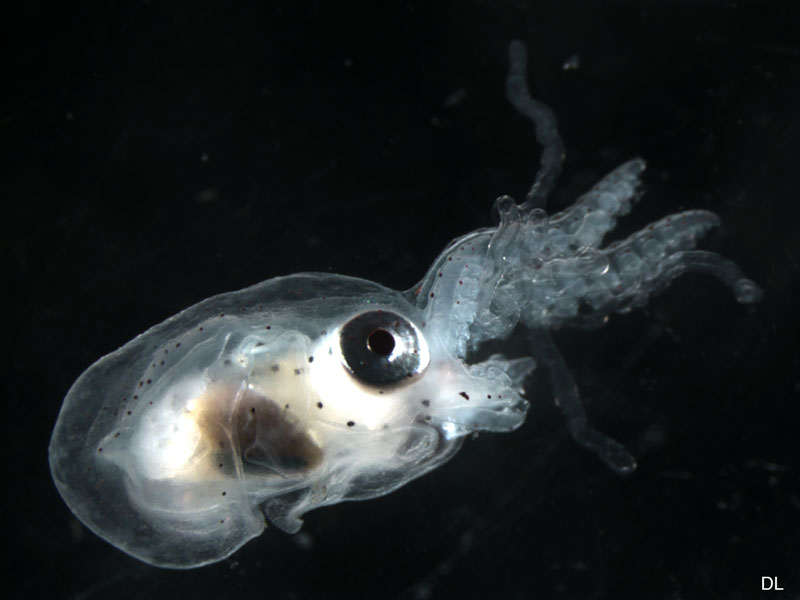
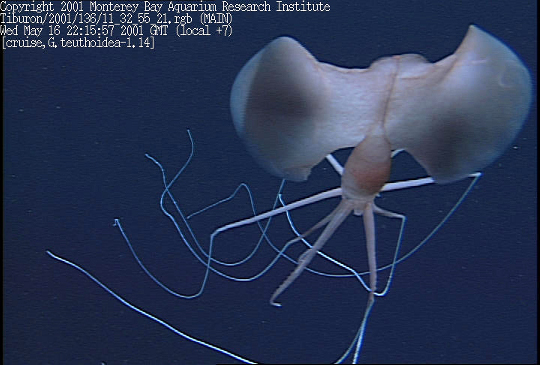
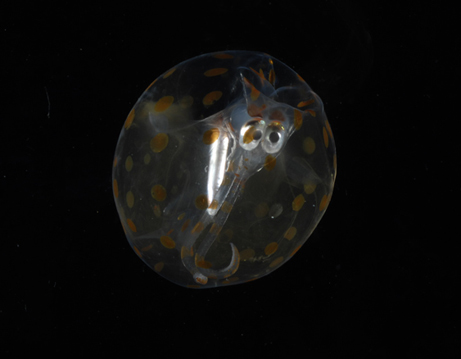
During yesterday’s research on the Dumbo Octopus or “Graceful Octopus” as Agapelife so eloquently named it, I came across another interesting sea creature.  I found the cartoon appearance of the Glass Squid so amusing that I had to write a Wild Fact on them. Seriously, look at the picture.  Believe it or not that is a real animal and not some artwork you find in one of those fancy glass stores where I was never allowed to touch anything as a kid.

Glass Squid

There are actually about 60 different Glass Squid species so they don’t all look like a Saturday morning cartoon but they all have a very unique appearance.  These cool looking animals can be found in the middle depths of the ocean where the sun-lit water combined with their transparency makes a pretty good camouflage. To make this camouflage even better some species actually have a bio-luminescent light organ on the undersides of their eyes.  How does this help with camouflage you ask? Well, the light it emits will cancel out their shadow, so now you have a transparent animal swimming through the water without a shadow.  You won’t know it is there until you swim into it.  Just imagine how confused that fish would be swimming into a see-thru squid. In fact in most cases the only thing you will see is their cigar-shaped digestive gland, which acts like a liver for the squid.  Again, some species have a small light organ on the tip of their digestive gland which also cancels out any shadows.  Clever little buggers if you ask me!

Most of the Glass Squid species have a swollen body with incredibly short arms.  Each arm will have two rows of suckers, also called hooks and the third arm is usually enlarged.  To make themselves even cooler the Glass Squid will often have a large chamber filled with Ammonia.  No, they don’t use this chamber to get their white clothes even whiter. They actually use the Ammonia to assist with their buoyancy control.  Interesting little animals aren’t they?

Enjoy the rest of your day folks!

Digg This
Reddit This
Stumble Now!
Buzz This
Vote on DZone
Share on Facebook
Bookmark this on Delicious
Kick It on DotNetKicks.com
Shout it
Share on LinkedIn
Bookmark this on Technorati
Post on Twitter
Google Buzz (aka. Google Reader)

Wild Fact #755 – Disneyland of the Ocean – Dumbo Octopus

August 2, 2010 - 12:00 am 12 Comments

Photo Courtesy of “The Deep: The Extraordinary Creatures of the Abyss” by Claire Nouvian

For many of my friends in Canada they are at home right now relaxing and enjoying their Civic Holiday.  Unfortunately in the Yukon we don’t recognize Civic Holiday and instead take August 16th off in honour of Discovery Days.  This was the day the famous Gold Rush started in the Yukon way back in 1896. I wanted to thank everyone who took time out of their busy long weekend to stop by today and learn about the Dumbo Octopus.  Yes, we are heading to the water to learn about an octopus with ears.

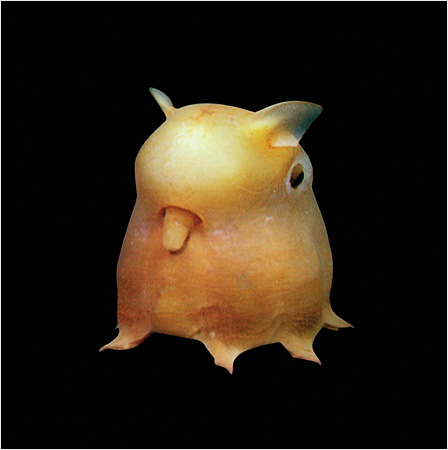
Okay, so I may have mislead you in that previous sentence but I wanted to keep you interested.  The Dumbo Octopus doesn’t actually have ears but rather two fins that look like and are situated in the same place as ears. Who knows, maybe our ears started out as fins too!  Okay, I highly doubt that but it is funny to think about. Unfortunately these “ears” don’t let the octopus fly like they did with a certain elephant but they do allow the Dumbo Octopus to be a very proficient swimmer.   This speed can be witnessed as they are escaping a would-be predator.

So we know they have big ears….err, fins, but let’s find out a little more about this special octopus.  For starters the largest dumbo octopus ever recorded was about 2 m (6′) long and only weighed 13 pounds.  Makes you wonder what type of diet they are on to be that tall, yet that skinny.  How is that for the perfect segue into their diet? The Dumbo Octopus are either bottom dwellers or will hover just above the ocean floor where they consume worms, crustaceans, bivalves, and zoo-plankton such as copepods.  Unlike other octopi the Dumbo Octopus will often swallow their prey whole.  Maybe that is how they keep their thin figure.  No matter the reason, after looking at what they eat, I think I am quite happy with my current weight.

Dumbo Octopus Fast Fact – It will be tough to witness the Dumbo Octopus on a typical snorkeling adventure as they are usually found at depths ranging from 400 m to 4800 m (1312 – 15748 feet).

If you want to see first hand why this Octopus is named after the famous Disney Elephant then I suggest checking out this beautifully done video below.  I hope you enjoy the ballet and today’s Wild Fact.  Have a great day!

Digg This
Reddit This
Stumble Now!
Buzz This
Vote on DZone
Share on Facebook
Bookmark this on Delicious
Kick It on DotNetKicks.com
Shout it
Share on LinkedIn
Bookmark this on Technorati
Post on Twitter
Google Buzz (aka. Google Reader)

Wild Fact #779 – The Sleepy Snail – Giant African Land Snail

June 29, 2010 - 12:00 am No Comments

Photo by J.M. Garg

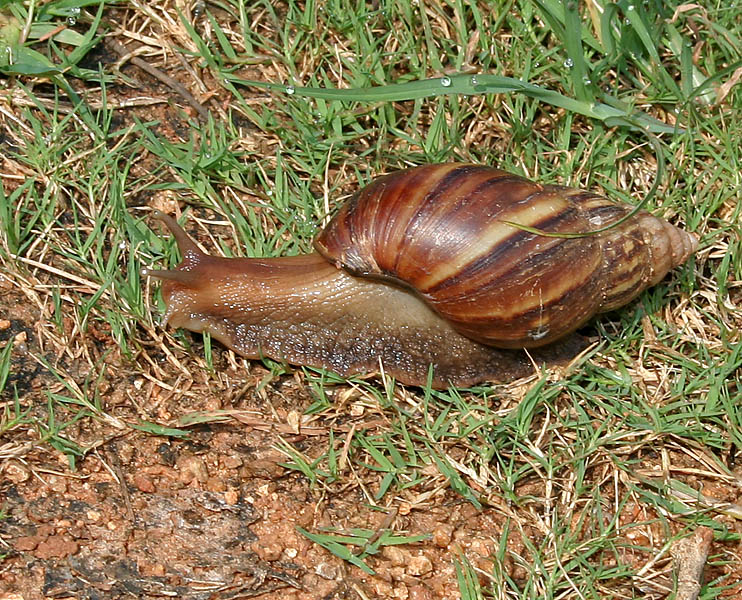
Well I think I have finally recovered from my squirrel incident so we can get back on track with Wild Facts about obscure and interesting animals.  I think today’s Fact could be the poster child for obscure and interesting.  By now you have read the title and realize that I am talking about the Giant African Land Snail.  Doesn’t it just sound fun?  I think any animal that has the world GIANT in it has to be awesome.

So how big is the Giant African Land Snail.  Well they range between 15 to 30 cm (6-11.8″).  Wait a minute, that is almost a foot long!  Further proof that any animal with the word “giant” in their name is worth reading about. Could you imagine a foot long snail? That is the same size as my usual Roasted Chicken Sub from Subway!

I know the size of this snail is awesome but do you know what they do during summers of drought? Well they aren’t big fans of dry summers so during years of drought the Giant African Land Snail will go into aestivation, which is just a fancy word for “Summer Sleep”.  Basically the snail will seal itself inside of its shell in order to retain water.  Depending where the snail is living they may go to sleep about 3 times a year.  I guess it is like holidays for the African Land Snail.

Before we go I just wanted to touch on the reproductive strategies of the Giant African Land Snail.  Like most snails they have both male and female organs.  Usually they will mate with other snails, however, in isolated areas the African Land Snail will reproduce by themselves.  No matter which method they choose they will produce about 200 eggs per clutch.  For the record they have about 6 clutches a year. Since 90% of their eggs will successfully hatch that is about 180 new snails per clutch. Now to get into the higher math.  That is about 1080 new snails per year from one individual snail.  As you can imagine areas tend to get infested pretty quickly which causes major problems for the ecosystem.

That’s it for me folks!  Have a great day.

Digg This
Reddit This
Stumble Now!
Buzz This
Vote on DZone
Share on Facebook
Bookmark this on Delicious
Kick It on DotNetKicks.com
Shout it
Share on LinkedIn
Bookmark this on Technorati
Post on Twitter
Google Buzz (aka. Google Reader)

Wild Fact #783 – A Mermaid’s Best Friend? – Pearl Oyster

June 23, 2010 - 12:00 am 2 Comments

Photo by Manfred Heyde

I know diamonds are a girls best friend but since diamonds aren’t made by animals we are not going to talk about them today.  Nope, instead we are going to look at the Pearl Oyster.  Come on, I am sure you ladies would be happy to receive a nice shiny pearl for no reason.

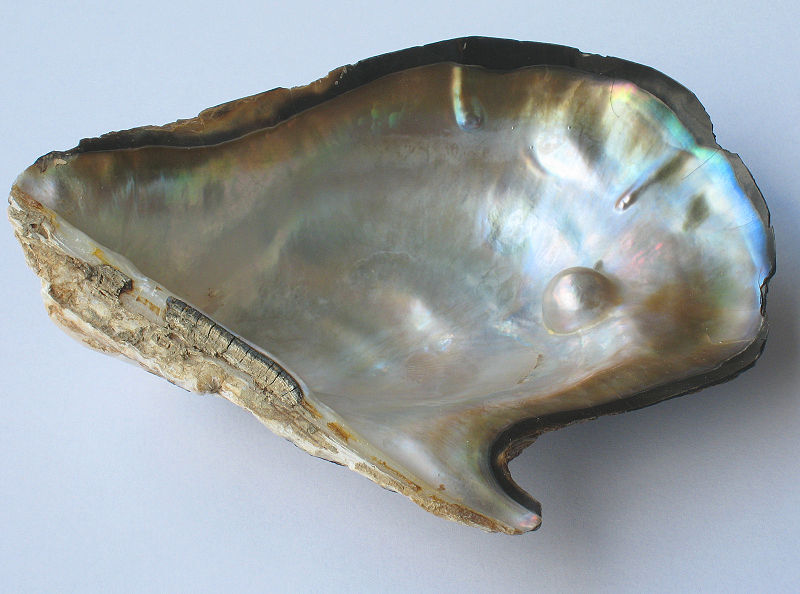
It isn’t a myth, pearls are actually found in oysters and less commonly in other animals such as clams and mussels but we are only talking about the Pearl Oysters today. As well it is important to note that the oysters you find at your local “All You Can Eat” Oyster Bar are true oysters and are only remotely related to the pearl oyster.  Again, these edible oysters can also produce pearls but it rarely happens. Imagine finding a pearl in your oyster at the restaurant.  Talk about a “Happy Meal”.

Okay, so how do these oysters make pearls and more importantly, why do they make pearls? Would you believe me if I told you they make peals when they get irritated.  Can you imagine how many pearls you would have if you made one every time your brother or sister irritated you? As I was saying a foreign object such as a parasitic worm, small crab or any organic particle will enter the shell of the pearl oyster.  As a natural defense mechanism the oyster will begin to cover up the irritant with a substance called “nacre”.  This is the same material that the inside of the shell is made from.  The oyster will keep layering the nacre over the irritant until eventually a pearl forms.  We think of pearls as being a nice round jewel, however, not all pearls are perfectly round.  In some cases the pearls will be created in odd shapes which are commonly referred to as baroque pearls.

Pearl Oyster Fast Fact: Pearls will come in a variety of colours including green, white, gray, red, blue and even black.  Most of these can be found all over the world except for the black pearls.  In the wild they can only be located in the South Pacific.

The next time you are buying pearls, ask yourself what is in the middle of the pearl that started the whole process.

Have a great day!

Digg This
Reddit This
Stumble Now!
Buzz This
Vote on DZone
Share on Facebook
Bookmark this on Delicious
Kick It on DotNetKicks.com
Shout it
Share on LinkedIn
Bookmark this on Technorati
Post on Twitter
Google Buzz (aka. Google Reader)

Wild Fact #817 – The Paint Palette of the Sea – Nudibranch

May 6, 2010 - 12:00 am 16 Comments

Photograph by: David Doubilet for National Geographic.

I would like to thank my brother, Clayton, for inspiring today’s fact as well as passing on some information.  Today we are going to head to the ocean to learn about a pretty cool mollusk. The Nudibranch is actually a shell-less mollusk and part of the sea-slug family. There are about 3000 nudibranch species and believe it or not, new ones are being identified daily.  Maybe we will discover a new species on our trip today.

The first thing you will notice and probably the most fascinating thing about this slug is the impressive colours.  The nudibranch has some of the most unique shapes, amazing colours and interesting patterns of any animal on earth. Who would have thought that a slug could be so cool?  The slugs get their colours from the food that they eat and some of them even keep the poison they obtain from ingesting certain prey species.  Basically, the colours help camoflage the slug while the poison helps defend against predators.  It is pretty cool to think their food source provides them with the self-defense mechanisms needed to survive in the wild. These particular slugs can be as small as 6 mm (0.25″) or as large as 31 cm (1′) long.  This is quite the size range.  Even more astounding is the fact that the larger slugs can get up to 1.5 kg (3.3 lbs). Could you imagine a foot long slug weighing over 3 lbs hanging out around your house?

The nudibranch will slowly make its way across the ocean floor feeding on algae, coral, sponges and other nudibranch’s. They are able to distinguish their prey by using two highly sensitive tentacles located on the top of their head.  These tentacles are called rhinophores and basically work in the same way as our noses.  This sense of “smell” provides the slug with all the information they need to identify their surroundings. In order to protect these highly sensitive organs the nudibranch is able to retract them at will.

Nudibranch Fast Fact – Some nudibranchs will actually store algae in their tissues.  What is the point of this you ask?  Well, the slug is able to live off of the sugars that the algae produces as a result of photosynthesis.  Pretty clever, eh?

Before you go, I recommend you check out these photos from National Geographic.  It will give you an idea of some of the variations of Nudibranch that exist in the depths of the ocean.  The link is:

http://ngm.nationalgeographic.com/2008/06/nudibranchs/doubilet-photography

Have a great day and Smile!

Photograph by David Doubilet for National Geographic

Digg This
Reddit This
Stumble Now!
Buzz This
Vote on DZone
Share on Facebook
Bookmark this on Delicious
Kick It on DotNetKicks.com
Shout it
Share on LinkedIn
Bookmark this on Technorati
Post on Twitter
Google Buzz (aka. Google Reader)