Archive for the ‘Fish’ Category

Wild Fact #370 – Bizarre But Tasty – Burbot

February 6, 2012 - 12:00 am No Comments
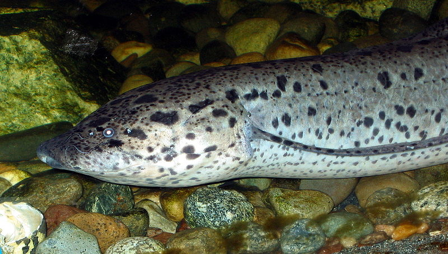
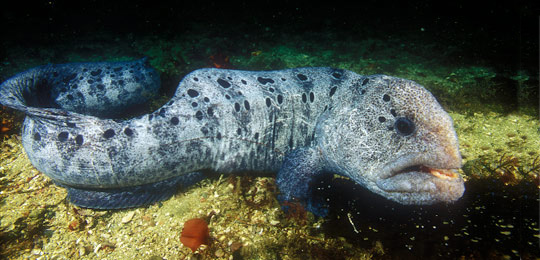
Burbot | Ling

Photo by Berreu (Wikimedia)

After a weekend of fishing with the guys, I figured it was only appropriate to write about an unique fish species. Today we are heading to freshwater lakes, above 40 degrees latitude, throughout North America and Europe. It is here that we will find the weird looking Burbot, which is also known as the Ling-Cod or what we were calling it this weekend, a plain ol’ Ling. Surprisingly enough, the Burbot is the only gadiform (cod-like fish) found in freshwater systems, so I guess that is one thing that makes this fish special. Keep reading to find out a few more things that set this fish apart from others.

What Kind of Fish is That?!?

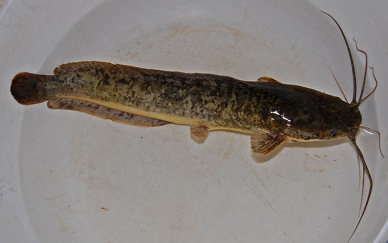
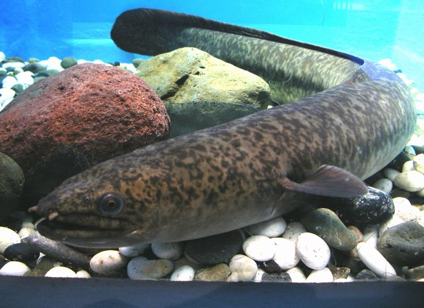
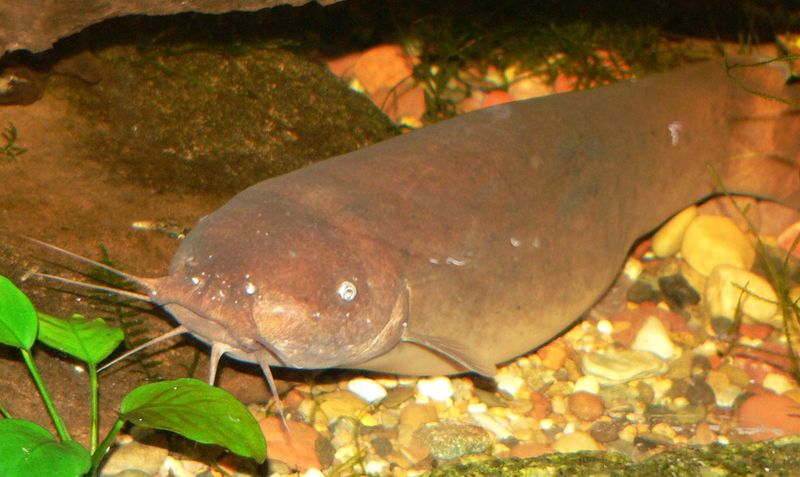
The Burbot is a cold water fish that prefers lakes in the 15 degrees Celsius (59 degrees Fahrenheit) range, which is why you can usually find them at deeper depths during the summer months. I know I would never make it as a Ling since I would be heading to the beach to relax in the warm water. So how can you tell if the fish you just caught is a Burbot? Well, it is pretty easy since they have a very unique appearance. They have slim body with smooth (and slimy) skin to go along with their flat head. On this head, you will notice a couple of barbels, which is just those whisker-like filaments hanging off their chin. These barbels provide the Burbot with a sense of smell as well as touch. Finally, you will notice the large fin running along the back-end of the fish, which is a pretty distinctive feature that should help you identify your fish species.

Burbot | Lota lota | Ling

Photo from Wikimedia

Tasty but Not Targeted

Although the Burbot isn’t necessarily sought after by anglers, their meat is delicious and even nutritious (in moderation). Nonetheless, anglers don’t seem to be too keen on targeting this bizarre fish. I am still surprised that more people don’t fish for them since they taste like lobster and are often referred to as “the poor man’s lobster”. If you decide try your luck at catching a Burbot, remember to check your local fishing regulations. Most places will allow you to catch these fish since they have a fairly healthy population. This is probably due to the fact that nobody is angling them and they lay about 1 million eggs every winter, so they are quite productive.

The next time you catch an odd looking fish, check it out to see if it is a Burbot before screaming and quickly throwing it back. You just may get a delicious meal out of it.

Digg This
Reddit This
Stumble Now!
Buzz This
Vote on DZone
Share on Facebook
Bookmark this on Delicious
Kick It on DotNetKicks.com
Shout it
Share on LinkedIn
Bookmark this on Technorati
Post on Twitter
Google Buzz (aka. Google Reader)

Wild Fact #378 – Just Standing Around – Tripod Fish

January 25, 2012 - 12:00 am No Comments
Tripod Fish

Click for Source

Earlier this week, we were studying an intriguing deep sea creature known as the Frilled Shark. Today, we are heading back to the ocean where we will be discovering another bizarre animal, the Tripod Fish. We will talk about their name in a second but I am sure you can guess the reasoning from the picture. This particular fish is found anywhere in the ocean between the northern latitude of 40 degrees and the southern latitude of 40 degrees. For some reason, they just love hanging out in this middle zone. While we are swimming around the bottom of the ocean, you will want to take some pictures of this unique fish so make sure to grab your camera – oh, and don’t worry about bringing your tripod, there is one down there already.

Tripod Fish – The Fish With Legs

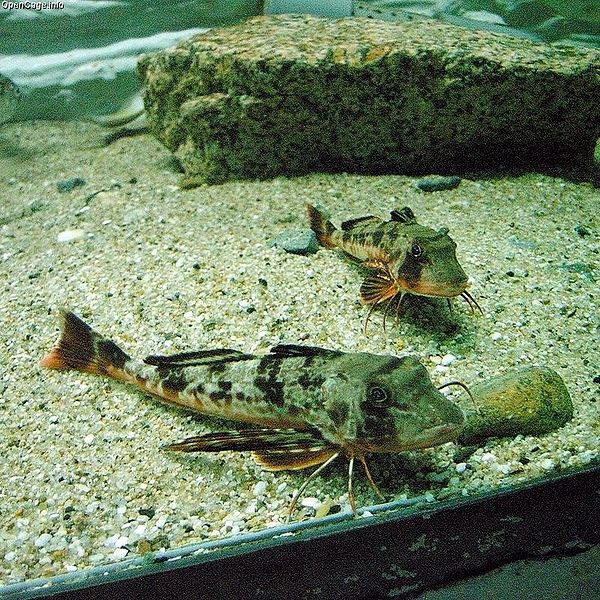
As you can tell the Tripod Fish has three long fin rays, two protruding from their pelvic fin while the third extends from the lower portion of their tail. Oddly enough, the Tripod Fish will simply stand on these “stilts” for most of their day. Why? It could be that they don’t like lying down on the icky ocean bottom but I think the more appropriate answer is, food! Yes, the motionless Tripod Fish will just stand their all day waiting for the current to bring shrimp and small fish into their zone.

Tripod Fish

Click for Source

The Pelvic Fins Come in Handy

The Tripod Fish has tiny eyes that are absolutely useless at 4700 m (15,400 feet) below the surface of the ocean. So how do they know when dinner comes swimming by? Well, they use their pectoral fins much like we use our hands. When they feel a scrumptious snack drifting by, they will use their fins to knock the poor unsuspecting animal into their mouth. I guess you can’t blame the prey since I would never suspect a tripod of eating me.

Not Quite Love at First Sight

One of the issues when you live in the darkest depths of the ocean is finding a suitable mate. To solve this issue the Tripod Fish evolved into a hermaphrodite (both male and female sexual organs). This allows our tiny, deep sea fish to create offspring all on their own. Of course, if they do happen to swim into another Tripod Fish then they will mate the standard way. This is an interesting approach to love but I guess it works for the Tripod Fish.

Digg This
Reddit This
Stumble Now!
Buzz This
Vote on DZone
Share on Facebook
Bookmark this on Delicious
Kick It on DotNetKicks.com
Shout it
Share on LinkedIn
Bookmark this on Technorati
Post on Twitter
Google Buzz (aka. Google Reader)

Wild Fact #380 – Is This the Loch Ness Monster? – Frilled Shark

January 23, 2012 - 12:00 am 2 Comments
Frilled Shark | Prehistoric Shark

Photograph from Getty Images

Reports of Loch Ness Monster sightings are most likely going to increase after today’s Wild Fact. Yes, the Frilled Shark has often been referred to as a “Real Life Loch Ness Monster” or simply a “Sea Serpent” but the truth is, they are just a really old and odd looking shark. In fact, they are so old that they have also be referred to as “living fossils”. How old? Researchers believe the Frilled Shark first existed about 95 to 150 million years ago. This would mean the Frilled Shark most likely had play dates with the Dinosaurs! So are you excited to go and find one of these “living fossils” or what?

The Loch Ness Monster?

Although this particular shark is rather uncommon there have been scattered reports of their existence all around the world. Some places they have been found include, the Eastern Atlantic around Norway, Ireland and Scotland (can you say Loch Ness Monster?), the western Pacific around Japan and Australia and in the Eastern Pacific around California and Hawaii. These reports are uncommon simply because this crazy old Sea Serpent prefers to stay about 500 to 1000 meters (1640 – 3280 feet) below the surface. Personally,  I would prefer these creepy looking sharks to be at these depths than hanging around the wading areas at the beach.

Frilled Shark

Click for Source

One Mean Looking Shark

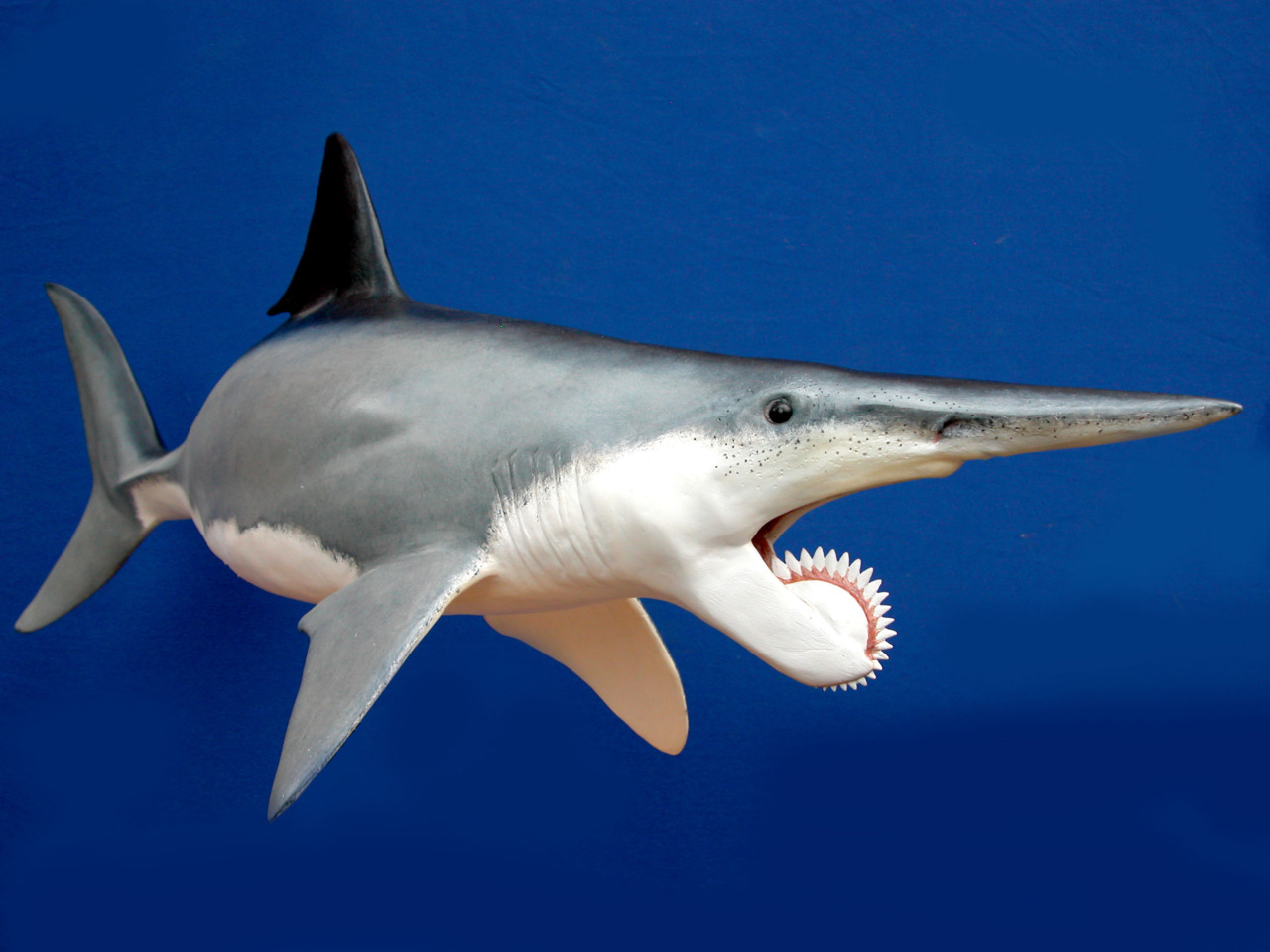
We can’t have  a Wild Fact about the Frilled Shark and not mention their physical appearance. They basically have the body of an eel but their head, with 300 trident-shaped teeth, are definitely all shark. Just behind all those teeth are a set of 6 “Frilled” gills, which obviously leads to the common name of this incredibly bizarre shark. The way the fins are organized on this shark leads to a odd looking tail, which has been compared to the wings of a throwing dart. I think the best way to fully appreciate the appearance of the Frilled Shark is to watch a short video about them.


http://www.youtube.com/watch?v=xry342A-utI

Absolutely amazing, aren’t they?

Frilled Shark Fast Fact

The Frilled Shark may have one of the longest gestation periods in the world. Believe it or not, researchers think that the Frilled Shark as a gestation period between three and three and a half years! Could you imagine being pregnant for 3.5 years? I personally can’t imagine being pregnant for 9 months, let along over 3 years. I guess we need to be thankful that we didn’t evolve from the Frilled Shark.

I hope you enjoyed today’s lesson on a living  fossil. Have a great day and I will see you tomorrow for another fun and exciting Wild Fact.

Digg This
Reddit This
Stumble Now!
Buzz This
Vote on DZone
Share on Facebook
Bookmark this on Delicious
Kick It on DotNetKicks.com
Shout it
Share on LinkedIn
Bookmark this on Technorati
Post on Twitter
Google Buzz (aka. Google Reader)

Wild Fact #416 – A Little Bloated – Sea Raven

December 2, 2011 - 12:00 am No Comments
Sea Raven Facts

Photo by Stan Shebs (Wikimedia)

After spending yesterday in the warm portions of the ocean chasing after the incredibly quick Sailfish, I thought we would head to the northwest Atlantic and north Pacific to search for a ground dwelling sculpin known as the Sea Raven. According to some researchers this is the “most remarkable looking fish” so I think we are all in for a treat today. Besides, I can’t think of a better way to end the week then by splashing around in the north Pacific Ocean at the beginning of December – I am getting shivers just thinking about it.

A Remarkable Fish

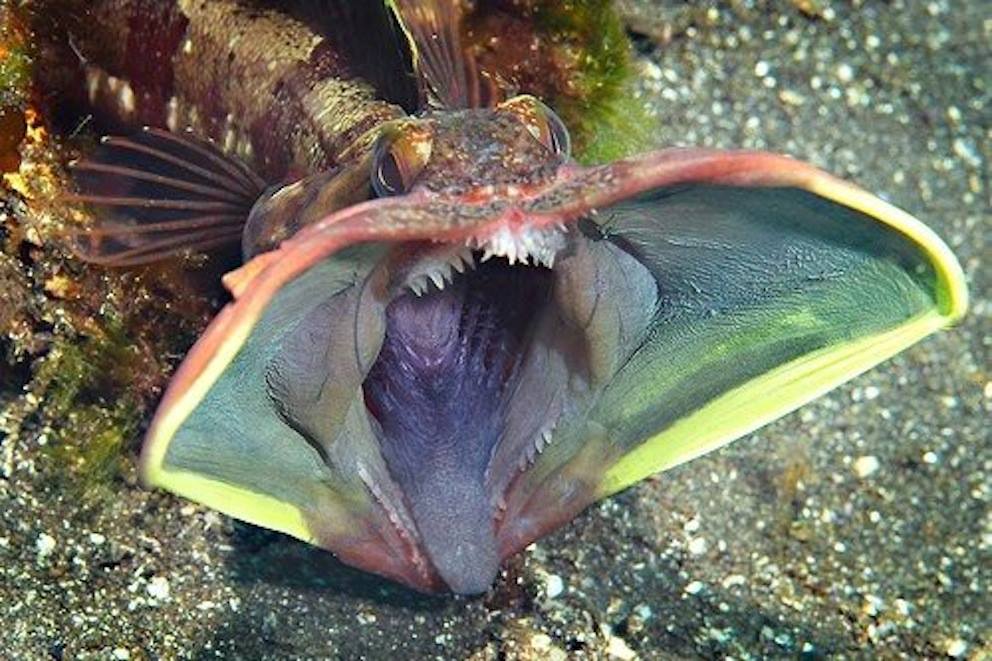
So what makes the Sea Raven such a remarkable looking fish? Well for starters they have a wide range of amazing colours including deep red, dark brown, purple and of course various shades of yellow. Don’t get me wrong their coloration is impressive but I don’t think this is their best feature. Personally, I like the fleshy protrusions extending from the large head of the Sea Raven. As well their prickly skin and ragged looking dorsal fin come together to make this one bizarre looking fish. I wonder if all the other sculpins make fun of the Sea Raven for being different or if they are envious of their remarkable look.

Sea Raven Facts

Click for Source

The Balloon of the Ocean

Compared to other sculpins, the Sea Raven is definitely the coolest, in my opinion. These little fish have the ability to expand their stomach by taking in large mouthfuls of water. In this condition the fish will just float around aimlessly as it tries to use their tail as a rudder to steer the ship. At this point it is unclear if the Sea Raven is able to control the amount of water it releases at any given time. It is believed that they just need to wait until the water naturally expels from their system. For some reason, I keep picturing this little fish flying around like a balloon that you just let go before tying the end.

Sea Raven Fast Fact

Okay, one last quick fact before we get ready for the weekend. The Sea Raven is known for having large teeth and as a result bite harder than most of the other sculpins out there. I guess this answers the question about whether other sculpins make fun of them or not….I wouldn’t mess with a fish that can bite me in half.

That does it for today’s Wild Fact. Enjoy your weekend and I will see you on Monday.

Digg This
Reddit This
Stumble Now!
Buzz This
Vote on DZone
Share on Facebook
Bookmark this on Delicious
Kick It on DotNetKicks.com
Shout it
Share on LinkedIn
Bookmark this on Technorati
Post on Twitter
Google Buzz (aka. Google Reader)

Wild Fact #417 – One Fast Sail Boat – Sailfish

December 1, 2011 - 12:00 am No Comments
Sailfish

Photo by OSF/Howard Hall/Animals Animals—Earth Scenes

Can you believe it is December 1st already? You know that this means Christmas is just around the corner, right? For a lot of people, Christmas is associated with snow and cold so I thought we would put those nasty winter thoughts out of our head by studying the warm water Sailfish. Yes, these beautiful creatures are typical found in the warmer oceans throughout the world. Although we may get to hang out in the warmer parts of the world, you better not just relax on the beach if you plan on catching a glimpse of the Sailfish. Unfortunately this fish is usually found quite far from land where they are able to feed on their favourite food.

The Fastest Fish

Even if you make it further out in the ocean, you had better be on the lookout since the Sailfish is known to be the fastest fish in the ocean. They have actually been clocked jumping out of the water at an astounding 110 km/hr (66 mph). I don’t know about your country but this would be considered speeding on pretty much  every highway in Canada. If you do get to see one of these speedy Sailfish, you shouldn’t have a tough time distinguishing them from other fish in the ocean. As you can see from the photo, the Sailfish has an incredible dorsal fin that is pretty much the length of their body. I wonder how they received their name “Sailfish”? :) .

Sailfish

Photo by Rich Gasparian (Wikimedia)

A Useful Sail

Their sail is more than just a fashion statement. It actually plays a pretty important role in their feeding strategy. The Sailfish loves feeding on schools of sardines and anchovies, which they corral together using their large sail. They are basically like a shepherd herding their sheep…..only the Sailfish shepherd eats their “sheep” right away. You have to feel sorry for the poor sardines and anchovies since they don’t stand a chance against a fish that has a large sail and travels at speeds greater than 100 km/hr. Although, it isn’t only small fish that need to be on the lookout since the Sailfish will also feast on squid and octopus.

That does it for today’s warm water fish Wild Fact. Enjoy the rest of your day and we will meet up tomorrow for the last fact of the week.

Digg This
Reddit This
Stumble Now!
Buzz This
Vote on DZone
Share on Facebook
Bookmark this on Delicious
Kick It on DotNetKicks.com
Shout it
Share on LinkedIn
Bookmark this on Technorati
Post on Twitter
Google Buzz (aka. Google Reader)

Wild Fact #438 – Is This Really a Fish? – Red-Lipped Batfish

November 2, 2011 - 12:00 am No Comments
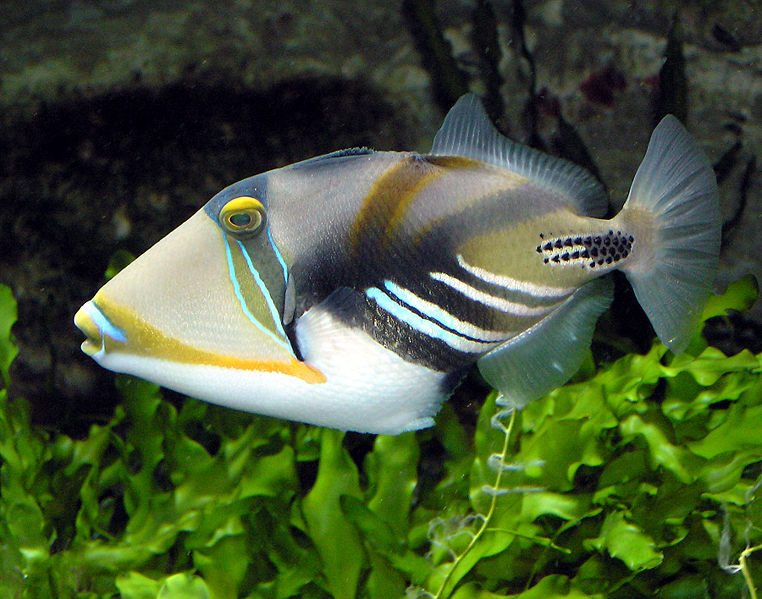
Red-Lipped Batfish

http://www.aboutfishonline.com/articles/redlipped.html

After spending the last two days dealing with “scary” animals, I figured we would head back to the ocean to enjoy a nice, cuddly, normal creature. Yes, they don’t get more normal than the Red-Lipped Batfish. Yes, that was definitely sarcasm, even if it is difficult to detect in a blog post. If you look at the picture above, you will quickly see that the Red-Lipped Batfish is anything but cute, cuddly or normal. This makes sense since they are found in the oceans surrounding one of the most intriguing places on earth, the Galapagos Islands. So grab you gear and let’s go exploring.

What I find most interesting about the Red-Lipped Batfish is they are horrible swimmers. Now, I know what you are thinking.. what kind of fish can’t swim? Well, the kind that prefers to walk along the ocean floor, that’s what kind. Yep, this particular fish has some weird looking fins that they have modified to use as legs. You would think that this might give them an extra advantage amongst all the other sea creatures. Well, I am not sure if the legs give them an edge but I do know that this next bizarre characteristic definitely does.

Red-Lipped Batfish

Photo by ideonexus on Flickr

Much like some other deep sea fish, the Red-Lipped Batfish loves to trick their prey into coming nice and close. They do this by using a shiny “lure” that projects from their head. This attracts small animals such as crabs, mollusks and shrimp, which of course is probably the last thing any of these prey species see before they meet their demise. Although, these fish are die-hard carnivores, but that is not blood on their lips. Nope, the red-coloured lips stay around all year and serve a very important purpose. What this purpose is, I am not entirely sure. Although, some scientists believe it helps the males show off for the females during mating season, but this hasn’t been confirmed. Sounds like this could be a great project for any aspiring Marine Biologists.

Red-Lipped Batfish Fast Fact – I figured we could use some good news for a change so I thought I would tell you that this strange looking fish is not even close to being at risk. As far as we know, they have no threats and should stick around for a long, long time. Perhaps this whole “Walking Fish” thing works after all.

I hope you enjoyed your trip to the ocean floor. I will see you tomorrow for another fun Wild Fact.

Digg This
Reddit This
Stumble Now!
Buzz This
Vote on DZone
Share on Facebook
Bookmark this on Delicious
Kick It on DotNetKicks.com
Shout it
Share on LinkedIn
Bookmark this on Technorati
Post on Twitter
Google Buzz (aka. Google Reader)

Wild Fact #452 – Too Old For Movies – Bluntnose Sixgill Shark

October 13, 2011 - 12:00 am No Comments
Bluntnose Sixgill Shark

Photo from Wikimedia

After spending some time at the Fisheries and Oceans Canada office today, I have this weird desire to head to the water and write about a fish. At the same time, I don’t want to bore you, so I figured we should actually go to the ocean and track down the Bluntnose Sixgill Shark. I guarantee that this shark is more interesting then some minnow species you would find in a freshwater lake Northern Ontario….okay, that minnow could be cool too. I apologize to minnows everywhere! So what do you say? You up for a trip to the Pacific Ocean to find the Sixgill Shark?

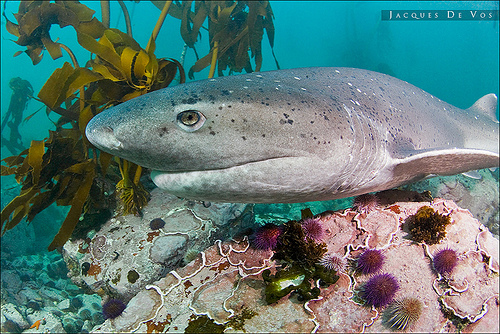
This particular shark is one of the few members remaining in the Hexanchidae family which is a very primitive family. In fact, most of the relatives of the Bluntnose Sixgill Shark are found in the fossil records dating back as far as 200 million years ago. Before we go any further I want you to process that number. What were you doing 200 million years ago? Probably hiding in the corner since dinosaurs were roaming the earth at this time. This just goes to show how primitive this shark is. As a result, the Sixgill Shark has a few unique features.

Sixgill Shark Distribution Map

Distribution Map - Photo by Chris_huh (Wikimedia)

For starters, unlike most sharks, the Bluntnose Sixgill Shark has…..wait for it….. a rounded blunt nose and believe it or not, six gills. Shocking, I know! Most sharks tend to have a more aerodynamic nose and only five gills. On other feature that stands out on this primitive shark is their lone dorsal fin. Look closely! They only have one dorsal fin, which is located near their tail. This means you won’t get that eerie feeling when you see the large shark dorsal fin cutting through the water as you are surfing. This is probably why they didn’t cast the Bluntnose Sixgill Shark for the movie, Jaws.

Bluntnose Sixgill Shark Fast Fact – The good news about this shark is you can catch a glimpse of them no matter where you live. The Sixgill Shark actually has the widest distribution of all sharks (well, the Great White might have it beat but it is close) and can be found all over the world in both temperate and tropical regions. Even more spectacular is the fact that they have been known to dive as deep as 1800 m (6000 feet). I guess you had better grab your scuba gear if you want to see this shark in action.

I hope you enjoyed your trip to the dark depths of the ocean. I will see all of you back here tomorrow for the last Wild Fact of the week.

Digg This
Reddit This
Stumble Now!
Buzz This
Vote on DZone
Share on Facebook
Bookmark this on Delicious
Kick It on DotNetKicks.com
Shout it
Share on LinkedIn
Bookmark this on Technorati
Post on Twitter
Google Buzz (aka. Google Reader)

Wild Fact #459 – Catch of the Day – Paedocypris

October 4, 2011 - 12:00 am No Comments
Paedocypris

Image credit: H. H. Tan, Raffles Museum of Biodiversity Research, National University of Singapore

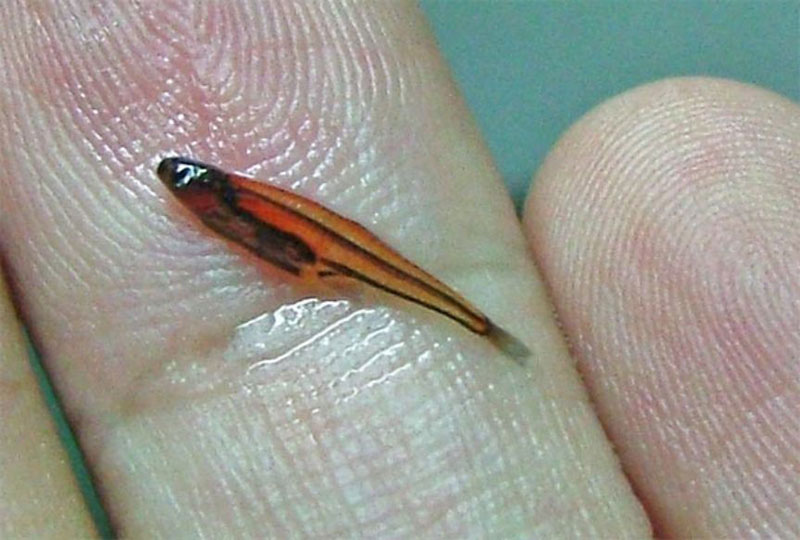
It looks like we may have started a trend with Yesterday’s Wild Fact on the Bumblebee Bat as I now have a desire to continue talking about the Worlds Smallest animals. Today, we are heading to a forest swamp in Indonesia to learn about the Worlds Smallest Fish, the Paedocypris. In fact, this tiny fish just happens to be the smallest animal with a backbone on the face of the earth, that we know about. You had better grab your magnifying glass and rubber boots for this adventure because I have a hunch that you will need both to spot the Paedocypris.

Okay, we all want to know just how small this fish really is and I won’t keep you in suspense…….that long. First, I should tell you that this fish belongs to the family Cyprinidae which means Carp and Minnows, such as the Red-Sided Dace, are technically related to our World Record Holder. Interestingly enough, this tiny fish is very thin and is transparent. That’s right, you can actually see through them. So this may be pretty cool but do you want to know something even more amazing about the Paedocypris? Of course you do! These animals have a very “un-developed” skull and as a result their brain is exposed! So not only can you see through them but their brain isn’t fully enclosed by their skull. Tell me that doesn’t make this one of the best fish species on the planet?

Paedocypris

Image credit: M. Kottelat, Raffles Museum of Biodiversity Research, National University of Singapore

If that doesn’t amaze you then maybe it is time to tell you how big this animal is. But first, I think you should know that the Paedocypris prefers to live in small, acidic swamps on the Indonesian Island of Sumatra. Oh and their is also another Paedocyrpis species that likes to hang out in peat swamps in Sarawak (that is in Borneo, folks). It is believed that the small size of this fish actually helps it survive since they don’t need a lot of water to live in, which is perfect considering that part of the world experiences severe droughts. Okay, one more crazy fact before I tell you their size. You know those acidic swamps this fish lives in? Well, the pH of these watering holes is around 2.9, which is basically equivalent to vinegar. That’s right, they are essentially living in vinegar! Cool fish, eh?

Paedocypris Fast Fact – All right, I will let you in on the size of the Worlds Smallest Fish but before I do I just wanted to tell you that…. nah, I am just kidding. The Paedocypris measures in at an astonishing 7.9 mm (0.31 inches), which is roughly the size of a large mosquito. I bet you won’t hear any fisherman bragging about that catch!

I hope you enjoyed another of the Worlds Smallest Wild Facts. Have a great day and I will see you tomorrow.

Digg This
Reddit This
Stumble Now!
Buzz This
Vote on DZone
Share on Facebook
Bookmark this on Delicious
Kick It on DotNetKicks.com
Shout it
Share on LinkedIn
Bookmark this on Technorati
Post on Twitter
Google Buzz (aka. Google Reader)

Wild Fact #537 – Fish and Chips – Atlantic Cod

June 16, 2011 - 12:00 am 2 Comments

Photo by Hans-Petter Fjeld (Wikimedia)

I hope all of you brought your fishing gear for today’s Wild Fact, since we are heading to the ocean in search for some Atlantic Cod.  At one time, along the east coast of Canada, you wouldn’t have needed any fishing gear since the Cod was so plentiful that you would have been able to walk across them.  Unfortunately, as a result of over-fishing, this is no longer the case, I do believe the Lobster populations are doing much better since the decline of the Codfish. So grab your fishing rod and perhaps your favourite motion sickness pill and lets head out to the ocean to learn about an interesting and economically important fish species.

So why is Atlantic Cod important to the economy?  Well, they have a nice, mild taste with a very low fat content and their livers are used to make Cod Liver Oil (clever name), which is an important vitamin supplement.  Not sure if you have ever tasted Cod before?  If you have ever bought fish and chips in the United Kingdom then I am willing to bet that you have sampled the wonderful taste of the Atlantic Cod.  Now do you see why these fish are economically important? 

Have you ever wondered what the Atlantic Cod looks like before they are battered and placed next to some potatoes?  What do you mean, you haven’t given it much thought until now? Am I the only one that thinks of these things?  Anyway, the Atlantic Cod will actually change colours depending which depth they are hanging around at and will typically be a grey-green colour or a lovely reddish-brown colour.  It reminds me of those Hypercolor T-shirts from the 90′s that changed with the temperature.  The Atlantic Cod isn’t generally the largest fish in the sea as they typically weigh between 5-12 kg (11-26 lbs), however, some specimens have been known to get up to 100 kg (220 lbs).  Talk about being an overachiever!

Atlantic Cod Fast Fact - Every now and again, a Cod would be found that had a deformed head, which looked very much like the crown of a king.  Naturally, these fish became known as King Cod and at one point in time, Norwegians believed they could use them to predict the weather.  Yep, they would hang the head on a piece of string and the nose would point in a different direction depending on the impending weather.  I highly doubt this will replace the standard barometer but it is a neat trick, nonetheless.

I hope you enjoyed fishing for Atlantic Cod Facts.  It is time to head back to shore so we can learn about tomorrow’s animal fact.  See you tomorrow.


Digg This
Reddit This
Stumble Now!
Buzz This
Vote on DZone
Share on Facebook
Bookmark this on Delicious
Kick It on DotNetKicks.com
Shout it
Share on LinkedIn
Bookmark this on Technorati
Post on Twitter
Google Buzz (aka. Google Reader)

Wild Fact #546 – The Rat of the Sea – Spotted Ratfish

June 3, 2011 - 12:00 am 2 Comments


Photo from Wikimedia

How about that?  We managed to make it all the way to the last Wild Fact of the week.  I am sure you are excited to get the weekend started so I will get right into today’s fact on the Spotted Ratfish.  To take a look at today’s animal, we are going to be doing a little diving in the Pacific Northwest.  It may be a little chilly so I suggest you bring a wet suit.  Before we dive in, let’s learn a little more about this interesting deep sea creature.

The Spotted Ratfish is actually a harmless relative to the shark family.  Obviously they get their name from the long, pointed,  rat-like tail, which is pretty unique for fish species.  In case their unusual tail isn’t enough to help you identify them during our dive, let’s go over a few more key features.  The Spotted Ratfish has a smooth and scale-less skin and will usually be a silvery colour with shades of gold, blue and green.  As well, this Ratfish has a large, emerald green eye which is capable of reflecting the light just like a cats eye.   This should definitely help spot them in the dark depths of the ocean.

Photo by Clark Anderson (Wikimedia)

Unfortunately, we may have a tough time observing these interesting fish species since the Spotted Ratfish tries to keep its distance from divers.  Although, if they do feel threatened, they are capable of inflicting a mild, toxic wound using a poisonous spine.  Don’t worry, it won’t kill you and for the most part the Spotted Ratfish is not generally an aggressive fish.  Oh and be sure to watch them as they swim away since I guarantee it will be entertaining.  I think they like to pretend they are in an air show as they will typically perform barrel rolls and corkscrew turns as they swim away.

Spotted Ratfish Fast Fact – Keep your eyes out while you are scanning the ocean floor.  The Spotted Ratfish will lay leathery egg cases that are often mistaken as inanimate objects by curious divers.  I guess it is a good thing that the Ratfish has figured out a way to make their eggs blend in and look like a non-living object.

It looks as though we have made it to the weekend.  Thanks for reading Wild Facts this week! Now let’s get outside and enjoy the beautiful weekend.  See you on Monday.
Digg This
Reddit This
Stumble Now!
Buzz This
Vote on DZone
Share on Facebook
Bookmark this on Delicious
Kick It on DotNetKicks.com
Shout it
Share on LinkedIn
Bookmark this on Technorati
Post on Twitter
Google Buzz (aka. Google Reader)