Archive for the ‘Crustaceans’ Category

Wild Fact #406 – All the Better to See You With – Mantis Shrimp

December 16, 2011 - 12:00 am No Comments
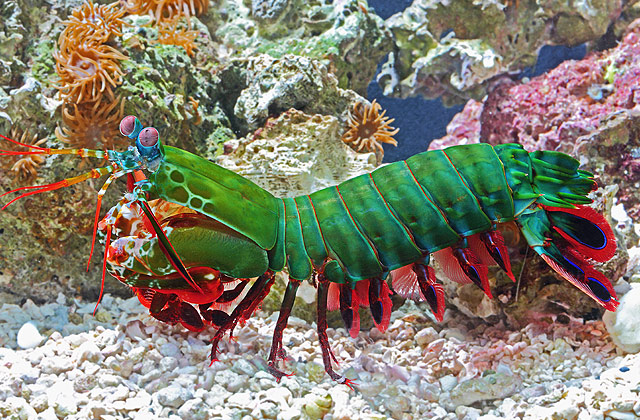
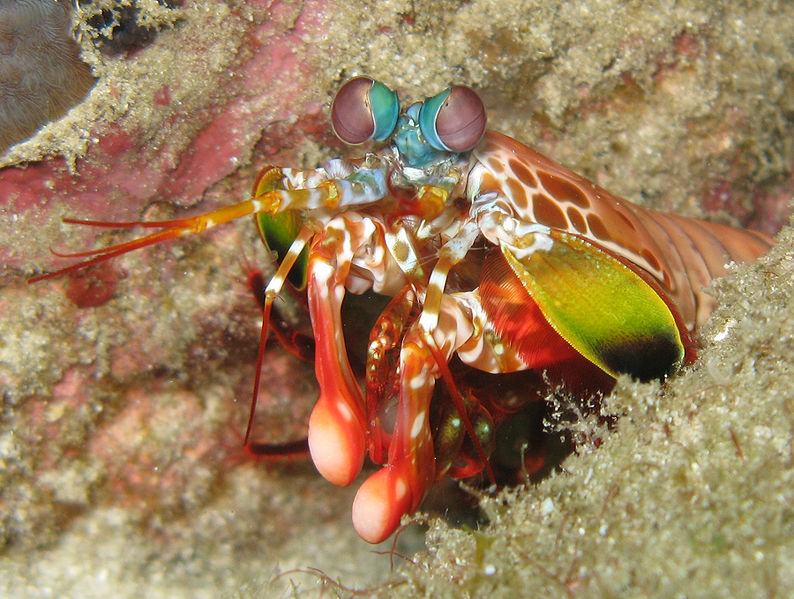
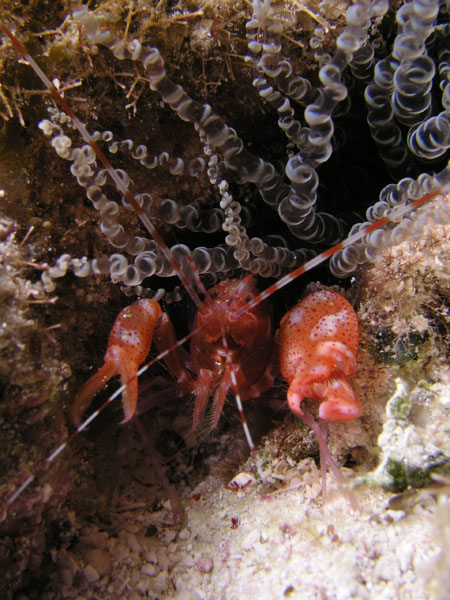
Mantis Shrimp

Photo by Silke Baron (Wikimedia)

The last Wild Fact of the week was suggested by my buddy, Jamie, who has been incredibly active on the blog the last week or so. I want to personally thank him for today’s awesome animal suggestion. I absolutely love the passion and enthusiasm that Jamie has towards wildlife and nature. I only wish more people had those same qualities. Okay, onto today’s Wild Fact! We are going to study a very confusing animal known as the Mantis Shrimp. You will find out why they are confusing in a minute but first let’s get ready for our trip to the ocean.

What’s in a Name?

The Mantis Shrimp is a marine crustacean, however, they are not actually a shrimp….or a Mantis for that matter. I told you they were a confusing little creature. They received this misleading name simply because they have a similar appearance to the amazing Praying Mantis as well as a shrimp. I guess that actually makes a lot of sense, if you break it down. The Mantis Shrimp has a large wardrobe and comes in a variety of colours from brown to bright, neon colours. I personally prefer the bright looking crustaceans since they seem to be more exciting.

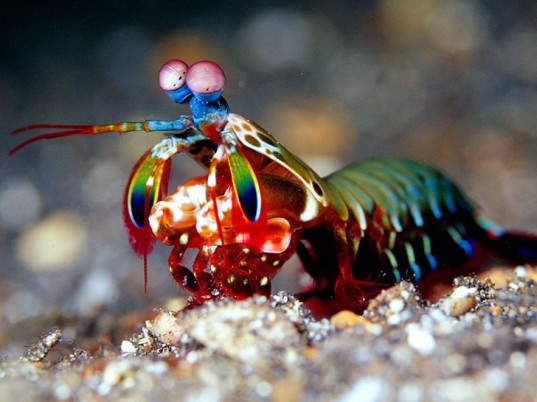
Mantis Shrimp

Photo by Jenny (Wikimedia)

Eye See You

Although the diverse coloration of the Mantis Shrimp is pretty impressive, it is nothing compared to their eyes. Believe it or not, this little sea creature has the most complex eyes in the animal kingdom! Yep, you read that right. So what makes them so special? For starters, they are situated on stalks, so they are able to move independently from one another. Secondly, and more importantly, they can perceive polarized light as well as hyperspectral colour vision, which is just a fancy way of saying they can see many colour bands (i.e. ultraviolet, infared and of course normal colours). The composition of their eyes is far too complex to include in Wild Facts, but just know that the eyes of the Mantis Shrimp are very intricate and complex.

Meteorologist Extraordinaire

Why does a marine crustacean need such great eyesight? It allows them to recognize different species of coral, spot transparent food and even locate a hungry predator from great distances. Even more interesting is the fact that many people believe the Mantis Shrimp is able to use their eyes to detect the phase of the moon, which is important for mating purposes (females are only fertile during certain phases of the tidal cycle). As well, detecting the phase of the moon could provide this tiny organism with important tidal information such as the size of the upcoming tide. This is great information to have for a creature living in the shallow water along the shore. Who would have thought that the Mantis Shrimp would be able to do all of that with their eyes? Just imagine how many years of schooling the Mantis Shrimp optometrist has to complete to try understanding their eyes.

That does it for this week of Wild Facts! Enjoy your weekend.

Digg This
Reddit This
Stumble Now!
Buzz This
Vote on DZone
Share on Facebook
Bookmark this on Delicious
Kick It on DotNetKicks.com
Shout it
Share on LinkedIn
Bookmark this on Technorati
Post on Twitter
Google Buzz (aka. Google Reader)

Wild Fact #461 – Crabby on a Friday? – Florida Stone Crab

September 30, 2011 - 12:00 am No Comments
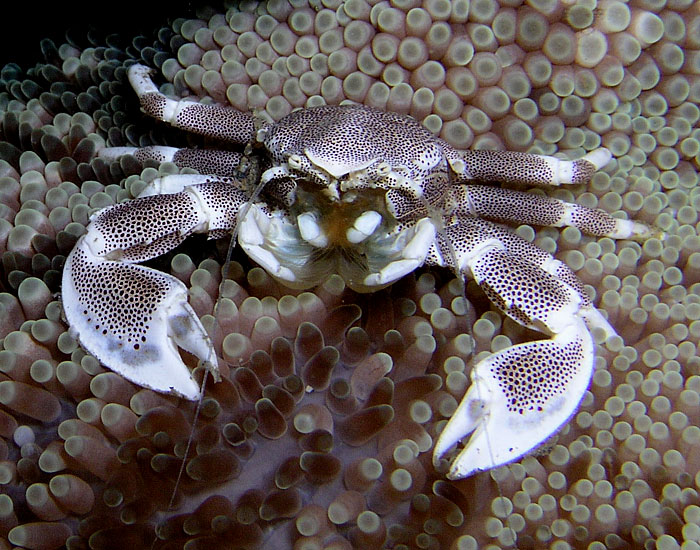
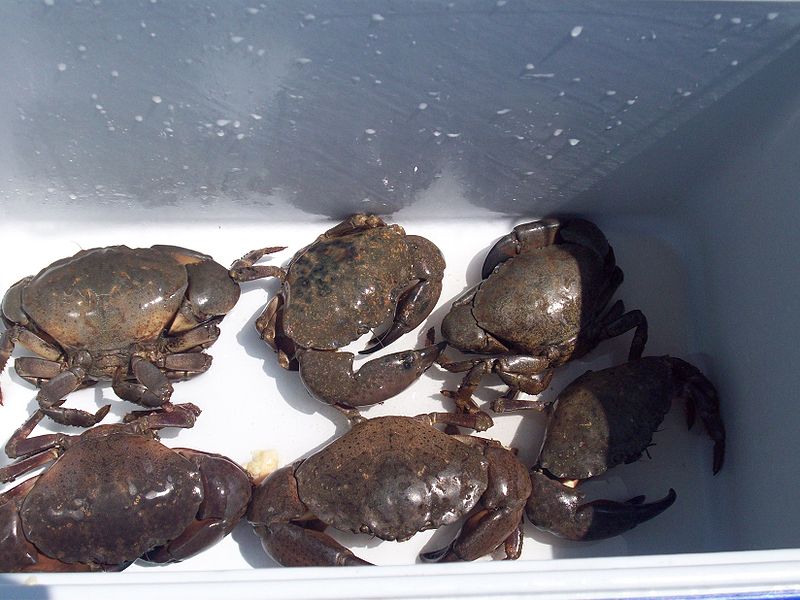
Florida Stone Crab

Photo from Wikimedia

Yesterday, we spent some time in the trees of North America looking for the intriguing Porcupine, so I thought we would mix things up and head to the ocean today. You can pick a spot pretty much anywhere along the western Atlantic Ocean including Connecticut, Belize, Cuba and even Texas (thanks to the Gulf of Mexico). Once you find the ideal location, keep your eyes peeled for the ever popular Florida Stone Crab (yes, they are also found in Florida). They shouldn’t be too hard to spot since you can probably find these crabs in most restaurants around the ocean. That’s right, the Florida Stone Crab is heavily utilized in the food industry.

So what are we looking for? Well, before they get served to you on a plate, the Florida Stone Crab is about 13-17 cm (5-6.5″) long and roughly 13 cm (5″) wide. They actually have a nice colouring even if it isn’t a vibrant colour. I find the brownish-red with black spots is a good look for this crab. Oh and if you were wondering, their belly is actually a nice tan colour. If you are looking at a live crab then you are probably focusing in on their amazing claws. The claws of the Florida Stone Crab are usually large, and un-equally sized (one is bigger than the other) with black tips. Hopefully you don’t get an extremely close look at these claws since I am sure they could deliver a pretty hefty pinch.

Stone Crab Claws

Prepared Stone Crab Claws - Photo by Veronica ML from Brooklyn, NY, USA

If you are on a mission to find this particular crab (or if you are really hungry) then you should probably focus your attention on the grassy flats, rock jetties or oyster reefs. For the most part, they like to hang out in places where they can either hide from predators (the grass flats and rock jetties) or where they can find a nice meal (oyster reefs). Although, this Stone Crab prefers to feed on oysters they will also snack on other crustaceans, seagrass and carrion, if given the opportunity. Similarly, they need to be on the look out for predators of their own including Grouper, Sea Turtles, Octopuses and of course humans, which is probably their biggest predator.

Okay, it looks like it is time to get out of the water and dry off just in time for the weekend. I hope you had fun playing in the ocean today and I will see you back here on Monday for some more exciting travelling. Have a great weekend!

Digg This
Reddit This
Stumble Now!
Buzz This
Vote on DZone
Share on Facebook
Bookmark this on Delicious
Kick It on DotNetKicks.com
Shout it
Share on LinkedIn
Bookmark this on Technorati
Post on Twitter
Google Buzz (aka. Google Reader)

Wild Fact #727 – Aliens of the Sea – Giant Isopod

September 9, 2010 - 12:00 am 2 Comments

I was having a really tough time picking an animal for today’s fact, which happens to be the toughest part of this Wild Facts project.  Since I wasn’t very creative tonight I decided to take a trip where I knew I could find some interesting creatures.  Of course I am talking about the deep depths of the ocean. It only took me about 30 seconds to find the Giant Isopod which just screamed “I am a perfect Thursday Wild Fact!” So adjust your scuba gear and hold on as we find out more about this bizarre crustacean.

The Giant Isopods are related to shrimp, crabs and other crustaceans and just happen to be very common in the cold waters of the Atlantic Ocean.  Now I know it looks like it could be the main character on a Sci-Fi movie but believe it or not this thing exists on earth and in some restaurants in Taiwan, with a side of rice of course.  So just how big is this “Giant”? On average the Giant Isopod will reach up to 40 cm (16″) in length and weigh about 1.7 kg (3.7 lbs).  Now I see why they are referred to as the Giant Isopod.

One of the biggest problems with living in the deep sea is the lack of light. Man, I get grumpy during the winter months because their isn’t much sunlight, I wonder how these guys do it on the ocean floor? Although there isn’t much light the Giant Isopod has large compound eyes composed of 4000 facets which gives these creatures a very large field of vision. To help out with the darkness they have also developed large antennae which relay signals back to the crawling crustacean.

Photo by: NOAA

So what does an Isopod that looks like it belongs in a horror movie eat? Pretty much anything that falls to the ocean floor.  Unfortunately food can get scarce in the deeper depths of the ocean so the Giant Isopod can’t afford to be a picky eater. Their diet consists of a variety of prey items including dead whales, fish and slow moving animals such as sea cucumbers and sponges. Just in case these creatures didn’t look scary enough their mouth parts are designed to rip, pierce and disembowel their prey. When things really get tough the Giant Isopod will just fast and has been known to go up to 8 weeks without food. Again, I get grumpy if I am not fed on a regular basis.  I think it is a good thing I am a terrestrial animal.

Giant Isopod Fast Fact – These magnificent creatures can be found in most oceans and in a variety of depths ranging from 170 m (550′) to 2140 m (7,020′). They are also known to lay the largest eggs of any marine invertebrate. Mmmmm….Giant Isopod omelet!

Below is a quick 30 second video of a Giant Isopod searching for food on the ocean floor.  It looks kind of like an alien on the surface of the moon. I hope you enjoyed our trip to the deep sea.  I will see all of you back here tomorrow for the last fact of the week.

Digg This
Reddit This
Stumble Now!
Buzz This
Vote on DZone
Share on Facebook
Bookmark this on Delicious
Kick It on DotNetKicks.com
Shout it
Share on LinkedIn
Bookmark this on Technorati
Post on Twitter
Google Buzz (aka. Google Reader)

Wild Fact #756 – Be Afraid of the “Claw” – Rusty Crayfish

July 30, 2010 - 12:00 am 2 Comments

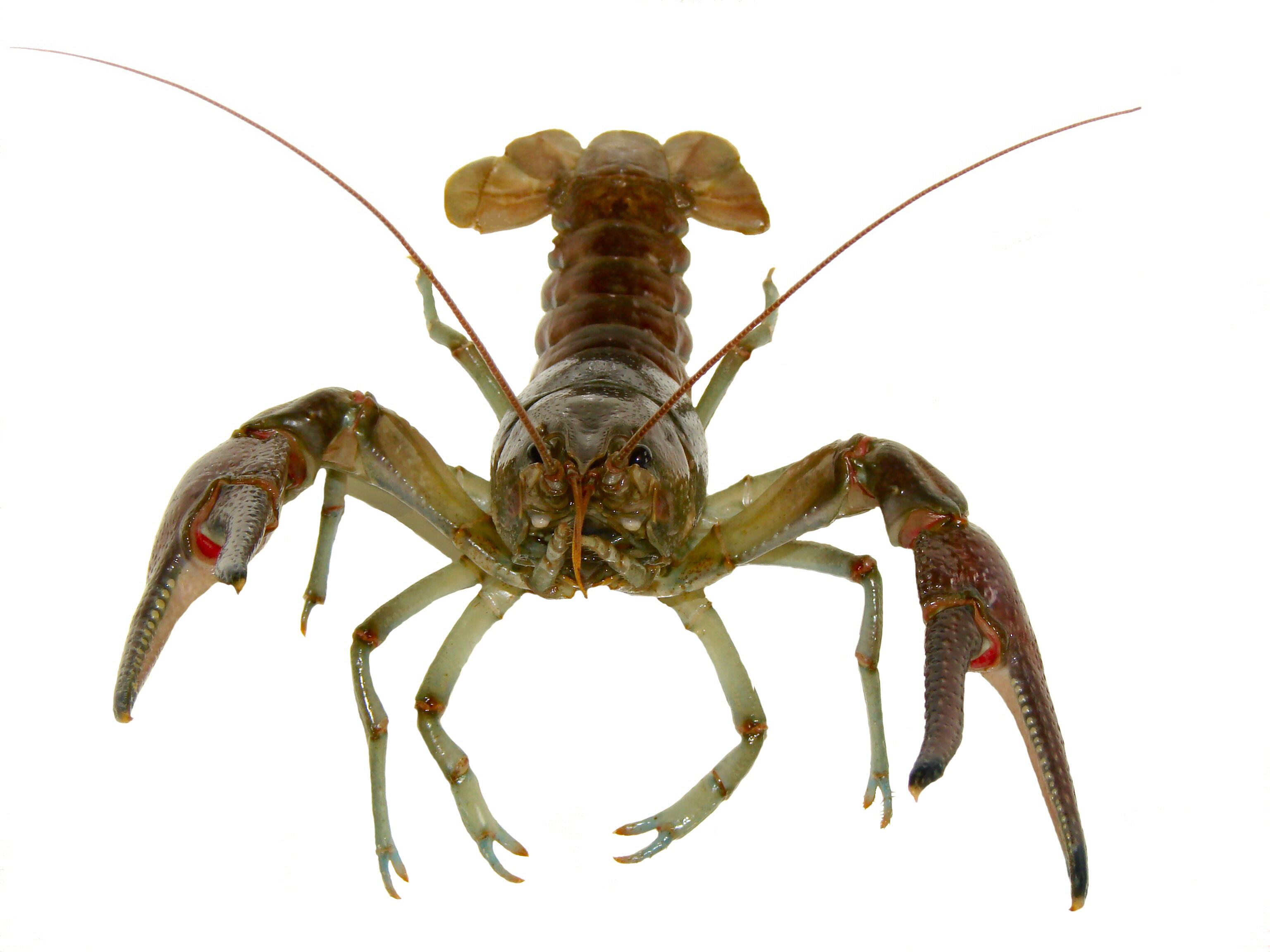
Photo by Jeff Gunderson, Minnesota Sea Grant

I was having a tough time choosing an animal for today’s Wild Fact when I suddenly remembered talking about the Rusty Crayfish the other day.  I thought this interesting and highly competitive Crayfish would be perfect for a Friday Fact.

The Rusty Crayfish isn’t your normal everyday crayfish. I am willing to bet that you if you gave a regular crayfish steroids that it would end up being like good ol’ Rusty.  You see the Rusty Crayfish is large, very aggressive  and spreading rapidly across North America.  This invasive species is beginning to displace our regular, native crayfish here in Canada.  Not only are these particular crayfish more aggressive but they also have bigger claws. Some scientists have found that fish will actually avoid eating the Rusty Crayfish in favour of the more docile, native ones.  When working for the Province of Ontario I had heard reports of this mean crayfish actually putting up a fight with a Smallmouth Bass.  This might be a new technique for fisherman, start using bait that attacks the fish.

So what do these big guys feed on? Well, they like your typical aquatic food such as snails, leeches, aquatic worms, plants, insects and of course small fish.  Believe it or not the Rusty Crayfish will not only consume aquatic vegetation but they will also clip the plants at the base using their large claws. Researchers believe that this destruction of vegetation allows for greater population expansion.  By removing vegetation they are reducing the amount of key habitat for juvenile sunfish.  Therefore this leads to a reduction in sunfish populations which are a major predator on baby Rusties.  If this theory is correct than I am absolutely impressed with Mother Nature right now. How incredible is it that a species is controlling their predators by removing their habitat? Hey, wait a minute! I am a Habitat Biologist whose job is to ensure “no net loss” of fish habitat.  I wonder if I should charge the Rusty Crayfish for violating the Fisheries Act?

Rusty Crayfish Fast Fact – Just before the female crayfish lays her eggs she will develop white patches on the underside of her tail. These white patches are actually a mucus-like substance created during egg fertilization and development. If you ever find a Rusty Crayfish with white patches you will be able to dazzle your friends with this little bit knowledge.

Have a great weekend everyone! See you first thing Monday morning.

Digg This
Reddit This
Stumble Now!
Buzz This
Vote on DZone
Share on Facebook
Bookmark this on Delicious
Kick It on DotNetKicks.com
Shout it
Share on LinkedIn
Bookmark this on Technorati
Post on Twitter
Google Buzz (aka. Google Reader)

Wild Fact #807 – Home Away from Home – Hermit Crab

May 20, 2010 - 12:00 am 8 Comments

The long weekend is just around the corner so I hope you have your plans figured out by now.  If you don’t then I want you to take a break from your weekend planning and enjoy today’s fact about the Hermit Crab.

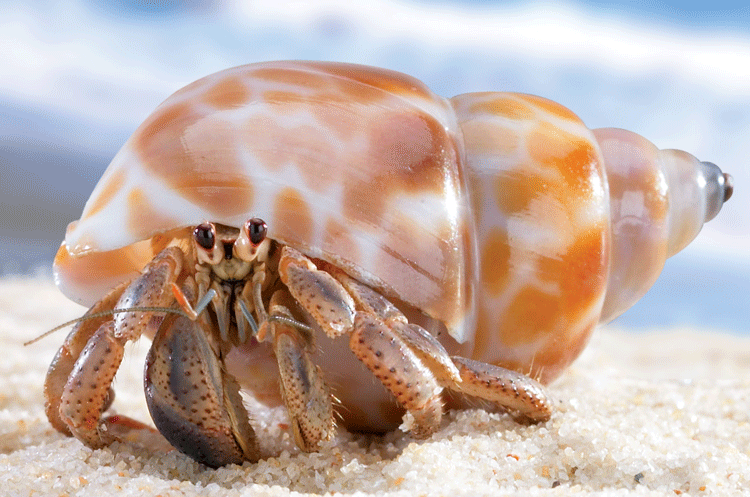
The Hermit Crab is a small crustacean that can be found throughout the ocean, usually hanging out in tidal pools.  This particular crab is not related to the true crabs with the big difference being the hermit’s soft body.  In order to protect their soft, weak body from predators the Hermit Crab will find a sea-shell to call home.  Once they find one that fits just right they will pull themselves inside of it leaving their legs and head exposed.  As the crab grows they will replace their shell with a larger, better fitting one.  I bet the Realtor hermit crab makes a ton of money selling fancy shells to the other crabs.

So what do these little guys eat when they aren’t scavenging the bottom looking for a new home? Well, they are an omnivore so they generally feed on plankton, small fish and their favourite food, invertebrates which includes worms.  Their shell may help protect them from predators but they still have to be on the lookout for sharks, fish, squid and octopus which all enjoy feasting on hermit crabs.  It is believed that hermit crabs will try to outsmart their predators by hiding with animals such as sea anemones which act as their bodyguard.

Hermit Crab Fast Fact: The hermit crab is commonly kept as a pet since they are small and easy to take care of.  Some species of hermit crab can live as long as 30 years if they are taken care of properly.  Could you imagine having a crab for 30 years?

Well that is all for today.  Tune in tomorrow for the last fact before the long weekend.

Digg This
Reddit This
Stumble Now!
Buzz This
Vote on DZone
Share on Facebook
Bookmark this on Delicious
Kick It on DotNetKicks.com
Shout it
Share on LinkedIn
Bookmark this on Technorati
Post on Twitter
Google Buzz (aka. Google Reader)

Wild Fact #844 – Not Your Typical “Zoo” Animal – Daphnia

March 30, 2010 - 12:00 am 4 Comments

Photo: Paul Hebert

I am going to issue a warning before getting into the details of today’s Wild Fact.  If you love swimming in lakes or perhaps like drinking fresh lake water while camping then you may want to skip today’s fact.  Still here?  Well that is great because we are going learn about one of the many types of zoo-plankton that can be found in lakes, ponds, streams and rivers.  This particular fact is about the ever popular, Daphnia.

Daphnia are also called “water fleas” although they are not closely related to fleas or insects for that matter.  Daphnia are actually crustaceans.  Yes just like lobster and crabs.  Okay, maybe not just like them but the same taxonomic group.  These water fleas tend to be anywhere between 0.2 – 5 mm (0.008 – 0.2″) long and can be found just about any place that has water.

Just because these “fleas” are tiny does not mean they are not important to the ecosystem.  The majority of Daphnia are filter feeders which means they will actually clean the lakes by feeding on algae and bacteria. As well, they provide a valuable service to larger members of the food chain such as fish.  Unfortunately, they have to sacrifice their life to provide this important service to the ecosystem.

I understand that it is difficult to see Daphnia as animals since they are tiny and mysterious but the truth is they aren’t that different from other animals. They have legs, antennae, eyes and even a nervous system.  In fact, scientists often study Daphnia to assess the effects of depressants on the nervous system.  They are a great resource since they are clear which allows you to actually see the heart-rate. I wonder if a Daphnia has ever won the Nobel Prize for their research work?  Nah, probably not!

Before we end today’s fact, I just want you to think that it is possible to have as many as 100 000 of these “water fleas” per cubic meter in the Great Lakes.  Even more astonishing is this is only one type of zoo-plankton!  There are many more which are even tinier.  This might make you think twice before you take that big gulp of fresh lake water.

Enjoy the rest of your day!

Digg This
Reddit This
Stumble Now!
Buzz This
Vote on DZone
Share on Facebook
Bookmark this on Delicious
Kick It on DotNetKicks.com
Shout it
Share on LinkedIn
Bookmark this on Technorati
Post on Twitter
Google Buzz (aka. Google Reader)

Wild Fact #872 – Choose Wisely Young Barnacle – Barnacles

February 18, 2010 - 12:00 am 8 Comments

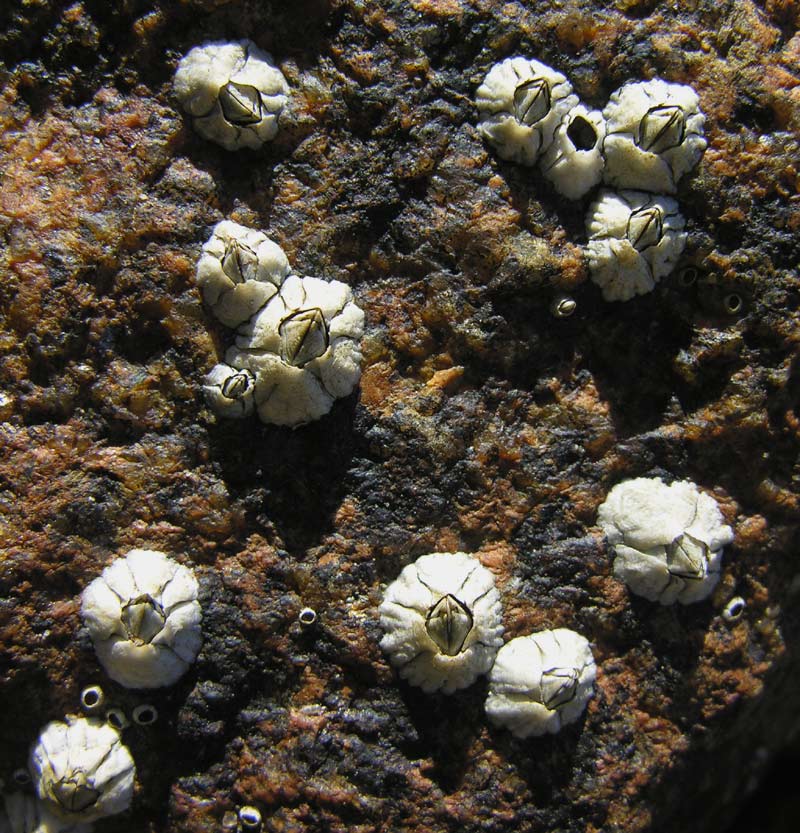
Photo by Bev Wigney

So far this week, we have looked at a couple of very cute animals with the wombat and the koala bear.  I figured I would take a different turn with today’s fact and talk about Barnacles.  That’s right the thing you find on the side of your boat.  Believe it or not, they really are animals! Go ahead and look it up if you don’t believe me.

Barnacles are a type of crustacean so they are related to crabs and lobsters. Personally, I would prefer to chow down on a nice tasty lobster but that is just me.  Juvenile barnacles are actually free floating until they decide to attach themselves to something nearby such as a rock or a boat.  They have to choose very wisely though since they will remain in that spot for the rest of their lives. I thought the koala bear and the wombat were lazy for sleeping for 18 hours. Barnacles don’t move for the majority of their life.  Now that is lazy! Some barnacles can be parasitic but most are suspension feeders that sit in the water column and draw particles into them using tiny, feathery appendages.  These feathery appendages are basically modified legs.  Who would have thought that barnacles actually have legs!

So how do these little crustaceans manage to stay stuck onto these objects? Wow, thank you for such a thought provoking question.  Believe it or not, free floating crustaceans (remember, these are the juvenile barnacles) actually have a cement gland that can be found at the base of their antennae. Basically, they cement themselves onto whatever they feel like living on for the rest of their lives.  You may have noticed that I said their cement gland was at the base of their antennae.  So now, what do you think this means? That’s right, this means that most barnacles are technically hanging upside down.  Did you know that barnacles were held in place by their heads? I think this might make barnacles one of the most headstrong animals that I know.

I hope you enjoyed today’s fact about barnacles.  Don’t forget to check back tomorrow for Friday’s Fun Wild Fact!

Digg This
Reddit This
Stumble Now!
Buzz This
Vote on DZone
Share on Facebook
Bookmark this on Delicious
Kick It on DotNetKicks.com
Shout it
Share on LinkedIn
Bookmark this on Technorati
Post on Twitter
Google Buzz (aka. Google Reader)

Wild Fact #914 – POP Goes the Weas…err… Shrimp – Pistol Shrimp

December 21, 2009 - 11:04 am 2 Comments

I hope everyone enjoyed their weekend and are counting down the days until Christmas!  I still can’t believe that this Friday is actually Christmas!  Where does the time go? Well, let’s get onto the reason we are all here.  Last week we looked at amazing animal defense mechanisms. There is no theme this week but today’s post is the exact opposite of last weeks. The pistol shrimp has a very unique adaptation that allows it to capture its prey.

First of all, let me tell you that this is not your typical shrimp and you would not want to try and eat this little guy.  If you look at the picture above you may have noticed that one of the claws is larger than the other.  It is also shaped differently.  I will let you in on a secret, the pistol shrimp uses this special claw to capture its prey.  I know that using claws to catch food doesn’t sound unique but you didn’t let me finish.  Would you believe me if I told you that the shrimp is able to use this claw to become one of the loudest animals of the sea? That’s right this tiny little shrimp can make a sound comparable to that of the sperm and beluga whale.   Even more impressive is the fact that pistol shrimp can create enough heat from this claw that it is acutally comparable to the sun’s temperature.  So how do they do this?

It all has to do with this specialized claw! When the pistol shrimp snaps this claw shut it will generate a cavitation bubble which is basically a shockwave. This bubble will momentarily reach temperatures of 4700 degrees Celsius as well as create a very loud “popping” sound!  As you may have assumed this cavitation bubble creates such intense pressure that it is able to stun and even kill fish and other prey items in the vicinity of the pistol shrimp. Don’t worry, if you happen to be in the area of the pistol shrimp, it will only feel like getting hit with an elastic band.

For your viewing pleasure, I have included a video of the pistol shrimp in the post below. Enjoy!

Digg This
Reddit This
Stumble Now!
Buzz This
Vote on DZone
Share on Facebook
Bookmark this on Delicious
Kick It on DotNetKicks.com
Shout it
Share on LinkedIn
Bookmark this on Technorati
Post on Twitter
Google Buzz (aka. Google Reader)

Wild Video – Pistol Shrimp

December 21, 2009 - 11:00 am No Comments

Check out the gun on this shrimp!

Digg This
Reddit This
Stumble Now!
Buzz This
Vote on DZone
Share on Facebook
Bookmark this on Delicious
Kick It on DotNetKicks.com
Shout it
Share on LinkedIn
Bookmark this on Technorati
Post on Twitter
Google Buzz (aka. Google Reader)

Wild Fact #937 – This Crab has Style – Yeti Crab (Kiwa hirsuta)

November 18, 2009 - 12:00 am 17 Comments

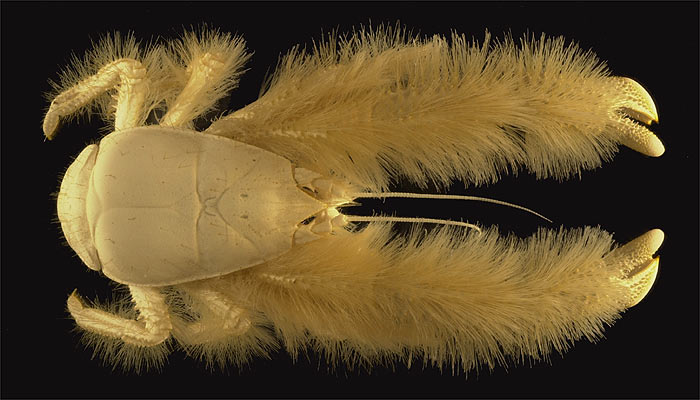
Newly Discovered Yeti Crab (Image: Ifremer/A. Fifis)

Newly Discovered Yeti Crab (Image: Ifremer/A. Fifis)

Welcome to day three of Wild Facts – Weird and Unusual Animals. You know, I think it was Glenn over at Man Over Board that suggested I could easily do 1000 Wild Facts just on deep sea animals.  I think he may have been right as we are heading back to the depths of the deep ocean for another newly discovered species.

I had my first experience with lobster on a trip to Halifax last year and I must say that I really enjoyed it.  Now, I am not sure if I would have eaten that scrumptious lobster had it been covered in fur like the newly discovered “Yeti Crab”.  That’s right, the silky fur on the picture above has not been photoshopped in for a crab fashion show.  That is really what these deep sea crustaceans look like. Obviously, the question that needs to be asked is “What the heck is the silky fur used for?” I can tell you right now that I am not able to answer that question with 100% certainty but I will let you in on the two possible answers.

The first possible reason has to do with feeding.  On our journey to Wild Fact #937 we have noticed that a lot of adaptations have evolved for feeding or mating so this would make sense.  Now, wait a minute, how can fur be used for feeding? Well, you see the “Yeti Crab” lives on the ocean floor by the Easter Islands (you know the famous Easter Islands).  This unique animal lives near some deep sea hydrothermal vents.  These vents can pose a serious threat to many animals as it produces a lot of toxins.  The other thing that it produces is bacteria.  When scientists discovered this new crustacean they noticed that the fur was covered in a variety of bacteria.  Some researchers believe that these animals eat the bacteria that they capture in their fur.  Well that seems plausible, doesn’t it? Although, there are reports of two of these “Yeti Crabs” fighting over a piece of shrimp so either they have various food groups or this special fur serves another purpose.

Remember, when I said that those ocean floor vents are deadly for some animals.  So why not for this crustacean? Well, some researchers believe that the bacteria in their fur actually filter out the harmful toxins that are produced from these vents.  Personally, I like this theory but to this point nobody knows for sure.  So what are you thoughts? Maybe it is just a fashion statement?  You know the drill, 5 Bonus Wild Fact Points for anyone with guesses for the use of this fur!

I hope you enjoyed today’s fact.

References:

National Geographic

Digg This
Reddit This
Stumble Now!
Buzz This
Vote on DZone
Share on Facebook
Bookmark this on Delicious
Kick It on DotNetKicks.com
Shout it
Share on LinkedIn
Bookmark this on Technorati
Post on Twitter
Google Buzz (aka. Google Reader)