Archive for the ‘Insects’ Category

Wild Fact #377 – Daring To Be Different – Predatory Hawaiian Caterpillar

January 26, 2012 - 12:00 am No Comments
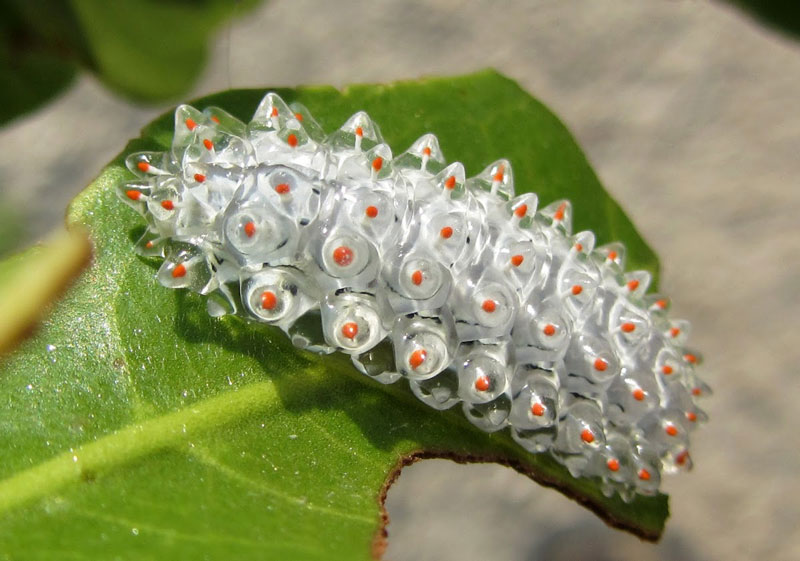
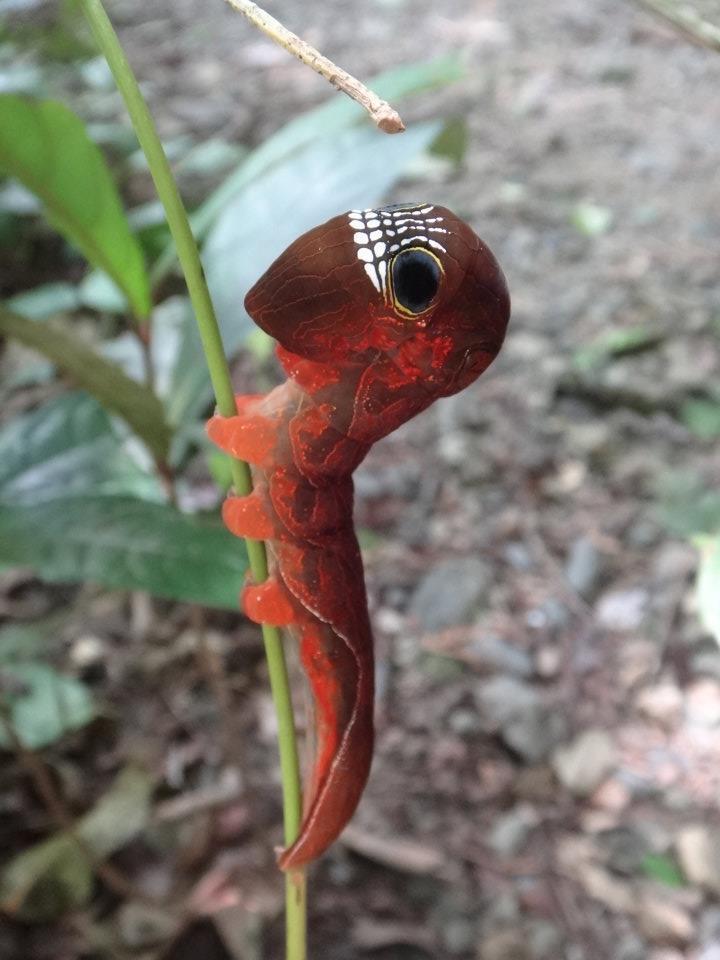
Predatory Hawaiian Caterpillar

Photo by Darlyne A. Murawski

After spending some time in the ocean, I thought we could shift gears today and head inland to this little island called Hawaii. Have you heard of it? Besides enjoying a nice relaxing day on the beach, we are going to head the forest to discover one of the most amazing caterpillars you will ever find. Of course I am talking about the unique Predatory Hawaiian Caterpillar. What makes this animal so unique? Well, they are one of the few caterpillars that are carnivores feeding on insects and snails. I guess they just couldn’t handle being a vegetarian any longer and had to switch.

Filling a Void

Actually, the Predatory Hawaiian Caterpillar evolved into a killing machine since that niche existed on the isolated islands of Hawaii. Normally, this particular niche would have been filled by a Praying Mantis or something similar. Since they don’t exist on the island, it provided the opportunity for this little caterpillar to adapt and take over their spot on the food chain. The question I have is, how in the world does a friendly, little caterpillar kill and eat other animals? Actually, their technique is pretty impressive.

Predatory Hawaiian Caterpillar

Photo by Jane Memmott

A Deadly Attack

These Predatory Caterpillar’s have long, thin appendages on their abdomen which act as sensory organs. When an unsuspecting insect (and they would be unsuspecting because caterpillar’s eat plants, right?) touches these sensory appendages, our deadly caterpillar will bend back and quickly strike the confused insect. To make the Predatory Hawaiian Caterpillar even deadlier are their raptorial claws which they use to hold down any struggling prey items. They sound cruel, don’t they?

The Disappearing Caterpillar

If these caterpillars are so deadly, why do insects keep brushing up against them? Not only is the Predatory Hawaiian Caterpillar dangerous, they are also excellent at concealing themselves. They blend in perfectly with their vegetated forest so all they need to do is sit and wait until a clumsy snail knocks into the hungry caterpillar. In some cases, the Predatory Hawaiian Caterpillar has adapted their appearance to blend in with specific tree species, making them practically invisible. I guess if you are a small insect or a snail, life in Hawaii can be pretty tough – a lot tougher than just lazing around on the beach all day, that’s for sure.

Digg This
Reddit This
Stumble Now!
Buzz This
Vote on DZone
Share on Facebook
Bookmark this on Delicious
Kick It on DotNetKicks.com
Shout it
Share on LinkedIn
Bookmark this on Technorati
Post on Twitter
Google Buzz (aka. Google Reader)

Wild Fact #392 – A Deadly Mosquito – Anopheles

January 5, 2012 - 12:00 am No Comments
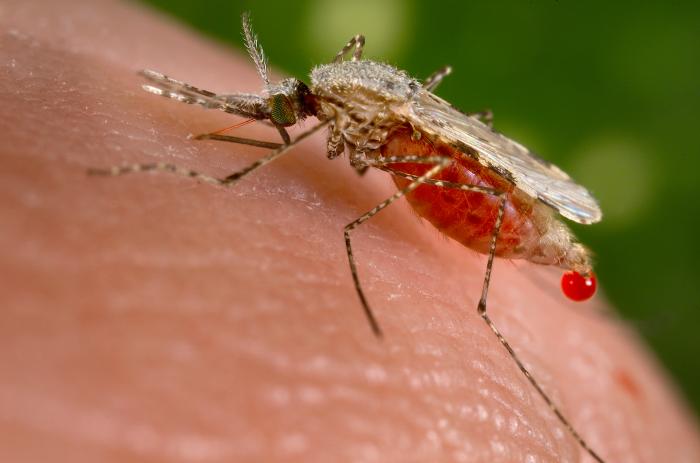
Anopheles Mosquito

Photo from Wikimedia

While I was waiting for the bus this morning, I quickly realized that we were definitely in the middle of winter. As I was sitting there freezing, I began to actually miss blackflies, mosquitoes and all the other wonderful bugs of Spring. Yes, that is how cold I was this morning. Since I was missing these nasty little insects, I figured we would take a break from winter and learn a little more about one of the more popular mosquitoes out there, the Anopheles mosquito. What? You didn’t realize there were popular and unpopular mosquitoes? You will soon find out what makes the Anopheles mosquito so special.

A Special Vector

So does anyone know what makes the Anopheles mosquito important to humans? I will give you a hint. Out of the 460 species of Anopheles, there are a 100 species that you do not want to get bit by. Why? Well, these 100 species have been known to transmit a little disease I like to call Malaria. Have you heard of it? Of course you have and this is why the Anopheles mosquito is so special. Sure the Culex Mosquito transmits the West Nile Virus but I figure Malaria is more dangerous worldwide, which is why I chose the Anopheles for today’s Wild Fact.

Anopheles Mosquito Larva

Larvae Stage

A Day In The Life Of…

Other than their desire to transmit deadly diseases, the Anopheles mosquito is not much different than other mosquitoes out there. Just like their relatives, they have four life stages, which are egg, larva, pupa and imago. The first three stages occur in slow moving water (so make sure you remove those old tires and other rain traps) and will typically last between 5 and 14 days.  The female adult phase (known as the imago stage) can last up to a month, however, the male adults tend to only live for a week or so. This is the stage that humans are most familiar with as we are constantly dealing with the pesky adult females during our picnics, baseball games and fishing trips. As well, it is only in this stage that the Anopheles mosquito becomes a vector of deadly diseases such as Malaria. You will notice that I keep referring to the adult “females”. Yes, it is only the women that have a taste for blood as their male counterparts prefer to feast on nectar and are actually very important pollinators. The poor males get a bad name simply because of the vampire females. Life isn’t fair sometimes, right guys?

All this talk about malaria and mosquito bites has me wishing for winter. Good thing it is January in Canada… I don’t have to worry about mosquito bites for several months. As well, I will remember not to complain so much the next time I am freezing at the bus stop. Enjoy the rest of the day.

Digg This
Reddit This
Stumble Now!
Buzz This
Vote on DZone
Share on Facebook
Bookmark this on Delicious
Kick It on DotNetKicks.com
Shout it
Share on LinkedIn
Bookmark this on Technorati
Post on Twitter
Google Buzz (aka. Google Reader)

Wild Fact #413 – A Neck Above the Rest – Giraffe Weevil (Madagascar)

December 7, 2011 - 12:00 am No Comments
Giraffe Weevil

Photo by Axel Strauß (Wikimedia)

To celebrate the middle of the week we are going to study a cool looking insect known as the Giraffe Weevil. This is basically a combination of two amazing animals so you know we are in for a treat. The Giraffe Weevil is only found on the island of Madagascar. Is it just me or does it seem like all of the coolest animals are found in Madagascar? Just so you know, New Zealand also has an insect called the New Zealand Giraffe Weevil, which is apparently the longest weevil in the world, however, they are a completely different species then the weevil we are studying from Madagascar.

Fighting Weevil

Okay, so I am sure you have figured out why they are called “Giraffe” Weevils. But did you know that the males typically have necks that are 3 times longer than their female counterparts? The males use their long necks for two very important things – fighting and nest building! Incidentally both of these activities are completed during the breeding season. The male Giraffe Weevil will use their long neck to impress the ladies by beating up any potential mating competitors. As you would expect the strongest weevil wins the attention of the attractive mate.

Giraffe Weevil

Photo: H. Zimmermann (NAT)

Home Building Weevil

This unusual neck also comes in handy when it comes time to building a nice little home for their children. The Giraffe Weevil will use their neck to roll up a portion of a leaf on their host plant. The female will then lay a single egg inside of the newly created leaf tube before snipping the tube away from the rest of the leaf. Once the egg hatches the little larvae will have a nice vegetarian meal as they eat their rolled up nest to get some energy to start their life. I hope the little Giraffe Weevil didn’t order steak because he will be greatly disappointed.

Fashionable Weevil

Besides the long neck you will notice that both the males and females have a bright red elytra (back) which covers their wings.  It just seems like these insects are doing whatever they can to be one of the coolest insects out there. Since they are a newly discovered species, we may find out more interesting things about the Giraffe Weevil in the near future.

That does it for today’s Wild Fact. Enjoy the rest of your day and I will see you tomorrow.

Digg This
Reddit This
Stumble Now!
Buzz This
Vote on DZone
Share on Facebook
Bookmark this on Delicious
Kick It on DotNetKicks.com
Shout it
Share on LinkedIn
Bookmark this on Technorati
Post on Twitter
Google Buzz (aka. Google Reader)

Wild Fact #430 – The Island Dinosaur – Giant Weta

November 14, 2011 - 12:00 am No Comments
Giant Weta

Photo From Wikimedia

Welcome back! I hope you had an amazing weekend and are wide awake and excited to learn about some interesting animals. To be honest, I don’t know of too many animals that are more interesting than the worlds heaviest insect, the Giant Weta! This particular insect is endemic to New Zealand and is a textbook example of island gigantism. Just so you know, island gigantism occurs when there is an absence of large carnivores present on the island ecosystem. As a result, the inhabitants of this island are free to grow as large as they like to fill in the available niches. So let’s take a trip to the island to see if we can learn a little more about the Giant Weta.

Heaviest Insect in the World!

As mentioned, the Giant Weta is the heaviest insect on our planet weighing in at an average weight of 35 grams (1.23 oz); however, the weight of one recorded female was an astounding 75 grams (2.5 oz). This may not sound that impressive but these insects are actually heavier than your standard Sparrow. Yep, this insect is heavier than a bird. So what does the Giant Weta eat to get this big?

Giant Weta

Click for Source

Feast Fit for a Mouse

Remember when I briefly defined island gigantism? Well, the Giant Weta ended taking over the role of the rodent since their were no mice around to compete with. Similarly, there were no larger predators to worry about so this was the perfect niche for this over-sized insect to fill. Although they may be giants of the insect world, the Giant Weta prefers to be a vegetarian feasting on leaves, roots and any other piece of vegetation. See, not all giants are scary!

Giant Weta Fast Facts

We are going to try something different today and provide you with legitimate “Fast Facts” about the amazing Giant Weta, so here we go:

The Giant Weta is so heavy that they literally can’t jump;

The Weta hasn’t really changed their appearance over the last 100 million years;

The parents will die before their eggs begin to hatch;

The Giant Weta is often referred to as the “Dinosaur of the Insect World”.

I hope you enjoyed those random facts and had a great time learning about the impressive Giant Weta. I think these insects alone are worth the long flight to New Zealand.  Have a great day and I will see you tomorrow.

Digg This
Reddit This
Stumble Now!
Buzz This
Vote on DZone
Share on Facebook
Bookmark this on Delicious
Kick It on DotNetKicks.com
Shout it
Share on LinkedIn
Bookmark this on Technorati
Post on Twitter
Google Buzz (aka. Google Reader)

Wild Fact #443 – Setting the Trap – Antlion

October 26, 2011 - 12:00 am No Comments
Antlion Adult

Antlion Adult - Photo from Wikimedia

After the last two domesticated Wild Facts, I figured we would get back to the “wild” and I couldn’t think of an animal that defines the harsh wild nature more than the lion. Of course, you have already read the title and looked at the picture so you know I am not talking about the typical lion. Nope, we are going to take some time to learn about a smaller but an equally voracious predator, the Antlion. In North America these insects are also referred to as “Doodlebugs” as a result of the odd, squiggly lines they leave in the sand. How about that, I have something in common with this insect as I am sure I could have been called a “Doodlebug” during my 1st year of University.

Antlion Larvae

Antlion Larvae - Photo by Jonathan Numer (Wikimedia)

This particular insect gets their name from their predatory larval stage, where they are metaphorically like lions among the ant world. In fact, these clever predators will typically set up a trap or two for their unsuspecting prey. Now you are probably wondering how in the world an insect can possibly set up a trap. Well, the Antlion will scour its environment for the perfect sand composition – it is this searching that causes the odd “doodles”. Once they find the perfect spot, they will excavate a pit and bury themselves at the bottom of the pit. Eventually an unsuspecting ant will fall into the pit and that my friends will be the last “accident” the ant ever encounters.

Below is a great video showing this but I must warn you it does get a little sad and perhaps a little graphic.

http://www.youtube.com/watch?v=CWkfAyfBDHE

Incredible how the Antlion is able to successfully knock their prey back into the pit by hurling sand at them, isn’t it?

Oddly enough, these predatory insects are quite harmless and delicate in the adult form. In fact, they resemble the beautiful Dragonfly or Damselfly. Similarly, it is difficult to observe the adult form since they spend the majority of the day hanging out in the trees, and let’s face it, when you have a greenish body and transparent wings, you would be very difficult to spot amongst the forest. I guess it is a good thing that the larvae is way more interesting that the well camouflaged adults.

Well, it looks like we are at the end of another Wild Fact. Enjoy the rest of your day and I will see you tomorrow.

Digg This
Reddit This
Stumble Now!
Buzz This
Vote on DZone
Share on Facebook
Bookmark this on Delicious
Kick It on DotNetKicks.com
Shout it
Share on LinkedIn
Bookmark this on Technorati
Post on Twitter
Google Buzz (aka. Google Reader)

Wild Fact #472 – An Outdoor “Pet” – Bumble Bee

September 15, 2011 - 12:00 am No Comments
Bumble Bee

Photo by Alvesgaspar (Wikimedia)

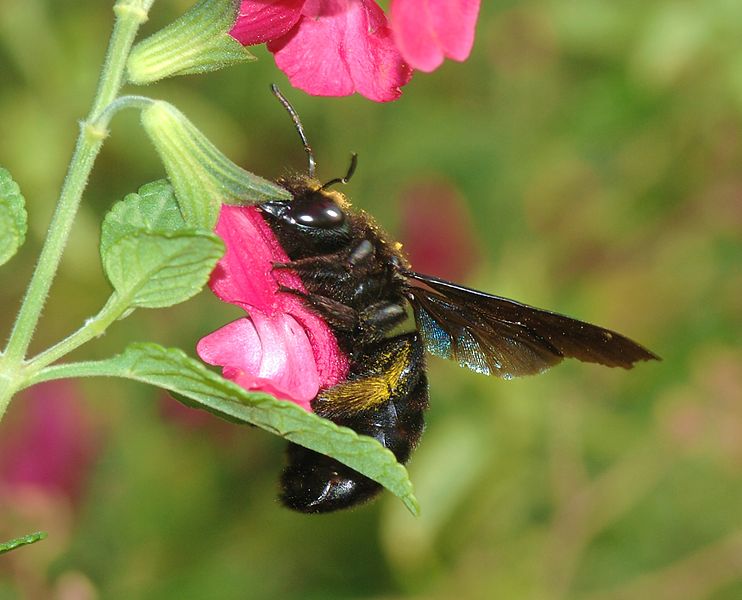
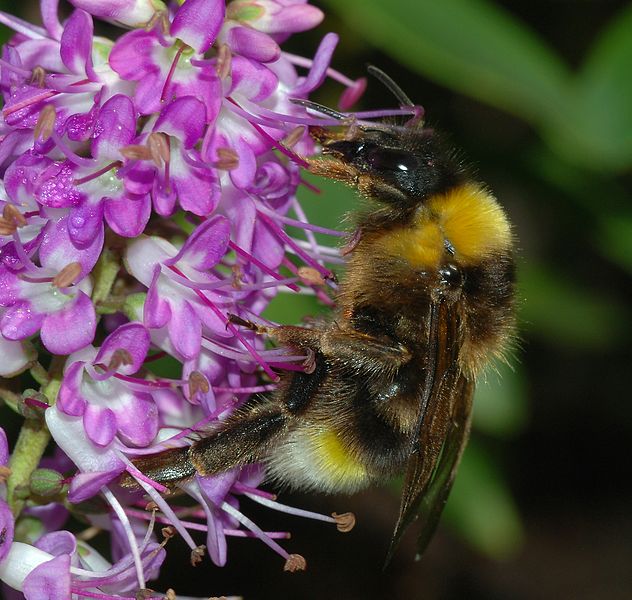
Today’s animal is one that I have admired for quite some time. It all stems from a little trick my dad taught me when I was a kid. Now I know you are dying to know what it is so I will fill you in. You see, my dad taught me how to pet Bumble Bees! That’s right, it is a little trick he learned from his dad and it isn’t too difficult so I am sure you could try it to. All you do is wait until the Bumble Bee is busy sucking the nectar from a flower and you gently (this is important….GENTLY) pet the back for the Bee. You will also want to make sure it is Bumble Bee and not a wasp or a hornet. So how can you tell it is a Bumble Bee? Let’s find out.

Bumble Bee’s are the nice, fat, furry bees and personally one of my favourite insects. I would like to say that all Bumble Bees have black and yellow bands, however, some species have orange and red bands, while others may be entirely black. This isn’t surprising since there are over 250 species of Bumble Bees in the Northern Hemisphere so you are bound to have some colour variations. Although this “fuzzy” hair may distinguish them from other flying insects, this is not an unique trait to the Bumble Bee. That’s right, other bees will also have this furry look so how can you make sure we are petting an actual Bumble Bee? Well, you can ask the bee first but if they don’t answer (and they probably won’t….but let me know if they do) then you can always look at their hind leg. They will have a bare, shiny hind leg with a few fringe hairs that help collect pollen. Other bees will typically have furry legs.

Bumble Bee with Pollen

Bumble Bee with Pollen (By P7r7 - Wikimedia)

Let’s talk a bit more about the hair of the Bumble Bee, which is also known as the “pile”. You have obviously noticed the cool colours and pattern. This isn’t just so the bee looks good. In fact, this bright colouring acts as a warning system to other animals out there. Basically, it says don’t mess with me since you will probably end up hurt. Besides giving the bee the “tough” look, it also acts as insulation to protect the Bumble Bee from colder weather. How about that….the Bumble Bee wears a winter coat!

Bumble Bee Fast Fact – Although Bumble Bees don’t have ears, they are still capable of sensing vibrations through the ground or from the plants their sitting on. So you will still need to be “vewy, vewy quiet” when trying to pet the beautiful Bumble Bee.

I hope you enjoyed today’s Wild Fact on one of my favourite insects. Have a great day and I will see you tomorrow for the last fact of the week.


Digg This
Reddit This
Stumble Now!
Buzz This
Vote on DZone
Share on Facebook
Bookmark this on Delicious
Kick It on DotNetKicks.com
Shout it
Share on LinkedIn
Bookmark this on Technorati
Post on Twitter
Google Buzz (aka. Google Reader)

Wild Fact #480 – Throwing a Hissy Fit – Madagascar Hissing Cockroach

September 5, 2011 - 12:00 am No Comments
Madagascar Hissing Cockroach

Photo from Wikimedia

I hope everyone is enjoying their long weekend (if you are at work today, then I hope you enjoyed your regular ol’ weekend). So I was going through some pictures on Facebook today and there was a cute one of my 2 year old niece holding a Madagascar Hissing Cockroach (which was part of an exhibit at the Jungle Cat Party). I am still impressed how brave she is since I am not sure if I would have wanted to hold the big, ugly insect. I figured talking about this massive cockroach would be a fun way to start the week. Okay, so maybe my idea of fun is a little messed up but what can you do, right?

The first thing we need to discuss is just how big the Madagascar Hissing Cockroach is. Well this rather large cockroach from Madagascar is typically somewhere between 5 – 7.5 cm (2 – 3″) long. Now this doesn’t sound that big but I want you to measure out 3 inches and then picture that being a cockroach. I bet now you can see why these insects made it onto an episode of Fear Factor (for some reason that episode has always stuck with me). The male Hissing Cockroaches even looks more impressive with their large horns, which gives them a rather unique appearance.

Okay, so why do the males have such cool horns? For the same reason moose have big antlers! That’s right, when two aggressive males meet up, they will enter into battle. And just like our ungulate friends, male Hissing Cockroaches will ram each other with their horns. During these battles there is quite a bit of hissing with the winner hissing much more than the losing cockroach. I guess it is the winners way of smack talking their opponent. This hissing also helps us understand the hierarchy of a Hissing Cockroach colony.

Madagascar Hissing Cockroach

Photo from WIkimedia

Oh yeah, these large insects will often live in colonies. But don’t worry, for the most part these cockroaches are not pests and don’t generally live in people’s houses. They prefer living on the forest floor where they will feast on fruit and plant material. Just so you know, if they did raid your fridge, a large colony of these cockroaches could consume one large carrot in a day. That may not sound like a big deal but try telling that to the carrot.

That does it for today’s wonderful Wild Fact on the Madagascar Hissing Cockroach. I have to thank my two year old niece, Camryn, for being brave and inspiring today’s Fact! Enjoy the rest of your day, folks.

Digg This
Reddit This
Stumble Now!
Buzz This
Vote on DZone
Share on Facebook
Bookmark this on Delicious
Kick It on DotNetKicks.com
Shout it
Share on LinkedIn
Bookmark this on Technorati
Post on Twitter
Google Buzz (aka. Google Reader)

Wild Fact #483 – Don’t Tug on Superman’s Cape – Tarantula Hawk

August 31, 2011 - 12:00 am No Comments
Tarantula Hawk Wasp

Photo by Kynn (Wikimedia)

Here we are at the middle of another week and I have another cool animal for us to study. Now I know most of you don’t care for insects but I think you will really like this one. Especially since the Tarantula Hawk may be beneficial to the people that are petrified of spiders but we will discuss that a little later on. By now you have probably figured out that the Tarantula Hawk is not actually a bird but a spider wasp. We will not have to travel far to observe these interesting insects since they are pretty much found worldwide, including Southeast Asia, Australia, Africa and of course the Americas. So, open the front door and see if you can spot one from your doorstep.

You can probably guess how the Tarantula Hawk is a friend of arachnophobes everywhere. Yes, these large wasps will hunt down the large, creepy spiders for her larvae. That’s right, the female wasp will capture, sting and paralyze the helpless Tarantula before the caring mother drags the heavy spider body back to her burrow or specially prepared nest. Once she gets it home, she will lay a single egg in the spiders body. Okay, this is the really gross part…. once the egg hatches, the larvae will bust through the abdomen and land in the stomach to start feeding.

Tarantula Hawk

Tarantula Hawk Taking a Spider Home (Photo from Wikimedia)

This clever little larvae will try to avoid the major organs so the spider stays fresh. After a few weeks of this, the larvae will turn into an adult and proceed to the real world by ripping through the stomach of the poor tarantula. I never thought I would feel bad for a huge spider, but I kinda do. What a horrible way for your life to end.  Just so you know, the male Tarantula Hawk is much nicer and doesn’t actually hunt. Instead, these peaceful guys just feed on the flowers of milkweeds and other plants.

Tarantula Hawk Fast Fact – This wasp is fairly docile and will not sting unless provoked. With that said, I would highly recommend not provoking this giant wasp. Their sting will cause excruciating pain for about 3 minutes and has been rated near the top of the Schmidt Sting Pain Index. In fact, the only other animal with a more painful sting is the bullet ant. Again, I think not provoking the Tarantula Hawk should be right up there with not tugging on Superman’s cape or pulling the mask off the ol’ Lone Ranger.

That does it for another Wild Fact. Have a great day and I will see you tomorrow.

Digg This
Reddit This
Stumble Now!
Buzz This
Vote on DZone
Share on Facebook
Bookmark this on Delicious
Kick It on DotNetKicks.com
Shout it
Share on LinkedIn
Bookmark this on Technorati
Post on Twitter
Google Buzz (aka. Google Reader)

Wild Fact #488 – Jump Around – Grasshopper

August 24, 2011 - 12:00 am 2 Comments
Grasshopper

Photo by Fir0002 (Wikimedia)

Now I know, I don’t get into Politics too much on this blog, considering it is a wildlife blog and all, but I did want to take a second to offer my deepest condolences to the Layton family. The passing of Jack Layton, an honest, inspiring and courageous politician as well as human being, has definitely left a large hole in the hearts of all Canadians. Regardless of your political views, it is difficult to criticize this man for his integrity, passion and desire to shape a better country for all of us. I only wish more politicians were built from the same mould as Mr. Jack Layton. You will be truly missed. No doubt he would want the country to continue moving forward and so we will.

With that said, let’s get into today’s Wild Fact. With winter fast approaching, I figured we should take a look at an insect or two before they all head for their annual winter sleep. I am sure we are all familiar with today’s animal, the infamous Grasshopper. There are two main types of Grasshoppers. We have the Long-Horned and the Short-Horned Grasshoppers. As you can imagine, the Long-Horned Grasshopper has antennae roughly the same size as their body. Their Short-Horned counterparts have antennae that are about half their body size. In today’s Wild Fact, we will mostly be looking at Grasshoppers in general.

Grasshopper

Photo by Jalil Arfaoui (Wikimedia)

Farmers in the Western United States are probably quite familiar with a special Long-Horned Grasshopper called the Mormon Cricket, which makes a living stealing feed from their grazing lands. I know it is called a Cricket, but trust me when I tell you that it is actually a Grasshopper. Before you go and start thinking that Short-Horned Grasshoppers are better since they don’t steal from farmers, you need to realize that it is the Short-Horned Grasshopper that will turn into Locusts when their populations get overcrowded. Believe me when I tell you that once these innocent Grasshoppers hit Locust stage, nothing is safe.

So sure, some of the Grasshopper species can become pests but for the most part they are actually quite harmless. This is a good thing too since these insects can be found pretty much anywhere, with the exception of the North and South poles. Naturally these two areas are just too cold for our cold blooded insect to survive. The cold even impacts the Grasshopper on a day to day basis. If you watch one of these jumpy insects for an entire day, you will notice that they remain relatively still during the morning. Although, once the sun is high in the sky, the Grasshopper will go on a jumping spree. They just need to warm up a little before doing their daily exercises. Actually, it is always a good idea to warm up before participating in any strenuous activity.

Grasshopper Fast Fact – Once they get warmed up, the Grasshopper is capable of jumping 20 times their own length. Some species of Grasshopper can reach 50 mm (2″) in length. So if we do the math that means that particular Grasshopper is able to jump about 100 cm or 3.3 feet.

Thanks for tuning into Wild Facts on this wonderful Wednesday. I am going to close out today’s Wild Fact with some very wise words that the entire world should live by.
“My friends, love is better than anger. Hope is better than fear. Optimism is better than despair. So let us be loving, hopeful and optimistic. And we’ll change the world.” – Jack Layton


Digg This
Reddit This
Stumble Now!
Buzz This
Vote on DZone
Share on Facebook
Bookmark this on Delicious
Kick It on DotNetKicks.com
Shout it
Share on LinkedIn
Bookmark this on Technorati
Post on Twitter
Google Buzz (aka. Google Reader)

Wild Fact #493 – King of the Insect World – Green Lacewing

August 17, 2011 - 12:00 am No Comments
Green Lacewing | Common Lacewing

Photo by Fritz Geller-Grimm (Wikimedia)

I thought it has been awhile since we took some time to study the amazing world of insects. Okay, so I know not everyone shares the same love I have for our precious insect “friends” but you have to admit some of these bugs are pretty cool. I think today’s insect falls into this “cool” category since they are actually beneficial to humans. Do you remember Garden Pest week on Wild Facts? Well the Green Lacewing is the exact opposite of a garden pest since they literally destroy those pesky garden intruders. Okay, maybe not the White-tailed Deer but definitely those deadly Aphids.

So what else can we learn about the Green Lacewing? Well, they are very common across North America and Europe, believe it or not they have a green coloured body and they are incredibly delicate. As well, this diverse group of insects can have a wingspan anywhere between 6 mm (2.3″) and 65 mm (25.5″), with the larger Lacewings being found in the tropical areas. Your best chance to catch a glimpse of these beneficial insects would be during the night or at dusk and dawn when they are most active.

During these times, the Green Lacewing will be out and about foraging on a variety of prey items. As mentioned, Aphids are a common snack for them, however, they will also chow down on mites and other small arthropods. Similarly, they supplement their diet with nectar and pollen. Although, most species feed on both insects and nectar there are some species that are solely predatory and still others that just like the sweet taste of nectar and pollen. To each their own, I guess.

Green Lacewing Larvae

Larvae - Photo by Eric Steinert (Wikimedia)

The larvae of the Green Lacewing are in my Top 5 Coolest Larvae list. Of course I have a Top 5 coolest larvae list! What? You don’t? The Lacewing larvae are absolute eating machines! They particularly enjoy feeding on aphids and mites while in this stage. Their feeding frenzy has lead to them being called Aphid Lions or Aphid Wolves. Both are wicked names that I am sure the larvae are proud of. Other than their sense of touch, they are not highly developed in their larvae form. They just sort of walk around swaying their head back and forth hoping to find something. Once they bump into a potential prey item, they will inject it with a special digestive secretion that can literally dissolve the organs of an aphid in about 90 seconds. Now do you see why they are in my Top 5 Coolest Larvae list?

See, insects can be fun and interesting, right? I hope you enjoyed reading this fact as much as I enjoyed writing it. Have a great day and I will see you tomorrow.

Digg This
Reddit This
Stumble Now!
Buzz This
Vote on DZone
Share on Facebook
Bookmark this on Delicious
Kick It on DotNetKicks.com
Shout it
Share on LinkedIn
Bookmark this on Technorati
Post on Twitter
Google Buzz (aka. Google Reader)