Archive for the ‘Mammals’ Category

Wild Fact #391 – Singing the Blues – Blue Monkey

January 6, 2012 - 12:00 am No Comments
Blue Monkey

Photo by Markrosenrosen (Wikimedia)

It looks like you made it to the weekend! I know all of you have been working very hard after a relaxing holiday, so I thought I should reward you with a Wild Fact about a cute and cuddly animal. Personally, I thought yesterday’s fact on the Anopheles Mosquito would have fallen into this category but I don’t think everyone sees it that way. So we are going to end the week with the fun and furry Blue Monkey, which is also known as the Diademed Monkey but that is tough to say so I think I will stick with the Blue Monkey. Is this monkey really blue? Find out in about 4.5 seconds…

How Blue is the Blue Monkey?

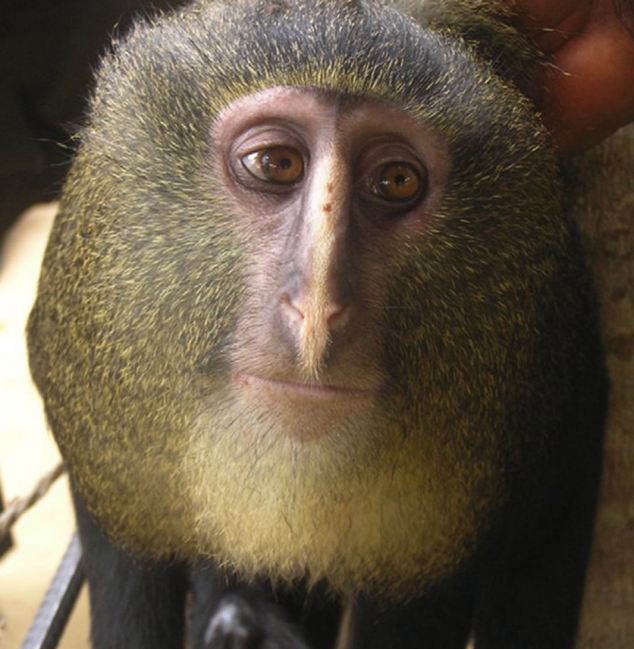
The short answer to this obvious question is “No”. The Blue Monkey is not noticeably blue, however, they have little hair on their face and this does occasionally give them a bluish appearance. For the most part the Blue Monkey is actually an olive or grey colour, except for the face which is typically dark with a yellowish patch on their forehead. Perhaps they should be called the “Yellowish, Olive/Grey Monkey”. Sure it doesn’t sound that great but at least it would be more accurate.

Blue Monkey

Photo by D. Gordon E. Robertson (Wikimedia)

A Forest Home

So where can we find our “Blue” Monkey? This particular monkey is native to Central and East Africa in the canopy of the evergreen forests or the montane bamboo forests. I have never personally been to a “bamboo forest” but it sounds absolutely incredible. If any readers have experienced this intriguing forest, could you please let me know what it was like? Thanks! Anyway, back to our monkey friend….

Life is Not Fair

Since the Blue Monkey prefers to live in trees that are capable of providing both food (fruits and leaves) and cover, they are quickly losing their habitat. For some reason, humans prefer to clear out these useful trees to create pine plantations. After this occurs, the confused monkey will begin peeling the bark off of these new, exotic trees trying to find something to eat. Naturally, this doesn’t go over well with “us” and measures are taken to ensure the Blue Monkey “Pests” no longer damage the pine plantations. Is it just me or does this not seem fair to the monkey?

That does it for the week. Enjoy your weekend and I will see you on Monday.

Digg This
Reddit This
Stumble Now!
Buzz This
Vote on DZone
Share on Facebook
Bookmark this on Delicious
Kick It on DotNetKicks.com
Shout it
Share on LinkedIn
Bookmark this on Technorati
Post on Twitter
Google Buzz (aka. Google Reader)

Wild Fact #395 – Fat Sand Rat

January 2, 2012 - 12:00 am No Comments
Fat Sand Rat

Photo by Tino Strauss (Wikimedia)

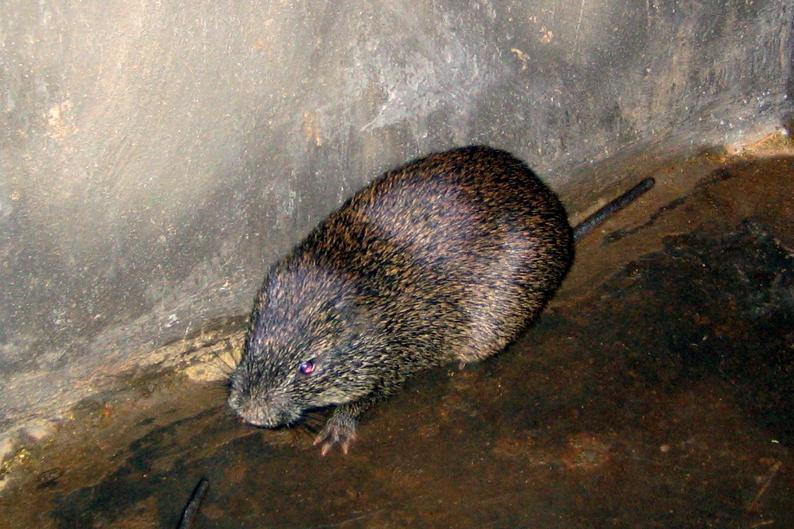
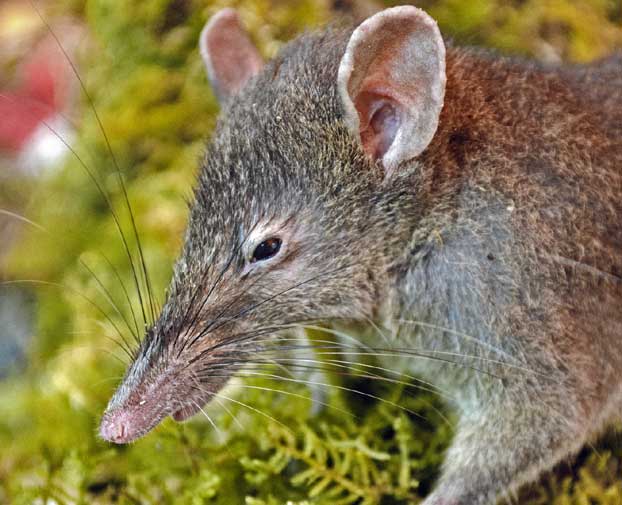
Welcome to the first Wild Fact of 2012. I trust all of you had a great New Year’s celebration and are ready for an exciting and prosperous 2012. With New Year’s comes the infamous “New Year’s Resolutions”. I have yet to make one, however, I think today’s animal, the Fat Sand Rat, should probably take some time to craft one or two resolutions for themselves. Yes, there is a member of the Gerbil family that is commonly known as the Fat Sand Rat. In fact, their scientific name, Psammomys obesus, isn’t much better. Let’s find out why this little rodent received such a hurtful name.

The Fat Lab Rat

As you might expect the Fat Sand Rat happens to be quite bulky and as such they have been referred to as “sloths of the rodent world”, which isn’t very accurate. Granted, the male Fat Sand Rats are bulky and as such, don’t exercise too much, however,  the females tend to be quite lean, fast and agile.  Perhaps, the females can help their counterparts keep their resolution this year. Interestingly enough, the Fat Sand Rat has been observed to suffer from diabetes when they feed on normal rodent food. As such, these rodents have become very important in the laboratory as humans continue to study the impacts of diabetes. I guess being a fat rodent does have its benefits…..for humans.

Fat Sand Rat

Click for Source

Housekeeping Sand Rat

The Fat Sand Rat is known to be active throughout the day and night, which lands them back in the laboratory to study seasonal affective disorder, but we will save that story for another time. Although these rodents get pegged for being lazy, they tend to have complex burrow system. Their underground homes usually consist of chambers for food storage, nesting as well as mating. Every morning, before they go foraging, the Fat Sand Rat has been spotted at the entrance of their burrow sweeping out the dirt and excrement. A little house cleaning to start the day is probably a good habit to get into. Perhaps, I jumped to conclusions when I mentioned that this rodent needs to make a resolution. They seem to be pretty organized and could probably teach us a few things, in the laboratory as well as out of it.

That does it for the first Wild Fact of 2012. Enjoy the rest of your day and I will see you tomorrow for another animal.

Digg This
Reddit This
Stumble Now!
Buzz This
Vote on DZone
Share on Facebook
Bookmark this on Delicious
Kick It on DotNetKicks.com
Shout it
Share on LinkedIn
Bookmark this on Technorati
Post on Twitter
Google Buzz (aka. Google Reader)

Wild Fact #396 – The Chatty Traveler – Beluga Whale

December 30, 2011 - 12:00 am No Comments
Beluga Whale | White Whale

Photo by Greg Hume (Wikimedia)

Before we get today’s Wild Fact started, I wanted to wish a Happy Birthday to Jamie who is responsible for suggesting today’s fact on the Beluga Whale. I was in shock when he informed me that I had yet to complete a Wild Fact on this amazing animal. Thank you Jamie for suggesting today’s animal and I hope you have a great birthday! The Beluga Whale is also known as the White Whale as a result of their unique white colouring. This colouring makes the Beluga one of the easiest whales to identify. So let’s see if we can locate a few of these incredible animals to learn a little more, shall we?

The “Small” Whale

The Beluga Whale isn’t the largest whale out there with an average length between 4 and 6.1 metres (13 to 20 feet). Males are typically a little larger than their female counterparts and have been known to weigh up to 1900 kg (4200 lbs). It is funny how we consider a whale of this size to be “small” but I guess it is all relative. The most conspicuous feature of the White Whale is the their unique, rounded forehead, which is known as the melon. The forehead of the Beluga is incredibly bulbous and is slightly malleable. The cool thing about this melon is the fact that the whale can change the shape of it simply by blowing air into their sinuses. This would be a great party trick.

White Whale | Beluga Whale

Photo by Eva Hejda (Wikimedia)

Social Whales

Beluga Whales are social animals that will typically live in small groups called pods, however, these groups have been known to get as large as 100 individuals. To communicate with each other, the Beluga uses a variety of clicks, whistles and clangs. As well, they have been known to mimic a variety of sounds. This communication is important since these pods will migrate long distances. And I am sure the trip goes a lot quicker if you can carry on a conversation with your travel buddies. The White Whale migrates south prior to the freezing of the Arctic Ocean, however, some whales won’t make it out before the ocean freezes, which typically results in death. I guess this is another important reason to be able to communicate with your pod members.

That does it for today’s Wild Fact. I hope you enjoy your day and have a great New Years. I will see you on Monday for the first Wild Fact of 2012.

Digg This
Reddit This
Stumble Now!
Buzz This
Vote on DZone
Share on Facebook
Bookmark this on Delicious
Kick It on DotNetKicks.com
Shout it
Share on LinkedIn
Bookmark this on Technorati
Post on Twitter
Google Buzz (aka. Google Reader)

Wild Fact #397 – Mountain Living – Colocolo

December 29, 2011 - 12:00 am 2 Comments

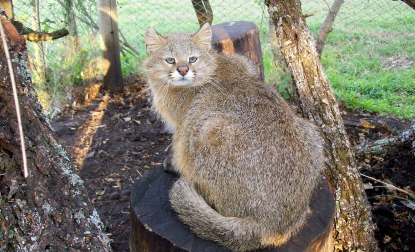
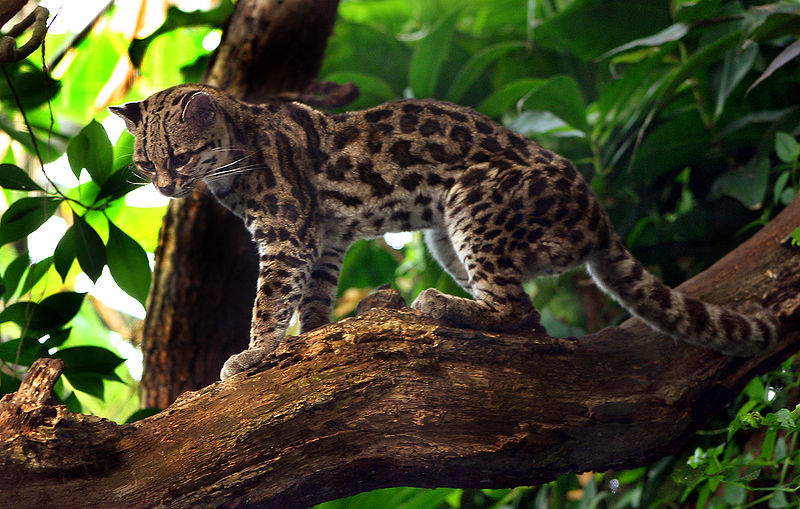
ColocoloWelcome to the Thursday edition of Wild Facts. As the snow continues to pile up in Ontario, we are going to relax in a warmer climate today. More specifically we are going to the Andean slope in northern and central Chile to find a small cat known as the Colocolo. Hmmm… I just realized that we will be climbing to an altitude of 1800 m (5900 feet) in order to find this beautiful cat. Perhaps, this isn’t going to be a nice relaxing vacation. Nonetheless, we will carry on since the Colocolo is one interesting feline.

Fashionable and Practical

Although the Colocolo is a small cat with a length between 56 and 67 cm (22 to 26″), they are quite heavy, weighing up to 3 kg (6.6 lbs). Okay, when you say it out loud, it doesn’t sound that heavy but it really is if you think about a 2 foot cat weighing over 6 lbs. I guess that heavy-set nature comes in handy when you live in high altitudes of the world’s largest continental mountain range. The Colocolo has a beautiful grey coat decorated nicely with brown stripes and spots. This coat is not just fashionable though as the long, coarse fur offers the cat protection from the environment they inhabit.

Colocolo

Photograph by Cola da Web.

Conservation of the Colocolo

The conservation status for the Colocolo is listed at “Near Threatened”, however, this rating includes the related Pantanal Cat and the widespread Pampas Cat. Until recently, it was believed that the Pampas Cats and Pantanal Cats were the same species as the Colocolo. Studies have shown that these are actually three distinct cat species. If the Colocolo is rated on its own, they may be considered “Endangered”, however, this is just an assumption since an official rating for just the Colocolo has not be undertaken. Luckily, the habitat that this small cat inhabits is not incredibly useful to humans yet, so habitat destruction shouldn’t be a major issue for our furry, feline friend.

The Pampas Cat vs. The Penguin

Since the Colocolo was once considered to be the same species as the Pampas Cat, I figured we should learn a quick fact about this species as well. Did you know that the Pampas Cats were known to steal penguin eggs and chicks from their nests? I doubt the Colocolo does this since I really don’t think penguins are hanging out in the Andes Mountains.

That does it for today’s Wild Fact. Enjoy the ret of your day and I will see you tomorrow for the final fact of the week.


Digg This
Reddit This
Stumble Now!
Buzz This
Vote on DZone
Share on Facebook
Bookmark this on Delicious
Kick It on DotNetKicks.com
Shout it
Share on LinkedIn
Bookmark this on Technorati
Post on Twitter
Google Buzz (aka. Google Reader)

Wild Fact #400 – On the Lookout – Dik Dik

December 26, 2011 - 12:00 am No Comments
Dik Dik

Photo by Pedro Gonnet (Wikimedia)

I hope Santa was good to all of you and you had a great Christmas. While  you are coming down from your sugar high, I thought we would take a quick boxing day trip to eastern and southern Africa. It is probably safe to assume that there won’t be any snow there but that won’t stop us from learning about the incredibly cute Dik Dik. Even though the Dik Dik is a dwarf antelope, I think we can make a good case for them to be included with Santa’s reindeer next year. Sure, they may not be the strongest, and perhaps they can’t fly but how could you possibly say no to this cute little animal? While we ponder their inclusion into Santa’s Reindeer herd, grab another glass of egg nog, sit back and enjoy the Dik Dik facts.

A Tasty Snack

As mentioned the Dik Dik is a dwarf antelope and as such, I feel compelled to tell you just how small they really are. This tiny antelope typically stands at a height between 30 and 40 cm (12 to 16 inches) and weighs between 3 to 6 kg (7 to 16 pounds). There is a pretty good chance that you pet dog is actually larger than the Dik Dik. As you can imagine, life can be difficult for a small antelope in Africa. They have to constantly be on the lookout for the following predators:

  • Monitor Lizards
  • Caracals
  • Lions
  • Hyenas
  • Wild Dogs
  • Leopards
  • Cheetahs
  • Jackals
  • Baboons
  • Eagles
  • Hawks
  • Pythons
  • Humans

If that many things wanted to eat me….I am pretty sure I would never leave the house.

Dik Dik

Photo by D. Gordon E. Robertson (Wikimedia)

Escape the Predator

In order to live past lunch time, the Dik Dik has amazing eyesight allowing them to see the predators coming from a long distance. Once they spot the threat, this tiny antelope is able to hurriedly get out of harms way. In fact, they are capable of running up to 42 km/hr (26 mph), which is probably quick enough to escape most predators. Since they rely on their eyesight to survive, the Dik Dik can typically be found in grasslands, however, as the grass grows too tall, this antelope will move out to find a new home that doesn’t obstruct their vision. Hopefully Santa brought the Dik Dik a nice lawnmower for Christmas!

That does it for the Boxing Day Wild Fact. Feel free to head out and go shopping now…..if you are brave enough! See you tomorrow for another animal fact.

Digg This
Reddit This
Stumble Now!
Buzz This
Vote on DZone
Share on Facebook
Bookmark this on Delicious
Kick It on DotNetKicks.com
Shout it
Share on LinkedIn
Bookmark this on Technorati
Post on Twitter
Google Buzz (aka. Google Reader)

Wild Fact #403 – A Different Monkey – Silvery Lutung

December 21, 2011 - 6:39 am No Comments
Silvery Lutung Monkey

Photo by Stavenn (Wikimedia)

I had so much fun writing about an interesting Old World Monkey yesterday that I thought we would do it again today. Instead of hanging out in the rocky regions of Ethiopia though, we are heading the mangrove and riverine forests of Malaysia, Sumatra and Borneo. What do we hope to find throughout these beautiful forests? The Silvery Lutung of course! This Old World Monkey is also known as the Silver Leaf Monkey and the Silvery Langur so pick the name you like best and lets learn a little more about today’s primate.

One Long Tail

The Silvery Lutung has a much different lifestyle compared to yesterdays Gelada. They spend the majority of their time hanging out in the trees and mostly feast on leaves with a few fruits and seeds thrown in for good measure. Unlike other arboreal monkey’s the Silvery Lutung does not have a prehensile tail that they can use as an extra hand. With that said, their tail is still very long and helps balance the monkey as they make their way through their tree top home. As well, their tail makes them look pretty cool.

Silvery Lutung Monkey

Photo by Dutch Spoon (Wikimedia)

One Long Intestine

The interesting part of the Silvery Lutung is their stomach. They actually have a 3 chambered stomach, which has some similar traits to a cow’s stomach. This allows our monkey friend to digest cellulose by fermenting this plant material. Besides their stomach, they also have a very long intestine that generally has several pouches along its length, which carries on further fermentation. This unique setup provides the Silvery Lutung with an advantage over other animals of the forest, mainly it lets them feast on vegetation that most animals can’t digest very well. This ensures they will have more than enough food to go around.

One Long Trip

It is a good thing they have plenty of food to share since they are commonly found in families that have anywhere between 9 and 40 individuals. That is a lot of mouths to feed! Usually these groups will have one male with many adult females that communally monkey-sit the babies. Throughout the day these monkey’s may travel up to 500 m (1600 feet), and hardly leave the trees. At times, the females will break off and form their own “all female” cliques, however, all family members come back and sleep together in the same tree during the night. I guess it is important for the ladies to get away and have some fun with just the girls.

I guess we are done monkeying around today. Thanks for reading and enjoy the rest of your day.


Digg This
Reddit This
Stumble Now!
Buzz This
Vote on DZone
Share on Facebook
Bookmark this on Delicious
Kick It on DotNetKicks.com
Shout it
Share on LinkedIn
Bookmark this on Technorati
Post on Twitter
Google Buzz (aka. Google Reader)

Wild Fact #404 – The Last of the Grazers – Gelada

December 20, 2011 - 4:06 am No Comments
Gelada

Photo by Kolumbusjogger (Wikimedia)

After spending yesterday in the trees learning about the Northern Cardinal, I thought we would change courses and head to the Ethiopian Highlands where the trees are few and far between. While wandering through the grassland escarpments and deep gorges, keep an eye out for the worlds most terrestrial primates,(with the exception of humans) known as the Gelada. This particular primate is a shaggy, baboon-like animal that can only be found in the highlands of Ethiopia. So what are you waiting for? We have a plane to catch if we want to make it to Africa before sundown.

Night Time Thrill Seekers

As mentioned, the habitat of the Gelada is slightly different than most other primates. They give up the forests and plains for a high altitude grassland that consists of many rocky cliffs and gorges. Don’t get me wrong, I think it is cool to live near a cliff, however, I don’t think I would like to try sleeping in a huddled group on a ledge, like our baboon friends do. I would be deathly afraid to roll over in my sleep if I were a Gelada. Once the sun rises, these Old World Monkeys climb back over the cliff and forage in the mountainous grasslands. This sounds a lot more relaxing than their thrill-seeking sleeping habits!

Gelada

Photo by BluesyPete (Wikimedia)

The Lazy Monkey Adaptation

The Gelada is the last known species of a very old lineage of grazing primates that used to dominate the landscape. Much like they have adapted to living on cliffs, this Old World Monkey has also adapted to sitting around all day and eating grass. How? Well, their buttocks have extra cushioning, much like humans – and I don’t mean that as insult to anyone out there. Considering they literally sit around all day, this evolution of a soft cushion seems pretty smart to me.

The True Boss

Much like humans, the Gelada lives in family units but they generally consist of one male and there to six females. Like most other animal species, the male is typically larger and more colourful. Unlike most other primate troops (except for humans), the females are in control of the Gelada family. Once the male begins to deteriorate as a result of age, it is the females that decide when a new younger male will replace him. Granted, the old guy will do everything he can to ward off the competition but there is only so much he can do. Poor guy!

That does it for our trip to Ethiopia. I hope you enjoyed learning about one of the most terrestrial primates on earth.

Digg This
Reddit This
Stumble Now!
Buzz This
Vote on DZone
Share on Facebook
Bookmark this on Delicious
Kick It on DotNetKicks.com
Shout it
Share on LinkedIn
Bookmark this on Technorati
Post on Twitter
Google Buzz (aka. Google Reader)

Wild Fact #407 – The Mammalian Snake – Spotted Linsang

December 15, 2011 - 12:00 am No Comments
Spotted Linsang

Photo from Wikimedia

As the week winds down, we are going to take an exhilarating trip to the Himalayas today. Come one, how hard can it be to climb these little hills? While we are there, we will be on the lookout for an endangered Civet known as the Spotted Linsang. Believe it or not, this amazing creature is often mistaken as a deadly snake. I am serious and you will find out why soon enough. So let’s grab our hiking boots, and perhaps an oxygen tank or two, and head to Himalayas to learn about the amazing Spotted Linsang.

The Stalking Snake

I wasn’t kidding when I said the Spotted Linsang has been mistaken for a large, powerful snake. You see when this Civet gets hungry they stalk their prey by crawling on their stomach. Naturally, this behaviour would make them look similar to one of this slippery, slithery reptiles that we all know and love. So if you are an insect, rodent, lizard, small mammal or bird, you had better be on the lookout for an animal crawling around on their stomach. Chances are, they want to eat you. For some reason, I think it would be funny to watch the Spotted Linsang stalk a little beetle. Wouldn’t it be easier just to walk up to it and eat it?

Spotted Linsange

Photo by Mark Kostitch

A Life in the Trees

The Spotted Linsang spends the majority of their time hanging out in the canopy of the dense Himalayan forests. High above the ground these beautiful creatures will rest during the day only coming out to hunt during the night. They usually build their nests in the hollows of the trees, however, some individuals prefer to build their nests at the other end of the tree…..underneath the roots. I guess this is a good spot to hide a nice nest made out of dry leaves and twigs. I am not sure why some individuals prefer nest building underneath the roots but I can guarantee it would have been the last place I had looked for them. Hmmm… maybe they are on to something!

Dwindling Population

Unfortunately, the last population estimate had the Spotted Linsang sitting around 200 individuals left in the wild. As usual, habitat destruction and poaching (for their fur) are the major causes of their decline. The future is not looking good for this extremely rare Civet species, but I have hope that they will find a way to rebound.

That does it for our trip to the Himalayas. Enjoy the rest of your day and I will see you tomorrow for the last fact of the week.

Digg This
Reddit This
Stumble Now!
Buzz This
Vote on DZone
Share on Facebook
Bookmark this on Delicious
Kick It on DotNetKicks.com
Shout it
Share on LinkedIn
Bookmark this on Technorati
Post on Twitter
Google Buzz (aka. Google Reader)

Wild Fact A#408 – Mr. Dressup – Red-Shanked Douc

December 14, 2011 - 12:00 am No Comments
Red-Shanked Douc

Photo by Bjørn Christian Tørrissen (Wikimedia)

I feel like it has been quite awhile since we have had the chance to study a monkey. So, I thought we could all take a trip to Southeast Asia to learn about an Old World Monkey called the Red-Shanked Douc. Like a lot of the animals that have made an appearance on Wild Facts, the Red-Shanked Douc is considered to be Endangered as a result of habitat loss and poaching. Apparently, people illegally hunt these primates for their meat or to keep as pets. I am sure they make beautiful pets, but I don’t think I could handle having a monkey roaming around my apartment.

Trick Or Treat

The Red-Shanked Douc is also known as the Costume Ape, which is fitting since they are one of the most colourful primates out there. If you look at the picture you will see that this monkey is wearing reddish stockings stretching from their ankles to their knees. To make an even bolder fashion statement they also appear to be wearing white forearm high gloves. Their black hands and feet top off this highly fashionable outfit. I am pretty sure you will be seeing this ensemble on the fashion runway soon.

Red-Shanked Douc

Photo by Art G.(Wikimedia)

One Big Family

Like other monkey’s the Red-Shanked Douc is a social animal and generally lives in groups consisting of 4 to 15 individuals, however, some groups have been known to get as large as 50. Each group usually consist of one or more males with approximately two females per male so once again, you have to like the monkey’s chances for finding a girlfriend. Usually both females and males will leave the group they were born into, which helps spread their genetic code to other parts of the forest. When on the move, the Red-Shanked Douc, has an order that they must keep. Typically, dominant males will be up front, the juvenile males will be in the rear while the females and young are nestled in the middle. Obviously this is a defensive strategy to protect the females and the children.

High in the Trees

If you are hoping to catch a glimpse of these colourful primates then you had better be prepared to strain your neck. The Costume Ape is active during the day, however, all of their activities such as sleeping and eating take place high above the ground in the canopy of the trees. Although these arboreal creatures don’t have a prehensile tail, which is normal for Old World Monkey’s, they are still quite adept at living a life in the trees.

That does it for our Wednesday Wild Fact. I hope you enjoyed learning about the Red-Shanked Douc.

Digg This
Reddit This
Stumble Now!
Buzz This
Vote on DZone
Share on Facebook
Bookmark this on Delicious
Kick It on DotNetKicks.com
Shout it
Share on LinkedIn
Bookmark this on Technorati
Post on Twitter
Google Buzz (aka. Google Reader)

Wild Fact #409 – Against All Odds – Barasingha

December 13, 2011 - 12:00 am No Comments
Barasingha | Swamp Deer

Photo by http://www.flickr.com/photos/aloshbennett/ aloshbennett

After spending some time in the mountains of South America to start the week off, we are going to northern and central India to study the Barasingha, which is also known as the Swamp Deer. This ungulate can also be found in parts of Nepal and at one time was prevalent throughout Pakistan and Bangladesh, however, that is not the case in 2011. The Swamp Deer has been battling with the possibility of going extinct for several decades, however, in 2004 they were up-listed from Endangered to Vulnerable, so that must be a good sign. No matter what their listing though, the population is still in jeopardy so we should probably hurry up and get to India before it is too late.

The Deer With the Large Rack

The Barasingha is best known for their antlers, which commonly have 10 to 14 tines, however, some Swamp Deer have been spotted that had about 20 tines. No matter how many tines the mature stags have, they are definitely an impressive creature. They are a fairly large deer weighing about 180 kg (400 lbs), which only contributes to their population decline. Unfortunately, any animal that weighs 400 lbs and has a huge set of antlers is going to be poached, which is definitely impacting the population of this beautiful deer species.

Swamp Deer | Barasingha

Photo from Wikimedia

A Team Sport

One of the other big threats to the Swamp Deer is the conversion of grasslands into agricultural fields. I know in North America, the deer like farms, however, the Barasingha rely on these tall grasses to provide food as well as cover. Luckily, there are protected areas that allow the Swamp Deer to continue thriving in their grassland habitat. In these areas, they are known to form herds with an average of 8 – 20 individuals, however, some herds have been known to have as many as 60 deer.

Playing the Odds

Typically the ratio of females to males is 2:1 in these herds, so you have to like the chances for the male Swamp Deer to find a nice lady-friend. When not trying to impress the women during the rut, the Barasingha will typically feed in the morning and evenings being less nocturnal than other deer species. Let’s face it, there is nothing better than a big bowl of tall grasses to start your day off properly (or end it,  I guess).

That does it for our trip to India to learn about the Barasingha. I hope you enjoyed studying this animal that is in the process of rebounding from near extinction. Enjoy the rest of your day!

Digg This
Reddit This
Stumble Now!
Buzz This
Vote on DZone
Share on Facebook
Bookmark this on Delicious
Kick It on DotNetKicks.com
Shout it
Share on LinkedIn
Bookmark this on Technorati
Post on Twitter
Google Buzz (aka. Google Reader)