Archive for the ‘Mammals’ Category

Wild Fact #336 – The Perfect Carrying Pouch – Yapok

March 23, 2012 - 12:00 am No Comments
Yapok | Water Opossum

Click for Photo Source

Congratulations for making it to another Friday! After all your hard work this week, you deserve to kick your feet up, grab a beer (or a glass of wine) and learn all about the amazing Yapok. What’s so amazing about this Water Opossum? For starters it is an Opossum that likes water! We will get into the rest of their cool characteristics shortly. In the meantime, let’s figure out where our imagination will be taking us today. Buckle up as we are heading to the freshwater lakes and streams located in Central and South America. Make sure you pack an extra pair of socks since there is a pretty good chance you will get wet looking for this little Opossum.

101 Uses for a Pouch

So what else makes the Yapok so interesting? Let’s see, they are the only animal species in the world that have a pouch. Right now you should be yelling at me that this isn’t true since Kangaroos and other marsupials have pouches. This is where i would kindly point out that I haven’t quite finished my sentence yet. They are the only species where both the female and male have pouches. That’s right, the male Yapok also has a handy, dandy pouch. Why? Because they kept losing their car keys so they figured this would be a great solution. Okay, I am obviously just playing with you but the real answer is requires a delicate response so I was trying to find a way to nicely tell you that the males place their genitalia inside their pouch while swimming. It is believed that this helps streamline the swimming Opossum. And it also ensures that no sensitive body parts get caught in the seaweed that the Yapok is always swimming through. For the record, I am not joking about any of this!

Water Opossum | Yapok

Click for Photo Source

Thrill of the Hunt

During the day our little marsupial friend prefers to stay hidden in burrows but once the night falls they head out to the lakes and rivers for a little hunting. Believe it or not, this opossum is very well adapted to the water. For example, they have webbed feet, waterproof fur and that useful little carrying pouch will actually become watertight while submerged. So if you are a fish, crustacean or amphibian living in the home range of the Yapok, you had better be alert once the sun goes down because the Water Opossum is perfectly suited to hunt you down.

Digg This
Reddit This
Stumble Now!
Buzz This
Vote on DZone
Share on Facebook
Bookmark this on Delicious
Kick It on DotNetKicks.com
Shout it
Share on LinkedIn
Bookmark this on Technorati
Post on Twitter
Google Buzz (aka. Google Reader)

Wild Fact #338 – A Strict No-Sugar Diet – Degu

March 21, 2012 - 12:00 am No Comments
Degu Facts

Photo by Markus (Wikimedia)

After looking at the Sooty Mangabey, which probably wouldn’t make a great pet due to their disease sharing ways, we are heading to Chile to find an animal that you could have as a fun, little pet. Yes, that’s right! The Degu, which is endemic to Chile, are cute enough to be quite common amongst pet owners. If this rodent looks familiar, it could be due to the fact that they share an infraorder with other creatures such as the chinchilla and the incredibly popular, Guinea Pig. Who didn’t have or want a Guinea Pig as a pet? Well, move over little piggy because the awesome Degu is in town!

Small but Deadly……to Vegetation

As you can tell by the picture, the Degu is a small, brown rodent measuring about 25 – 31 cm (9.8 – 12.2″) in length and weighing in at an astonishing 300 gram (11 oz). Okay, so you can probably guess that the Degu isn’t at the top of the food chain with measurements like that. Nonetheless, if you are a shrub or a blade of grass then you had better watch out for these hungry little herbivores.

Degu Facts

Photo by Vera Buhl (Wikimedia)

Diabetic Rodents

It is important for the Degu to be conscious of their diet since they are unable to handle free-sugar substances and as a result are susceptible to developing diabetes. Sure, this probably isn’t an issue for the wild animals, however, if you have a pet Degu…you should be checking their feed. If it contains free-sugar substances like molasses, honey or syrup then your little friend could be in trouble. Why are these rodent unable to handle these free-sugars? It is believed to be a result of evolutionary pressure. Since these substances didn’t exist in their natural environment, they never built up a tolerance to them. Bottom line, if you are feeding your friend non-Degu specific food, they could be susceptible to diabetes.

The Value of Teamwork

Back in the wild, the Degu is known to be very social and they understand the value of teamwork. For example they realize that by working to together to communally dig a burrow, they can make it more complex and larger than they could ever do on their own. It is kind of like the old days when you would have a good ol’ fashion barn raising party. Only, this would be a burrow digging party, which sounds just as fun.

Digg This
Reddit This
Stumble Now!
Buzz This
Vote on DZone
Share on Facebook
Bookmark this on Delicious
Kick It on DotNetKicks.com
Shout it
Share on LinkedIn
Bookmark this on Technorati
Post on Twitter
Google Buzz (aka. Google Reader)

Wild Fact #339 – Cute as a Virus – Sooty Mangabey

March 20, 2012 - 12:00 am No Comments
Sooty Mangabey

Photo by Year of the dragon (Wikimedia)

Welcome back to another fun and exciting Wild Fact. Today we are all in for a real treat as we are heading to the forests of Western Africa (between Senegal and Ghana) to look for a spectacular creature known as the Sooty Mangabey. They also have a few other names including White-Crowned Mangabey, White-Naped Mangabey and of course White-Collared Mangabey. For some reason, people like to name this Old World monkey by their white coloration around their head. Regardless of their name, this endangered species definitely deserves its very own Wild Fact, so let’s see what we can learn about our primate friend, shall we?

Diverse Habitat

The Sooty Mangabey prefers to live in old growth forests but has no problems hanging out in Mangroves, Swamps and the super cool, Gallery Forests. If I were a monkey, I think I would live in a Mangrove Swamp….those things just look so fun. As you might expect, this particular monkey is much like others – they typically spend their time in the trees and do most of their galavanting during the day. It is during this time when they go out and scour the earth for very tasty fruits and seeds but if they can’t find them they have no issues feasting on insects or other small animals.

Sooty Mangabey

Photo credit: Yerkes NPRC

Taught to Share

Interestingly enough, it is believed that the Sooty Mangabey is responsible for passing along a strain of the Simian Immunodeficiency Virus (SIV) to humans, which became known as the HIV-2 virus. Sure the common Chimpanzee gets all the credit for passing along the HIV-1 strain but nobody knows about the poor Sooty Mangabey who was thoughtful enough to share their virus with us. Besides HIV, this particular monkey is also susceptible to contracting leprosy so you have to wonder what else these little Mangabey’s are capable of contracting. I think I might keep my distance during our trip to Western Africa.

Watch Your Back!

When the Sooty Mangabey isn’t worrying about which disease they are going to catch, they need to be on the lookout for a variety of predators including leopards, eagles, snakes, humans and even the common chimpanzee. I have a tough time picturing a cute little chimp causing problems for their sooty cousins but I guess all is fair in love and survival.

Digg This
Reddit This
Stumble Now!
Buzz This
Vote on DZone
Share on Facebook
Bookmark this on Delicious
Kick It on DotNetKicks.com
Shout it
Share on LinkedIn
Bookmark this on Technorati
Post on Twitter
Google Buzz (aka. Google Reader)

Wild Fact #342 – Look Up….Look Waaay Up – Black Tufted Marmoset

March 15, 2012 - 12:00 am No Comments
Black Tufted Marmoset

Photo by Eurico Zimbres FGEL/UERJ (Wikimedia)

To celebrate the fact that it is already Thursday (is this week flying by for anyone else?) we are going for a nice visit to the Neo-tropical forests of the Brazilian Central Plateau. What are we looking for once we get to these beautiful forests? Well the Black Tufted Marmoset, of course! Although, feel free to look around and see what else you can find in this diverse landscape. You may want to bring a little neck massager with you for this trip since this particular New World Monkey likes to live high up in the trees, so you will definitely have a sore neck by the time you are finished observing these primates.

A Fashion Statement

So what is a Black Tufted Marmoset? Well, they are New World Monkey’s that have an average length between 19 and 22 cm (7.5 – 8.6″) and weigh a whopping 350 grams (12.3 oz), so they are not the largest animals in the forest. They typically have a brown or black head, characterized by the black tufts around their ears (hence the name), while their body is usually a greyish colour. Finally, they have a beautiful black and white ringed tail that is used mostly for balance since it isn’t a prehensile tail so they can’t grip branches with it.

Black Tufted Marmoset

Photo by Leofleck (Wikimedia)

The Power of Claws

How does a monkey without a prehensile tail manage to live high up in the tree canopy? Well, they are an agile species that happens to have claw-like nails, which are pretty good at gripping. Unfortunately, they are lacking an opposable thumb so they won’t be very good at playing video games or any other activities requiring the use of a thumb. Nobody said being a Black Tufted Marmoset would be easy!

I Tawt I Taw a Marmotet

Speaking of a tough life, these little monkey’s need to be constantly scanning the skies for large birds of prey. They really don’t have much of a defence mechanism other than looking over their shoulder and communicating with other Marmosets if a predator happens to wander into their area. I guess if those were my only lines of defence, I would be hiding in the trees all day as well. Although, the Black Tufted Marmoset mostly feeds on tree sap, in times of severe drought they have been known to become a predator themselves, typically feeding on arthropods, baby birds and bird eggs. I personally have a tough time picturing this cute, little monkey feasting on a poor innocent bird. I guess you do what you have to do when the times get tough. You have to love the survival instincts of wild animals.

Digg This
Reddit This
Stumble Now!
Buzz This
Vote on DZone
Share on Facebook
Bookmark this on Delicious
Kick It on DotNetKicks.com
Shout it
Share on LinkedIn
Bookmark this on Technorati
Post on Twitter
Google Buzz (aka. Google Reader)

Wild Fact #343 – Pile Up – North African Gundi

March 14, 2012 - 12:00 am No Comments
North African Gundi

Click for Photo Source

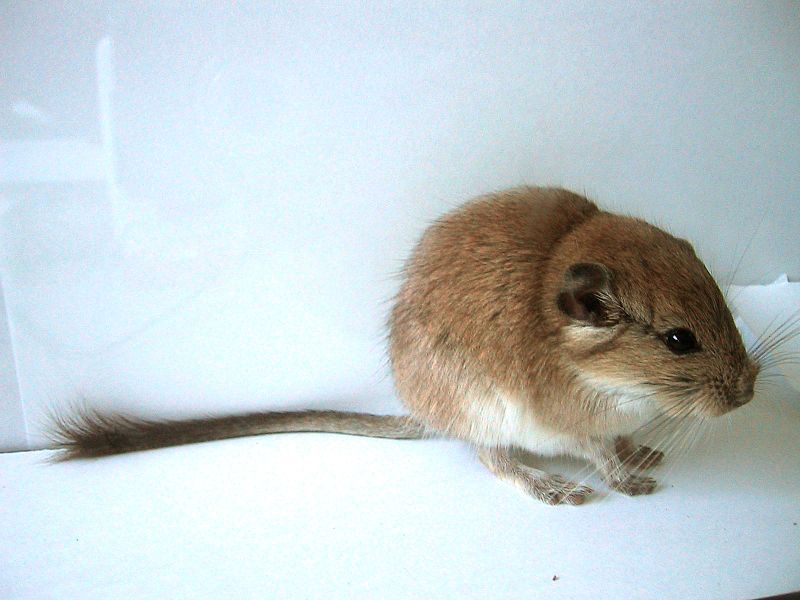
We are officially half way through the work week and to celebrate we are going to Africa to study a cute, little rodent known as the North African Gundi. You shouldn’t have any problems finding this mouse-like creature provided you don’t mind lifting up a rock or two. That’s right, this common and widespread species tends to live in the crevices of rock outcrops located in Northern Africa. There are four other species of Gundi located throughout Africa so we will need to study their physical characteristics before leaving. After all, you don’t want to travel all the way to Africa just to observe a completely different Gundi, now would you?

They All Look Alike

Okay, so it probably wouldn’t be a big deal if you observed a cousin of the North African Gundi and it is a good thing too since they all look pretty similar. For example,  all 5 of the Gundi species tend to look like furry, little Guinea Pigs with their short, stubby legs, large eyes and a short tail. As well, two toes on the Gundi’s hind foot is known to have little bristles. What are these bristles for? Well, to scratch their rump, of course.  Why do they do this? Not sure… maybe because they have an itch or it could be their way of scent marking their territory. Why do you think the North African Gundi scratches their rump all the time?

North African Gundi

Click for Photo Source

A Crowded Bedroom

Although this particular Gundi lives in the desert, these animals do not drink water. Instead they prefer to drink soda pop! Okay, obviously I am just making that up but they do get all of their water intake from the plants they eat. Probably not a bad idea considering they live in a desert so water may be tough to come by. Another issue with living in the desert is regulating your body temperature. The area they live in tends to be very warm during the day but cold at night. Unfortunately, they don’t have blankets they can use to cover up with at night but they have the next best thing……each other. Yes, the North African Gundi gathers in communities and then piles on top of each other to keep warm during the cold African nights. I am not sure how much sleep the rodent on the bottom gets but I am sure it doesn’t wake up feeling rested.

Digg This
Reddit This
Stumble Now!
Buzz This
Vote on DZone
Share on Facebook
Bookmark this on Delicious
Kick It on DotNetKicks.com
Shout it
Share on LinkedIn
Bookmark this on Technorati
Post on Twitter
Google Buzz (aka. Google Reader)

Wild Fact #344 – The Cutest Anteater- Silky Anteater

March 13, 2012 - 12:00 am No Comments
Top 10 Cutest Animals | Silky Anteater

Click for Source

The last couple of Wild Facts haven’t contained too many cute animals, unless you like wet rats such as the Pyrenean Desman, but today’s fact will be all about adorable creatures. Okay, only one adorable creature but the Silky Anteater is pretty good at looking cute. This smallest member of the anteater family can be found in parts of Central and South America; however, you will have to have a keen eye if you want to spot them. Not only are these creatures small but they are also nocturnal and rare, which makes sighting them that much more pleasurable. Let’s go and see if we can find one…
Cutest Animal in the Rainforest?

As mentioned, this adorable anteater is the smallest member of their family with a length between 3.6 and 4.5 centimetres (14 – 18″) and typically weighs less than 400 grams (14 oz). Basically, you can find bigger cans of spaghetti sauce in your local supermarket. There is no question that the small stature of this animal adds to their cuteness factor but their soft golden brown fur and short snout definitely gives them a cuddly look. The Silky Anteater also has a partially prehensile tail which is perfect for a life in the trees. Oh, did I not mention that unlike typical anteaters this particular species lives in the canopy of the rainforest? It is the little things like this that make the Silky Anteater so unique.

Top 10 Cutest Animals | Silky Anteater

Click for Photo Source

Lazy as the Sloth?

For some reason this animal reminds me of one of my favourite animals on the planet, the Three-Toed Sloth. Don’t you find they have a similar look to them? The Silky Anteater is even known for even being a slow moving animal, although not nearly as slow as the Sloth. Let’s face it, there are not too many animals that are Sloth Lazy!. Luckily for the Anteater, their source of food comes from insects that live in large colonies so they really don’t need to be swift as their is hardly any chasing going on. Surprisingly, this small creature can typically consume up to 5000 ants in a single day!

Silky Cover

Even when a predator is attacking our Anteater friend, they choose not to run. Instead they will stand and on their two back legs and hold their forelegs close to  their face so they can “punch” any attacker that gets too close. Although this defence tactic can be somewhat successful the first defence strategy of the Silky Anteater is not to be seen. In fact, it is speculated that their golden colour fur helps them blend in with the silk pod fibres found on Silk Cotton Trees. I guess you had better blend in when you are only 14″ long. Otherwise, you are just providing the Eagles with a nice, easy snack!

Digg This
Reddit This
Stumble Now!
Buzz This
Vote on DZone
Share on Facebook
Bookmark this on Delicious
Kick It on DotNetKicks.com
Shout it
Share on LinkedIn
Bookmark this on Technorati
Post on Twitter
Google Buzz (aka. Google Reader)

Wild Fact #346 – That Water is Cold! – Pyrenean Desman

March 9, 2012 - 12:00 am No Comments
Pyrenean Desman

Photo by David Perez (Wikimedia)

Although most of the week as been dedicated to our feathered friends, with my favourite being the rock stealing penguin, we are going to shift gears and finish the week off with an interesting but rare rodent. Oh come on, rodents can be fun too! Especially a semi-aquatic rodent that happens to live in the Pyrenees (for those not up on their Geography…that is a pretty big mountain range in southwest Europe). So what do you say? Shall we grab our hiking gear and begin exploring the mountain streams in search of this vulnerable rodent? Yeah, of course we should!

On the Decline

I said we are searching for a “vulnerable” rodent because their population has experienced a 30% decline  over the last 10 years. As a result, the IUCN has listed them as vulnerable and expects their population to drop by another 30% over the next 10 years. I wouldn’t be surprised to see this cute and cuddly rodent classified as endangered in the coming years…..unless something is done to prevent this. So what exactly is this animal that we should be concerned about?

Pyrenean Desman Distribution Map

Distribution Map - Photo by Carlosblh (Wikimedia)

Natural Born Swimmers

As mentioned the Pyrenean Desman is a semi-aquatic rodent with an average length between 11 – 16 cm (4.3 – 6.3 inches) and is found by the banks of cold mountain streams. They also have a long, flat tail that is about 12 – 16 cm (4.7 – 6.3 inches) long and I know everyone loves little rodents with long, hairless tails, right? Although their tail may creep us out a little, it is quite valuable for the Pyrenean Desman. They are able to use this long, flat tail as a rudder while swimming and when you combine this feature with their water-proof fur (that’s right, they have waterproof fur!!) they become quite proficient at swimming. So if you ever decide to go for a nice, cold swim while visiting the Pyrenees, be sure to look out for swimming rodents.

Detecting Prey with Echolocation…..Really??

The Pyrenean Desman has poor eyesight and has a result it is believed they are capable of using echolocation to detect their aquatic prey such as crustaceans and insect larvae. How do they do this? I am glad you asked. It is speculated that they will slap the water with their long, flat and disgusting tail to generate the waves, which they will sense when it bounces off a tasty snack. Of course this is just speculation but it would be a pretty neat party trick so let’s hope for the Pyrenean Desman that it is true.

Digg This
Reddit This
Stumble Now!
Buzz This
Vote on DZone
Share on Facebook
Bookmark this on Delicious
Kick It on DotNetKicks.com
Shout it
Share on LinkedIn
Bookmark this on Technorati
Post on Twitter
Google Buzz (aka. Google Reader)

Wild Fact #349 – Sonic the Dwarf Gymnure – Dwarf Gymnure

March 6, 2012 - 12:00 am No Comments
Dwarf Gymnure | Hairy Hedgehog | Moonrat

Click for Source

We are going to switch gears after talking about the Hammerkop yesterday. That’s right, we are heading back to land where we will try and find the Dwarf Gymnure but I have to warn you, this may not be an easy task. Not only is this animal tiny but they are also listed as Critically Endangered on the IUCN list due to having a restricted home range. The good thing about them only being found at Mount Kerinci in Indonesia is we know exactly where we need to go to track down this little rat-like hedgehog.

That Hedgehog is a Rat! I Mean…That Rat is a Hedgehog?!

Yes, you read that right! The 10 cm (4″) long Dwarf Gymnure is in the same family as the infamous Hedgehog, however, their appearance definitely resembles that of the much loved Rat. Unlike their hedgehog family members the Dwarf Gymnure has a rust-brown coloured coach that contains soft, silky fur instead of those sharp, prickly spines. I know, I know! How can they be closely related to Sonic the Hedgehog if this little rat-like creature doesn’t have spines? I guess you can blame evolution and genetics for causing that confusion.

Dwarf Gymnure Distribution Map

Distribution Map - Photo by Chermundy (Wikimedia)

The Gymnure Diet Fad

The Dwarf Gymnure is an insectivore meaning they love feasting on…yep, you guessed it…..INVERTEBRATES! What?!? You can’t expect them to limit their diet just to insects when there are scrumptious creatures like worms kicking around your house. Occasionally the Gymnure may even supplement their diet by eating a variety of fruit. I know, how could they possibly eat disgusting fruit when there are potential insects and worms hanging around?

Protected by Tigers and Rhinos

As mentioned, the Dwarf Gymnure is Critically Endangered since they are restricted to such a specific and limited home range. Unlike other species of Gymnure it doesn’t appear that their habitat is being further destroyed by human development.  No, it isn’t because humans are so fond of this little critter that they decided to postpone growing crops, instead it is a result of their mountain homerange being in the middle of a National Park. The same park that protects endangered animals such as the Sumatran Tiger and the Sumatran Rhinoceros. Naturally, this should help our cute and cuddly rat-like, hedgehog – there’s a sentence you don’t hear every day. Let’s just hope this doesn’t change anytime soon and people continue to realize the importance of National Parks.

Digg This
Reddit This
Stumble Now!
Buzz This
Vote on DZone
Share on Facebook
Bookmark this on Delicious
Kick It on DotNetKicks.com
Shout it
Share on LinkedIn
Bookmark this on Technorati
Post on Twitter
Google Buzz (aka. Google Reader)

Wild Fact #353 – A Beautiful Comeback – Bontebok

February 29, 2012 - 12:00 am No Comments
Bontebok

Photo by Thomas Schoch (Wikimedia)

So it appears that 2012 is actually a “Leap Year”, which means you get one additional animal fact this year. Don’t you just love these extra days! In an effort fully utilize our extra time, we are all going on a trip to South Africa where we will observe a ton of wildlife including the beautiful Bontebok. If you are anything like me, you are probably wondering how this antelope received such an unusual, albeit fun name. I suppose if you are Dutch, you wouldn’t be as confused with their name since it comes from the words “bont” which means particolored and “bok” meaning buck. So I guess we can call them the Particolored Buck for the rest of this Wild Fact…..but…..I think I will stick with Bontebok.

Bontebok

Photo from Wikimedia

The Multi-Coloured Antelope

As their name suggests the Bontebok’s shiny coat has a variety of coloured sections. They typically start with a nice purplish or reddish brown colour that tapers into a lighter tan coloration on their back. The inside portion of their legs are a beautiful white colour while the outside section goes back to that stunning purplish or reddish-brown colour. To make an even more impressive fashion statement, this antelope has a white patch extending from their forehead down to the tip of their nose. I am starting to see why they are called Bontebok :) . Although, the Bontebok calves should be called something different since they are usually a yellowish brown colour with a dark face. Oh, and don’t have any of their parents markings, which makes them a little boring to look at but they still have that whole “cute, baby” thing going for them.

The Comeback Kid

Like other antelope species, the Bontebok is a social animal that usually hangs out in groups that can contain as many as 40 individuals. This is actually quite impressive since at one time their entire population was not greater than 20. Luckily the creation of reserves and parks have allowed this beautifully coloured antelope bounce back a little. Currently their population is estimated to be over 1000, which is an amazing comeback but the Bontebok is still classified as vulnerable on the IUCN. This is  a good news story which provides hope that any animal species on the brink of extinction can be saved with a little effort on our part.

Digg This
Reddit This
Stumble Now!
Buzz This
Vote on DZone
Share on Facebook
Bookmark this on Delicious
Kick It on DotNetKicks.com
Shout it
Share on LinkedIn
Bookmark this on Technorati
Post on Twitter
Google Buzz (aka. Google Reader)

Wild Fact #354 – Monkey Stare – Dryas Monkey

February 28, 2012 - 12:00 am No Comments
Diana Monkey

Photo by Ikmo-ned (Wikimedia)

For some reason I was in the mood to take a quick trip to the Congo today so I figured…why not? After all, anything is possible in the land of imagination, right? Anyway, while we are traveling through the forests of the Congo basin, keep an eye out for the fun and exciting Dryas Monkey, which is also known as the Salonga Monkey or the Ntolu. There is very little known about this particular species of Guenon (a type of monkey) but what we do know will be presented in today’s Wild Fact so keep reading as we learn everything we can about today’s monkey.

Dwindling Population

Although we don’t have a ton of data on this monkey species, we do know there are only about 200 individual members of this species remaining in the wild. As you might expect, this makes the Salonga Monkey critically endangered. Even though we don’t know exactly why their population has declined so rapidly, it is probably safe to say that habitat destruction and poaching are key factors in their decline. Luckily the community managed Kokolopori reserve is focusing their efforts on the preservation of this adorable monkey species. Let’s hope the Dryas Monkey has what it takes to make a remarkable comeback.

Dryas Monkey Distribution

Distribution Map - Photo by Mysid (Wikimedia)

Communication is Key

This particular monkey species relies heavily on a few unique communication techniques to get their point across to other members. For example, when threatened they typically rely on the famous staring contest. That’s right, these monkey’s will stare at each other in an effort to display their coloured eyelids. In other occasions, they will add head bobbing to the star or open their mouth. When they add these extra features to their stare…..look out because they mean business! During mating season the females can often be found “presenting” which is a way to show the males that they are ready to be taken out on a nice romantic date.

Dryas Monkey Fast Fact

Since the Dryas Monkey can typically be found in troops of up to 30 individuals, they have plenty of opportunities to use their unique facial expressions. Like most other monkey troops this particular family unity only contains one mature male with the remainder being females and juvenile monkey’s. I have a feeling that the lone adult male doesn’t win very many of those staring contests amongst all the females.

There is still a lot of information that needs to be collected on the Dryas Monkey and hopefully their population will be around long enough for researchers to learn everything about them.

Digg This
Reddit This
Stumble Now!
Buzz This
Vote on DZone
Share on Facebook
Bookmark this on Delicious
Kick It on DotNetKicks.com
Shout it
Share on LinkedIn
Bookmark this on Technorati
Post on Twitter
Google Buzz (aka. Google Reader)