Posts Tagged ‘Cat Facts’

Wild Fact #489 – Good Things Come in Small Packages – Kodkod

August 23, 2011 - 12:00 am No Comments
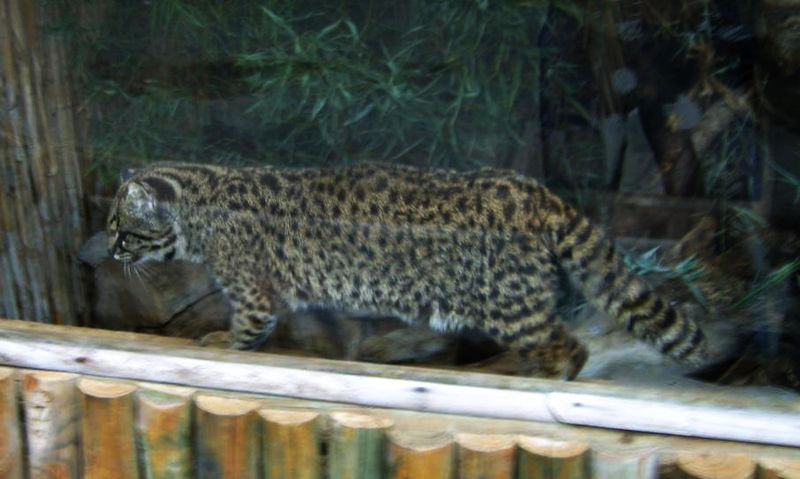
KodKod

Photo by Lycaon.cl (Wikimedia)

I know there are  a lot of cat lovers that read Wild Facts so today’s animal is dedicated to everyone that just adores those tiny, furry, feline critters. Since the name of this blog is “WILD Facts” I wanted to stay away from the domestic variety so today we are going to be talking about the KodKod, which is the smallest wild cat found in the Americas. In order to spot this rare and elusive cat we will need to take a short trip to central and southern Chile. The good news is we will get to wander around the rainforest so even if we don’t get to see them, I am sure we will see plenty of amazing animals. So what are you waiting for? Let’s get going.

As mentioned the KodKod is the smallest wild cat found in the Americas with their typical length being somewhere between 37 and 51 cm (15-20″) and their weight around 2.5 kg (5.5 lbs). When you take those dimensions and add in a furry, spotted coat and a nice striped tail, you have the perfect mix for a cuddly cat. Just to make it clear, I am not recommending you go down to Chile and try to cuddle a wild KodKod since the cat probably wouldn’t like this too much.

Distribution Map of the KodKod

Distribution map of the KodKod

I don’t think you would have to worry about them eating you since it is believed that the KodKod is a nocturnal hunter that feeds on rodents, birds, insects and other small animals. Unfortunately we don’t know a whole lot about this species since they are so rare and elusive, which means we are just guessing at their diet preferences. Similarly, we can speculate that the KodKod stalks their prey on the ground, however, they are also very capable tree climbers. I guess this means you will never have to call the Fire Department if your KodKod gets stuck in a tree. In fact, these cats will probably enjoy being stuck in the tree since they spend a portion of their day resting in canopy of the rainforest.

KodKod Fast Fact – Since the KodKod is restricted to a very small geographic area, they are in jeopardy of going extinct as a result of habitat destruction occurring in this area. Illegal trading of these animals can also cause problems for their population and as such trading of these animals have been strictly regulated. Hopefully this vulnerable cat will continue to survive and occupy the rainforest of central and southern Chile for a long time to come.

Thanks for checking out today’s Wild Fact. I will see you back here tomorrow for another new and exciting animal fact.

Digg This
Reddit This
Stumble Now!
Buzz This
Vote on DZone
Share on Facebook
Bookmark this on Delicious
Kick It on DotNetKicks.com
Shout it
Share on LinkedIn
Bookmark this on Technorati
Post on Twitter
Google Buzz (aka. Google Reader)

Wild Fact #558 – The Purrrrfect Pet – Somali

May 18, 2011 - 12:00 am 2 Comments

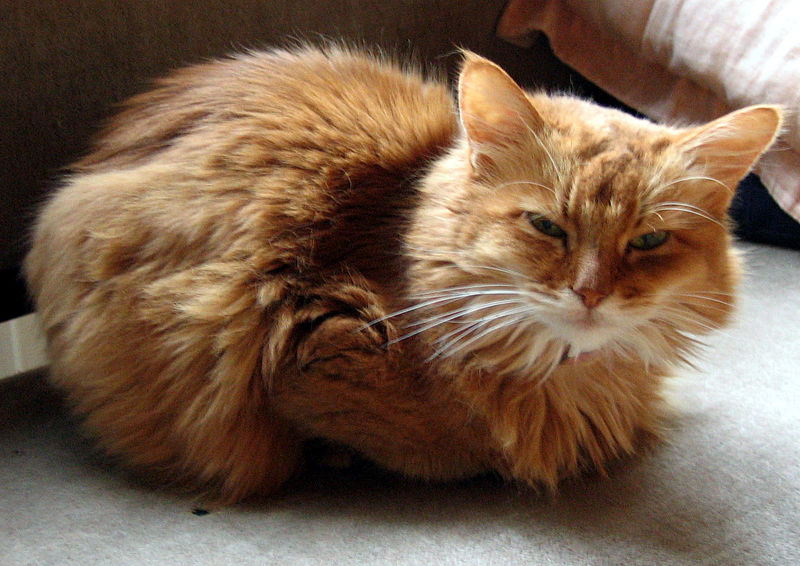
Photo by Heikki Narko (Wikimedia)

You may know by now that I am definitely more of a dog person than a cat person; however, this website is all about unbiased facts (okay so maybe there are a few biased facts) so today I am going to be writing about a domestic cat called the Somali.  I figure this is only fair since we talked about the German Shorthaired Pointer yesterday.  And you know I don’t want to leave out all of my cat loving friends.  Although the Somali originated from Northern Africa, they are quite popular throughout the United States of America.  So let’s learn more about this cute, little cat, shall we?

If you love cats but hate the shedding that comes with them then you are going to be very excited about the Somali.  Yep, you guessed it, this particular breed of cat sheds very little.  So how did this awesome, non-shedding cat come about?  Well, they sort of appeared overnight during the 1950′s.  They are actually part of an Abyssinian breeding program (in case you don’t know your cats – the Abyssinian is thought to be the oldest breed of cat in the world).  Somewhat spontaneously during this breeding initiative, little kittens were born with long fluffy coats and bottle-brush tails.  This my friends was the beginning of another intelligent and playful breed of cat.

Photo by Julia Shepeleva (Wikimedia)

As I just alluded to , the Somali isn’t your stereotypical cat that doesn’t want anything to do with you.  Nope, this breed is intelligent, active, playful and very affectionate.  Probably why they have become so popular among pet owners in the States.  Even a dog lover such as myself wouldn’t mind getting one of these playful cats (no, that is not a hint for a future birthday gift).  Even better yet is the Somali actually thrives in an environment with other animals. This makes them perfect if you have other pets or children.  It sort of sounds like I just compared your children to pets but I really didn’t mean to :) .

Somali Fast Fact – If you are going to own a Somali then you should be aware that they tend to have problems with their teeth.  As well, about 5% of all Somali’s have issues with their kidney’s.  Although, I think the benefits of this breed definitely outweighs the disadvantages.

I guess that does it for another Domesticated Wild Fact. I promise we will be back to the Wild tomorrow.

Digg This
Reddit This
Stumble Now!
Buzz This
Vote on DZone
Share on Facebook
Bookmark this on Delicious
Kick It on DotNetKicks.com
Shout it
Share on LinkedIn
Bookmark this on Technorati
Post on Twitter
Google Buzz (aka. Google Reader)

Wild Fact #603 – Can You “Spot” the Cat in Today’s Fact? – Leopard Cat

March 16, 2011 - 12:00 am No Comments

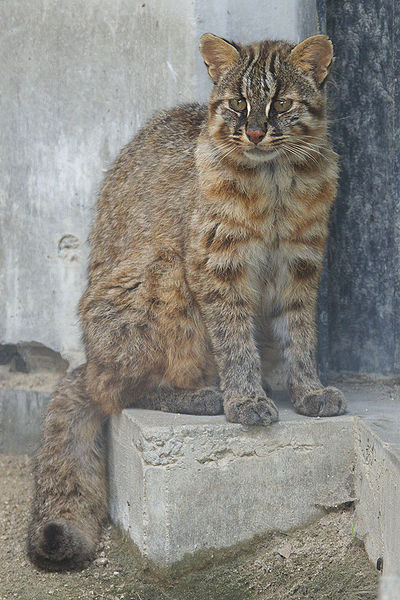
Photo by Pontafon (Wikimedia)

Somehow this week seems to be all about wild animals that can be domesticated as pets. I swear, that I did not try to do this when the week started, however, it is an interesting theme. Today we are looking at the Leopard Cat which is a small cat that can be found in South and East Asia.  Typically this wild cat is a little bit larger than your big, fat, regular old house cat.  I bet they aren’t bigger than Garfield but most cats don’t eat lasagne on a regular basis so I guess this doesn’t count.

Obviously, the Leopard Cat gets their name from their amazing coat which looks strikingly similar to that of a Leopard.  This particular cat as a wide range throughout Asia and tends to occupy a variety of habitats.  These sneaky little felines can be found in tropical jungles, woodlands, scrublands and even semi-arid deserts, provided they are close to water.   So pick the habitat type you want to see the most and you will probably have the opportunity to view one of these interesting cats.

Photo by F. Spangenberg (Wikimedia)

Like other cat species the Leopard Cat is a carnivore as they feast on rodents, frogs, birds, lizards and even insects.  Again,  similar to other cats, this particular cat tends to be a solitary animal.  Now before you go wanting one of these as a pet you need to know that they are nocturnal so you can expect them to keep you up all night.  They like to spend the daylight hours relaxing in a nice shady tree.  The life of a Leopard Cat sounds pretty sweet and not that much different then your typical house cat.

Okay, so appartently it is possible to domesticate the Leopard Cat, however, it could be difficult.  The better way to do this is to cross breed one of these amazing wild cats with a domestic cat which produces a pet known as the Bengal Cat.  Actually, I think my cousin just bought one of these Bengal Cats – I should ask him about their behaviour.  If you are thinking of buying one of these cats then it is recommended you get a Bengal Cat that is a least 4 generations removed from their wild Leopard Cat relatives. 

I guess that just about does it for the latest edition of our Domestic Wild Fact.  See all of you tomorrow!

Digg This
Reddit This
Stumble Now!
Buzz This
Vote on DZone
Share on Facebook
Bookmark this on Delicious
Kick It on DotNetKicks.com
Shout it
Share on LinkedIn
Bookmark this on Technorati
Post on Twitter
Google Buzz (aka. Google Reader)

Wild Fact #852 – The Water Cat – Flat-Headed Cat

March 18, 2010 - 12:00 am 8 Comments

Today we are going to continue with the apparent theme of the week which is “Cats and Dogs”.  We are going to head to Southeast Asia where we will discover that cats really do like water.  I don’t know where this myth that cats don’t like water comes from but I can tell you that the Flat-Headed Cat loves the wonderful, wet stuff.

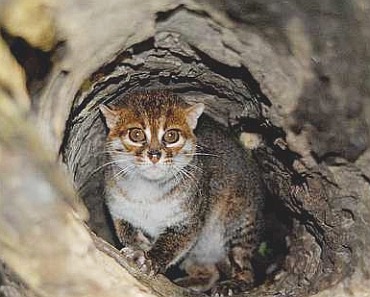
So what the heck is a flat-headed cat. Well, it is a rare, little cat that is about 60 cm (2′) long and only weighs 2.2 kg (4.8 lbs).  The diet of the flat-headed cat includes fish, frogs, crustaceans and rodents.  You will notice that the majority of their diet lives around water.  This is why you will always find our furry, flat-headed friends around lakes and streams. The appearance of this cat would make you question whether it truly is a cat since it has short legs, a long head with tiny ears and a short tail. They have often been compared to muskrats and otters instead of other cats.  The differences continue to pile up for the flat-headed cat since their toes tend to be webbed and they are one of the few cat species with non-retractile claws.  Well, I guess that isn’t entirely true since their claws do retract, however, the sheath covering is so short that two-thirds of the nail remain exposed.

Unfortunately, the population of the flat-headed cat is decreasing with under ten-thousand cats remaining in the wild. As you can imagine water pollution and habitat destruction is causing a major concern for these cute little kitties.  Just imagine what would happen to us if we didn’t have a place to live and all of our food was poisoned.  Currently, the status for this particular cat is listed as Vulnerable.

I hate ending Wild Facts with the negative feelings of extinction.  I know, I tend to do this from time to time but I do want everyone to be aware that certain animals are in jeopardy.  To make up for the sad ending, I am going to include a cute picture at the end of the post.  ENJOY!

Digg This
Reddit This
Stumble Now!
Buzz This
Vote on DZone
Share on Facebook
Bookmark this on Delicious
Kick It on DotNetKicks.com
Shout it
Share on LinkedIn
Bookmark this on Technorati
Post on Twitter
Google Buzz (aka. Google Reader)