Posts Tagged ‘Lizard Facts’

Wild Fact #387 – A Good Defense is the Best Offense – Northern Alligator Lizard

January 12, 2012 - 12:00 am No Comments
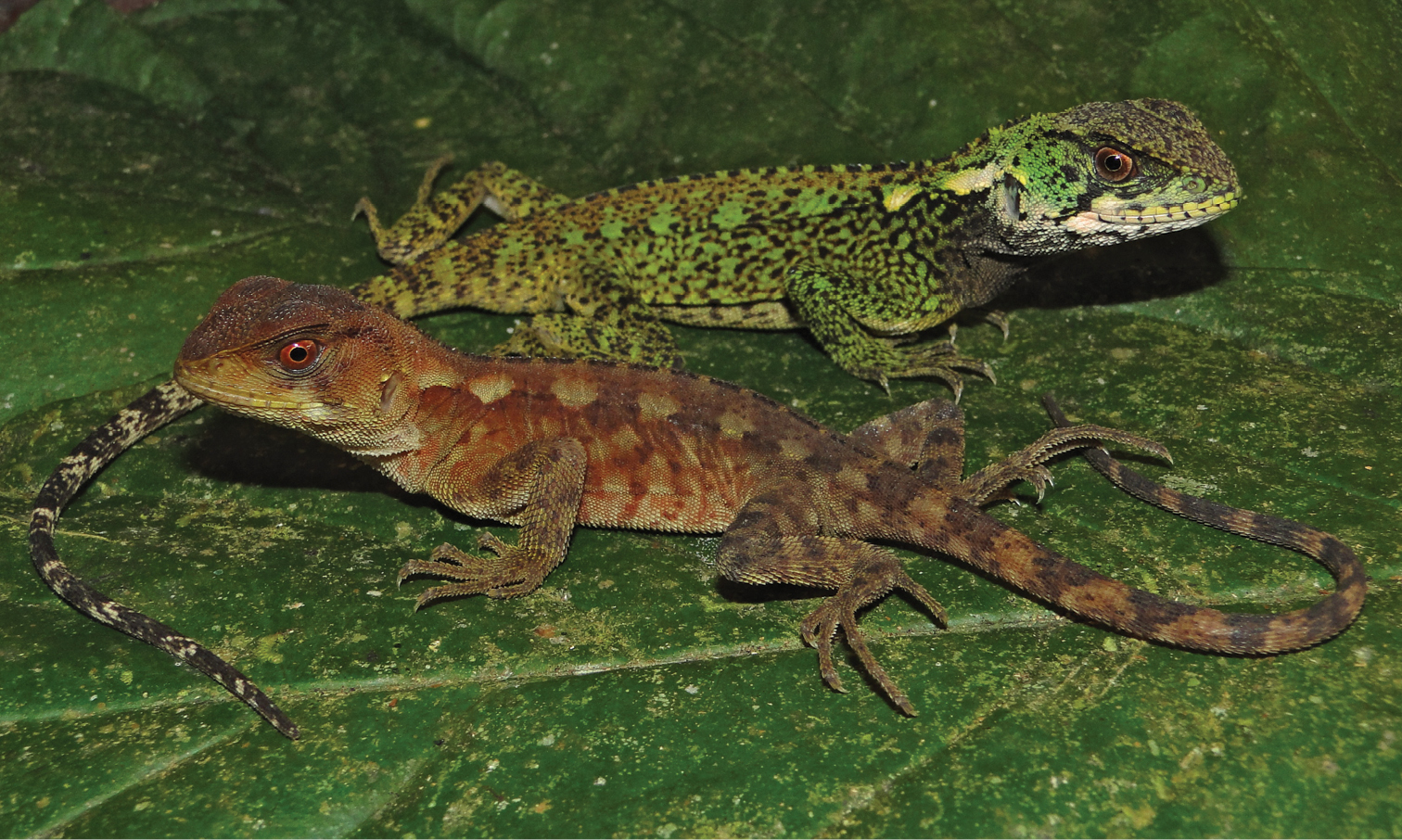
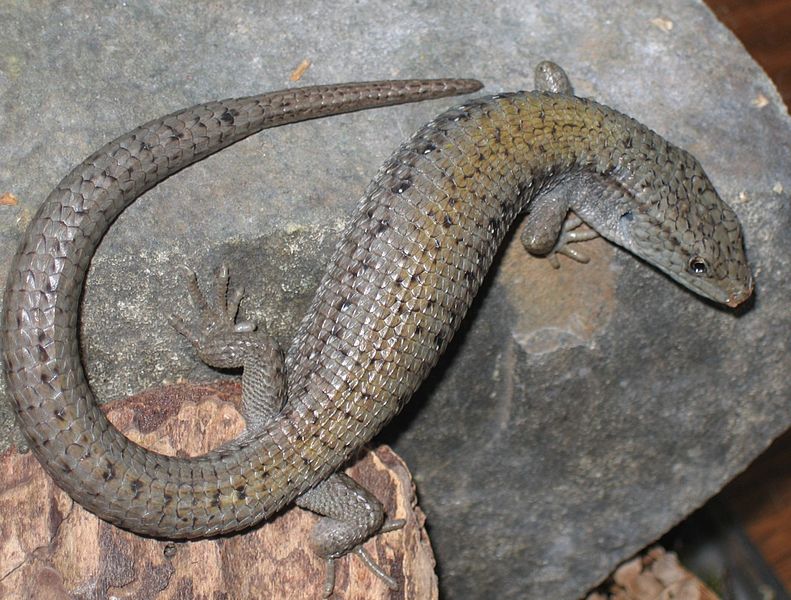
Northern Alligator Lizard

Photo by Meggar (Wikimedia)

Today we continue learning about obscure animals. Although today’s animal is a little more popular, you may be surprised to find out that you have an alligator living in your backyard……if your backyard is on the west coast in North America.  Okay, so maybe it is a Northern Alligator Lizard but that doesn’t take away from their awesomeness. Although, they may not be as large as a real alligator (thank goodness), they are known to be one of the largest lizards species in Canada, which is pretty impressive, right? So what are we waiting for? Let’s head out to your backyard and start looking for the incredible Northern Alligator Lizard.

The Defense Specialist

We may have a tough time spotting this medium-sized lizard since they are known to be quite secretive and will typically flee once spotted. Trust me when I tell you not to pursue a fleeing Alligator Lizard. I guarantee you will not be a happy camper once you catch them. Once caught the Northern Alligator will try a few different defence strategies. They will release a foul smelling mix of musk and faeces, followed by biting and if the situation calls for it, they will simply drop their tail and scurry away. Dropping their tail is a common trend among lizards and acts as a distraction to the predator, giving them just enough time run and hide. The tail of the Northern Alligator Lizard does grow back, however, it tends to be shorter, fatter and darker. I guess this is one way to tell which lizards have had a tough life.

Northern Alligator Lizard

Click for Source

Anti-Social Lizards

Although the Northern Alligator Lizard doesn’t mind the cold, which is why they can be found living in Canada, they are still not big fans of winter. Therefore, this lizard species will hibernate in underground dens known as, hibernacula. The Northern Alligator Lizards living in British Columbia tend to stick around their hibernacula all year long. I guess they are afraid that winter can hit anytime! During the summer months, the Northern Alligator Lizard can often be found in groups as they sun themselves on the rocks. Although, they can be found in groups, the Northern Alligator Lizard is not a social animal and will hardly interact with the neighbouring sun tanners. Sometimes you just want to relax and soak up the sun without having to worry about entertaining other lizards, right?

That does it for today’s Wild Fact. I will see you tomorrow for the final animal fact of the week.


Digg This
Reddit This
Stumble Now!
Buzz This
Vote on DZone
Share on Facebook
Bookmark this on Delicious
Kick It on DotNetKicks.com
Shout it
Share on LinkedIn
Bookmark this on Technorati
Post on Twitter
Google Buzz (aka. Google Reader)

Wild Fact #651 – The Poor Man’s Chameleon – Anoles

January 7, 2011 - 12:00 am 2 Comments

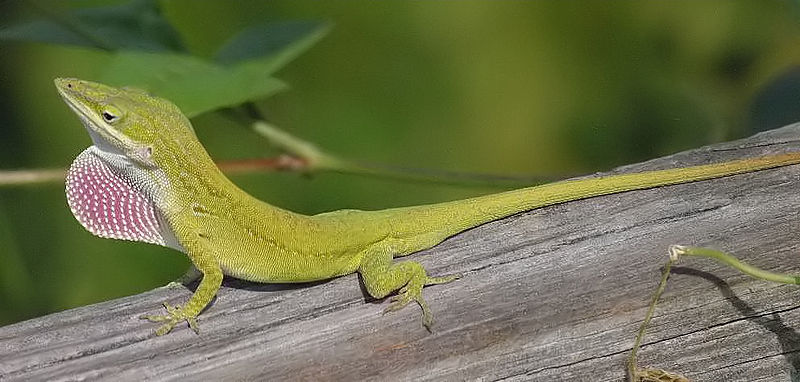
Photo from Wikimedia

For some strange reason I was in the mood for a trip to the Rainforest today.  In fact, I think I might stay there all weekend.  Anyone with me?  No?? Really?!?  What if I told you that we were going to have a chance to study some Anoles?  All right, first I will explain what Anoles are and then you can decide if you would like to join me on my tropical, weekend getaway.  I still can’t believe I am having this much difficulty convincing you to go on a trip.  For the record, these conversations I have with myself really do entertain me.

So what in the world are Anoles?  Well, I am sure you can tell by the picture that they are a type of lizard.  The Anole Lizard is actually closely related to Iguanas, however, people often confuse them as a Chameleon or a Gecko.  We will make sure not to make this mistake on our trip.  So how could people think that this lizard is actually a Chameleon?  Great question and it is funny since I was thinking the same thing.  It probably has to do with the fact that the Anoles have something in common with a Chameleon. Go ahead and take a guess.  You are absolutely correct!  The Anole Lizard is capable of altering their skin colour.  It appears that the mood and surroundings of the Anole Lizard will dictate their colour.  For example, in North America, Green Anoles, which are very common among pet owners will turn from their usual green colour into a nice brown colour when they become stressed.  This is a sign that the owner should probably do something to relieve the stress of their little friend.

Photo by Paul Hirst (Wikimedia)

There are about 372 known species of Anoles found throughout southeastern United States and the Caribbean.  Interestingly enough when the Green Anole and the Brown Anole overlap they display an unique behaviour.  In these areas the Green Anoles will stick to the higher branches of the trees while the Brown Anole hangs out on the lower branches.  Don’t get me wrong, I am sure the odd rebel crosses the border but for the most part they stick to their own territories.

Anoles Fast Fact – If you don’t like bugs around your house then you may consider getting a couple of Anoles.  They are actually very effective at pest control consuming cockroaches, spiders and other insects.  Typically they will also run away from humans.  Oh and one last thing before we go.  Apparently a Green Anole will turn yellow after it feeds.  Can any Green Anole pet owners confirm this?  I think it would be pretty cool to have your own Hypercolor lizard.

So have you made your decision yet?  I thought you might change your mind so grab your bags and lets catch our flight.  It is going to be a great weekend in the Rainforest.

Digg This
Reddit This
Stumble Now!
Buzz This
Vote on DZone
Share on Facebook
Bookmark this on Delicious
Kick It on DotNetKicks.com
Shout it
Share on LinkedIn
Bookmark this on Technorati
Post on Twitter
Google Buzz (aka. Google Reader)

Wild Fact #685 – The Colour Changers – Sand Lizard

November 8, 2010 - 12:00 am No Comments

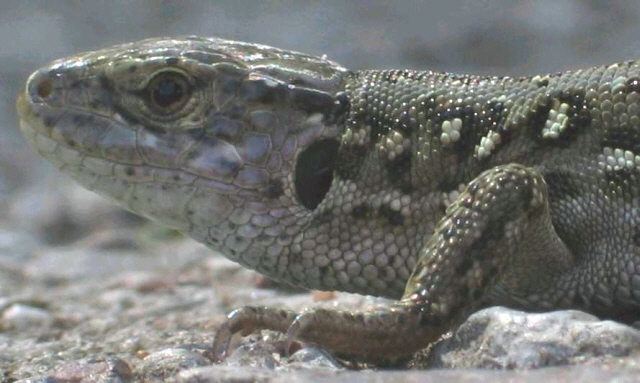
Photo from Wikicommons

I sincerely hope everyone enjoyed the last couple of weeks while I was out of town.  I almost forgot that I had to actually write up a new Wild Fact today as I was use to them simply auto-posting.  We are going to start the week off with a little trip to Europe (and parts of Asia).  This is the perfect place to learn about the Sand Lizard.  This particular lizard is actually protected in the majority of the European countries as their populations are dangerously low.

The Sand Lizard is a fairly small animal which can get up to 20 cm (7.8″) in length and weigh about 15 g (0.5 oz).  They are usually light brown with dark markings, however, the males are famous for changing their colours.  In an effort to impress the ladies the male Sand Lizard will change into a bright green colour during the mating season.  So if you want to see the green version of the Sand Lizard you had better plan your visit for early summer.

During this summer mating season the female will lay her eggs in the sand and let the heat incubate her babies.  Just so you know, the Sand Lizard is the only lizard species in Britain that actually lays eggs.   These eggs will usually hatch in late summer without much parental care. I bet when the kids are screaming as you are trying to get them ready for school you just dream about being a Sand Lizard.  You know, drop your kids off at the beach in early summer and let them take care of themselves, while you enjoy a peaceful summer vacation. So perhaps this is why I don’t have any children?

Mating Colours of the Sand Lizard (Photo from Wikicommons)

As you can imagine the small size of the Sand Lizard makes them a target for many predators including birds, cats and dogs.  When not being attacked by a variety of animals the Sand Lizard is doing its own attacking.  They love feasting on invertebrates such as grasshoppers and spiders.  This particular lizard relies heavily on their keen eyesight and quick, strong tongue to catch their unsuspecting prey.

Sand Lizard Fast Fact – As I mentioned the populations of Sand Lizards across Europe are dwindling.  This is a result of habitat loss which doesn’t come as much of a surprise if you look at how developed Europe has become.  The Sand Lizard is considered to be at threat of extinction which is why they are protected through much of their range.  Hopefully it is enough for this little colour changing lizard to flourish once again.

Thanks for joining me on this wonderful Monday.  I hope you all enjoyed today’s fact and will join me tomorrow for another fun fact. Have a great day folks!

Digg This
Reddit This
Stumble Now!
Buzz This
Vote on DZone
Share on Facebook
Bookmark this on Delicious
Kick It on DotNetKicks.com
Shout it
Share on LinkedIn
Bookmark this on Technorati
Post on Twitter
Google Buzz (aka. Google Reader)

Wild Fact #759 – 7 Years of Bad Luck? – Glass Lizard

July 27, 2010 - 12:00 am No Comments

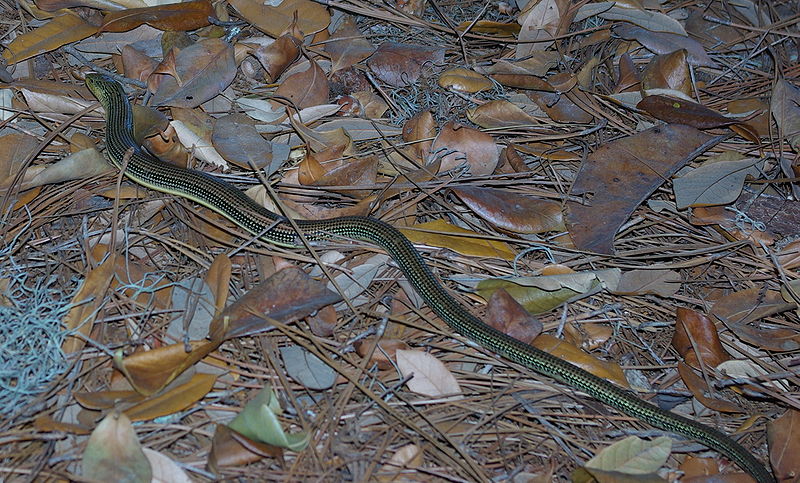
Photo by NatalieK

You may be a little confused today if you read the title of our Wild Fact and then looked at the picture.  You are probably thinking to yourself that the picture looks more like a snake than a lizard.  If you picked up on this than good for you but believe it or not the Glass Lizard is actually a lizard and not a snake.  As you can imagine these animals are also referred to as Glass Snakes for obvious reasons.  You might be questioning how it can be a lizard if it doesn’t have any legs.  I guess we should address that issue right now, shouldn’t we?

The majority of Glass Lizard species have no legs, however, a few select species actually have very small stub-like legs.  So how is it that we call them lizards instead of snakes? Well, the Glass Lizard still has the head of a lizard including movable eyelids and external ear openings.  These distinct features puts them into the lizard category as opposed to the slippery, slithery snake category. I guess this is another example that illustrates that looks can indeed be deceiving.

The Head of the Glass Lizard

The Glass Lizard can get up to 1.2 m (4′) in length although two-thirds of this length is their tail.  In previous reptile Wild Facts we have discussed that one of the main defense mechanisms for some lizards is to drop off part of their tail.  The Glass Lizard is no exception and has the ability to easily break off sections of their long tail.  This is actually how they get their name.  Get it? Both glass and these lizards break easily? This is actually a pretty clever naming convention, for once. The coolest thing about this is the fact that the portion of the tail that breaks off remains mobile while the rest of the lizard stays motionless.  Obviously this distracts the predator and allows the Glass Lizard to make an escape when the time is right. Unfortunately this cool defense mechanism requires a lot of energy to regenerate a new tail so it will often be smaller.  I guess this is a good way to tell how often the Glass Lizard had to drop off its tail.

I guess that does it for the Glass Lizard.  Make sure you check back here tomorrow for another crazy Wild Fact.  Have a great day!

Digg This
Reddit This
Stumble Now!
Buzz This
Vote on DZone
Share on Facebook
Bookmark this on Delicious
Kick It on DotNetKicks.com
Shout it
Share on LinkedIn
Bookmark this on Technorati
Post on Twitter
Google Buzz (aka. Google Reader)

Wild Fact #828 – The Spotlight Hog (errrr… Lizard) – Agama Lizard

April 21, 2010 - 12:00 am 4 Comments

A question about the little lizard in the background of yesterday’s Wild Fact about the Elephant Shrew has sparked today’s post about the Agama Lizard.  I was not certain about the exact species but I am fairly certain that the little lizard in the background was indeed an Agama, which can found across Africa.

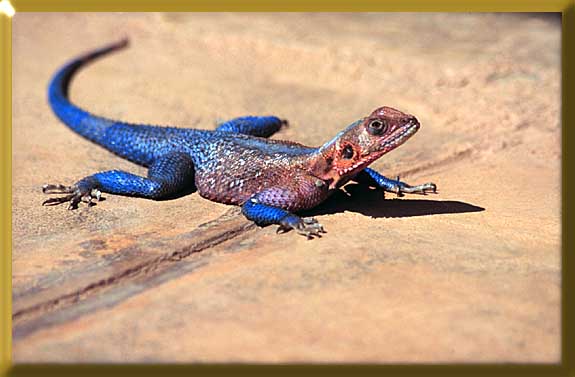
There are at least thirty seven different species found in Africa and happen to be the most common lizard found on the continent.  I guess it is so common that it had no choice but to take away from the elephant shrews two minutes of fame during the photo shoot.  Now let’s take a minute and learn what an agama actually is.  They are mainly insectivorous lizards that are active during the day, however, they will also supplement their diet with fruit, grasses and even the eggs of other lizards.

Perhaps one of the reasons the agama is so prevalent in Africa is due to their ability to adapt.  Originally, they would be mostly found in the forests of Africa, however, as their habitat was destroyed and towns and villages created, the little lizard had to either adapt or perish.  Obviously they chose to adapt and can often be found living in houses and coming out only to feed.  If you happen to spot an agama out in the open and proceed to chase it, don’t be surprised to see this little guy book it out of there quickly on its hind legs.

So what about the bright colours? Often when animals are brightly coloured it is to warn other animals to stay away since they are poisonous.  This is not the case for the agama.  I just brought that up to make myself sound smart. In fact, most agama lizards  are a dull greenish colour.  It is only the dominant males that will have the beautiful colours.  This means that sub-ordinate males and females have the boring green colours.  As with most animals, this colour is a status thing and let’s all the others know who is boss!

That just about does it for the agama lizard.  Have a great day!

Digg This
Reddit This
Stumble Now!
Buzz This
Vote on DZone
Share on Facebook
Bookmark this on Delicious
Kick It on DotNetKicks.com
Shout it
Share on LinkedIn
Bookmark this on Technorati
Post on Twitter
Google Buzz (aka. Google Reader)