Posts Tagged ‘Lizard’

Wild Fact #647 – Not the Tanning Type – Boyd’s Forest Dragon

January 13, 2011 - 12:00 am No Comments

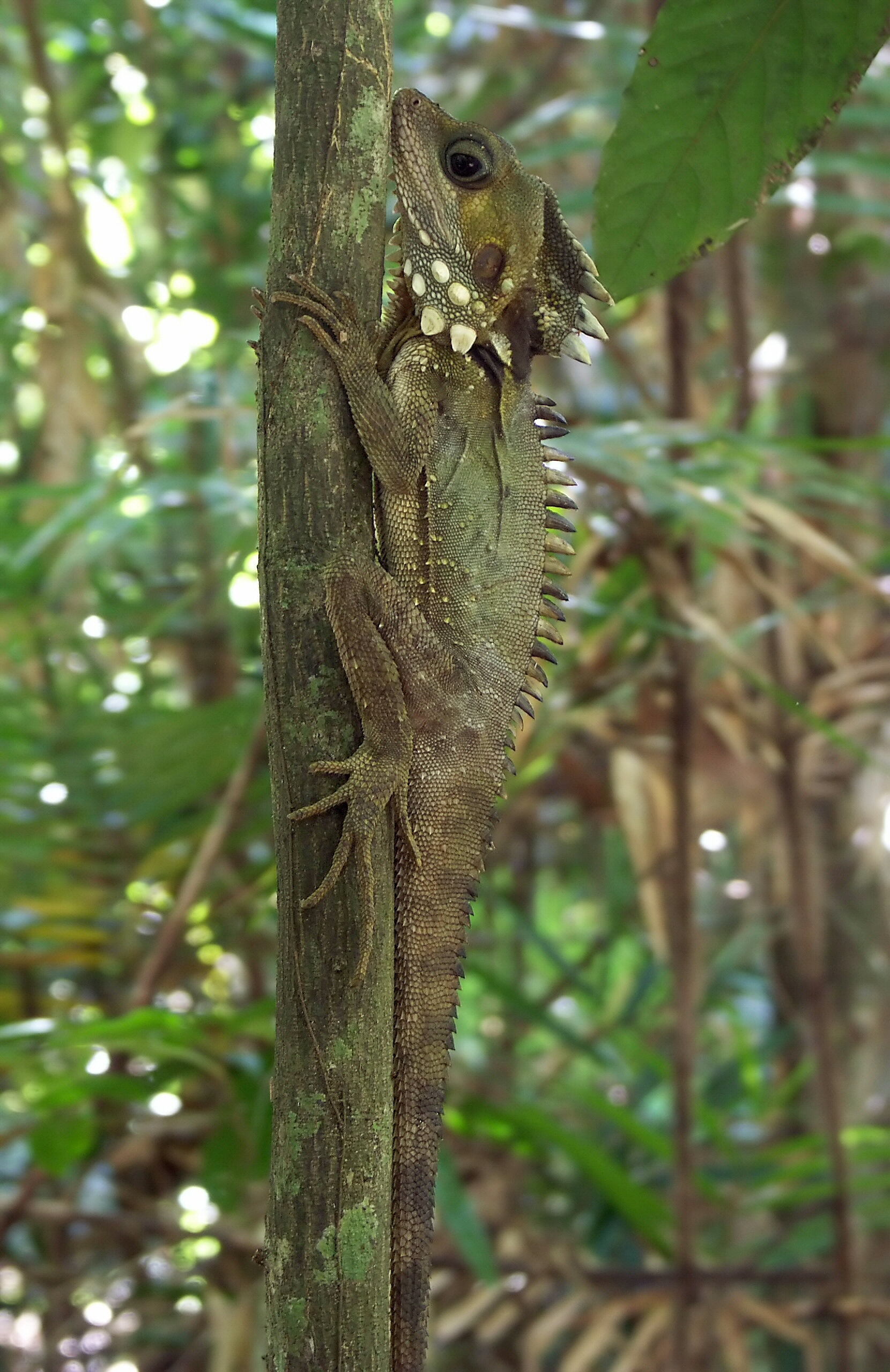
Photo by Zoharby (Wikimedia)

Yesterday we were hanging out in the rainforests of Central and South America.  Today we are heading to the other side of the world to wander around the rainforests of Queensland, Australia.  Granted we may be a little jet-lagged but it will be worth it.  So what are we looking for while we are in Australia?  Well, we are going to study an interesting lizard called the Boyd’s Forest Dragon.  Don’t get too excited since it isn’t a real dragon.

You really can’t miss this lizard as they have large cheek scales, a noticeable crest and of course a yellow dewlap under their chin.  Nothing says fashion like a nice yellow dewlap.  The male Dragon’s are typically larger than their female counterparts and they also have larger, blockier heads.  Yes, go ahead and insert your witty comment about all men having block heads.

Photo by Oliver Castaneda (Wikicommons)

It probably comes as no surprise that the Boyd’s Forest Dragon likes to hang out in the trees.  This actually works to the benefit of people trying to observe them since they are usually clung to the trees at the same height as our head.   Although, they are pretty clever so if you try to approach this lizard they will typically move to the other side of the tree so that the trunk is always between them and the intruder.

These little Dragon’s take their trees very seriously as they are highly territorial.  The males will generally guard an area as large as a 1000 square meters.  These large male territories will usually overlap the territories of several females.  That is one smart male lizard.  He greatly improves his chances for mating if he surrounds himself with females.  Speaking of mating the lowland population of Boyd’s Forest Dragon will reach maturity between one and two years.  The upland population on the other hand usually takes a year longer.  I wonder if the lowland population bullies the upland lizards before they reach maturity.

Boyd’s Forest Dragon Fast Fact – Unlike most reptiles the Forest Dragon doesn’t bask in the sun.  Instead they let their body temperature just fluctuate with the temperatures.  The exception to this is females that are carrying eggs.  They can often be seen sunning themselves in the open.  I guess it can’t hurt to get a good tan once in awhile.

That does it for our trip to Australia.  Have a great day!

Digg This
Reddit This
Stumble Now!
Buzz This
Vote on DZone
Share on Facebook
Bookmark this on Delicious
Kick It on DotNetKicks.com
Shout it
Share on LinkedIn
Bookmark this on Technorati
Post on Twitter
Google Buzz (aka. Google Reader)

Wild Fact #651 – The Poor Man’s Chameleon – Anoles

January 7, 2011 - 12:00 am 2 Comments

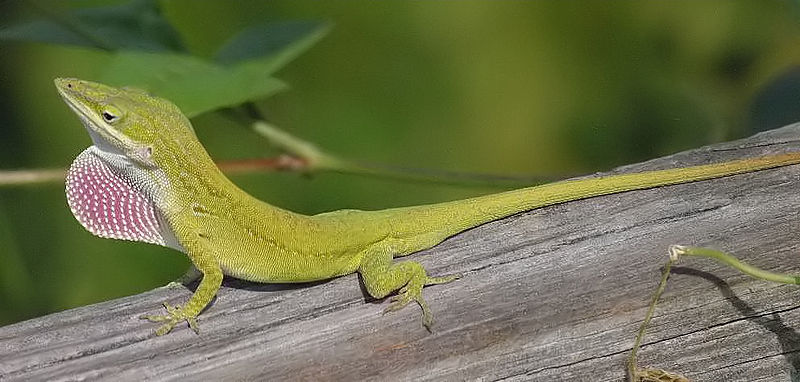
Photo from Wikimedia

For some strange reason I was in the mood for a trip to the Rainforest today.  In fact, I think I might stay there all weekend.  Anyone with me?  No?? Really?!?  What if I told you that we were going to have a chance to study some Anoles?  All right, first I will explain what Anoles are and then you can decide if you would like to join me on my tropical, weekend getaway.  I still can’t believe I am having this much difficulty convincing you to go on a trip.  For the record, these conversations I have with myself really do entertain me.

So what in the world are Anoles?  Well, I am sure you can tell by the picture that they are a type of lizard.  The Anole Lizard is actually closely related to Iguanas, however, people often confuse them as a Chameleon or a Gecko.  We will make sure not to make this mistake on our trip.  So how could people think that this lizard is actually a Chameleon?  Great question and it is funny since I was thinking the same thing.  It probably has to do with the fact that the Anoles have something in common with a Chameleon. Go ahead and take a guess.  You are absolutely correct!  The Anole Lizard is capable of altering their skin colour.  It appears that the mood and surroundings of the Anole Lizard will dictate their colour.  For example, in North America, Green Anoles, which are very common among pet owners will turn from their usual green colour into a nice brown colour when they become stressed.  This is a sign that the owner should probably do something to relieve the stress of their little friend.

Photo by Paul Hirst (Wikimedia)

There are about 372 known species of Anoles found throughout southeastern United States and the Caribbean.  Interestingly enough when the Green Anole and the Brown Anole overlap they display an unique behaviour.  In these areas the Green Anoles will stick to the higher branches of the trees while the Brown Anole hangs out on the lower branches.  Don’t get me wrong, I am sure the odd rebel crosses the border but for the most part they stick to their own territories.

Anoles Fast Fact – If you don’t like bugs around your house then you may consider getting a couple of Anoles.  They are actually very effective at pest control consuming cockroaches, spiders and other insects.  Typically they will also run away from humans.  Oh and one last thing before we go.  Apparently a Green Anole will turn yellow after it feeds.  Can any Green Anole pet owners confirm this?  I think it would be pretty cool to have your own Hypercolor lizard.

So have you made your decision yet?  I thought you might change your mind so grab your bags and lets catch our flight.  It is going to be a great weekend in the Rainforest.

Digg This
Reddit This
Stumble Now!
Buzz This
Vote on DZone
Share on Facebook
Bookmark this on Delicious
Kick It on DotNetKicks.com
Shout it
Share on LinkedIn
Bookmark this on Technorati
Post on Twitter
Google Buzz (aka. Google Reader)

Wild Fact #685 – The Colour Changers – Sand Lizard

November 8, 2010 - 12:00 am No Comments

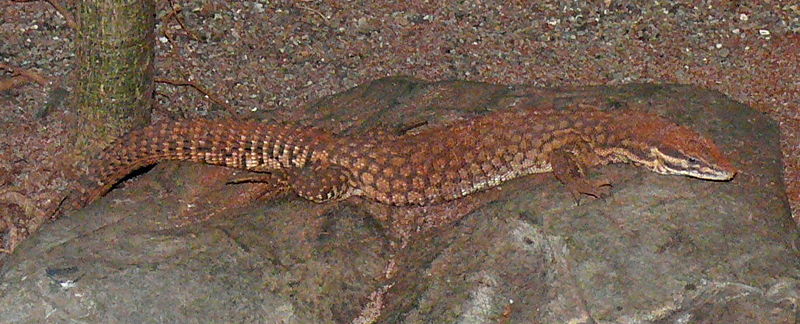
Photo from Wikicommons

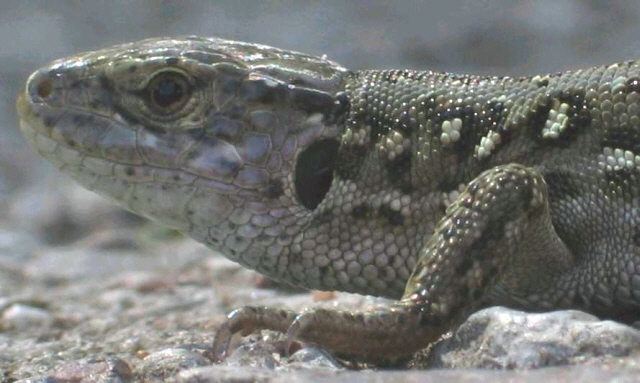
I sincerely hope everyone enjoyed the last couple of weeks while I was out of town.  I almost forgot that I had to actually write up a new Wild Fact today as I was use to them simply auto-posting.  We are going to start the week off with a little trip to Europe (and parts of Asia).  This is the perfect place to learn about the Sand Lizard.  This particular lizard is actually protected in the majority of the European countries as their populations are dangerously low.

The Sand Lizard is a fairly small animal which can get up to 20 cm (7.8″) in length and weigh about 15 g (0.5 oz).  They are usually light brown with dark markings, however, the males are famous for changing their colours.  In an effort to impress the ladies the male Sand Lizard will change into a bright green colour during the mating season.  So if you want to see the green version of the Sand Lizard you had better plan your visit for early summer.

During this summer mating season the female will lay her eggs in the sand and let the heat incubate her babies.  Just so you know, the Sand Lizard is the only lizard species in Britain that actually lays eggs.   These eggs will usually hatch in late summer without much parental care. I bet when the kids are screaming as you are trying to get them ready for school you just dream about being a Sand Lizard.  You know, drop your kids off at the beach in early summer and let them take care of themselves, while you enjoy a peaceful summer vacation. So perhaps this is why I don’t have any children?

Mating Colours of the Sand Lizard (Photo from Wikicommons)

As you can imagine the small size of the Sand Lizard makes them a target for many predators including birds, cats and dogs.  When not being attacked by a variety of animals the Sand Lizard is doing its own attacking.  They love feasting on invertebrates such as grasshoppers and spiders.  This particular lizard relies heavily on their keen eyesight and quick, strong tongue to catch their unsuspecting prey.

Sand Lizard Fast Fact – As I mentioned the populations of Sand Lizards across Europe are dwindling.  This is a result of habitat loss which doesn’t come as much of a surprise if you look at how developed Europe has become.  The Sand Lizard is considered to be at threat of extinction which is why they are protected through much of their range.  Hopefully it is enough for this little colour changing lizard to flourish once again.

Thanks for joining me on this wonderful Monday.  I hope you all enjoyed today’s fact and will join me tomorrow for another fun fact. Have a great day folks!

Digg This
Reddit This
Stumble Now!
Buzz This
Vote on DZone
Share on Facebook
Bookmark this on Delicious
Kick It on DotNetKicks.com
Shout it
Share on LinkedIn
Bookmark this on Technorati
Post on Twitter
Google Buzz (aka. Google Reader)

Wild Fact #818 – Check Under Your Bed – Gila Monster

May 5, 2010 - 12:00 am 4 Comments

Photo by: Dr. Brendan P. O'Connor

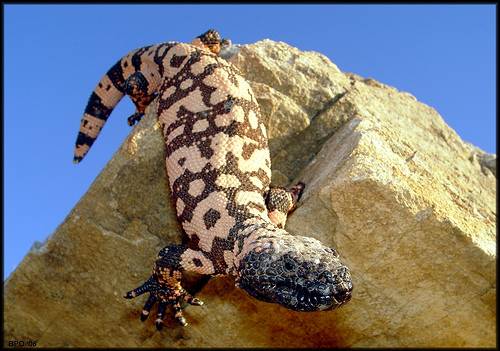
I had thought about including today’s animal into the Venomous Animal Week, however, I decided against it.  The Gila Monster (pronounced HEE-Luh) is pretty cool so I wanted to share some facts about it with all of you.  In all honesty, I could have sworn that I already completed a Wild Fact for this monster but apparently not.  That index of animals really does help me keep my facts straight. Enough of my rambling, onto today’s fact.

The Gila Monster is native to Southwestern United States and Mexico.  It is actually the largest lizard species native to the USA.  So just how big do they get? Well, this monster can get up to 60 cm (2′) long and weigh about 2.2 kg (5 lbs).  That is pretty big for a lizard, especially one that is poisonous.  In fact, this monster is one of the few reptiles that contain venom (others are bearded lizards, some iguanas and the monitor lizards).  Luckily, this lizard only has a mild neurotoxin and there have been no reported deaths from this venom.  Don’t get me wrong the bite will still hurt a lot but it won’t kill you.  Why does this bite hurt so much? That is a very insightful question!  You are on the ball today.  Well besides the obvious answer that it is a 5 pound lizard with a very powerful bite so of course it will hurt.  The Gila Monster also has a painful poison which it delivers by latching onto their victims and chewing.  This allows the venom to move through their grooves in their teeth and into the wound.  I guess these lizards never have to worry about the “chew your food before you swallow” speech from their moms.

This particular monster frequently raids nests to feed on the eggs of birds and other reptiles. They will also feed on insects, small mammals and other reptiles.  The Gila Monster will store the fat obtained from these foods in their over-sized tails.  This allows them the ability to go months between meals, if required.

Digg This
Reddit This
Stumble Now!
Buzz This
Vote on DZone
Share on Facebook
Bookmark this on Delicious
Kick It on DotNetKicks.com
Shout it
Share on LinkedIn
Bookmark this on Technorati
Post on Twitter
Google Buzz (aka. Google Reader)

Wild Fact #828 – The Spotlight Hog (errrr… Lizard) – Agama Lizard

April 21, 2010 - 12:00 am 4 Comments

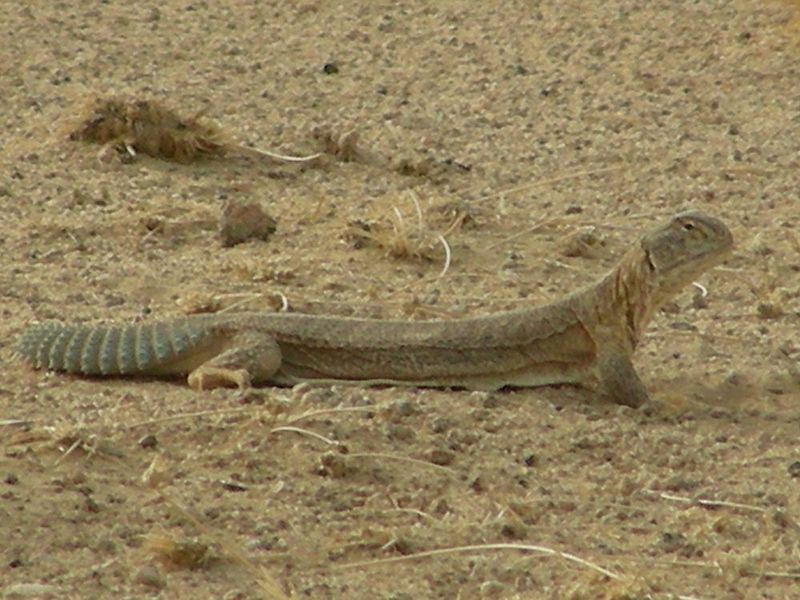
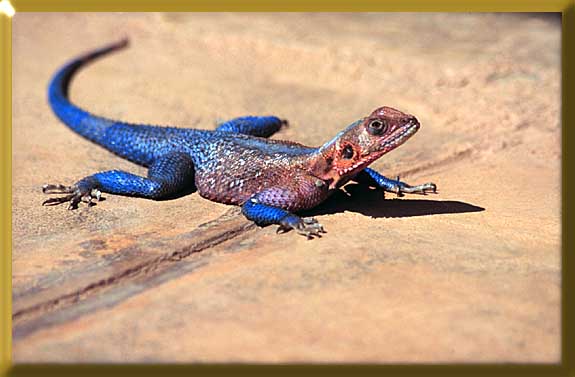
A question about the little lizard in the background of yesterday’s Wild Fact about the Elephant Shrew has sparked today’s post about the Agama Lizard.  I was not certain about the exact species but I am fairly certain that the little lizard in the background was indeed an Agama, which can found across Africa.

There are at least thirty seven different species found in Africa and happen to be the most common lizard found on the continent.  I guess it is so common that it had no choice but to take away from the elephant shrews two minutes of fame during the photo shoot.  Now let’s take a minute and learn what an agama actually is.  They are mainly insectivorous lizards that are active during the day, however, they will also supplement their diet with fruit, grasses and even the eggs of other lizards.

Perhaps one of the reasons the agama is so prevalent in Africa is due to their ability to adapt.  Originally, they would be mostly found in the forests of Africa, however, as their habitat was destroyed and towns and villages created, the little lizard had to either adapt or perish.  Obviously they chose to adapt and can often be found living in houses and coming out only to feed.  If you happen to spot an agama out in the open and proceed to chase it, don’t be surprised to see this little guy book it out of there quickly on its hind legs.

So what about the bright colours? Often when animals are brightly coloured it is to warn other animals to stay away since they are poisonous.  This is not the case for the agama.  I just brought that up to make myself sound smart. In fact, most agama lizards  are a dull greenish colour.  It is only the dominant males that will have the beautiful colours.  This means that sub-ordinate males and females have the boring green colours.  As with most animals, this colour is a status thing and let’s all the others know who is boss!

That just about does it for the agama lizard.  Have a great day!

Digg This
Reddit This
Stumble Now!
Buzz This
Vote on DZone
Share on Facebook
Bookmark this on Delicious
Kick It on DotNetKicks.com
Shout it
Share on LinkedIn
Bookmark this on Technorati
Post on Twitter
Google Buzz (aka. Google Reader)

Wild Fact #918 – Look Deep into my Eyes – Short Horned Lizard

December 15, 2009 - 12:00 am 9 Comments
Photograph courtesy Gary M. Stolz/U.S. Fish & Wildlife Service

Photograph courtesy Gary M. Stolz/U.S. Fish & Wildlife Service

Yesterday we discussed an animal that will actually blow itself up to prevent predators from harming their colony.  If you didn’t get a chance to read it yet then I recommend checking it out here. Don’t get me wrong, that is a pretty fascinating defense mechanism but I think today’s animal is even more unique.

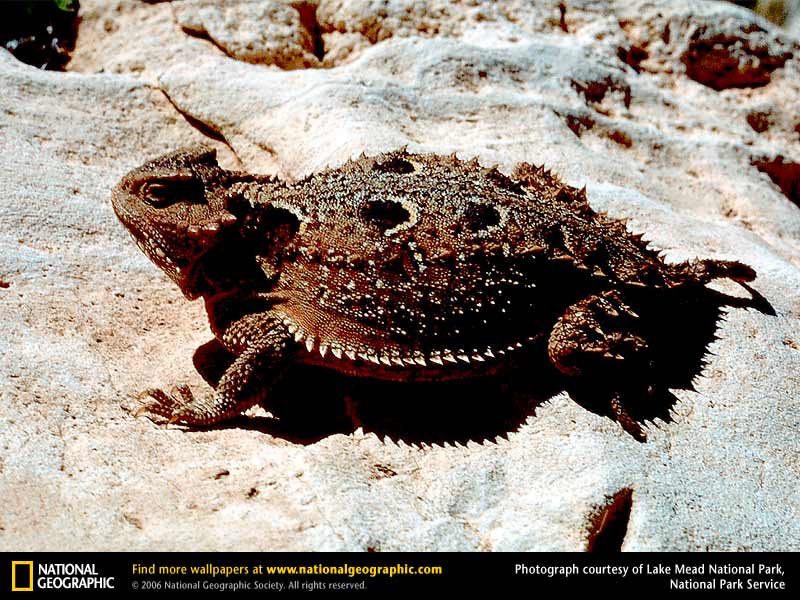
The short horned lizard can be found in deserts from North to Central America. Because of their rounded shaped they are often referred to as the horny toad or horned toad but in reality are actually a lizard.  Even though the short horned lizard appears to be well protected by all of their spikes they tend to have numerous predators.  Animals such as coyotes, snakes, roadrunners (beep beep), hawks, lizards and dogs all feast on these little lizards. So how can the short horned lizard ward off such large predators? Well, they have several strategies depending on the risk level. First and foremost the colour of their skin allows them to blend in very well to their environment.  Let’s face it, if you can’t be found then it will be tough for you to be eaten. The next two adaptations are a lot more fun and exciting. So if they are spotted and need to defend against a predator the lizard is able to inflate it’s body to twice it’s size.  This makes the lizard look like a big spiny balloon. If this technique fails to thwart the attempts of their attacker then they will employ the ultimate strategy.  You sitting down?  Some species of horned lizards are able to direct a stream of blood from their eyes to distract the threat while they make their getaway.  They are able to do this by rupturing tiny blood vessels in their eyelids.  Besides confusing the predator the blood contains a chemical that is noxious for dogs, coyotes and wolves.  Unfortunately this strategy does not work well on the flying threats.

Short Horned Lizard Fast Fact: The short horned lizard is able to squirt blood from their eyes up to a distance of 1 m (3 feet).

Digg This
Reddit This
Stumble Now!
Buzz This
Vote on DZone
Share on Facebook
Bookmark this on Delicious
Kick It on DotNetKicks.com
Shout it
Share on LinkedIn
Bookmark this on Technorati
Post on Twitter
Google Buzz (aka. Google Reader)

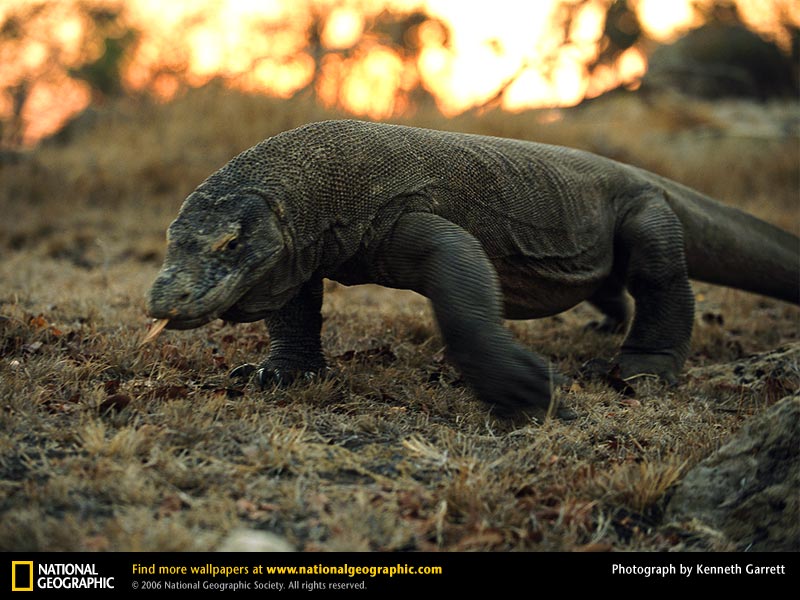
Wild Fact #962 – A Real World Dragon – Komodo Dragon

October 14, 2009 - 12:00 am 6 Comments

komodo-dragon1

Now don’t get all excited because the title says today’s fact is about dragons.  The Komodo Dragon does not breathe fire or guard princesses in a tall castle, at least I am not familiar with any that do. Don’t get me wrong, just because they don’t breathe fire doesn’t mean they are not an interesting animal.

The komodo dragon is the largest member of the lizard family averaging around 6-10 feet long and weighing about 150 lbs.  Obviously, not an ideal candidate to keep as a pet in a terrarium.  Besides the size of this particular lizard, it’s eating habits would also make keeping it as a pet to be difficult. The komodo dragon feeds mostly on carrion (dead animals) but have been known to hunt pigs and small deer. What is impressive about this is the way they eat their prey.  For the larger animals they will tear off junks and swallow them whole while holding down the prey.  For the smaller prey, up to the size of a goat, they will simply swallow it whole! It will take them about 15-20 minutes to swallow an animal this size even if they have to ram it against  a tree to help it get it down.  I know it is crazy to think that  a lizard can swallow a goat sized animal whole, but they are capable of doing this since they have a loosely articulated jaw, flexible skull and an expandable stomach. As well, they have a small tube underneath their tongue that connects directly to their lungs.  This allows the dragon to breath while trying to swallow it’s food. The komodo dragon has a very slow metabolism which means they could technically survive on 12 meals/year.  Imagine how much cheaper your grocery bill would be if we could survive on 12 meals/year.

This slow metabolism can cause problems for the komodo dragon since if the dinner they swallowed does not digest quick enough, it will become toxic and poison the dragon.  Finally, when the dragon swallows its prey whole it will proceed by recurgitating a mass of horns, hair and teeth which is called the gastric pellet.  As I mentioned earlier, the eating habits of the komodo dragon make it very difficult to keep as a nice pet!

I hope you enjoyed today’s fact!  Have a great day!

Digg This
Reddit This
Stumble Now!
Buzz This
Vote on DZone
Share on Facebook
Bookmark this on Delicious
Kick It on DotNetKicks.com
Shout it
Share on LinkedIn
Bookmark this on Technorati
Post on Twitter
Google Buzz (aka. Google Reader)