Posts Tagged ‘Mammals’

Wild Fact #485 – I Heard That! – Bat-Eared Fox

August 29, 2011 - 12:00 am No Comments
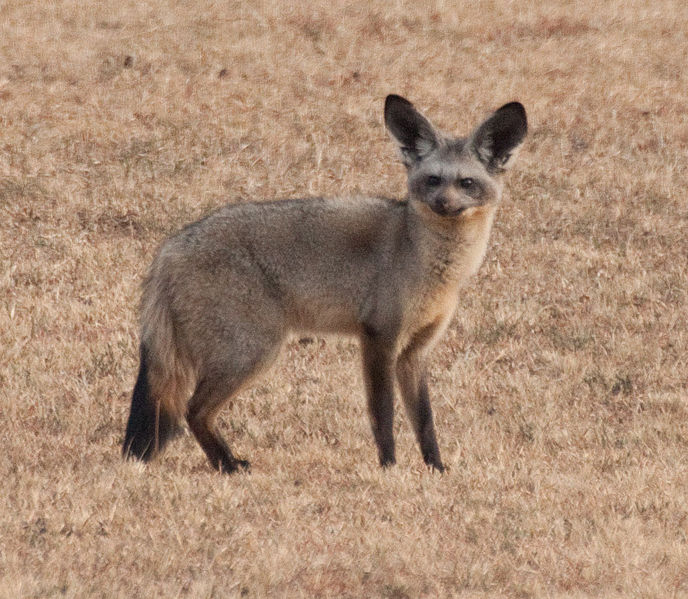
Bat-Eared Fox

Photo by Joanne Goldby (Wikimedia)

So we are at the beginning of another amazing week of animal facts and to start it all off, we are heading to the African continent to learn about a little canine species called the Bat-Eared Fox. If you take a look at the picture, I am sure you will figure out how this fox received their name. Yep, it has to do with the fact that their ears are incredibly large compared to the rest of their head, which is a trait that many bats also share. To get a glimpse of the unique Bat-Eared Fox, we will have to venture out into the grasslands and semi-deserts scattered across Africa.

Unlike other canine species, the Bat-Eared Fox is one of the few that has pretty much given up feasting on mammalian prey. So if they don’t eat small mammals like mice and rabbits then what to they eat? Believe it or not, they survive mainly on insects and other arthopods with their favourites being termites and dung beetles. Generally, I am not one to judge but it is probably bad enough eating insects day in and day out but to feast on Dung Beetles…….ewwww!  The teeth of the Bat-Eared Fox are much smaller than their canine cousins, which is an adaptation to their insectivore diet.

Bat-Eared Fox Distribution Map

Distribution Map fo the Bat-Eared Fox

The Bat-Eared Fox is technically a night owl, as they prefer to do their foraging in the cover of the darkness, which is probably a good idea if you live in a wide open area such as the grasslands. You don’t want to make things too easy on your predators, do you? Similar to other fox species, the Bat-Eared Fox is a hopeless romantic that will be monogamous to their mate. Although, it is unclear if this monogamy lasts their entire life or just for that breeding season. Anyone in need of a thesis topic….there you go!

Bat-Eared Fox Fast Facts – Our foxy friend will rely on its speed and incredible manoeuvrability to escape the clutches of their predators. This is probably a smart tactic considering there won’t be much cover for the Bat-Eared Fox to hide under. Luckily, this particular fox doesn’t have to worry too much about humans interfering with their life, although some indigenous people will hunt them. For the most part their populations are doing well and the Bat-Eared Fox is not at risk. Isn’t it nice getting good news on a Monday?

Well that does it for the first Wild Fact of the week. I hope you enjoyed yourself and I will see you tomorrow.

Digg This
Reddit This
Stumble Now!
Buzz This
Vote on DZone
Share on Facebook
Bookmark this on Delicious
Kick It on DotNetKicks.com
Shout it
Share on LinkedIn
Bookmark this on Technorati
Post on Twitter
Google Buzz (aka. Google Reader)

Wild Fact #870 – The ko-WAH-ti Kid – Coati

February 22, 2010 - 12:00 am 6 Comments

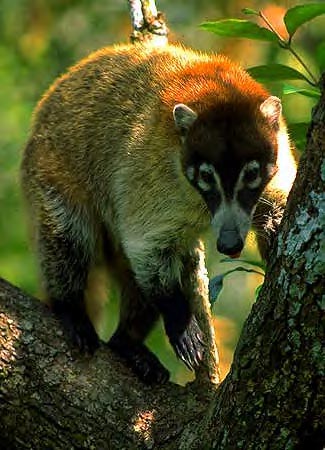
The people that know me well will know that hockey games will often affect my mood.  After watching the Americans beat the Canadians tonight, you should all know that I am no longer in a very jovial mood.  I figure doing a little bit of research about a cool animal will do me some good.  In fact today’s animal is so cool, it needs a Coati! No that is not a spelling mistake, that is me trying to make pun since we are indeed going to learn about the Coati today. In reality though, the Coati is pronounced (ko-WAH-ti) so that wrecks the pun a little.

You may not have heard of the coati before but have you ever heard of a Snookum Bear, hog-nosed coon or Brazilian aardvark? These are just some of the other names that people call the coati. So what exactly is this animal? Well, they are members of the raccoon family which can be found in North, Central and South America.  They tend to be a diurnal species foraging for food throughout the day and hanging around in the trees at night.  During those blistering hot moments of the day the coati will seek refuge in their home high above the ground.  Although they are considered to be a terrestrial animal, the coati will sleep, mate and give birth in the trees.  The amount of time spent in the trees may help explain the need for such a long tail.  This tail provides the balance necessary to manoeuvre through those tricky branches.

The coati are an omnivorous species which means they like to eat both plants and animals.  They have adapted an excellent sense of smell as well as strong digging claws to help with find the meat component of their diet.  They will often be seen sniffing along the ground until they catch a scent of their prey.  At this point they will begin to dig into the ground and will move the dirt around using their special pig-like nose that can actually rotate 60 degrees in any direction.  Maybe the police force should hire a few Coati’s for their Canine Unit. Well, I guess it would then be called a Coati Unit!  Hmmmm, that actually has a pretty cool ring to it.

Writing up this post has definitely put me into a better mood which I can thank each and everyone of you for!  Have a great day!

Digg This
Reddit This
Stumble Now!
Buzz This
Vote on DZone
Share on Facebook
Bookmark this on Delicious
Kick It on DotNetKicks.com
Shout it
Share on LinkedIn
Bookmark this on Technorati
Post on Twitter
Google Buzz (aka. Google Reader)

Wild Fact #928 – The Cows of the Sea – Dugong

December 1, 2009 - 12:00 am 13 Comments
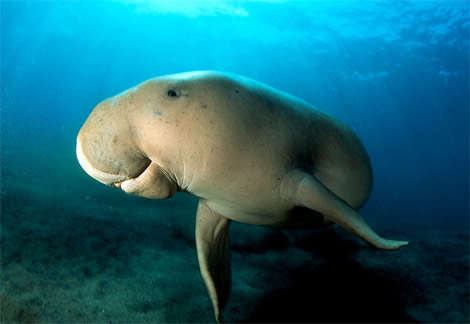
Photograph by OSF/D. Fleetham/Animals Animals—Earth Scenes

Photograph by OSF/D. Fleetham/Animals Animals—Earth Scenes

Today we are going to head to the farm to learn about cows.  Okay, maybe that isn’t exactly correct.  We are actually going to head to the sea to learn about Sea Cows.  No, I am not being funny!  The Dugong is often referred to as the sea cow.  I don’t believe there are any farmers out there that have a herd of sea cows and use them to produce milk but I could be wrong.

The dugong is called a sea cow because it basically feeds the same way as a regular cow.  The dugong will graze on underwater grasses by digging them up with their snout. The sea cow can grow to about 3 meters (6′) long and weigh up to 300 kg (600 lbs).  In the wild they are able to live up to 70 years.  Unfortunately, the dugong is the only remaining member of its once diverse family.  Hunting has brought the dugong population into jeopardy, however, they have finally been protected throughout their range.

So do these “cows” have any special adaptations to allow them to graze along the ocean floor? Of course they do, I wouldn’t have asked the question if they didn’t.  The first adaptation has to do with their snout which is turned downwards to allow the sea cow the ability to uproot their yummy grass salad.  The liver of the dugong has also evolved which actually removes all of the salt from the plants that it consumes. Another unique adaptation is the weight of their bones.  Unlike humans the dugong has little to no marrow in their bones.  These solid bones actually acts as a ballast which allows them to stay suspended just below the water surface.  Just so you know the bones of the dugong are among the densest in the world. I wonder if they use the excuse “I’m just big boned” after they put on a few pounds from eating too many Christmas goodies!

Dugong Fast Fact: It is believed that the dugong may be responsible for starting the myth about mermaids. I wonder why Disney didn’t go with The Little Dugong instead of the The Little Mermaid.

Digg This
Reddit This
Stumble Now!
Buzz This
Vote on DZone
Share on Facebook
Bookmark this on Delicious
Kick It on DotNetKicks.com
Shout it
Share on LinkedIn
Bookmark this on Technorati
Post on Twitter
Google Buzz (aka. Google Reader)

Wild Fact #940 – Splish Splash – Hippopotamus

November 13, 2009 - 12:00 am 6 Comments

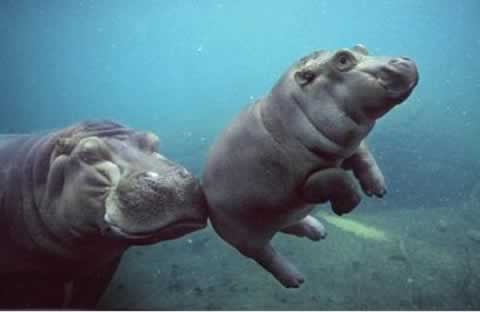
Photo courtesy of www.neatorama.com

Photo courtesy of www.neatorama.com

I have learned that some animals are so interesting that they deserve more than one Wild Fact! The hippopotamus just happens to be one of those animals deserving of two Wild Facts. If you remember, the first fact had to do with their ability to produce a natural sunscreen.  If for some reason you missed that fact or need a refresher then I urge you to check it out here.

Today we are going to look at how well accustomed these large creatures are to lakes and rivers.  Believe it or not, hippos depend on freshwater lakes and rivers to survive, and don’t even need to swim.  What am I talking about you ask?  Well, they don’t need to swim since they are so heavy, they just sink to the bottom and walk along the river bed.  Personally, I prefer my water wings but to be honest, I have never tried just sinking to the bottom and walking around.  The eyes, ears and nose of the hippopotamus have evolved to be placed high on their head.  This allows them to remain submerged in the water yet still see, hear and breathe.

The water is also very important for hippopotamus reproduction.  That’s right, mating actually occurs in the water and in most cases the female will be completely submerged, coming to surface every now and again for air. The other amazing fact is that the baby hippos are born underwater. Once the 60-100 pound baby is born they must swim to shore to catch its first breath.  They will often hang onto their mother’s back when they are in deeper water, however, the little ones will swim underwater to nurse.  So not only do they produce their own sunscreen but they are one of the few mammals that actually give birth underwater. Impressive, eh?

Hippopotamus Fast Fact: The entire time I was writing this post I kept thinking of the delivery guy in the movie Big Daddy starring Adam Sandler.  You know the scene where they are doing the spelling… Hip… Hip Hop,… Hip Hop Anomnyous!  I know this isn’t a typical fast fact but I wanted to end the week on a light note.

Have a great weekend!

Digg This
Reddit This
Stumble Now!
Buzz This
Vote on DZone
Share on Facebook
Bookmark this on Delicious
Kick It on DotNetKicks.com
Shout it
Share on LinkedIn
Bookmark this on Technorati
Post on Twitter
Google Buzz (aka. Google Reader)