Welcome to another new week of Wild Facts. We are going to start the week off discovering an interesting bird. This is another animal that was recommended by my brother, Clayton. Enough of the idle chit chat, let’s head over to Africa to learn about the Abyssinian Ground-Hornbill.
This large bird can be found hanging out in the grasslands and savannas of Africa, just north of the equator. There are several things that we will notice first about this unique bird. A few of their characteristics include the casque on top of their head, stubby legs, an inflatable throat pouch and of course incredibly long eyelashes.
So where should we start? Well, I guess we can begin with the odd looking casque on the top of their head. This is believed to help with enhancing their vocalizations so all of their friends can hear them. The bare legs of this bird are perfect for walking and running throughout the grasslands of Africa. Let’s move onto the more interesting features of this particular hornbill.
You will notice that this bird as a blue or red throat pouch, also called a wattle. This wattle is used in courtship with the males puffing it out to impress the ladies in the area. Interestingly enough, both males and females have this throat pouch but the women have a nice blue coloured wattle while the males are red coloured. At least this makes it easy for us to tell the males and females apart.
I guess now is a good time to solve the mystery that was bugging my brother so much. What is the purpose of the long eyelashes? Well first of all, these eyelashes that most women would kill for are actually modified feathers. I doubt women would want feathers growing on their eyes. The purpose of these eyelashes are to protect the hornbill’s eyes from elements such as sand. I wonder how much mascara these birds go through in a year?
I hope you all enjoyed today’s fact and stay tuned for another fun fact tomorrow!
We have taken a look at elephants in the past, however, we focused on their interesting behaviours such as grief and altruism. Today, I want to help Hailey’s little brother with his project on elephants, so we are going to look at some of the unique physical features of these gentle giants. There are two types of elephants in this world, African and Asian. I would like to focus today’s fact on the larger and in my opinion the more popular African Elephant.
The African elephant is the largest known land mammal and can be found in Central and Southern Africa. I know it is shocking to hear that you can find the African Elephant in Africa. These elephants spend their time wandering the Savannah grazing on grass and searching for water. You can probably imagine how hot it can get in Africa so how do elephants handle the heat? Well for starters their super large ears aren’t just a fashion statement. The large surface area of their ears helps radiate the heat and keeps them cool. When it gets to hot to handle, the elephant will then go and play in the water. You know you would do the same thing. Elephants are often seen sucking up water with their trunk and spraying it all over their bodies. This shower actually keeps them cool. After they finish with their water park the elephant will often cover himself in sand. Mother’s can probably relate to this phenomenon. I am sure you have given your child a bath and before you can get them changed into their pajamas the little rascals are outside playing in the dirt. I guess it is a little different since elephants use this dust to protect their skin from elements such as the sun.
Besides the ears, people usually notice the trunk of the elephant. Not only does the trunk act as a nose but it is also used for drinking, breathing, trumpeting and of course grabbing things. Believe it or not there are a 100 000 muscles in the trunk alone! The African Elephant also has two finger-like features at the end of their trunk which is excellent for picking up their favourite food, leaves and grass. For the record, the Asian Elephant only has one of these finger-like adaptations.
African Elephant Fast Fact: Both female and male African Elephants have tusks that can grow to 2.5 metres (7.5′) and weigh between 50 and 100 pounds. They use the tusks to dig in the ground for food and water as well as to strip bark off the trees. Males will also use their tusks to battle with other male elephants. Unfortunately, these tusks have caused problems for the elephant since poachers will kill the elephant simply for their ivory tusk.
I recommend checking out the following sites for more information:
Photograph by: David Doubilet for National Geographic.
I would like to thank my brother, Clayton, for inspiring today’s fact as well as passing on some information. Today we are going to head to the ocean to learn about a pretty cool mollusk. The Nudibranch is actually a shell-less mollusk and part of the sea-slug family. There are about 3000 nudibranch species and believe it or not, new ones are being identified daily. Maybe we will discover a new species on our trip today.
The first thing you will notice and probably the most fascinating thing about this slug is the impressive colours. The nudibranch has some of the most unique shapes, amazing colours and interesting patterns of any animal on earth. Who would have thought that a slug could be so cool? The slugs get their colours from the food that they eat and some of them even keep the poison they obtain from ingesting certain prey species. Basically, the colours help camoflage the slug while the poison helps defend against predators. It is pretty cool to think their food source provides them with the self-defense mechanisms needed to survive in the wild. These particular slugs can be as small as 6 mm (0.25″) or as large as 31 cm (1′) long. This is quite the size range. Even more astounding is the fact that the larger slugs can get up to 1.5 kg (3.3 lbs). Could you imagine a foot long slug weighing over 3 lbs hanging out around your house?
The nudibranch will slowly make its way across the ocean floor feeding on algae, coral, sponges and other nudibranch’s. They are able to distinguish their prey by using two highly sensitive tentacles located on the top of their head. These tentacles are called rhinophores and basically work in the same way as our noses. This sense of “smell” provides the slug with all the information they need to identify their surroundings. In order to protect these highly sensitive organs the nudibranch is able to retract them at will.
Nudibranch Fast Fact – Some nudibranchs will actually store algae in their tissues. What is the point of this you ask? Well, the slug is able to live off of the sugars that the algae produces as a result of photosynthesis. Pretty clever, eh?
Before you go, I recommend you check out these photos from National Geographic. It will give you an idea of some of the variations of Nudibranch that exist in the depths of the ocean. The link is:
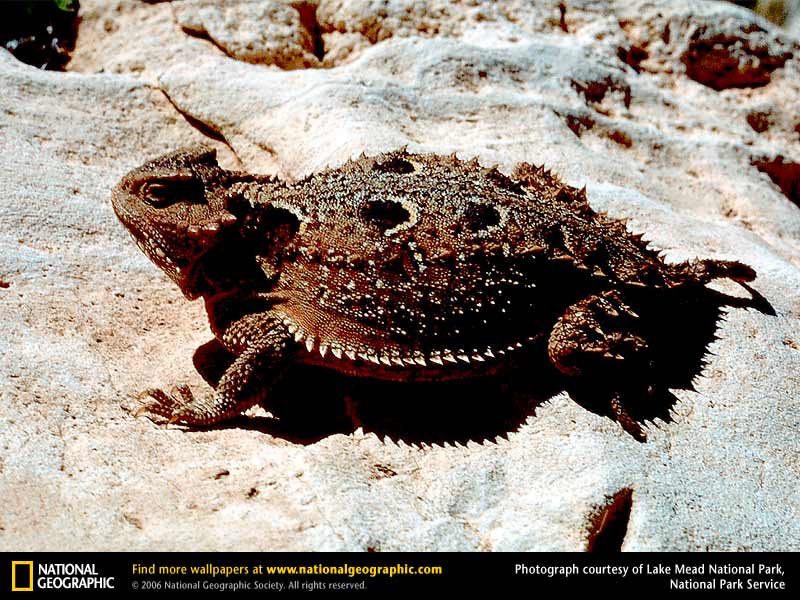
I had thought about including today’s animal into the Venomous Animal Week, however, I decided against it. The Gila Monster (pronounced HEE-Luh) is pretty cool so I wanted to share some facts about it with all of you. In all honesty, I could have sworn that I already completed a Wild Fact for this monster but apparently not. That index of animals really does help me keep my facts straight. Enough of my rambling, onto today’s fact.
The Gila Monster is native to Southwestern United States and Mexico. It is actually the largest lizard species native to the USA. So just how big do they get? Well, this monster can get up to 60 cm (2′) long and weigh about 2.2 kg (5 lbs). That is pretty big for a lizard, especially one that is poisonous. In fact, this monster is one of the few reptiles that contain venom (others are bearded lizards, some iguanas and the monitor lizards). Luckily, this lizard only has a mild neurotoxin and there have been no reported deaths from this venom. Don’t get me wrong the bite will still hurt a lot but it won’t kill you. Why does this bite hurt so much? That is a very insightful question! You are on the ball today. Well besides the obvious answer that it is a 5 pound lizard with a very powerful bite so of course it will hurt. The Gila Monster also has a painful poison which it delivers by latching onto their victims and chewing. This allows the venom to move through their grooves in their teeth and into the wound. I guess these lizards never have to worry about the “chew your food before you swallow” speech from their moms.
This particular monster frequently raids nests to feed on the eggs of birds and other reptiles. They will also feed on insects, small mammals and other reptiles. The Gila Monster will store the fat obtained from these foods in their over-sized tails. This allows them the ability to go months between meals, if required.
I found out today that one our young readers really likes ducks, so today’s Fact on the Ruddy Duck is for my friend Emma. Actually, one of our old readers, my dad, also really likes ducks so this fact is for him as well. In order to learn about them we need to explore some marshes throughout North America. Luckily the Ruddy Duck was accidentally introduced into Great Britain and has consequently spread across Europe. I say “luckily” since now our European friends don’t need to travel all the way to North America to see these beautiful birds.
The ruddy duck is a diving duck that feeds mainly on the seeds of aquatic plants, leafy plants and of course, invertebrates. These particular ducks are very abundant during the summer, however, you will hardly get to see them. They tend to be very shy and spend most of their time hiding in the cattails surrounding the edges of wetlands. Now we know where to find these colourful, little ducks so it should make our expedition a little easier.
Speaking of colourful, you will notice that the male ruddy duck has a nice rust coloured body, blue beak and a black cap. As with most ducks, the female tends to be dull and boring. The lady ducks have a gray-brown body and grayish coloured head. I suppose the males are brightly coloured in order to gain the attention of their female friends. If you look at the picture again, you will notice that the duck has its tail feathers sticking straight out of the water. I am not exactly sure why they do this but it is an interesting characteristic of the little duck.
Ruddy Duck Fast Fact: The ruddy duck loves the water and is one of the most aquatic ducks out there. In fact, they have a tough time on land since their feet are placed so far back on their body. The placement of their feet helps them dive but they are not going to win any sprinting competitions anytime soon.
I hope you enjoyed today’s fact on the Ruddy Duck!
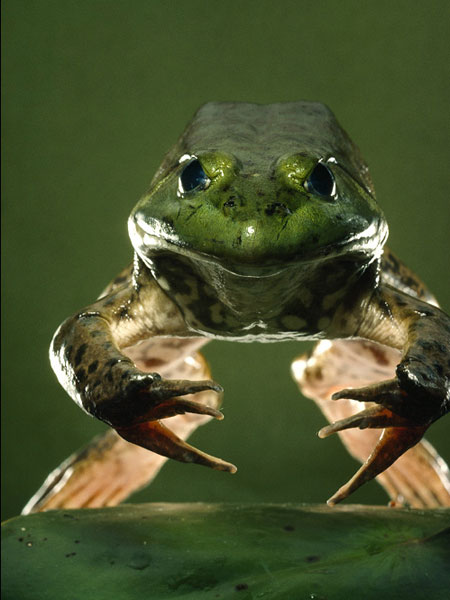
It is time for another exciting week of Wild Facts. Today we are going over to Africa to learn about an interesting frog. The African Clawed Frog can be found throughout the African continent and is also known as the Platanna. Grab your chest waders and water wings because we are going swimming.
The African Clawed Frog can be about 12 cm (5″) in length and weigh about 220 g (8 oz). This particular frog gets its name from the three short claws on their hind feet. This frog eats small fish, water bugs and other insects. As well, the African Clawed Frog will actually eat their own skin after shedding it. How gross is this, eh? They use their specialized claws to assist with catching and tearing apart their food.
Most frogs can occasionally be found hanging out on land, however, the platanna spends all of its time in the water. As you would expect the African Clawed Frog is a very proficient swimmer. They are capable of swimming very quickly in all directions. Whether they are going forwards, backwards, sideways, up or down, these frogs are incredibly comfortable in the water.
Again, most frogs have some pretty cool croaking sounds but this particular frog doesn’t actually have a vocal sac. This doesn’t stop the persistent males from contracting their laryngeal muscles (basically, their throat muscles) to make long and short trills which they alternate during mating season. If the female is interested in the frog then they will respond back with a rapping sound. I highly doubt this “rapping” sound is anything like Eminiem or Snoop Dogg does but it is effective in the frog world. If the female wants nothing to do with the singing male then they will respond with a slow ticking sound. So I guess rap is the favourite music genre of the male African Clawed Frogs.
Well, I hope you all enjoyed today’s fact. Have a good one!
So it is the last Wild Fact of the week dedicated to the venomous creatures of the earth. I had mentioned that you wouldn’t be able to guess today’s poisonous animal. I will be very surprised if anyone thought it would be one of our flying, feathered friends. That’s right! The Hooded Pitohui actually contains venom. So do we have to be worried about death from above? We will get to that in a second. Where is the fun in telling you all the facts right up front? We need a little bit of suspense to keep you interested.
The Hooded Pitohui can be found in Papua New Guinea and was the first documented poisonous bird. Researchers were studying these little song birds back in 1989 and noticed that after being scratched by the pitohui they would feel numbness and irritation. Eventually, they clued in that perhaps this bird was actually poisonous. The funny part about this is the fact that the locals in the area had known that for years and would rub the meat in charcoal before consuming it.
So just how poisonous is the hooded pitohui? Well the birds feathers and skin contain the exact same poison that is found in the slightly more famous “Poison Dart Frogs”. This chemical is actually the most powerful natural toxin known to man. In fact, researchers injected some of this neurotoxin into a mouse and it died instantly. For the most part these birds will cause numbness and tingling, sneezing and other minor symptoms when touched. Serious side effects such as paralysis and death would occur if you came in contact with a higher quantity of this poison.
Interestingly enough, not all of the birds contain the same amount of toxin. In some instances the researchers would sneeze and exhibit the symptoms just by being close to some of the birds while at other times nothing would happen. This indicates that the birds are obtaining their poison from an external source. In this case the pitohui acquires their toxin from their food source, the Choresine Beetle. It seems that insects are always causing problems in this world, eh? This natural toxin offers incredible protection against predators since nobody in their right mind would want to eat something that could possibly kill you.
I hope you all enjoyed the week of Poisonous Wild Facts! Have a great weekend!
**EDIT - As a request from one of my faithful readers, I have included a sound clip of the Hooded Pitohui below.**
We can’t have a week of Wild Facts dedicated to the venomous creatures of earth and not talk about a snake. Today we are going to look at the Russell’s Viper, which could be one of the most deadly snakes in the world. The worst part is it has a smaller relative, the Saw-Scaled Viper, which is just as deadly. We will learn more about their poison in a second but first let’s get some additional information on this interesting snake.

The Russel’s Viper can be found throughout much of Asia including India, Southern China and Taiwan. This particular snake can grow as long as 1.7 m (5.5′) and comes in earthy type colours such as brown, gray and deep yellow. They have a flattened head with a blunt snout and large nostrils. Now that we have an idea what they look like, lets find out just how poisonous they really are.
As mentioned the Russell’s Viper is one of the deadliest snakes in the world and coupled with their smaller relative, the Saw-Scaled Viper, account for more snake bite deaths than all other species put together. The Russell’s Viper will transfer a large amount of venom into a single bite. This does not bode well for the victim. Some of the symptoms from a Russell’s Viper bite include pain lasting for 2-4 weeks (this should be an indication of how venomous these guys really are), drop in blood pressure and heart rate, bleeding of the gums, vomiting, swelling, and of course death may occur over two weeks after the bite. Even if you do survive the deadly bite there can be life long complications such as renal failure and a total lack of blood coagulation. Interestingly enough males bitten by this snake may lose their facial hair, have decreased libidos and actually have a reduction in male hormones. I am not sure why the cobra and the python gets all of the attention. I would definitely take a cobra or a python over this crazy snake!
Well that just about does it for this fact. Make sure you tune in Friday for the final fact. I can promise you won’t be able to guess this venomous animal!
Welcome back to day two of “Animals that can Kill” on Wild Facts. We talked about the deadly sting of the bark scorpion yesterday. Today we will take a look at another sting that you will want to avoid. I am of course talking about the sting from an Africanized Bee better known as the Killer Bee. Now isn’t that a nice reassuring name. It sounds bad but are they really that deadly? We will find out soon enough.
The “Killer Bee” is actually a hybrid of the African Honey Bee and various European Honey Bees. This hybrid is much more aggressive and will actually take over the hive of European honey bees by killing the European queen and establishing their own. I guess this proves the old theory wrong that only humans cause war.
Originally these killer bees could only be found in Africa, however, they have managed to find their way over to the Americas. They can now be found throughout South America, Mexico and some Southern US states such as Texas, Arizona, Florida and California. So how poisonous are these hybrid bees? To tell you the truth the potency of their sting is the same as the European honey bee. So why are they so deadly? Why have cheap B-rated movies been made about these bees? Is it all an exaggeration? These are all excellent questions and to answer them we have to learn about the killer bees behaviour.
The africanized bee has what is called “hyper-defensive behaviour”. Basically, they will attack a perceived threat on their hive at the drop of a hat. If you look the wrong way at a killer bee hive then they will attack. The problem is when they attack they come at you in great numbers. The number of deaths to humans are increased because of the greater number of stings that occur when you startle a hive as well as the fact that killer bees tend to sting more readily. As you can imagine the media has caused a lot of hype over the killer bees but the fact remains that they can be deadly and 1-2 Americans are reported to die each year from killer bee stings. Whether or not these people are allergic is unknown. The hype may not be completely justified but I wouldn’t go trying to pet these hybrid bees anytime soon.
Killer Bee Fast Fact: Not all killer bee hives are are defensive and aggressive as described above. For this reason beekeepers have been able to create a strain of gentler killer bees. Apparently these “domesticated” killer bees are the bee of choice in South America.
I have attached an interesting 3 minute clip on the killer bees below but it may not be suitable for the really young ones. As well, it may instill fear into people regarding these bees. Enjoy!
It has been awhile since we have had a nice week long “theme” to Wild Facts so I figured this week would be dedicated to some of our poisonous friends around the world. You are going to want to come back every day this week to find out which animals are deadly, especially if you are traveling soon. We are going to start the week off with an animal that comes to mind when you think of deadly animals. Of course I am talking about scorpions and more specifically the Bark Scorpion.

The bark scorpion can be found in the Southern USA through Mexico and into various countries of Central America. We generally picture scorpions scurrying around in the sand, however, as their name suggests, the bark scorpion can usually be found in the trees. They prefer to live underneath the bark of trees where it is nice and cool. This causes problems for the people living in these areas since these scorpions tend to confuse the nice, cool spots of your home with that of trees. Why is this a problem? Keep reading to find out.
The venom of the bark scorpion is considered to be the most poisonous of all the scorpions in North America. If you are unfortunate enough to get stung by these little guys than you will experience extreme pain for about 24-72 hours. For the most part, the bark scorpion is not deadly to healthy adults, however, their sting can be fatal to children, pets and people with a weak immune system. What makes these scorpions even more troublesome is their plain, yellowish colour. What happened to the rule that poisonous animals be brightly coloured so we know not to mess with them? If you live in an area with bark scorpions then I suggest picking up a UV LED flashlight. I am not kidding! The bark scorpion will glow a nice green colour under UV light. You can actually spot them more than 50 feet away with this method. Pretty cool, eh?
Bark Scorpion Fast Fact: Scorpions are very resilient. In fact, researchers have frozen scorpions for weeks with no ill effects after they thawed. Even more impressively, scorpions have been found at ground zero after a nuclear blast and again they experienced no negative effects. I don’t know how they do it but it is pretty impressive.
Welcome to my ongoing project to provide you with 1000 Animal Facts. Every week-day I will provide a new and interesting animal fact counting down from 1000. My goal is to hopefully educate the young and old alike about the interesting adaptations of the animal kingdom. As well, I am hoping people will gain a greater appreciation of the animals we share earth with. If you have any questions, please feel free to use the Contact form or leave a comment.